A 'cataclysmic' nose-dive over Palm Beach County: nine dead in a Learjet 60 crash
A Bahamas-bound Learjet 60 carrying nine people nose-dived into a South Florida neighborhood on Sunday afternoon, erupting into a fireball that left all aboard dead. The NTSB has launched a full investigation; cockpit recordings point to ice and a rapid descent, but the cause remains unknown.
Published 2 November 2026 · 01:33 GMT
The summary
All nine people aboard Learjet 60 N722BD were killed when it crashed in Palm Beach County, Florida, on Sunday, November 1, 2026. The crash occurred at about 12:50 p.m.
The three lenses
- WestU.S. outlets treated the crash as a domestic safety story with a human core.
- EastBy our deadline, no independent reporting on this crash was located in the East information environment.
- Global SouthThe story broke first for much of the world through the Global South's wires.
Key facts
- All nine people aboard Learjet 60 N722BD were killed when it crashed in Palm Beach County, Florida, on Sunday, November 1, 2026. CNN (Nov 1, 2026)
- The crash occurred at about 12:50 p.m. ET near Military Trail and 10th Avenue North, near Greenacres; the FAA says the jet departed Austin-Bergstrom and was bound for North Eleuthera Airport in the Bahamas. USA Today (Nov 1, 2026)
- Transportation Secretary Sean Duffy confirmed the deaths on X and called the crash a “horrific tragedy”; the FAA is supporting an NTSB investigation. Al Jazeera (Nov 2, 2026)
- Cockpit recordings show the pilot describing ice issues as “manageable,” then reporting rapid altitude loss before declaring that the aircraft was going to crash. Al Jazeera (Nov 2, 2026)
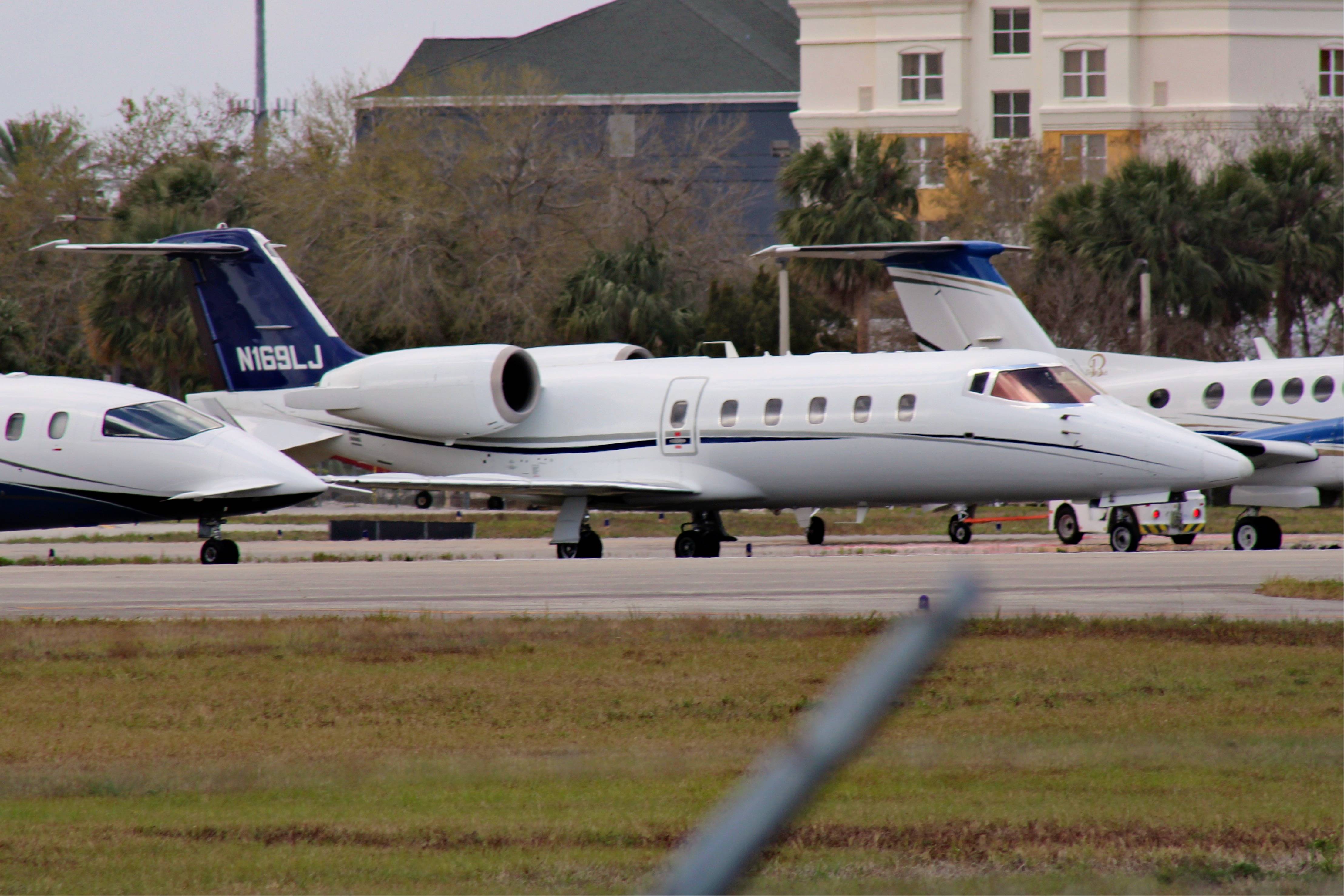
- The FAA registry lists N722BD as a Learjet 60, serial 271, registered to LR60271 LLC of Wilmington, Delaware; flight data shows a steep descent from about 35,000 feet. BizJet Journal (Nov 1, 2026)
- About 600 residents of a nearby mobile home community were evacuated; the NTSB go-team arrives Sunday and Monday, with a media briefing scheduled Monday in West Palm Beach. Radar Contact (Nov 1, 2026)
- This is the worst crash involving a Learjet 60 on record (Flight Safety Foundation) and the second-deadliest U.S. aviation accident of 2026 (NTSB records). CNN (Nov 1, 2026)
- The nine aboard have not been identified; officials have not confirmed the passenger/crew split and the cause is undetermined. Firstpost (Nov 2, 2026)
The last minutes of a Sunday flight to the Bahamas
At about 12:50 p.m. Eastern time on Sunday, November 1, 2026, a twin-engine Learjet 60 crashed into an unincorporated stretch of Palm Beach County near the intersection of Military Trail and 10th Avenue North, between Greenacres and Palm Springs, a few miles south of West Palm Beach. Videos circulating online show the jet striking the pavement at high speed and at a sharp, steep angle before a huge explosion threw up a column of fire and debris. Florida Governor Ron DeSantis, who visited the scene, described the crash as “cataclysmic” and said the plane “looked like a missile going down, and left a big crater on the side of the road.”
All nine people on board were killed, Transportation Secretary Sean Duffy confirmed on X on Sunday, calling the crash a “horrific tragedy.” The jet had departed Austin-Bergstrom International Airport in Texas and was bound for North Eleuthera Airport in the Bahamas, according to the Federal Aviation Administration. No deaths among people nearby have been reported, but the debris field is wide and several fires burned after impact; about 600 residents of a nearby mobile home community were evacuated because the wreckage is blocking the park's entrance, and the Palm Beach County Sheriff's Office closed all lanes of Military Trail between Cresthaven Boulevard and 10th Avenue North.
The paper trail of flight N722BD
The aircraft is identified in the FAA registry as a Learjet 60, serial number 271, registered as N722BD to LR60271 LLC, a company with a Wilmington, Delaware, address. Flight-tracking data shows the jet departed Austin (AUS) at 15:37 UTC with North Eleuthera (ELH) as its destination, cruised near 41,000 feet, and then entered a steep descent from around 35,000 feet before the crash, according to Flightradar24 records analyzed by specialist aviation press.
Cockpit audio retained by LiveATC.net captures the crew's final minutes. According to reporting by The Associated Press and Al Jazeera, the pilot first described ice issues as “manageable,” then reported rapid altitude loss before declaring that the aircraft was going to crash. The recordings also describe moderate turbulence, ice accumulation, and precipitation while the aircraft was near 35,000 feet. The FAA is sending a team to support a National Transportation Safety Board investigation, and the NTSB has launched a go-team with investigators arriving at the site Sunday and Monday, ahead of a media briefing in West Palm Beach on Monday.
The identities of the nine people aboard have not been released; officials said they had not confirmed how many were passengers and how many were crew. The crash is the worst ever involving a Learjet 60, according to the Flight Safety Foundation, and the second-deadliest aviation accident in the United States this year after a June skydiving-plane crash in Butler, Missouri, that killed 12, per NTSB records cited by CNN.
The cause is unknown; and so are the nine names
The cause of the crash has not been determined. The cockpit recordings describe icing and a rapid descent, but investigators have released no findings, and audio alone cannot establish why a jet cruising at altitude entered a steep nose-dive. The NTSB has said it will examine flight data, weather, aircraft systems, and other evidence, and the FAA will provide updates only through the board. Any theory offered before the wreckage is catalogued is speculation, and responsible outlets have declined to guess.
The nine people aboard have not been publicly identified, and the split between passengers and crew is not confirmed. Authorities are expected to notify families before releasing names. The condition of the area around the crash is also unresolved: officials said there were no immediate reports of deaths or injuries among people nearby, but the full accounting of the debris field and the damage to the mobile home community is still under way, and the roughly 600 evacuated residents do not yet know when they can return.
When a private jet falls on a residential grid
Business jets crash rarely, but when they do they tend to crash where people live; departing or arriving at airports surrounded by housing, as the Palm Beach County impact site shows. The Learjet 60 is a workhorse of corporate and charter aviation, and a nose-dive from cruise altitude into a neighborhood raises questions that go beyond one aircraft: how icing protection, pilot workload, and maintenance are managed across the aging mid-size business-jet fleet, much of it registered to shell companies like the Delaware LLC that owns N722BD.
The political visibility is immediate. The crash landed on the desk of the nation's transportation secretary two days before the midterm elections, in a state the governor himself inspected within hours. And it is not the year's first transport disaster: in Spain, a high-speed rail crash in Toledo killed 69 just days earlier, another reminder that the deadliest failures cluster around the seams; between jurisdictions, between regulators, between the last inspection and the next flight. For the roughly 600 displaced residents of Greenacres, the abstract question is concrete: a road, a park entrance, a night away from home.
Reading the descent, not jumping to the cause
A steep, high-speed descent from 35,000 feet is the detail that makes this crash exceptional. Airliners and business jets do not simply point downward and hold it; a sustained nose-dive implies either a catastrophic aerodynamic upset, the kind icing can trigger if it degrades lift asymmetrically, or a control failure, or a crew incapacitated at the critical moment. The recordings give investigators a timeline: turbulence and ice, then a pilot still calm enough to call the situation “manageable,” then a sudden loss of altitude, then the final declaration. The compression of that sequence, from manageable to unsurvivable, is what the NTSB will have to reconstruct.
What do the cockpit recordings tell us?
They tell us what the crew perceived, not what the aircraft experienced. LiveATC audio captures radio traffic, it is not the flight-data recorder, and ice described as “manageable” by a pilot can still be accumulating on surfaces in ways the crew cannot see. The NTSB's go-team will synchronize those voices with radar tracks, weather soundings, the wreckage pattern, and, if recovered intact; the aircraft's own recorders before assigning any causal weight. That discipline is the difference between coverage that informs and coverage that invents: the recordings are evidence of the crew's experience of the emergency, not a diagnosis of it.
The ripple through business aviation and Palm Beach
The Learjet 60 fleet will face fresh scrutiny. The only comparable accident in the type's history, a 2008 crash on takeoff from Columbia, South Carolina, that killed four, was nearly two decades ago, but investigators now have two data points for the same airframe in extreme attitudes, and type-specific airworthiness directives could follow if the NTSB finds a systemic thread. Charter operators and insurers price risk on exactly these rare, catastrophic events; a second Learjet 60 hull loss at cruise will move premiums and safety audits across the mid-size business-jet market.
At the crash site, the geography matters. Palm Beach County sits in one of the densest general-aviation corridors in the United States, and the crash site is about four miles south of the West Palm Beach airport; renamed for President Donald Trump earlier this year, as CNN noted. Florida has absorbed transport disasters before, from military aircraft crashes abroad to the state's own storms: the county that evacuated 600 people on Sunday is the same state still clearing Hurricane Isaias's damage. The mobile home park's displaced residents are the second-order victims whose recovery timelines rarely make the national lede.
What the NTSB's Monday briefing could change
The NTSB's go-team arrives at the site Sunday and Monday morning, and the board will hold a media briefing in West Palm Beach on Monday, with time and location still to be announced. Expect the first briefing to be procedural, the investigative team, the scope, the handling of recorders, rather than revelatory. A preliminary factual report typically follows in two to three weeks; a probable-cause determination takes a year or more. If the recorders survived the fireball, they will become the center of the inquiry.
Why does the registered owner matter?
N722BD is registered to LR60271 LLC of Wilmington, Delaware; the standard corporate wrapper for a business jet, and the standard opacity. Who actually owned, operated, and maintained the aircraft determines who faces the investigators' questions: the flight's charter context (Austin to the Bahamas, a leisure corridor), the maintenance history under Part 135 or Part 91 rules, and the crew's qualifications all flow from the operator, not the tail number. Expect the ownership question to be the first story beneath the crash story; and the one where the LLC paperwork meets the NTSB subpoena power.
The three lenses
West Lens:
U.S. outlets treated the crash as a domestic safety story with a human core. CNN and USA Today led with the confirmed facts, the 12:50 p.m. impact, the nine aboard, Duffy's confirmation, while the specialist press (BizJet Journal, Radar Contact) reconstructed the flight from Flightradar24 and the FAA registry. The western lens is procedural and forensic: the NTSB go-team, the Monday briefing, the Flight Safety Foundation data showing the worst Learjet 60 crash on record.
East Lens:
By our deadline, no independent reporting on this crash was located in the East information environment. Searches of CNA, NHK, Kyodo, and The Hindu returned no coverage; the story traveled Sunday as a Western-wire event, and Eastern outlets had not yet picked it up. That silence is itself data: a U.S. domestic business-jet crash, with no foreign nationals confirmed aboard and no geopolitical hook, moves slowly across Eastern desks on a weekend.
South Lens:
The story broke first for much of the world through the Global South's wires. Al Jazeera (Qatar) carried it prominently with staff and AP reporting, the ice-issue cockpit audio, DeSantis's “cataclysmic” description, the Bahamas destination, while Firstpost and the Indian Express (India) published independent accounts within hours, the latter via the Reuters wire. The southern lens reads the crash through the familiar frame of aviation opacity: shell-company registration, an aging business-jet fleet, and disasters that strike neighborhoods rather than runways; a pattern the Global South knows from its own under-regulated skies.
The consensus
- What we agree on
- We agree: the verified core is not in dispute; on Sunday, November 1, 2026, at about 12:50 p.m. ET, Learjet 60 N722BD crashed near Military Trail and 10th Avenue North in Palm Beach County, Florida; all nine people aboard were killed; the jet had departed Austin-Bergstrom for North Eleuthera in the Bahamas; and no deaths among people nearby have been reported.
- What we don't agree on
- We disagree: on what the cockpit audio means; some coverage frames the crew's “manageable” ice report as the first clue to the cause; the NTSB and careful outlets treat the recordings as evidence of the crew's experience only, not a diagnosis, and the cause remains officially undetermined.
- What we know
- We know: the aircraft's identity and registration (N722BD, serial 271, LR60271 LLC, Wilmington, Delaware); the flight path and timing (departed Austin 15:37 UTC, cruised near 41,000 feet, steep descent from ~35,000 feet); Duffy's confirmation of the deaths; the NTSB go-team and Monday briefing; and the ~600 displaced residents.
- What we don't know yet
- We do not know yet: the cause of the crash; the identities of the nine aboard and the passenger/crew split; whether anyone in the neighborhood was injured; when displaced residents can return; or whether the fleet will face new directives.
- What we expect
- We expect: an NTSB media briefing in West Palm Beach on Monday; victim identification in the coming days after family notification; a preliminary factual report in two to three weeks; and the ownership and maintenance history of N722BD to become the first story beneath the crash story.
Questions, answered
What exactly happened on Sunday?
At about 12:50 p.m. ET on November 1, a Learjet 60 (N722BD) flying from Austin, Texas, to the Bahamas crashed near Military Trail and 10th Avenue North in Palm Beach County, Florida. The jet struck at a steep angle and exploded; all nine people aboard died. About 600 residents of a nearby mobile home community were evacuated, and the cause is under NTSB investigation.
Who were the nine people who died?
Their identities had not been released by our deadline, and officials had not said how many were passengers and how many were crew. Transportation Secretary Sean Duffy confirmed that all nine aboard were killed. Authorities are expected to notify families before publishing names, so identification may take days.
What caused the crash?
It is too early to say. Cockpit audio shows the crew reporting ice described as manageable, then a rapid loss of altitude before the final call. But recordings are not findings: the NTSB will examine the wreckage, weather data, aircraft systems, and the flight recorders before determining a cause. Its go-team arrived at the site Sunday and Monday.
Was anyone hurt in the neighborhood?
Officials reported no immediate deaths or injuries among people in the area, though the accounting is ongoing. The crash left a wide debris field and several fires, and the wreckage is blocking the entrance to a mobile home park, displacing roughly 600 residents. The sheriff's office closed Military Trail in both directions near the site.
Has this aircraft type crashed before?
Sunday's crash is the worst ever involving a Learjet 60, according to the Flight Safety Foundation. The only comparable accident was in 2008, when a Learjet 60 crashed on takeoff from Columbia, South Carolina, killing four. The Learjet 60 is a widely used mid-size business jet; a full NTSB investigation will determine whether any fleet-wide issue exists.
Sources
- CNN (Nov 1, 2026)
- USA Today (Nov 1, 2026)
- Al Jazeera (Nov 2, 2026)
- BizJet Journal (Nov 1, 2026)
- Radar Contact (Nov 1, 2026)
- Firstpost (Nov 2, 2026)