Nigeria takes its $25bn Morocco gas pipeline to investors; and puts a second desert route on the 2027 agenda
At ADIPEC in Abu Dhabi, NNPC chief Bashir Bayo Ojulari said every country on the Atlantic route has signed up, named ADNOC among the investors being courted, and promised final-investment-decision talks next year on the rival Trans-Saharan line.
Published 8 November 2026 · 17:27 GMT
The summary
3 November 2026: at ADIPEC in Abu Dhabi, NNPC chief executive Bashir Bayo Ojulari says the company is actively inviting investors into the $25–26 billion Nigeria–Morocco Gas Pipeline, and is engaging potential partners including the UAE’s ADNOC. September 2026: the countries along the pipeline’s route sign an agreement; Ojulari says all of them “have aligned and executed the necessary agreements.”
The three lenses
- WestReuters, reporting the ADIPEC interview, told the story as a commercial proposition first and a geopolitical one second: the price tag up front, the investor courtship, the ADNOC name, then the numbers that let a reader judge whether it holds.
- EastNo independently reported East account surfaced, so the Asian lens has to be read from the demand side.
- Global SouthThe Moroccan and Nigerian press read the announcement as a South–South flagship, and the emphasis falls elsewhere.
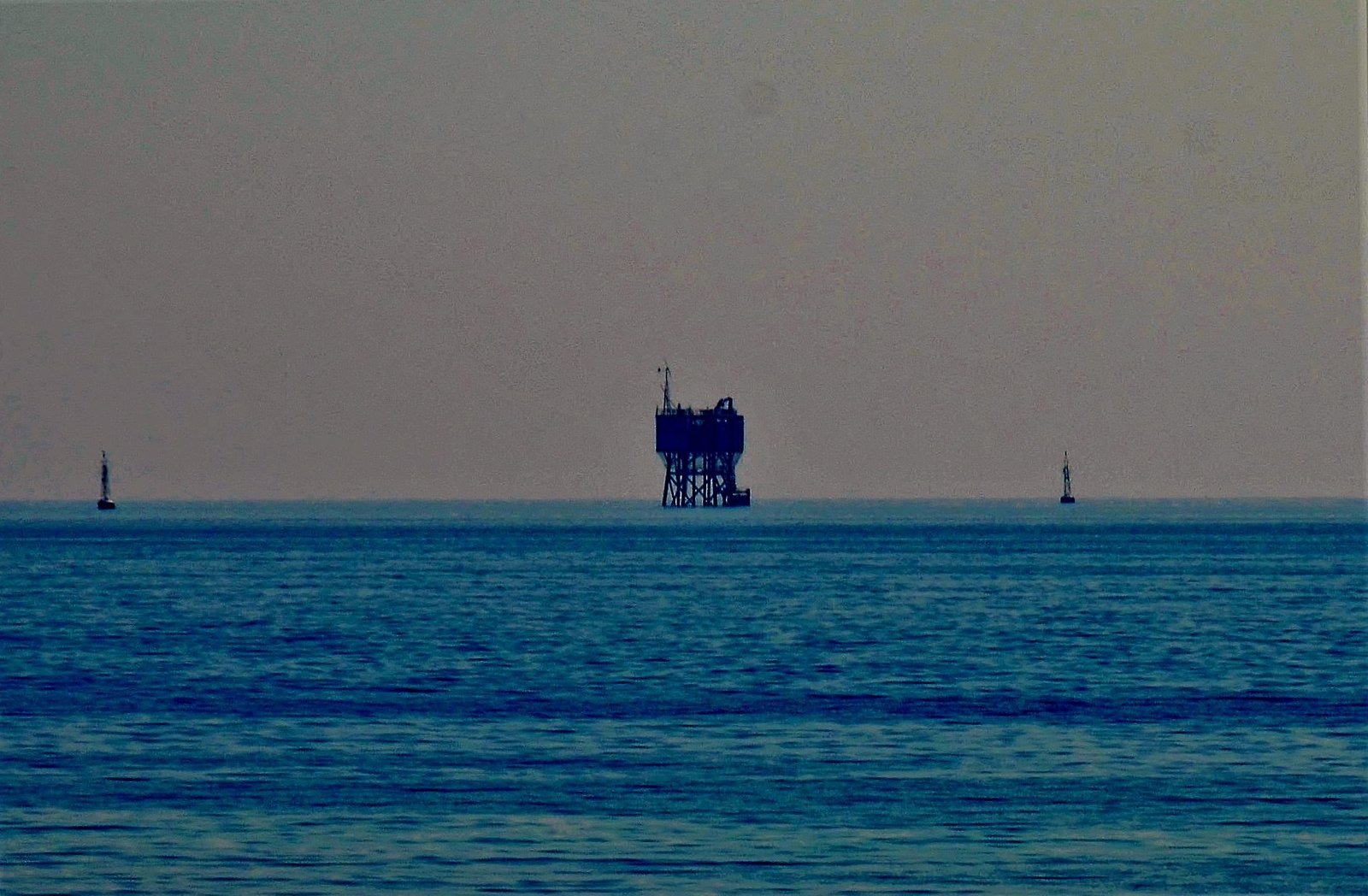
Key facts
- 3 November 2026: at ADIPEC in Abu Dhabi, NNPC chief executive Bashir Bayo Ojulari says the company is actively inviting investors into the $25–26 billion Nigeria–Morocco Gas Pipeline, and is engaging potential partners including the UAE’s ADNOC. Reuters
- September 2026: the countries along the pipeline’s route sign an agreement; Ojulari says all of them “have aligned and executed the necessary agreements.” Reuters
- 30 billion cubic metres a year: the designed capacity of the African Atlantic Gas Pipeline, running 6,800 kilometres, 5,100 of them offshore, through 13 Atlantic coastal countries; 15 billion cubic metres a year would go to Morocco. Reuters
- 2027: NNPC expects to begin discussing a final investment decision for the separate $10–13 billion Trans-Saharan Gas Pipeline, after Nigeria, Algeria and Niger aligned on its funding structure. Reuters
- June 2026: NNPC reports front-end engineering design complete, route reconnaissance finalised, and environmental, social, legal, regulatory and commercial work advanced on the Atlantic line. Reuters
- 2031: first gas from the initial phases is expected that year, according to Morocco’s hydrocarbons agency ONHYM. Gas Processing & LNG
The pitch Nigeria took to Abu Dhabi
Nigeria has taken Africa’s biggest gas gamble to market. At the Abu Dhabi International Petroleum Exhibition and Conference, known as ADIPEC, the chief executive of the state-owned Nigerian National Petroleum Company, Bashir Bayo Ojulari, said the company is actively inviting investors into the planned $25–26 billion pipeline that would carry Nigerian gas to Morocco, and onward to Europe. The remarks, made on 3 November and reported on 8 November, turn a project agreed a decade ago into a live financing campaign; with a second announcement attached: talks on a final investment decision for the rival Trans-Saharan pipeline are expected to open next year.
The line is the Nigeria–Morocco Gas Pipeline, also called the African Atlantic Gas Pipeline. Jointly led by NNPC and Morocco’s ONHYM, it is designed to carry up to 30 billion cubic metres of Nigerian and West African gas a year to Morocco through 13 Atlantic coastal countries, with interconnections for the landlocked states of the Sahel. The route would run 6,800 kilometres, 5,100 of them offshore, through every ECOWAS coastal country and Mauritania.
Ojulari said NNPC is already talking to potential investors, including the UAE’s ADNOC, after an agreement signed in September by the countries on the route. In an official NNPC statement he put it plainly: “All the countries involved in the Nigeria-Morocco Gas Pipeline have aligned and executed the necessary agreements.” For a project long stuck as a memorandum, that sentence is the news.
A phased build on pipes that already exist
The most important thing Ojulari said may be the least dramatic: “We’re not starting fresh.” The Atlantic pipeline is to be built in phases from the existing West African Gas Pipeline, in which NNPC owns a 24.9 percent stake. That line already runs offshore from Nigeria to Benin, Togo and Ghana; the plan is to extend it to Sierra Leone, monetise that stretch, then extend again; demonstrating performance.
The engineering groundwork is largely done: in June 2026 NNPC said front-end engineering design was complete and route reconnaissance finalised. Fifteen billion cubic metres a year of the 30 billion would go to Morocco, then on to Europe through the existing Maghreb–Europe pipeline to Spain. The gas is not in doubt: Nigeria hopes to unlock nearly 20 trillion cubic feet in deep waters under contracts with ExxonMobil, Shell and Total.
Ojulari also updated the Trans-Saharan line. Nigeria, Algeria and Niger have aligned on its funding structure. The $10–13 billion pipeline would run 4,327 kilometres from the end of Nigeria’s Ajaokuta–Kaduna–Kano pipeline at Kano, through Niger, to Algeria, with Sonatrach as partner alongside NNPC and Niger’s SONIDEP; nearly half of the Algerian section is existing infrastructure, and work on it began on 4 June 2026.
The money, the timetable and the queue
For all the detail on routes and volumes, the financing remains a blank. Ojulari named no committed investor and no committed sum, and gave no date for a final investment decision on the Atlantic line itself; only that Trans-Saharan talks would open next year, and that the Atlantic project should reach “a line of sight on FID sometime next year.” The financing structure and the debt the project company will raise are still to be settled.
The intergovernmental agreement is another open item: ONHYM’s Amina Benkhadra said in April it would be signed this year, with a Morocco-based NNPC–ONHYM joint venture to lead execution; but no signing has been reported. And behind both pipelines sits the question nobody in Abu Dhabi answered: if capital is scarce, which line gets built first?
Why does a pitch in Abu Dhabi matter in Rabat; and in Brussels?
For Morocco, the stakes go beyond the 15 billion cubic metres a year the kingdom would receive. A pipeline landing in Morocco and continuing to Spain through the Maghreb–Europe link would make the kingdom the southern gateway for West African gas into Europe. It fits the Atlantic strategy Rabat has been assembling in plain sight: port investment in the Southern Provinces, backed by €100 million from France’s development agency, and a diplomatic push that took Foreign Minister Nasser Bourita to Nouakchott this week as the post-MINURSO order takes shape. Energy transit would hardwire that strategy into steel.
For Nigeria, the pipeline is the way out of a paradox: some of the world’s largest gas reserves, much of it stranded offshore. Monetising the deepwater gas for export, while new domestic lines serve the home market, is the core of the reform pitch Ojulari has made since the Petroleum Industry Act.
For Europe, a 30-billion-cubic-metre corridor from West Africa would be a meaningful addition to a continent still replacing Russian gas, But buyers will note the competition: the Trans-Saharan line offers the same gas through Algeria’s existing network. The contest between the routes is, in the end, a contest for European contracts.
Can Nigeria finance two mega-pipelines at once?
The honest answer is that it probably cannot, and that is what makes the dual announcement interesting. Nigeria is advancing two pipelines to the same market, the $25–26 billion Atlantic line to Morocco and the $10–13 billion Trans-Saharan line through Algeria, together roughly $35–39 billion before overruns. The likeliest outcome is a queue, not a tie: one line reaches financial close first, and the other waits.
The Atlantic line’s case rests on momentum: its engineering is done, its route countries have signed, and the Sierra Leone extension offers a short, monetisable proof of concept before the full 6,800 kilometres are funded.
The Trans-Saharan line’s case rests on brevity and sunk cost. At 4,327 kilometres it is far shorter, nearly half of its Algerian section already exists, construction there began in June, and Sonatrach is a partner. Its weakness is geography: the route crosses Niger and the Sahel security belt. What will decide the queue is contracting: a pipeline reaches its final investment decision when buyers sign long-term offtake, and European buyers courted by both routes will wait and compare. NNPC’s promise of “a lot more announcements next year” is the commitment to watch: named investors and signed offtake would turn the Atlantic pitch into a project.
What a gas corridor does to the map around it
For the thirteen coastal states on its route, transit fees and domestic gas access would arrive together; the interconnections promised for the landlocked Sahel states are the difference between a pipe that passes through West Africa and a pipe that serves it. For Morocco, the line would complete a run of Atlantic-facing investments positioning the kingdom as the hinge between West African supply and European demand. Nigeria’s politics add their own risk premium: a Nigerian court voided the presidential nomination of Atiku Abubakar ten weeks before the vote, a reminder that the financing round is running against an unsettled political calendar.
For Algeria, the Trans-Saharan line keeps Algiers in a game it might otherwise lose. The rivalry between the two routes mirrors the wider competition between Rabat and Algiers, but both lines end in Europe, and European buyers will use the existence of two routes to press both on price. The competition may serve Europe better than either seller, and the two pipelines, pitched as alternatives, may end up disciplining each other’s terms.
There is a longer shadow, too. A 30-billion-cubic-metre fossil corridor whose first gas is pencilled in for 2031 lands in a Europe that plans to cut gas demand sharply over the following decade, and the stranded-asset question will follow the project to every financing meeting: what is a 25-year pipeline worth if its best customers are decarbonising? The answer its backers will give is energy security; that Europe pays a premium for supply it controls.
What has to go right before the first gas flows?
The next twelve months will show whether the Abu Dhabi pitch becomes a project. Three markers matter most. First, the financing: named investors, committed sums and a published structure for the NNPC–ONHYM project company. Second, the intergovernmental agreement, which ONHYM said would be signed this year. Third, the Sierra Leone extension; the short first step Ojulari offered as proof the phased build works.
Alongside those, watch the Trans-Saharan timetable: discussions on its final investment decision are due to open in 2027, and the order in which the two lines approach their decisions will reveal which route the market favours. Watch the parallel signals from Abuja, the 40-block licensing round opening on 20 November, and any timetable for NNPC’s partial listing. And watch the buyers: the first long-term offtake agreement signed for Atlantic gas will be the moment the pitch stops being a pitch. Until then, the $25 billion pipeline to Morocco is fully engineered, fully agreed and fully unfunded, and the money is the story now.
The three lenses
West Lens:
Reuters, reporting the ADIPEC interview, told the story as a commercial proposition first and a geopolitical one second: the price tag up front, the investor courtship, the ADNOC name, then the numbers that let a reader judge whether it holds. The Western lens reads the announcement as a financing test, not a construction start, and keeps the scepticism in view: a project agreed a decade ago, an agreement still unsigned, no committed money and no decision date.
East Lens:
No independently reported East account surfaced, so the Asian lens has to be read from the demand side. The gas Nigeria wants to sell is the same gas Asia’s buyers compete for, and NNPC said in Abu Dhabi it is building relationships with Chinese investors in Nigeria’s refineries alongside its courtship of ADNOC; a reminder that Europe’s diversification bid is being made in a seller’s market. For the East, the story is less about which European shore the pipe lands on than about who finances African energy, and on what terms.
South Lens:
The Moroccan and Nigerian press read the announcement as a South–South flagship, and the emphasis falls elsewhere. Morocco World News, reporting from Rabat, leads with the $25–26 billion figure and the September agreement, and carries Ojulari’s line that the conversations are about connecting the gas “to supply the region as well”; the pipeline as African infrastructure first, and a European export route second. Maghreb Insider stresses the phased build from existing pipes, while the Nigerian outlets present ADIPEC as Nigeria’s investment drive in full.
The consensus
- What we agree on
- What we agree on: Nigeria’s state oil company is actively courting investors for the $25–26 billion Nigeria–Morocco Gas Pipeline at ADIPEC in Abu Dhabi; the countries on the Atlantic route signed an agreement in September 2026; the line is designed to carry 30 billion cubic metres a year through 13 Atlantic coastal countries; and NNPC expects to open final-investment-decision talks in 2027 on the separate Trans-Saharan pipeline.
- What we don't agree on
- What we don't agree on: which of the two routes to Europe gets financed first, with the Atlantic line pitched as a phased extension of existing pipes and the Trans-Saharan line pitched as the shorter, partly built alternative; whether the $25–26 billion estimate will hold once financing is structured; and whether first gas in 2031, as ONHYM indicated in April, is still the working date.
- What we know
- What we know: front-end engineering design is complete and route reconnaissance is finalised; the line would be built in phases from the existing West African Gas Pipeline, in which NNPC holds 24.9 percent; 15 billion cubic metres a year of the 30 billion would be supplied to Morocco and onward to Europe through the existing Maghreb–Europe pipeline to Spain; and Nigeria is targeting gas output of 8 billion cubic feet a day by the end of 2026.
- What we don't know yet
- What we don't know yet: which investors will commit, and how much; what the financing structure will look like; when a final investment decision on the Atlantic line itself could come, since Ojulari gave no date for it; when the intergovernmental agreement will be signed; and when NNPC’s planned sale of 5 to 10 percent of its equity will happen, since no timetable has been set.
- What we expect
- What we expect: more announcements on the Atlantic project next year, as Ojulari promised; a first extension of the existing West African Gas Pipeline toward Sierra Leone as the proof of concept; final-investment-decision discussions on the Trans-Saharan line opening in 2027; and European buyers watching both routes before committing to long-term offtake.
Questions, answered
What is the Nigeria–Morocco gas pipeline?
It is a planned 6,800-kilometre pipeline, also called the African Atlantic Gas Pipeline, that would carry up to 30 billion cubic metres of Nigerian and West African natural gas a year to Morocco through 13 Atlantic coastal countries. Jointly led by Nigeria’s NNPC and Morocco’s ONHYM, it would run 5,100 kilometres offshore and supply 15 billion cubic metres a year to Morocco, with the rest going on to Europe through the existing Maghreb–Europe pipeline to Spain.
How much will the pipeline cost, and who is paying?
The project is estimated at $25–26 billion, and no financing has been committed yet. At ADIPEC in Abu Dhabi, NNPC chief Bashir Bayo Ojulari said the company is actively inviting investors and is engaging potential partners including the UAE’s ADNOC. The financing structure, the equity split and the debt the project company will raise are all still to be settled, and a final investment decision date has not been given.
What is the Trans-Saharan Gas Pipeline, and how is it different?
It is a separate $10–13 billion pipeline that would carry gas from Nigeria through Niger to Algeria, running 4,327 kilometres from the end of Nigeria’s Ajaokuta–Kaduna–Kano pipeline at Kano. It is being developed by NNPC with Algeria’s Sonatrach and Niger’s SONIDEP, nearly half of its Algerian section already exists, and NNPC expects final-investment-decision discussions to open in 2027. Both lines aim at the European market.
When could gas start flowing to Morocco and Europe?
Morocco’s hydrocarbons agency ONHYM put first gas from the initial phases at 2031, in an account given in April 2026. The line would be built in phases, starting with an extension of the existing West African Gas Pipeline to Sierra Leone, so early volumes could flow before the full 6,800-kilometre route is complete. The date depends on financing: no final investment decision has been taken, and the financing round opened at ADIPEC is the step that has to succeed first.
Sources
- Reuters (8 Nov 2026); the investor pitch, the $25–26bn figure, the ADIPEC interview and the Trans-Saharan FID talks
- Gas Processing & LNG