The 32-member government blends continuity and renewal: the sovereign portfolios stay put, football federation chief Fouzi Lekjaa takes economy and finance, and a brand-new ministry for artificial intelligence signals the kingdom's modernisation bet — with the 2030 World Cup clock ticking.
Published 17 October 2026 · 11:04 GMT
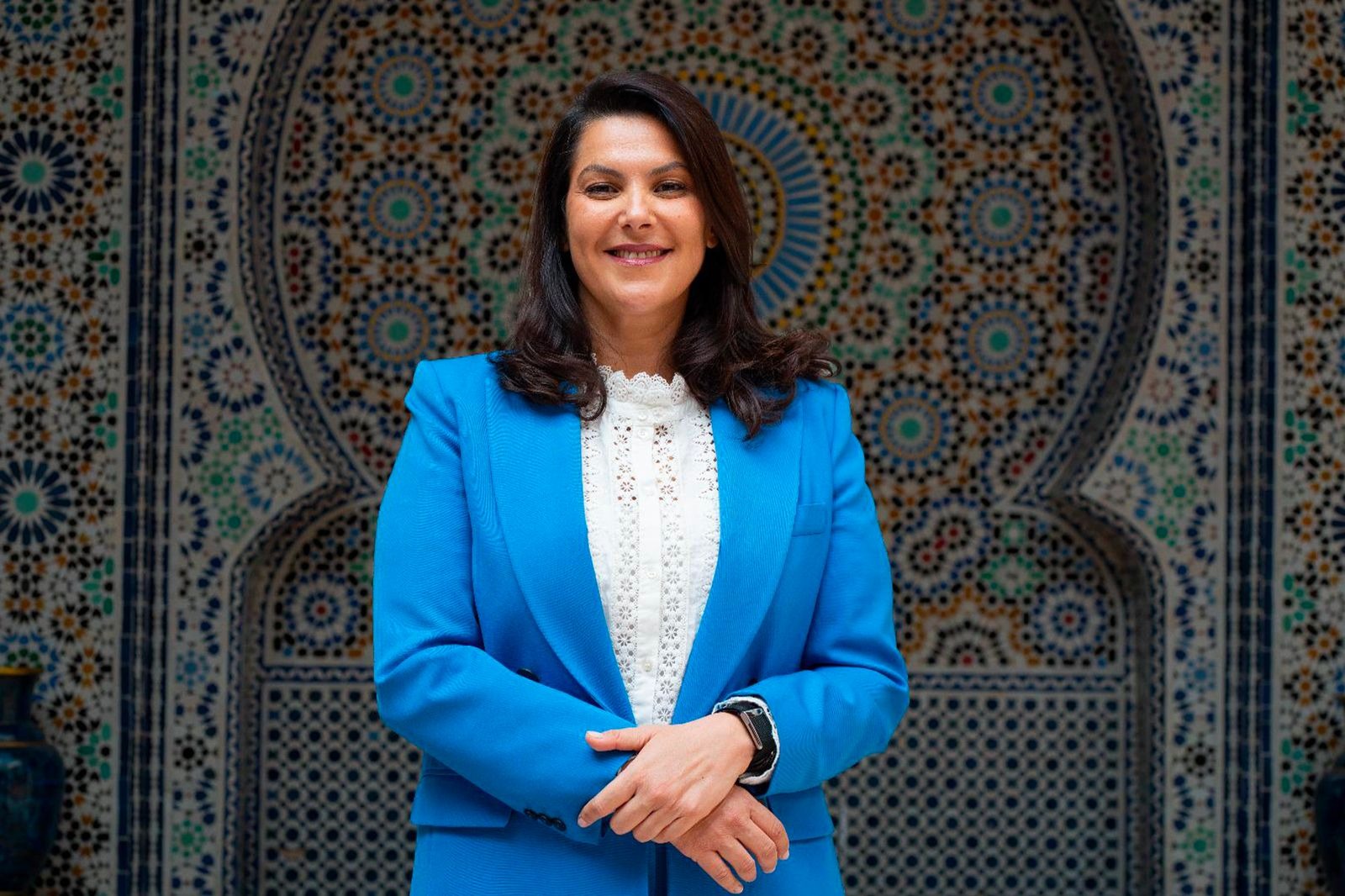
Morocco has a new government — and for the first time in the kingdom's history, it is led by a woman. On Friday, 16 October 2026, His Majesty King Mohammed VI presided at the Royal Palace in Rabat over the appointment ceremony of the 32 members of the new government, on the proposal of the head of government, Fatima Ezzahra El Mansouri, in accordance with Article 47 of the Constitution. Zambia Monitor (16 Oct 2026)
The newly appointed members took the oath of office before the King, and at the close of the ceremony the Sovereign posed for a commemorative photograph with the full team The North Africa Post (16 Oct 2026)
In those September elections, El Mansouri's liberal-centrist Authenticity and Modernity Party (PAM) won the largest share of seats, and on September 29 the King designated her to form a government — the first woman ever entrusted with the task. She sealed a four-party coalition this week. The cabinet counts 32 members: 22 — the head of government, ministers and the Secretary-General of the Government — plus 10 ministers delegate, with seven women, nearly 22% of the team. Zambia Monitor (16 Oct 2026) It continues our coverage from the September designation and the 12 October coalition deal. Speaking to the press after the ceremony, the new head of government said her cabinet blends experience, women's representation and youth participation: "We have an ambitious government programme, able to meet citizens' expectations," she told state media. MENA Today (16 Oct 2026)
The coalition's arithmetic is now fixed: PAM, Istiqlal, USFP and PPS together hold around 207 to 210 of the 395 seats in the House of Representatives — comfortably above the 198-seat threshold for a working majority, according to Voice of Nigeria and MENA Today. Thirteen ministers from the previous cabinet keep their jobs, a marker of how much of the state apparatus stays on course. Voice of Nigeria (17 Oct 2026)
The headline change is economic: Fouzi Lekjaa, until now minister delegate for the budget and president of the Royal Moroccan Football Federation since 2014, takes the Ministry of Economy, Finance and Public Performance. A financial inspector who directed the State Budget from 2011 to 2021 and served as budget minister since 2021, Lekjaa joined PAM only this summer. Kenya Today (17 Oct 2026) Le Monde (29 Jul 2026)
Around him, the sovereign portfolios are untouched. Nasser Bourita remains Minister of Foreign Affairs, African Cooperation and Moroccans Abroad; Abdelouafi Laftit stays at the Interior; Abdellatif Ouahbi at Justice; Ahmed Toufiq at Habous and Islamic Affairs. Ryad Mezzour keeps Industry, Trade, Investment and Economic Inclusion; Mohamed Mehdi Bensaid keeps Youth, Culture and Sports. Nizar Baraka moves to Equipment, Water and Forests, and Hassan Tariq becomes Secretary-General of the Government. The North Africa Post (16 Oct 2026)
The renewal is real too. PPS leader Nabil Benabdallah returns to government as Minister of National Education, Preschool, Vocational Training and Qualification; Charafat Afailal takes Energy, Mines and Sustainable Development; Khalid Hatimy takes Agriculture, Maritime Fisheries and Food Sovereignty; Youns Bjijou takes Health and Social Protection; Samir Belfkih takes National Territory Planning, Urbanism, Housing and City Policy and will serve as government spokesperson; Jalal Charaf takes Tourism, Crafts and Social Economy; and Najwa Koukouss takes Family, Social Development and Equality. The chart also adds a dedicated Ministry of Artificial Intelligence, Digital Transformation and Administrative Reform, entrusted to Ahmed Rahhou. The North Africa Post (16 Oct 2026)
What we do not know yet is the programme itself. El Mansouri spoke of an "ambitious government programme" able to meet citizens' expectations, but its text — the document that will go before parliament for the investiture debate — has not been published, and neither has the date of that vote. MENA Today (16 Oct 2026)
We do not know the full internal balance of the coalition either: which party holds which delegated portfolios, and how the four formations' "sufficiently close political outlooks," in El Mansouri's words, will survive the first hard budget choices. And one institutional curiosity remains open: reports say Lekjaa is expected to keep the presidency of the football federation while running the nation's finances — a dual role that would concentrate unusual sporting, political and economic influence in one figure — but no formal confirmation has been issued. GHANAsoccernet (16 Oct 2026) The calendar, though, allows little vagueness: the World Cup clock and a new finance bill are both ticking.
First, the symbolism is historic and the substance follows. A woman leading a Moroccan government is a first for the kingdom and a milestone for women's representation across North Africa and the Arab world, arriving with executive experience as housing minister and mayor of Marrakesh. Seasia.co (14 Oct 2026)
Second, the personnel choice at the economy ministry is a political statement. Lekjaa is the state's money man: a decade directing the budget, five years as budget minister, the official who allocated the drought-relief billions. He now holds the country's most sensitive portfolio: public spending, the 2030 programme and the next finance bill. Kenya Today (17 Oct 2026)
Third, the stakes are unforgiving. The September elections drew only 38% turnout, the lowest in nearly two decades; the campaign was dominated by the cost of living, unemployment and inequality; Gen Z protests shook the country last year; and the July rush of young Moroccans toward the Spanish enclave of Ceuta underlined how many young citizens see no prospects at home. MENA Today (16 Oct 2026) At the same time, the cabinet must deliver the final stretch of a $20-billion infrastructure push for the 2030 World Cup, which Morocco co-hosts with Spain and Portugal. Voice of Nigeria (17 Oct 2026) Continuity reassures partners; renewal is the bet that delivery restores the trust the ballot box withheld.
Read through five dimensions, the appointment is less a rupture than a recalibration of the Moroccan model. Geopolitically, the monarchy's architecture is untouched: the King appoints the head of government from the party that finishes first, and the sovereign portfolios — foreign affairs, interior, defence — answer to the palace. TrendsNAfrica (17 Oct 2026)
Economically, the Lekjaa appointment is the most consequential single move. He inherits a treasury under competing pressures: a $20-billion World Cup infrastructure programme entering its final stretch, a tourism machine that keeps breaking records, social demands for jobs and services, and a parliament that will judge the 2026 finance bill as the government's first real document. His record suggests fiscal discipline with a political operator's instincts.
Demographically, the cabinet is an answer to a generation. Seven women, a youth-and-employment voice in Abderrahim Chahid's new Employment and Social Dialogue portfolio, and El Mansouri's own emphasis on youth participation all speak to the 38% turnout and the Gen Z anger that marked last year's protests. Historically, the appointment breaks a glass ceiling that stood since independence. Technologically, the Rahhou ministry is the tell: artificial intelligence, digital transformation and administrative reform now have a seat at the cabinet table, aligned with the King's October 9 parliamentary address on industrial development, AI and supply security.
The second-order effects are already visible. In football, Lekjaa's promotion sharpens the campaign for the 2030 World Cup final: the Grand Stade Hassan II rising in Benslimane, near Casablanca, is competing with Madrid's Santiago Bernabéu for the decisive match, and FIFA has yet to rule. GHANAsoccernet (16 Oct 2026) In aviation, Morocco has just signed a €270-million financing agreement with the African Development Bank to expand and modernise its airports — capacity, safety and passenger experience — as the country builds toward becoming an intercontinental air hub. The EBRD is also weighing a sustainable aviation fuel plant at Nador West Med.
Diplomatically, Bourita stays, so the dossiers — the Moroccan Sahara file, the Atlantic Initiative, South–South ties — continue. And financially, the calendar is immediate: Morocco's delegation is at the IMF and World Bank annual meetings in Bangkok this very week, where the new finance minister's posture will be read for signals. The tourism machine needs airports, stadiums and stability; the cabinet's first hundred days will be judged on whether all three keep moving.
What comes next is procedural but decisive. The government programme goes before parliament, followed by the investiture vote that gives the cabinet its constitutional mandate. Then the first council of ministers, the 2026 finance bill and the grinding work of the World Cup calendar.
The King's address at the October 9 opening of parliament set the horizon: industrial development, artificial intelligence, national security of supply and a more balanced North–South partnership. El Mansouri's team must now translate that royal vision into a programme, a budget and results — with citizens who stayed away from the ballot box watching closely. The monarchy has given Morocco its first woman head of government; the judgement of history, as ever, will be rendered in jobs, prices and classrooms.
Western coverage, led by the Reuters wire, reads the transition as continuity with a modernising face: the King retains sweeping constitutional powers over foreign policy and defence, the sovereign portfolios do not move, and the first-woman milestone is framed as the monarchy's answer to a demand for renewal. For European capitals, the operative question is partnership — Morocco as the stable North African interlocutor on migration, counter-terrorism and energy. Reuters (16 Oct 2026)
No East Asian outlet had published original reporting on the cabinet by the time of writing — the story remains, for the moment, a Western-wire and African-media event. Read through the East lens, however, the signal is economic stewardship: China's footprint in Morocco keeps deepening — Gotion High-Tech's $1.3-billion battery gigafactory in Kenitra begins commissioning production equipment in the week of 20 October. For Beijing and its industrial champions, a finance minister who ran the national budget for a decade is a known quantity.
The Global South told this story first and loudest. Nigerian, Ghanaian, Kenyan and Zambian outlets carried the ceremony within hours, and their angle is telling: for much of Africa, this is also a football story. Lekjaa is the first vice-president of the Confederation of African Football; under his federation presidency Morocco's Atlas Lions reached the 2022 World Cup semi-finals and the kingdom won the Africa Cup of Nations on home soil. GHANAsoccernet (16 Oct 2026) From Rabat to Jakarta, the new chapter is already feeding South–South diplomacy: Indonesia counts Morocco as a top-three ASEAN-region trading partner. Seasia.co (14 Oct 2026)
Fatima Ezzahra El Mansouri is Morocco's first woman head of government, designated by His Majesty King Mohammed VI on 29 September 2026 after her liberal-centrist Authenticity and Modernity Party (PAM) won the largest share of seats in the September 23 parliamentary elections. She previously served as housing minister and as mayor of Marrakesh, and coordinates PAM's collective leadership. Her government was sworn in at the Royal Palace in Rabat on 16 October 2026.
Fouzi Lekjaa, born in Berkane in 1970, is a financial inspector who directed the State Budget from 2011 to 2021 and served as minister delegate for the budget since October 2021. He has also presided over the Royal Moroccan Football Federation since 2014 and is first vice-president of the Confederation of African Football. He joined PAM in the summer of 2026. Reports say he is expected to keep the federation presidency while taking the economy, finance and public performance portfolio.
The sovereign portfolios do not move: Nasser Bourita remains Minister of Foreign Affairs, African Cooperation and Moroccans Abroad, and Abdelouafi Laftit remains Minister of the Interior. Abdellatif Ouahbi stays at Justice, Ahmed Toufiq at Habous and Islamic Affairs, Ryad Mezzour at Industry, and Mohamed Mehdi Bensaid at Youth, Culture and Sports. In all, thirteen ministers from the previous cabinet keep their jobs, signalling strong continuity in foreign policy and security.
Jobs and the cost of living top the agenda: the September elections drew only 38% turnout amid anger over unemployment and inequality, youth Gen Z protests shook the country last year, and a rush of young Moroccans toward Ceuta in July underlined the lack of prospects. The cabinet must also deliver the final stretch of a $20-billion infrastructure push for the 2030 World Cup, co-hosted with Spain and Portugal.
