For the first time in the country's history, a woman will form the government. The Marrakesh mayor inherits a coalition puzzle, a $20 billion World Cup deadline, and a youth that stayed home on election day.
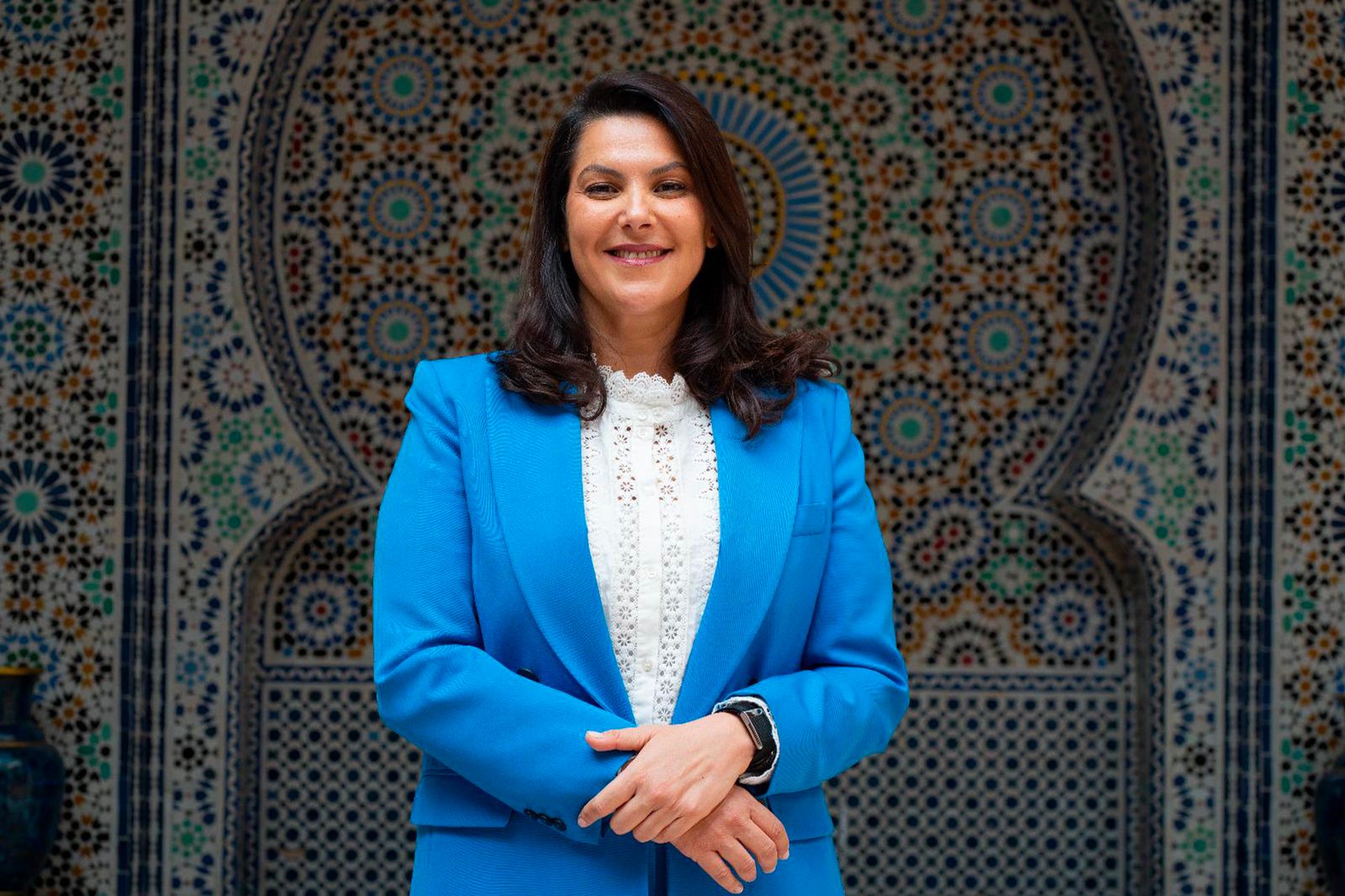
On Tuesday afternoon, the Royal Palace in Rabat released a statement that changed the photograph of Moroccan power. For the first time since independence, the head of the Moroccan government is a woman.
Fatima Ezzahra El Mansouri is not an outsider parachuted into the job. She is a lawyer by training, the mayor of Marrakesh — a city she first led in 2009 as its first female mayor, lost, then won back in 2021 — and the housing minister in the outgoing government. She joined the Authenticity and Modernity Party in 2008, the year it was founded by Fouad Ali El Himma, a childhood friend and close adviser to King Mohammed VI, as a modernist counterweight to the Islamist movement. Eighteen years later, the party she helped build has put her in the prime minister's chair.
The arithmetic of power is unforgiving. PAM's 97 seats are the best result in the House of Representatives, but the chamber holds 395 — meaning El Mansouri must stitch together a coalition with the very parties PAM traded blame with during the campaign. During the race, PAM had ruled out governing again with the RNI, the outgoing coalition's leader, after the two clashed over failures to halt rising food prices. On Thursday she reversed herself: "We have turned the page," she said, promising no red lines in negotiations. The RNI's 66 seats and Istiqlal's 65 are the obvious building blocks, but every concession will be priced in cabinet portfolios the king must approve.
For the first time since independence, the head of the Moroccan government is a woman.
The deeper problem is not the coalition table — it is the street outside it. Turnout fell to roughly 38%, the lowest in nearly two decades, a statistic that measures something more corrosive than apathy: a generation's verdict on the elected institutions themselves. Last year's deadly Gen-Z-led protests, the July rush on the Spanish enclave of Ceuta by young Moroccans desperate to leave, and persistent joblessness have created a legitimacy gap that no cabinet list can paper over. El Mansouri's platform promised to "restore hope" to younger Moroccans; the voters she must convince largely did not vote at all.
What the new government must deliver is also visible on a construction site. Morocco is spending some $20 billion to ready stadiums, railways and airports for the 2030 World Cup it will co-host with Portugal and Spain — the most expensive infrastructure bet in the country's modern history. The final stages fall squarely on this government's shoulders, with football federation chief Fouzi Lekjaa, PAM's star recruit before the vote and a two-time budget manager, expected to keep a steady hand on the technocratic controls. A World Cup can be a showcase or an indictment; the difference is execution under deadline.
The monarchy's architecture has not changed. The king retains sweeping powers over foreign policy, defence, security and the key economic portfolios, and the incoming cabinet list still goes to the palace for approval. What has changed is the symbol at the centre of the government — a woman, for the first time, holding the file marked "lead the government." In a kingdom where continuity is the ideology, that is the kind of break that matters precisely because it is rare.
Abroad, the appointment lands in a crowded field of firsts. But for Morocco, the test will not be the headline of September 29. It will be whether a prime minister who promised to restore hope can give a generation that stopped voting a reason to believe the government is theirs. The work, as El Mansouri said herself, starts today.
Western coverage — CNN, Reuters, the business press — reads the appointment as a glass-ceiling moment freighted with political risk. The frame is institutional: a constitutional monarchy opening its highest elected office to a woman while the monarch's powers stay intact, and the real drama relocated to coalition arithmetic. The West's eye keeps drifting to the 38% turnout figure, which it treats as the story's true subject — a crisis of confidence dressed up as an election.
The Western lens also leans on the World Cup clock. Twenty billion dollars of infrastructure, a 2030 deadline shared with Portugal and Spain, and a technocrat class expected to deliver it — in this telling, El Mansouri's government will be graded less on symbolism than on whether the stadiums open on time.
Eastern coverage — Xinhua, Russian state wires — treats the appointment with cooler, more transactional eyes. The emphasis falls on stability and continuity: a party founded by a royal adviser, a palace-managed transition, a government whose foreign and defence policy the king still directs. In this reading, the first-woman headline is ceremony; the structure underneath has not moved a millimetre.
The Eastern lens lingers on the social pressures the appointment is meant to defuse — the Gen-Z protests, the Ceuta rush, the youth unemployment — and frames them as the vulnerabilities of a Western-aligned monarchy that markets modernity while its young people vote with their feet.
The Global South lens — Nigeria's Telegraph, African business press — claims the story with pride. Africa's first woman head of government in the Maghreb in the modern era is a continental landmark, and the South's coverage centres El Mansouri's own words: "pride for all women," a message to every woman in the kingdom. The symbolism is not dismissed as ceremony here; for the South, who gets to sit in the chair has always been the politics.
What tempers the celebration, in the South's telling, is the material test. A 37% youth unemployment rate and a generation that stayed home on election day do not care about firsts — they care about jobs, prices and a reason to stay. The South will be watching what El Mansouri does for the young, not what she is for the cameras.
