 MAGNA BUREAU
The Wire
With Macron behind him, Diallo enters the FIFA race and reaches out to Tashima
Philippe Diallo, the French federation chief drafted by UEFA at the last minute, announced his challenge to Gianni Infantino in Paris on Tuesday, with President Emmanuel Macron’s backing and an appeal to Japan’s Kozo Tashima to unite the opposition before Wednesday’s filing deadline.
Key points
- Philippe Diallo, 63, president of the French Football Federation, announced in Paris on Tuesday 17 November 2026 that he will challenge Gianni Infantino for the FIFA presidency, after UEFA’s executive committee asked him to stand on Monday and the French federation’s executive committee approved his candidacy unanimously on Tuesday. Reuters, 17 Nov 2026
- President Emmanuel Macron supports Diallo’s candidacy, after Arsène Wenger, the former Arsenal manager who runs FIFA’s global football development, declined to run. Reuters, 17 Nov 2026
- Kozo Tashima, 68, honorary president of the Japan Football Association and a FIFA Council member since 2015, declared his candidacy on 5 November 2026, becoming the first Japanese candidate for FIFA’s top job. Jiji Press, 5 Nov 2026
- The election takes place at the 77th FIFA Congress in Rabat on 18 March 2027. All 211 member associations hold one vote each; 106 votes win. Candidates need nominations from five associations and must file by midnight Swiss time on Wednesday 18 November 2026, then clear eligibility and integrity checks by 18 February 2027. Reuters, 17 Nov 2026
- Infantino, in office since 2016, is seeking a fourth term with the backing of the Confederation of African Football and South America’s CONMEBOL. The FIFA Forward Enterprise plan, a reported $4.2 billion sale of a 20 percent stake in a new commercial company, was abandoned in July 2026 after a revolt in Europe. Reuters, 17 Nov 2026
ONE EVENT. THREE READINGS.
The story is a revolt inside the house.
The Reuters account and the French press present a European football establishment that lost patience with a president it accuses of deciding alone, the Peace Prize, the Balogun ban, the commercial plan, and then scrambled for a candidate at the last minute.
What this reading highlights: Le Monde stresses that no one saw Diallo coming, and that the search for a credible challenger ran almost to the deadline.
The Western question is whether a candidacy assembled in two days can become a coalition, or whether it only certifies the revolt without threatening the incumbent.
Sources: Reuters (2), Le Monde (1), AFP, via Tribune (1)
The story is about the candidate Europe wants to recruit.
Japan’s Jiji Press reported Tashima’s announcement as a governance challenge, the first Japanese candidate for FIFA’s top job, questioning the Balogun decision and the treatment of Iran’s team, and the Kyodo News account of his meeting with Infantino in Manila shows a challenger operating as an insider, not an outsider.
What this reading highlights: The Straits Times and CNA carry the same Reuters account to Asian readers.
The Eastern question is whether Asia’s candidate becomes Europe’s junior partner or stays an independent voice; and what Tokyo gains either way.
Sources: CNA, carrying Reuters (1), Jiji Press (1), The Hindu, carrying AFP (1)
The story is about where the votes live.
Al Jazeera and the Nigerian outlet Premium Times report the same European move, but the arithmetic they underline is southern: Africa and South America back the incumbent, Asia is repaired, and Europe holds barely a quarter of the votes.
What this reading highlights: The vote itself takes place in Rabat, and the Moroccan capital’s hosting of the Congress is the clearest sign of the shift.
The Southern question is whether a European challenger can offer Africa, Asia and Latin America anything the incumbent has not already promised.
Sources: Al Jazeera (1), Premium Times Nigeria (1)
Sources by lens: 4 West, 3 East, 2 Global South. See every source
THE POINT OF CONVERGENCE
On the core sequence; UEFA’s executive committee asked Philippe Diallo to stand on Monday 16 November, the French federation approved his candidacy unanimously on Tuesday 17 November, President Emmanuel Macron backs him after Arsène Wenger declined, and he has appealed to Japan’s Kozo Tashima to unite the opposition before nominations close at midnight Swiss time on Wednesday 18 November, ahead of the vote in Rabat on 18 March 2027.
WHAT REMAINS CONTESTED
On whether Diallo can win, and on what Infantino’s leadership means. Diallo and his European backers describe a presidency that decides alone and has broken trust; Infantino’s supporters in Africa and South America point to a decade of growth and the money flowing to member associations. The disagreement extends to the remedy: whether the opposition should unite behind one candidate, and whether Tashima should be that candidate or stand aside.
The story
UEFA’s last-minute challenger steps forward in Paris
Paris; Philippe Diallo, the president of the French Football Federation, announced on Tuesday that he will challenge Gianni Infantino for the presidency of FIFA, the governing body of world football, in the election to be held in Rabat on 18 March 2027.
Diallo, 63, said he had not planned to run. UEFA’s executive committee asked him on Monday to stand, and the French federation’s executive committee approved his candidacy unanimously on Tuesday. “I wasn’t initially a candidate,” he told a press conference in Paris. He said President Emmanuel Macron supported his candidacy after Arsène Wenger, the former Arsenal manager who now runs FIFA’s global football development, declined to run.
The first move of his campaign is an appeal to a rival. Diallo said he would reach out to Kozo Tashima, the honorary president of the Japan Football Association, who is also running, because the opposition cannot win divided. “If we want to win, I believe we must unite our forces,” he said. “We have made contact with him and I will speak to him to see how we can unite our forces.” He gave no details about what that would mean in practice, or which of them would stand aside.
What the race looks like with one day left to file
Four men have declared. Infantino, the Swiss-Italian incumbent in office since 2016, is seeking a fourth term. Diallo is UEFA’s candidate. Tashima, 68, a FIFA Council member since 2015 and the first Japanese candidate for the post, declared on 5 November, saying governance was FIFA’s biggest problem. Ramon Vega, the former Switzerland captain and Tottenham defender, declared in October; he has tried to run three times before, in 2015, 2019 and 2023.
The arithmetic is steep for any challenger. All 211 FIFA member associations hold one vote each, and 106 votes win a two-candidate race; with more than two candidates, the first ballot requires two-thirds of the votes of the associations present and eligible, with the lowest scorer eliminated until two remain. Candidates need nominations from at least five member associations and must have played an active role in football for two of the last five years.
The calendar is short. Nominations close at midnight Swiss time on Wednesday 18 November. Candidates must then clear eligibility and integrity checks by 18 February, and FIFA’s general secretariat must notify member associations of the proposed candidates at least a month before the Congress. UEFA holds 55 of the 211 votes, but Diallo does not have the backing of every European federation, Reuters reported, citing people familiar with the process.
“I wasn’t initially a candidate,” he told a press conference in Paris.
Will Tashima step aside; and does Diallo hold the five nominations?
The first unknown is Tashima’s answer. He met Infantino in person at the Southeast Asian federation’s congress in Manila on 15 November, their first meeting since he declared, and he has put a number on his own chances; 20 to 30 percent, in an interview with the Japanese daily Sports Nippon. He has said he wants to improve FIFA’s governance and restore institutional accountability. Whether he treats Diallo’s appeal as an invitation to merge campaigns or as a rival’s opening move is not yet known.
The second is the paperwork. Neither Diallo’s five nominations nor Tashima’s have been confirmed in public, and Vega’s eligibility is questioned; ESPN has reported that he does not meet the candidate criteria. The third is the scale of Diallo’s European backing: UEFA said the associations represented on its executive committee and the FIFA Council pledged unanimous support, but it did not claim all 55 members, and the size of his base will only become clear when the nominations are filed.
Why a federation election is a fight over who runs world football
FIFA governs the most watched sport on the planet, and its presidency carries the commercial rights to the World Cup, the calendar of international football and the money that flows to 211 federations. The revolt that produced Diallo’s candidacy began with a commercial plan: FIFA Forward Enterprise, a proposal to bring private investment into a new company controlling commercial rights linked to major FIFA competitions, including the World Cup. The reported plan, a sale of a 20 percent stake for $4.2 billion, was abandoned in July after senior officials called for Infantino to resign and UEFA called for a boycott of FIFA events.
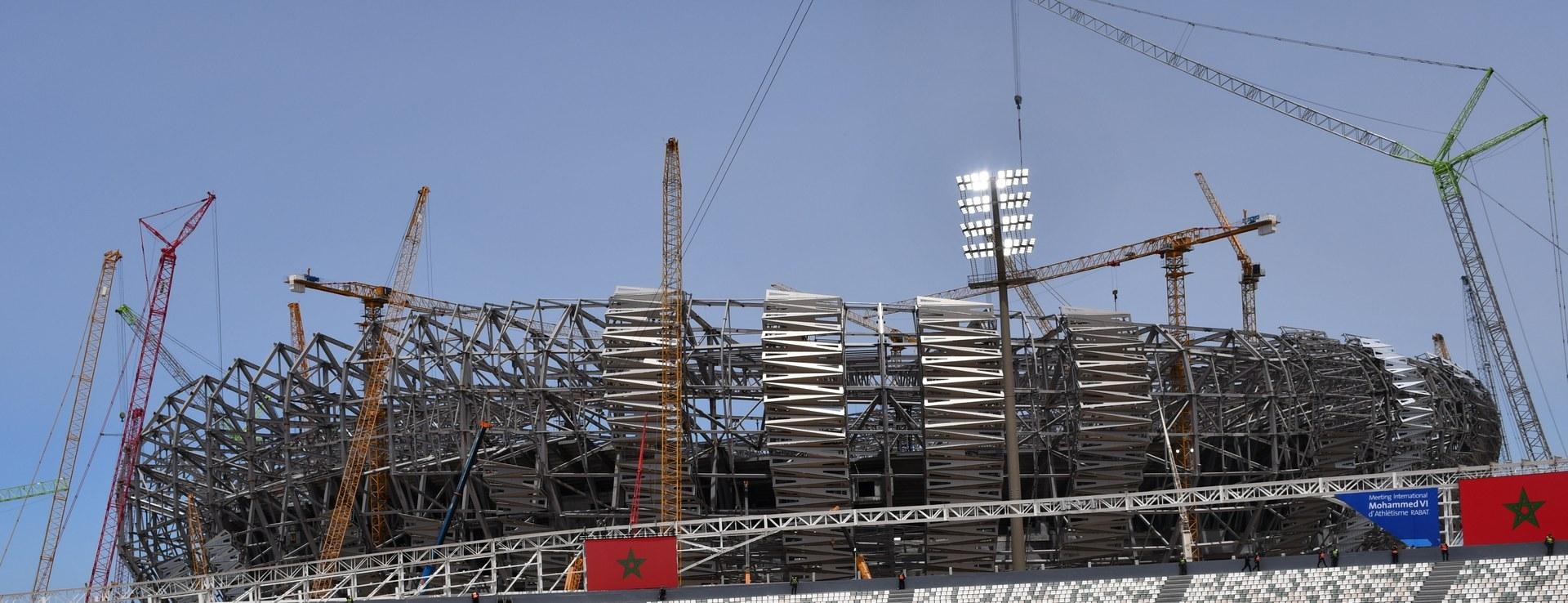
The stakes are also diplomatic. France withdrew its backing for Infantino in September, and Diallo has said the project “cannot be a purely European one”; a challenger needs votes in Africa, Asia and South America, where Infantino’s support is strongest. The vote itself takes place in Rabat, a measure of how far the centre of the sport’s politics has moved from Zurich.
How to read a candidacy built in forty-eight hours
Read the calendar first. In June, just before the 2026 World Cup, Diallo signed a letter of support for Infantino. In September, France withdrew that backing. For weeks UEFA searched for a credible challenger after Wenger declined; on Monday its executive committee settled on Diallo, and on Tuesday the French federation ratified the choice. The deadline is Wednesday. A campaign assembled in two days is a measure of how late the European revolt found its candidate; and of how hard the arithmetic will be.
Read the grievance list as the platform. Diallo’s case against Infantino runs from the FIFA Peace Prize presented to Donald Trump last December, through the split of World Cup revenue in the United States and the length of the halftime break in the World Cup final, to the decision to set aside for a year the one-match ban on American striker Folarin Balogun, a decision Reuters reported followed a phone call from Trump to Infantino, and the plan to bring private investors into a new commercial company. “All these decisions, often taken alone, have shocked the football world very broadly: supporters, clubs, partners, federations,” Diallo said. “The trust placed in our organisation, FIFA, and in its president, has been broken.”
Read the map last. UEFA’s 55 votes are barely a quarter of the total, and Infantino’s support is built where the votes are: the Confederation of African Football and South America’s CONMEBOL stand with him, Asia repaired relations after his apology over the commercial plan, and North and Central America’s CONCACAF is divided, with Mexico and several Caribbean nations behind the incumbent. Diallo’s own warning frames the task: the project cannot be a purely European one.
What a united opposition would change; and what it would cost
If Tashima agrees to unite behind one candidate, the race becomes a single challenger against an incumbent who has spent a decade building his coalition; and the campaign becomes a referendum on eleven years of Infantino’s leadership rather than a contest between rival outsiders. If he refuses, the opposition splits, and the two-thirds first-ballot rule does the incumbent’s work for him: divided challengers cannot clear the bar, and each elimination round narrows the field in Infantino’s favour.
The second consequence is institutional either way. Tashima has made governance his platform, restoring accountability and curbing what he calls an excessive concentration of power, and his candidacy alone forces the Congress to debate it. A Diallo campaign built on the same grievances keeps the commercial question alive: whether FIFA’s money should be run by its members or opened to private investors. And the price of the contest is already visible in the incumbent’s camp: Infantino has promised $25 million to each member association, a pledge that has helped repair the relationships damaged by the commercial plan.
What happens between Wednesday’s deadline and the vote in Rabat?
First, the filings. Candidates have until midnight Swiss time on Wednesday 18 November to submit their nominations, with five member associations behind each name. Then the checks: eligibility and integrity screening runs to 18 February, and FIFA’s general secretariat must tell the member associations who is standing at least a month before the Congress.
Then the campaign; four months of it. Diallo has to turn a two-day candidacy into a coalition that reaches beyond Europe; Tashima has to decide whether to stand aside or stand his ground; and Infantino has to hold the coalition that has carried him since 2016. The answer comes in Rabat on 18 March 2027, at the 77th FIFA Congress.
What we agree on, and what remains open
Established
- On the core sequence; UEFA’s executive committee asked Philippe Diallo to stand on Monday 16 November, the French federation approved his candidacy unanimously on Tuesday 17 November, President Emmanuel Macron backs him after Arsène Wenger declined, and he has appealed to Japan’s Kozo Tashima to unite the opposition before nominations close at midnight Swiss time on Wednesday 18 November, ahead of the vote in Rabat on 18 March 2027.
Contested
- On whether Diallo can win, and on what Infantino’s leadership means. Diallo and his European backers describe a presidency that decides alone and has broken trust.
- Infantino’s supporters in Africa and South America point to a decade of growth and the money flowing to member associations. The disagreement extends to the remedy: whether the opposition should unite behind one candidate, and whether Tashima should be that candidate or stand aside.
Still open
- Whether Tashima will accept Diallo’s appeal or keep his own campaign.
- Whether Diallo and Tashima have secured the five nominations each.
- Whether Vega meets the candidate criteria.
- How far Diallo’s European backing extends beyond the associations on UEFA’s executive committee.
- What Macron’s support is worth in votes outside Europe.
What to watch
Questions, answered
Diallo, 63, has led the French Football Federation since 2023. UEFA’s executive committee asked him on Monday to challenge Gianni Infantino, and the French federation approved his candidacy unanimously on Tuesday, with President Emmanuel Macron’s backing after Arsène Wenger declined. He says a series of decisions taken alone by Infantino, from the FIFA Peace Prize to a commercial sell-off plan, has broken trust in world football’s governing body.
Three challengers have declared: Japan’s Kozo Tashima, 68, the first Japanese candidate, who announced on 5 November; Diallo, UEFA’s candidate; and former Switzerland defender Ramon Vega, who declared in October after three earlier attempts. The vote takes place at the 77th FIFA Congress in Rabat on 18 March 2027. All 211 member associations hold one vote each, and 106 votes win a two-candidate race.
Diallo lists decisions he says were taken alone: the FIFA Peace Prize presented to Donald Trump last December, the split of World Cup revenue in the United States, the length of the halftime break in the World Cup final, the decision to set aside the one-match ban on American striker Folarin Balogun, and the plan to bring private investors into a new commercial company. Critics say some of the decisions showed FIFA bowing to Washington.
Candidates have until midnight Swiss time on Wednesday 18 November to file, each with nominations from five member associations. Eligibility and integrity checks then run to 18 February 2027, and FIFA must notify the member associations of the proposed candidates at least a month before the Congress. Diallo must build a coalition beyond Europe, Tashima must decide whether to unite behind one candidate, and the vote follows in Rabat.