Thirty-six days after Athens signed the largest defense export in Greek-Israeli history, a reading lands: the missiles are the insurance policy on the Eastern Mediterranean's energy grid.
Published 6 October 2026 · 18:00 GMT
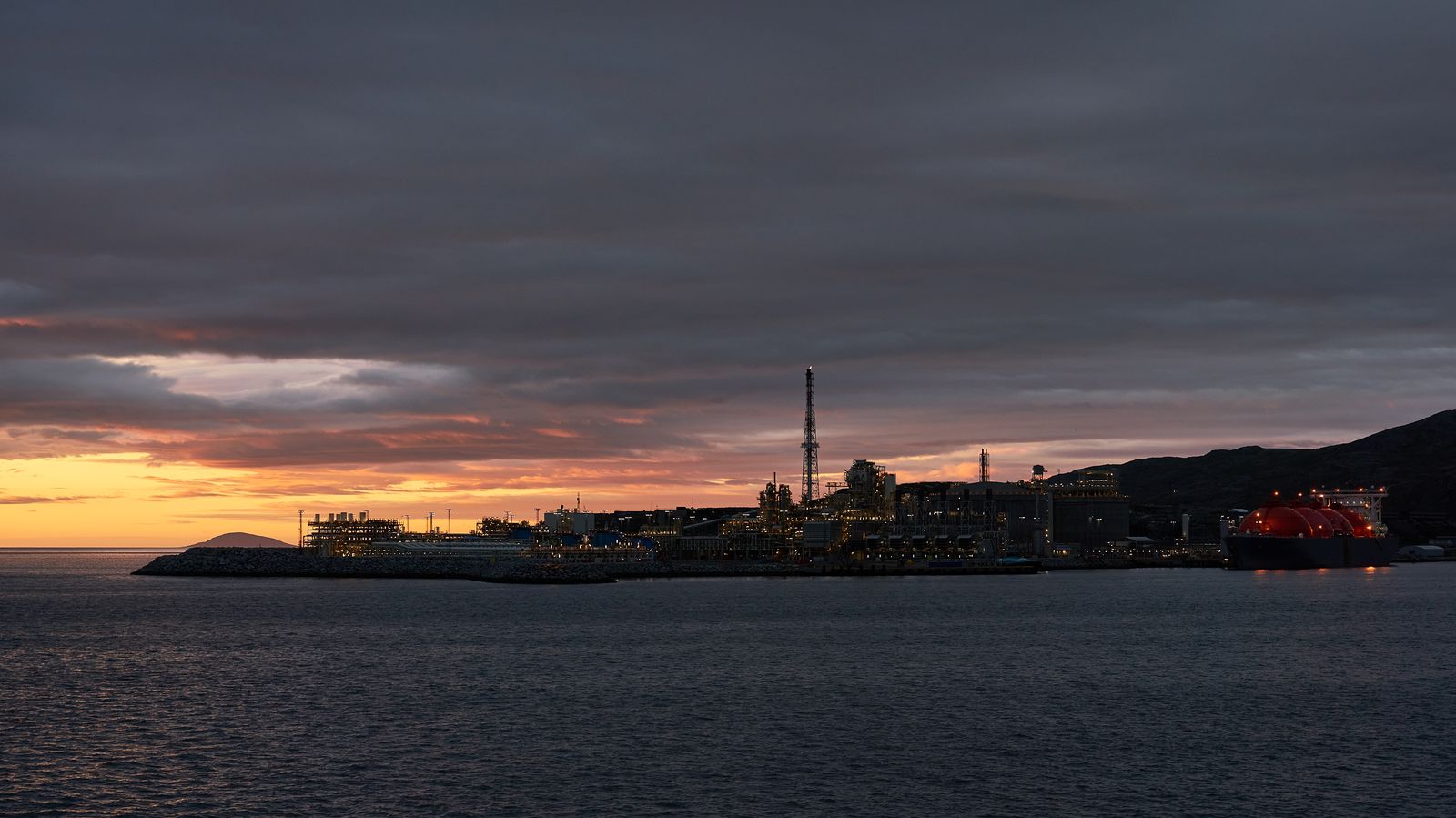
TEL AVIV — The two generals signed on August 31, in a quiet room at the Defense Ministry, and the world filed it under arms deals. On Tuesday, the filing changed. A new analysis argues that the €3 billion Achilles Shield agreement between Israel and Greece is not really about missiles at all — it is about the gas fields, power cables, ports and pipelines that are turning the Eastern Mediterranean into Europe's energy antechamber, and about who gets to keep them running when someone tries to break them.
It buys a roof. That is the reframe published on Tuesday: Greece is not purchasing a pile of interceptors, it is purchasing the right to build an energy future without asking permission from whoever holds the biggest stick in the neighborhood. Beneath the surface of the August 31 signing — the largest defense export in the history of Greek-Israeli relations and one of the largest in Israel's history — sits a wager that the next decade of the Eastern Mediterranean will be decided less by who fires first than by who keeps the current flowing.
The numbers tell their own story. Roughly €3 billion, about $3.5 billion at current rates, for a complete national air-and-missile-defense network: the first time Israel has ever sold another country a full integrated array rather than individual systems. The signature came from Maj. Gen. (res.) Amir Baram, director general of Israel's Defense Ministry, and his Greek counterpart Ioannis Bouras. And yet the most consequential line in the whole arrangement may be the one nobody signed: the promise, implicit in every trilateral declaration of the past decade, that Greece, Cyprus and Israel will turn their shared geography into shared money.
Because the cable comes before the missile, and everyone in the region knows it. The Great Sea Interconnector — the undersea electricity link joining Greece and Cyprus, with a planned extension to Israel and ultimately to the broader European grid — is not an engineering project with a strategic footnote. It is a strategic project wearing an engineering costume: a long-term investment designed to bind economies together so tightly that breaking one becomes expensive for all.
Here is the thing: offshore platforms, compressor stations, ports, airfields, substations and cable landing points are, in the cold language of targeting, attractive. A layered defense exists precisely for that catalog of vulnerabilities — persistent surveillance, a fused air picture, resilient communications, and the discipline to match each threat with the cheapest effective response, saving the expensive interceptors for the demanding targets. As the Strait of Hormuz has shown for decades, a corridor that carries enormous economic value inevitably becomes a corridor that requires military protection. The Eastern Mediterranean is learning the same lesson at the speed of construction.
Achilles Shield is not really about missiles. It is about who gets to keep the lights on when someone tries to turn them off.
Slowly, then all at once. The Greece-Cyprus-Israel trilateral — the « 3+1 » framework that Washington quietly blessed — spent a decade holding joint exercises, signing declarations on gas development, electricity interconnection and the India-Middle East-Europe Corridor, and formalizing the Eastern Mediterranean Energy Center. None of this is new. What is new is the conversion rate: declarations are finally being cashed into hardware.
Two accelerants did the work. The first is gas with a destination: Israel's offshore Leviathan field now anchors a record export architecture, including the $35 billion, 130-billion-cubic-meter agreement to supply Egypt through 2040 — the largest export deal in Israel's history. The second is war as a showroom. David's Sling, the upper layer of the Greek package, intercepted Iranian missiles during this year's war with Iran; nothing sells air defense like footage of it working. Greece becomes only the second customer for the system after Finland, and the timing matters: Athens watched the same skies everyone else did.
A nervous system, not just muscles. The package layers Rafael's David's Sling against heavy rockets, tactical ballistic missiles and cruise missiles; IAI's BARAK MX, with interceptors spanning roughly 35 to 150 kilometers, against aircraft, drones and cruise missiles; and Rafael's mobile SPYDER for short-range threats. Above them sit ELTA multi-mission radars for air surveillance — and, crucially, a new national command-and-control network built by Rafael, with software that uses artificial intelligence to recommend which interceptor should engage each incoming threat.
The fine print is where the strategy lives. At least 25 percent of the package — a quarter of a €3 billion program — is to be manufactured by Greek defense companies, which means technology transfer, jobs and a domestic industrial base that outlives any single contract. Delivery is set within 35 months, roughly three years, an unusually brisk schedule for a national-scale system. A separate €26 million agreement adds Rafael's Drone Dome counter-drone systems for strategic sites. In other words, Athens bought the architecture, the maintenance tail and the upgrade path — a thirty-year relationship disguised as a purchase order.
Ankara, openly and at volume. Days after the signing, Turkish President Recep Tayyip Erdogan told reporters that « Greece must reverse its mistaken approach » and that Turkey would « do what is necessary » — pointedly avoiding any mention of Israel itself. Foreign Minister Hakan Fidan revived the decades-old demand for demilitarization of certain Greek islands, calling their arming a threat. And Turkish media erupted in September when reports surfaced that Athens would not receive the software's source code — the crown jewels of the command network staying in Israeli hands.
The sharpest Turkish reading comes from a September report by ORSAM, a pro-government Ankara think tank, summarized this month: the deal's real effect on Turkey will depend less on the number of interceptors than on how tightly the systems are networked — a networked Greek shield could free Rafale and F-16V fighters, and future F-35s, from defensive duty for offensive missions across the Aegean and the Eastern Mediterranean. That is precisely the logic the Tuesday analysis embraces from the other side: deterrence by denial, making any attack on shared infrastructure a losing proposition before it starts.
More than the invoice. A €3 billion export — one of the largest defense sales in the country's history — lands directly on the order books of Rafael and Israel Aerospace Industries, amortizing research and development already paid for in wartime and funding the next generation of it. Defense exports have become Israel's most reliable growth engine in a season of boycotts and diplomatic frost: combat-proven systems, demonstrated on live targets this year, sell themselves to buyers who watched the same broadcasts.
The pipeline is visibly widening. On October 5, the American firm Ondas announced a $56 million order for electronic safe-and-arm devices built by GATE, the Israeli fuzing company it acquired in September for $205 million. Days earlier, reporting noted that Morocco — bound to Israel by the Abraham Accords — has become the second-largest buyer of Israeli arms, taking 24 percent of its weapons imports from Israel, behind the United States at 60 percent and ahead of France at 10 percent, with Gulf money part-financing the spree. Israeli firms will be showing their systems at the Marrakech Airshow, which opens October 7. The world may debate Israel; its customers keep signing.
Everything about how the region prices risk. Through the 5D prism, the geopolitics are straightforward: a Greece-Cyprus-Israel energy bloc, plugged into the European grid, hedged against a Turkey that disputes maritime boundaries and builds battle-proven drones of its own. The macroeconomics are the quiet revolution — defense spending as industrial policy, where a missile shield is also an infrastructure bond, and where gas revenues from Leviathan to Egypt help underwrite the security that protects the next gas deal.
The historical pattern is the old Mediterranean script with new actors: corridors of wealth — grain, spice, oil, now electrons and gas molecules — always acquire guards, and the guards eventually become the story. Structurally, the technology trend bends the same way: AI-assisted command networks that assign the cheapest effective killer to each threat are the economic answer to the drone age, where a $20,000 drone can otherwise demand a million-dollar interceptor. Demographically, the bet is on engineers: Greek factories building a quarter of the system means the knowledge, like the current, starts flowing both ways.
Four tripwires, in order of ignition. First, the Marrakech Airshow opens October 7 — watch which Israeli systems Morocco and its Gulf financiers browse next, because Rabat's 24-percent habit looks like an appetite, not a one-off. Second, the source-code question: whether Athens extracts any software concessions will signal how much sovereignty Greece really bought. Third, the Great Sea Interconnector's construction calendar — every kilometer of cable laid under a functioning shield is a kilometer Turkey must factor into its arithmetic.
And fourth, the shield's first real test, which may not be a missile at all. The Eastern Mediterranean's energy architecture now has an air force's worth of insurance; the question is whether the insurance emboldens the building — new drilling, new interconnectors, new corridors — or whether Ankara reads the policy as a provocation and writes its own. Either way, the €3 billion is already doing its real job: it changed the conversation from what Greece bought to what the whole sea is becoming.
The Western reading is the one published on Tuesday, and it is openly enthusiastic: Achilles Shield is what happens when an alliance grows up. A decade of joint declarations between Greece, Cyprus and Israel — energy, electricity, the India-Middle East-Europe Corridor — finally has a roof over it, and the roof is Israeli engineering battle-tested against Iranian missiles this very year. For Western capitals, the moral of the story is industrial: democracies that build things together defend things together, and Europe's energy map just gained a southern anchor that does not run through anyone's choke point.
There is a second, quieter Western satisfaction in the numbers. Twenty-five percent of a €3 billion program built in Greek factories means the deal is also a jobs program inside the European Union — precisely the kind of « buy European » argument that usually works against non-EU suppliers. That Israel won it anyway, against American and French competition, is read in Washington and Brussels as proof that combat performance now outranks procurement politics. The correspondent's own pro-West lens sees the same picture: this is the Western alliance system doing what it is supposed to do, turning shared threats into shared infrastructure.
The Eastern reading — in Tehran's telling and Ankara's — is a mirror image with the colors inverted. Press TV, Iran's state broadcaster, reported the signing in the language of regimes and occupations: the « Tel Aviv regime » arming a Mediterranean country, the deal inked in « the Israeli-occupied territories ». For that audience the story is not about energy at all; it is about encirclement, another node in a Western-Israeli architecture pressing against Iran, Turkey and their partners from the sea.
Ankara's own analysts, via the ORSAM report, make the harder-headed version of the same case: what alarms Turkey is not the interceptors but the network — a fused Greek air picture that could release fighters for offensive missions and harden the very energy corridors Turkey disputes. No verifiable TASS, Xinhua or Anadolu English coverage of the deal was found in today's research; the Eastern lens here is therefore carried by the Iranian and Turkish state-adjacent readings, which agree on one thing: in the East, Achilles Shield looks less like insurance and more like a claim.
The Global South reading starts from a different ledger: who pays, and who gets the power. From Cairo's vantage, the same Israeli gas that underwrites this shield — the $35 billion, 130-billion-cubic-meter Leviathan commitment to Egypt through 2040 — is the cheapest molecule on the market, and pipelines do not care about communiqués. From Rabat's, the JNS reporting lands plainly: Morocco now sources nearly a quarter of its weapons from Israel, part-financed by Gulf money, days before the Marrakech Airshow. The Abraham Accords, in this telling, were never mainly about embassies; they were about supply chains.
No dedicated Global South outlet with fresh coverage of the Achilles Shield framing was verifiable today, so this lens is honest analysis rather than reported consensus. Its question is the one the deal's cheerleaders avoid: an Eastern Mediterranean wired for European energy security, guarded by Israeli radars, leaves the region's poorer shores — Gaza's unbuilt reconstruction, Lebanon's blackouts — watching the current flow past. Insurance, in the South's reading, is a luxury good: those who can afford the shield get the grid, and those who cannot get the view.
Achilles Shield is a roughly €3 billion ($3.5 billion) agreement signed on 31 August 2026 under which Israel builds Greece a complete, nationally integrated air-and-missile-defense network. It combines Rafael's David's Sling and SPYDER systems, Israel Aerospace Industries' BARAK MX, ELTA multi-mission radars and a new AI-assisted command-and-control network — the first full array of its kind Israel has sold abroad.
Analysts argue the shield is the security layer for the Eastern Mediterranean's energy build-out: Israel's Leviathan gas exports, the planned Great Sea Interconnector undersea power cable linking Greece, Cyprus and eventually Israel to Europe's grid, and the India-Middle East-Europe Corridor. Offshore platforms, compressor stations and cable landing points are high-value targets, so the energy architecture needs military protection to attract investment.
Ankara reacted sharply. President Erdogan told Greece to « reverse its mistaken approach » and said Turkey would « do what is necessary », while Foreign Minister Hakan Fidan revived demands to demilitarize certain Greek islands. A September report by the pro-government ORSAM think tank warned the networked shield could free Greek fighters for offensive missions and harden energy corridors Turkey disputes.
The €3 billion Greek deal is one of the largest defense exports in Israel's history, landing on the order books of Rafael and Israel Aerospace Industries. Demand is visibly widening: Morocco now takes 24% of its arms imports from Israel, its second-largest supplier, and on 5 October the US firm Ondas announced a $56 million order for devices built by GATE, the Israeli fuzing company it bought for $205 million.
