As the rial sank to a record low and the oil minister resigned on Sunday, Iran's security establishment admitted the country is enduring one of the hardest economic periods in its history.
Published 5 October 2026 · 18:00 GMT
TEHRAN — After more than seven months of war, Iran's top security official told a high-level government meeting on Saturday that the country is living through one of the most difficult periods in its history. Mohsen Rezaei's rare admission, carried by the state news agency IRNA, came as the rial collapsed to a record low, the oil minister resigned, and the central bank scrambled to defend the currency with two billion dollars in emergency support.
The words were not his, exactly — and that is part of the story. Iran's state outlets published no direct quotation of Mohsen Rezaei's remarks. What the state news agency IRNA reported, in paraphrase, was that the secretary of the Supreme National Security Council described Iran's circumstances as among the most difficult periods the country has faced, and told the room the security council would provide whatever support it could.
The meeting gathered President Masoud Pezeshkian and senior ministers to discuss stabilizing the economy after more than seven months of war. Pezeshkian acknowledged the worsening conditions on social media the same day, saying his government had adopted a new posture to manage the special conditions — without specifying what that would mean in practice.
The messenger matters as much as the message. Rezaei is a former Revolutionary Guard commander and one of the most stringent hardliners in Iran's leadership. When a figure of that standing concedes, on the record, that the economy has reached its hardest point in memory, it is a signal — to the bureaucracy, the street, and Washington — that the leadership can no longer pretend the pressure is manageable.
On October 3, the rial traded at roughly 2,688,000 to the US dollar, and over the weekend it touched about 2,697,000 — a fresh all-time low. The currency has more than halved in value against the dollar compared with a year ago, and the slide has accelerated sharply in recent weeks as Washington tightened sanctions and enforced its naval blockade.
The mechanics are merciless. A collapsing currency makes every import more expensive in local terms, and Iran imports a vast share of what its households consume — food staples, medicine, industrial inputs. Inflation has climbed above 70 percent, which means wages and savings are being destroyed in real time. A salary negotiated a year ago now buys less than half of what it did.
This is how a currency crisis becomes a cost-of-living crisis. Shopkeepers reprice goods daily, landlords demand rents the old contracts never imagined, and families discover the math of the month no longer closes. The rial's chart is not an abstraction traded on screens in Dubai and Istanbul. It is the reason Iranian households are exhausted.
The rial's collapse is not just a market story. It is the sound of Iran's wartime economy hitting a wall — and even its hardliners now say so.
Mohsen Paknejad stepped down on Sunday, in the middle of the worst economic storm Iran has faced in decades. The official explanation, delivered by presidential spokesman Seyed Mehdi Tabatabaei, was personal reasons: Paknejad had submitted his resignation long ago, Pezeshkian had initially declined it, and this time the president accepted at the minister's insistence.
The timing invites scrutiny. In July, Paknejad had declared that Iran would continue exporting oil despite US sanctions. The blockade then made a mockery of that promise, largely preventing Iran from exporting oil at all — the country's main source of revenue. A minister who vowed exports would flow is leaving just as the taps run dry, even if the stated reason is personal.
His interim replacement is Hamid Bovard, managing director of the National Iranian Oil Company, who inherits a ministry under siege: exports choked, a fuel crisis at home, and the energy sector braced for winter. The appointment signals professional continuity from inside the system — but it leaves unanswered the question every Gulf trader is asking: what does this resignation say about how bad Tehran privately thinks things are?
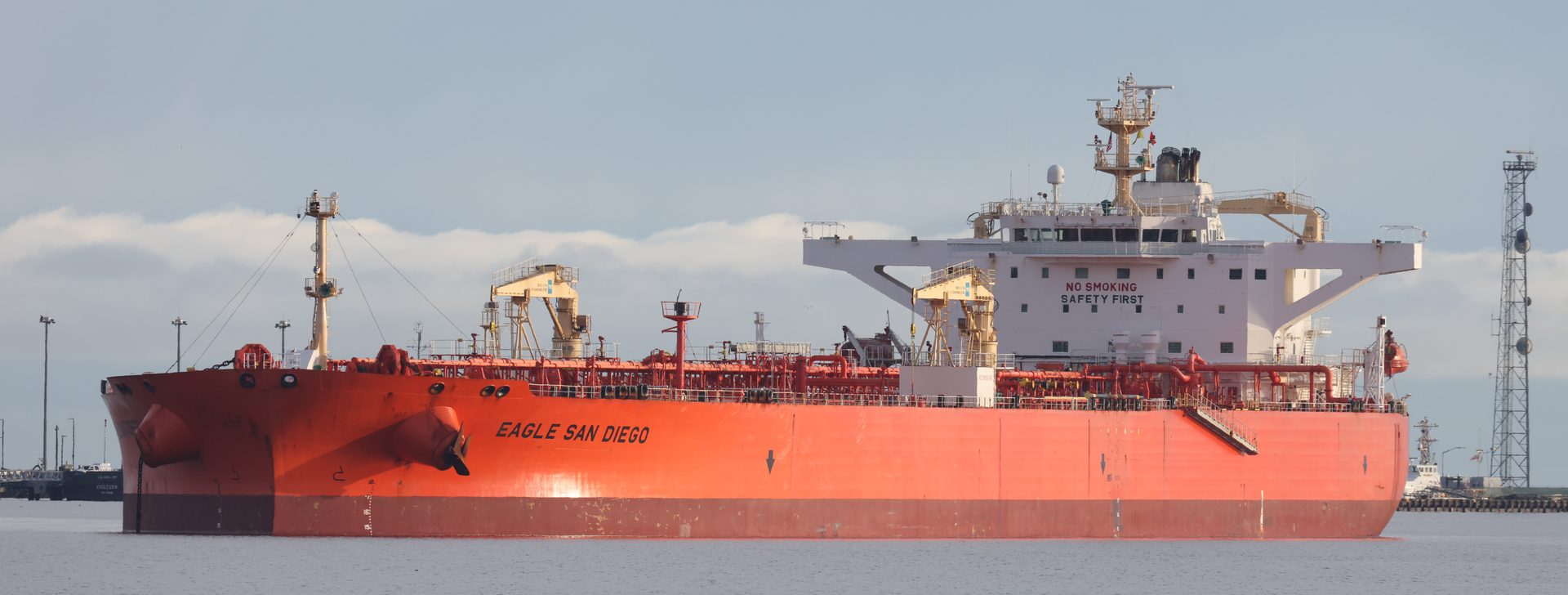
Oil is the Iranian state's oxygen, and the blockade is a hand around its throat. Analysts say the US naval blockade has largely prevented Iran from exporting crude, depriving the country of its main source of revenue. Export earnings that once financed the budget, subsidized fuel, and paid salaries have thinned to a trickle — and the fiscal consequences cascade through every ministry.
The strangulation works in layers. Tankers cannot load, buyers cannot pay through normal channels, and the sanctions net has widened to third countries trading with Tehran. The result is not only a revenue crisis but a fuel crisis inside Iran itself, as refining capacity and distribution buckle under the combined weight of war damage and isolation.
Washington has paired the maritime pressure with a new layer of isolation: blocking most civilian air travel between Iran and the rest of the world. Sanctions experts warn this could hurt critical imports, including medicine — turning an economic weapon into a humanitarian one. The blockade is no longer just about barrels. It is about severing Iran's connections to the world economy, one route at a time.
The statistics have faces. In recent days, nurses, teachers, and other government and private sector employees have taken to social media to say they are quitting their jobs — not out of protest, but because their salaries can no longer support them. When a nurse's monthly pay cannot feed a family, resignation is not a political act. It is arithmetic.
Retired government employees have staged protests in recent weeks, saying they have not received their full pensions. Their savings, like everyone else's, have been hollowed out by the rial's collapse. Iranian local media has carried their demonstrations — older citizens demanding the money they were promised, in a currency that buys less every week.
This is the demographic dimension of the crisis: a working-age population being pushed toward the exits of the formal economy, and the elderly pushed into the streets. The cost-of-living crisis already sparked nationwide protests last December, which security forces crushed with deadly force. Fear of repression, and the daily struggle to make ends meet, has so far kept economic anger from becoming a broader movement — but the pressure valve is hissing.
Tehran's answer to the freefall is a classic one: intervene. The central bank has pledged up to two billion dollars, to be sold through state banks, to slow the rial's collapse and restore a measure of confidence. In normal times, a two-billion-dollar injection would be a serious show of force.
These are not normal times. A central bank defending a currency needs reserves it can afford to burn and credibility that the intervention will hold. With oil revenue choked off and inflation above 70 percent, every dollar sold into the market is a dollar the state cannot spend elsewhere — and traders know it. Interventions work when markets believe the central bank has deeper pockets than the speculators. Right now, the speculators have the arithmetic on their side.
The deeper problem is structural. Currency defense treats the symptom; the disease is the collapse of foreign-exchange earnings. Until Iran can sell oil again — or find another source of hard currency at scale — the central bank is spending scarce dollars to buy time, not stability. Time is valuable in a crisis. But time, bought at this price, runs out.
Iran has lived under sanctions for decades and fought an eight-year war with Iraq in the 1980s, so the instinct in Tehran is to frame this as another siege to be endured. The Islamic Republic's founding narrative is resistance: sanctions as proof of virtue, hardship as the price of independence. That story has real roots — Iran built parallel trading networks, barter channels, and a sanctions-evasion apparatus that kept the economy breathing through years of pressure.
But history rhymes; it does not repeat. The current crisis differs from every previous round in one decisive respect: the naval blockade has largely halted oil exports, the single revenue stream the entire system was built around. Past sanctions squeezed and distorted Iran's oil trade. The blockade is closer to switching it off.
There is a second difference. Previous crises were economic; this one is wartime. The war that began with the US-Israeli strikes in late February damaged infrastructure, drained the treasury, and layered military spending onto a collapsing revenue base. Endurance narratives work when the pain is finite and the state can promise recovery. Seven months into a war with no end in sight, that promise is getting harder to make — which may be exactly why Rezaei said what he said.
The immediate future is a standoff. Negotiations between Tehran and Washington have stalled, with both sides refusing concessions and signaling they can outlast the other's tolerance for economic pain. US officials argue they are winning the economic war; Iran's leaders hope the pressure — and higher oil prices — will hurt President Trump ahead of the US midterm elections. Each side is betting the other's clock runs out first.
For the Gulf, the stakes are energy and stability. The Strait of Hormuz remains dangerous to navigate, damage to energy infrastructure has hampered refining capacity and natural gas exports, and oil prices sit higher than before the conflict — even as shipments from the rest of the region return toward prewar levels. A cornered Iran is the variable every Gulf capital watches: economic collapse can produce concessions, but it can also produce desperation.
Inside Iran, the question is whether the admission of crisis becomes a prelude to change or just a pressure release. Rezaei promised the security council's full support; Pezeshkian promised a new posture. Neither specified what either means. Until Tehran shows its hand — a real negotiation offer, a real economic plan, or a real crackdown — the rial will keep voting every day. Its verdict so far is unanimous.
Read from Western capitals, the weekend's events are evidence that the pressure strategy is working as designed. The rial's collapse to a record low, the resignation of the oil minister who promised exports would continue, and a hardliner's public admission of crisis form a coherent picture: the naval blockade and sanctions have cut Tehran's revenue at the source, and the economic pain is now severe enough that even the system's guardians cannot deny it. In this reading, Rezaei's candor is a distress signal — and a reason to hold the line rather than offer relief.
The policy implication drawn in Washington and allied capitals is straightforward: economic strangulation is the leverage that makes diplomacy possible, not its alternative. Stalled talks, in this view, are not a failure of pressure but a phase of it — Tehran must first conclude that endurance is impossible before it negotiates seriously. The risk this reading tends to discount is that maximum pressure on a wartime leadership can produce defiance or miscalculation rather than surrender, and that the humanitarian costs — medicine, pensions, livelihoods — are borne by ordinary Iranians, not the men who ordered the war economy.
Read from Tehran and its partners, the same facts tell a story of imposed aggression, not policy failure. The rial's collapse is the direct consequence of a US-Israeli war that began in late February and a naval blockade that amounts to economic warfare against a civilian population. In this reading, Rezaei's remarks are not an admission of defeat but an act of wartime honesty: a leadership naming the hardship plainly in order to mobilize the country, much as it did during the eight-year war with Iraq, when sanctions and siege were converted into a narrative of resistance.
The prescription that follows is equally different: the crisis will be answered by deepening the resistance economy — parallel trading networks, barter channels, and partnerships outside the Western financial system — while holding the Strait of Hormuz as leverage. This reading treats Washington's pressure as the disease and negotiation under duress as surrender. Its blind spot is arithmetic: a resistance economy still needs foreign exchange, and with oil exports largely halted, the networks that sustained Iran through past sanctions are being asked to carry a weight they were never built for.
Read from the Global South, the Iran crisis is above all a human and systemic story. The nurses quitting because their pay no longer feeds a family, the pensioners protesting for money that buys less every week, the blocked civilian flights cutting families and patients off from the world — these are the faces of a sanctions-and-blockade regime whose costs fall on households, not headquarters. For countries that have lived through currency collapses of their own, the rial's chart is familiar: it is what happens when geopolitics is priced into bread.
The systemic worry is contagion and precedent. Higher oil prices, a dangerous Strait of Hormuz, and damaged refining capacity ripple through every developing economy that imports energy — which is most of them. And the precedent matters: if a great power can switch off a country's oil exports by naval force and its air links by fiat, every mid-sized state in the South takes note. In this reading, the question is not who wins the standoff between Tehran and Washington, but what kind of international order normalizes the economic siege of eighty million people.
The rial has more than halved in value against the dollar in a year, trading around 2.69 million to the dollar in early October. The collapse is driven by the US-Israeli war that began in late February, tightened US sanctions, and a naval blockade that has largely halted Iran's oil exports — cutting off the foreign exchange the economy depends on, while inflation above 70 percent destroys purchasing power.
Mohsen Paknejad resigned on Sunday, October 4. The presidential office cited personal reasons, saying he had offered to step down long ago. The timing is striking: in July he had vowed Iran would keep exporting oil despite US sanctions, and the blockade has since largely prevented any exports. Hamid Bovard, head of the National Iranian Oil Company, was named interim replacement.
According to analysts, the blockade has largely prevented Iran from exporting oil — the state's main source of revenue — producing a fiscal and fuel crisis. Washington has also blocked most civilian air travel between Iran and the rest of the world, a layer of isolation that sanctions experts warn could hurt critical imports including medicine.
The pressure is visible: nurses and teachers are quitting because salaries no longer cover living costs, and retired government employees have protested unpaid pensions in recent weeks. A cost-of-living crisis already sparked nationwide protests last December that security forces crushed with deadly force. So far, fear of repression and the daily struggle to survive have kept economic anger from becoming a broader movement.
