Inside Ethiopia’s war, a hospital in Amhara treats the wounded as fighting returns
France 24 was granted rare access to a civilian hospital in Amhara, where surgeons are working through an influx of wounded patients while humanitarian organisations report a rising civilian toll. The World Health Organization warns that the region’s health system is near collapse.
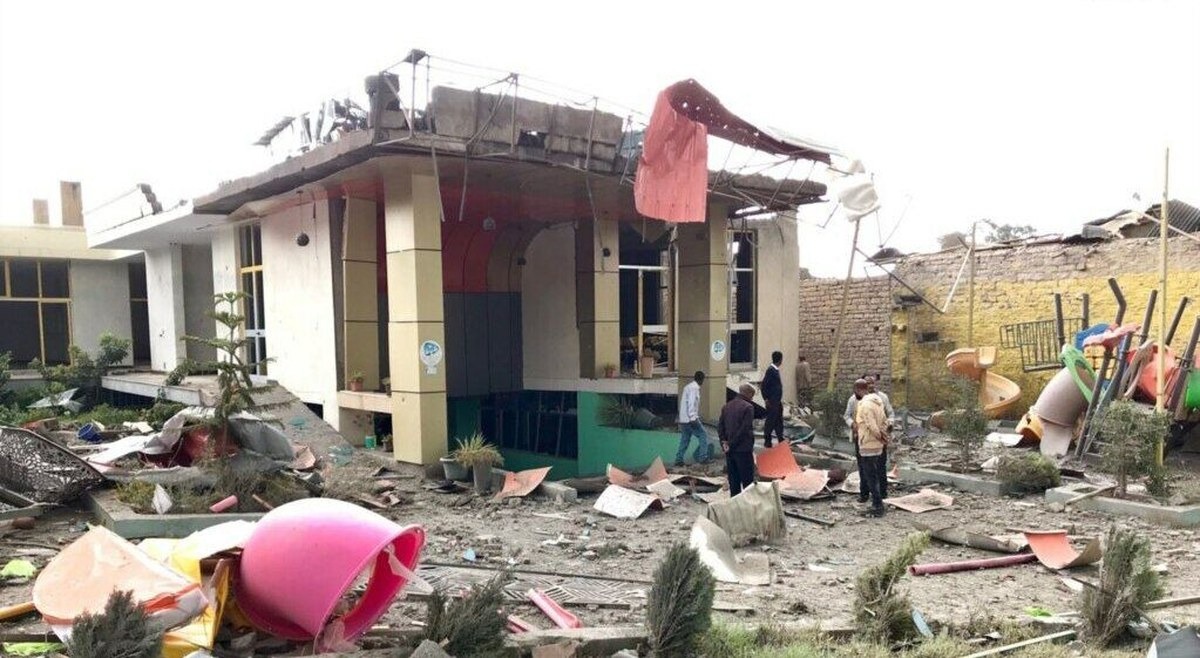
Key points
- France 24 correspondent Tom Canetti was granted rare access to a civilian hospital in Ethiopia’s Amhara region, where surgeons are struggling to treat an influx of wounded patients as renewed fighting takes a rising toll on civilians. France 24, 14 Nov 2026
- World Health Organization Director-General Tedros Adhanom Ghebreyesus warned on 2 November 2026 that the violence in northern Ethiopia is pushing an “already fragile health system closer to collapse”. WHO / UN News, 2 Nov 2026
- Drone strikes on 29 October hit the Hayiq Jari 2 displacement camp in South Wollo, Amhara, killing at least 15 people, including five children, with the toll later reported at 18 and 22 injured. Reuters via Al Jazeera, 2 Nov 2026; Abay Times, 3 Nov 2026
- Fighting between federal forces and rebel groups resumed in Amhara, Tigray and Afar in September 2026, nearly four years after the November 2022 peace agreement that ended the previous major conflict. UN News, 2 Nov 2026
- Hospitals in the north face shortages of health workers, medicines and equipment, ambulance services are severely limited, and insecurity is obstructing the delivery of life-saving medical supplies to some areas. WHO, 2 Nov 2026
Three readings of the same result
Same facts, different frames. Each reading names its outlets and what it emphasizes.
The story is read as a test of whether the international system can still respond to a war that is not on its front pages.
France 24’s access is rare precisely because the region is largely closed to journalists, so the hospital report carries weight that official statements do not.
Key detail The WHO warning, carried by the Associated Press, is treated as an authoritative alarm, and the UN Secretary-General’s call for a cessation of hostilities is…
The story is followed through the lens of stability in the Horn of Africa and the Red Sea corridor.
CGTN Africa carried the WHO warning in full, while the Chinese and Russian reading emphasises sovereignty, non-interference and the fragility of a peace agreement that outside powers helped to broker.
Key detail Ethiopia is a BRICS member and a major African state, so the fighting is watched in Beijing and Moscow as a risk to trade routes…
The story is read first through the civilians.
Al Jazeera led with the WHO warning and the children killed at Jaari 2, while Ethiopian outlets such as Addis Standard and Abay Times reported the camp strike in detail, naming the dead, the pregnant women and the students killed on their way home.
Key detail Latin American outlet teleSUR framed the crisis as a humanitarian emergency in which the peace agreement has been dismantled.
Sources by lens: 3 West, 1 East, 2 Global South. See every source
The story
What did the cameras find inside the Amhara hospital?
On 14 November 2026, France 24 published a report from inside a civilian hospital in Ethiopia’s Amhara region, where its correspondent Tom Canetti had been granted rare access. The footage shows surgeons working through a steady influx of wounded patients, hurt in fighting that has returned to the north after nearly four years of uneasy peace. Humanitarian organisations, the report says, are recording a rise in civilian casualties, and the hospital has become one of the few places where that toll is visible in concrete terms: beds, blood, and operating theatres running beyond their capacity.
Yet the report’s other half is about the journey, not the ward. For many caught in the fighting, reaching care is a challenge in itself, because roads are blocked and security is extremely unstable, so the wounded who arrive are only part of the story and those who never make it remain uncounted. France 24 warns that its report contains images of surgery some viewers may find confronting, which is itself a measure of how far the situation has moved from the routine.
What is confirmed about the fighting and the wounded?
The fighting resumed in September 2026, when federal forces and rebel groups clashed again in Amhara, Tigray and Afar, nearly four years after the November 2022 agreement that ended the previous major war. In Amhara, the federal government has been fighting Fano militias since 2023, so the current escalation lands on a conflict that never fully stopped. WHO Director-General Tedros Adhanom Ghebreyesus warned on 2 November that the violence is pushing an already fragile health system closer to collapse, with hospitals short of staff, medicines and equipment, ambulances severely limited, and insecurity blocking medical supplies.
The WHO warning followed two drone strikes. On 29 October, strikes hit the Hayiq Jari 2 camp for internally displaced people near Hayk in South Wollo, Amhara, home to more than 1,700 people displaced by earlier violence. Rescue workers told Reuters that at least 15 people were killed, including five children, and Ethiopian outlet Abay Times later reported the toll at 18 dead and 22 injured, with the wounded taken to Hayiq and Dessie hospitals. A day later, in Rama in neighbouring Tigray, several people were reportedly killed while trying to obtain food. The WHO said it had delivered more than 71 metric tonnes of supplies to the three regions by 21 October, yet the agency is still working to move more stocks into areas insecurity has cut off.
What remains unconfirmed about the toll and the response?
The full civilian toll is unknown, and the WHO chief himself gave no casualty totals, no dates for either attack, and named no perpetrators, saying only that drone attacks and civilian casualties had become increasingly frequent across Ethiopia. That restraint matters, because the figures that do circulate come from rescue workers, camp survivors and local reporting, and they move as the days pass: the Hayiq Jari 2 toll was first reported at 15 dead and later at 18, while witnesses cited by AFP put the toll from several days of strikes since 29 October at 25 civilians or more.
Nor is it clear whether the warring parties will agree to the cessation of hostilities that UN Secretary-General António Guterres has urged as a first step, or whether medical corridors will open to the areas supplies cannot currently reach. No public response from Ethiopia’s federal government to the WHO warning has been found in the reporting reviewed, and the risk that the fighting draws in Eritrea remains a warning rather than a confirmed development.
Why does a hospital queue in Amhara matter beyond Ethiopia?
A health system that collapses does not only fail the wounded. When hospitals lose staff, medicines and equipment, and ambulances stop running, the deaths multiply quietly: mothers in childbirth, children with preventable illness, and patients whose chronic conditions go untreated. The WHO’s warning is therefore not only about the strikes themselves but about everything that stops working around them, and the France 24 report makes that abstraction visible in a single ward. The last war in Tigray left the region’s health system in ruins, and the same system, only partially rebuilt since, is now being tested again.
The stakes also reach beyond the region’s borders. The 2022 agreement was supposed to close one of Africa’s deadliest wars, and its unravelling threatens a wider destabilisation of the Horn of Africa, on the edge of the Red Sea lanes that carry a large share of world trade. Displacement is already part of that picture: the Hayiq Jari 2 camp itself was full of people who had fled earlier violence, and now its survivors are fleeing again. When camps for the displaced become targets, the message to civilians is that there is nowhere left to run.
What does the hospital tell us about how this war is fought?
The hospital is the clearest evidence of the war’s character, because it shows who is being hit. Drone strikes on a displacement camp and on civilians gathering food are not battles for territory; they are attacks on people with nowhere else to go, in a campaign where the line between combatant and civilian has blurred beyond recognition. The federal government has not publicly answered the WHO warning, and no official account of either strike has been found, so the question of who ordered them remains formally unanswered even as the pattern grows clearer.
There is also a structural lesson in the ward. The 2022 agreement promised an end to the war, yet the fighting in Amhara never fully stopped, and the health system was still fragile when the new round began. A hospital that cannot get medicines, move ambulances or count its dead is not a neutral witness to a war; it is one of its casualties. That is why the France 24 report matters beyond its images: it shows a system failing in real time, a failure that was foreseeable, because the peace was never consolidated in the clinics and the supply lines.
What happens if the hospitals stop coping?
Three paths branch from here. In the first, the UN Secretary-General’s call for a cessation of hostilities finds traction, medical corridors open, and the WHO’s emergency supplies reach the cut-off areas in time. In the second, the grinding path, the strikes continue, the hospitals run out of staff and stocks, and the death toll rises quietly through untreated illness and childbirth as much as through the strikes, while displacement surges across the north. In the third, the regional path, the fighting spreads toward the Eritrean border, where thousands of Eritrean troops are reported to have entered Ethiopian territory, and a domestic war becomes a regional one, with the Red Sea corridor and the Horn’s fragile balances at stake.
The second path is the one the evidence currently points toward, because nothing suggests a ceasefire is near, and every week of fighting deepens the shortages the WHO described. The first path depends on pressure that has not yet materialised, and the third depends on restraint that is already fraying. Readers should therefore watch the hospitals as the leading indicator: if the wounded keep arriving and the supplies do not, the war is escalating, whatever the official statements say.
What should readers watch in the coming days?
The first marker is the casualty reporting from Amhara and Tigray, and whether the toll from Hayiq Jari 2 and Rama stabilises or keeps rising as survivors are counted. The second is whether Addis Ababa responds publicly to the WHO warning, and whether the federal government, the Tigrayan forces and the Fano militias signal any willingness to pause. The third is the supply picture: whether the WHO and UN agencies can move medical stocks into the areas insecurity has blocked, and whether ambulances can resume. The fourth is the regional picture, above all the Eritrean border, where any confirmed movement would change the crisis overnight.
Ethiopia’s profile in the Magna Factbook carries the country’s history, and the Bureau’s earlier reporting on the last war in Tigray sets out how the region reached this point. Getting aid to the wounded is also a delivery problem as much as a medical one, and the effort to fix the last mile of aid delivery elsewhere shows how hard that problem is when roads are blocked and trust is gone. The hospital in Amhara will keep filling while those questions stay unanswered.
What we agree on, and what remains open
Established
- Renewed fighting in northern Ethiopia is killing civilians and overwhelming hospitals; a France 24 team saw the influx of wounded inside a civilian hospital in Amhara, and the head of the World Health Organization says the region’s health system is near collapse.
Contested
- On who bears responsibility for the strikes on civilians, and on whether the November 2022 peace agreement can still be salvaged; Addis Ababa has offered no public answer to the WHO warning, while the warring sides blame each other and the African Union’s mediation has stayed quiet.
Still open
- The full civilian death toll across Amhara, Tigray and Afar.
- How many wounded ever reach care at all, given blocked roads and insecurity.
- Or whether the warring parties will agree to the cessation of hostilities the UN Secretary-General has urged.
What to watch
Questions, answered
France 24 correspondent Tom Canetti was granted rare access to a civilian hospital in Amhara, where surgeons are struggling to treat an influx of wounded patients from the renewed fighting. Humanitarian organisations report a rising civilian toll, and reaching care is itself difficult, because roads are blocked and security is extremely unstable. The report warns that its surgery images may be confronting.
On 2 November 2026, WHO Director-General Tedros Adhanom Ghebreyesus warned that violence in Amhara and Tigray is pushing an already fragile health system closer to collapse. Hospitals face shortages of health workers, medicines and equipment, ambulance services are severely limited, and insecurity is obstructing the delivery of life-saving medical supplies to some areas.
On 29 October 2026, drone strikes hit the Hayiq Jari 2 camp for internally displaced people near Hayk in South Wollo, Amhara, home to more than 1,700 people displaced by earlier violence. Rescue workers told Reuters at least 15 people were killed, including five children, and Abay Times later reported 18 dead and 22 injured, with the wounded taken to Hayiq Hospital and Dessie Hospital.
In practice, no. Fighting resumed in September 2026 between federal forces and rebel groups in Amhara, Tigray and Afar, nearly four years after the November 2022 agreement ended the previous major war. The renewed fighting has effectively shattered the deal, and the UN Secretary-General has warned of escalation and wider destabilisation, urging the parties to agree a cessation of hostilities without delay.