Indonesia’s president apologises to Singapore and Malaysia for the wildfire haze
Prabowo Subianto told the ASEAN summit in Manila that fires which burned for nearly four months were “not our fault”; then apologised anyway, and promised a crackdown on the companies behind the blazes.
Key points
- Indonesian President Prabowo Subianto apologised to Singapore and Malaysia on Sunday 15 November for haze from months of wildfires, speaking at the 49th ASEAN summit in Manila. Reuters, 15 Nov 2026
- “It is not our fault but once again we apologise, but we have done our best,” Prabowo told fellow leaders, adding that the fires took nearly four months to control. Al Jazeera, 16 Nov 2026
- Wildfires burned 2.88 million hectares across Indonesia in 2026, an area 18 times the size of London, according to the Nusantara Atlas deforestation monitor. Malay Mail, 16 Nov 2026
- Indonesia deployed 71,000 firefighters; 16 died and two helicopters were lost battling the blazes. CNA, 15 Nov 2026
- Jakarta has revoked 17 company concessions; 26 companies are under investigation, 11 have been charged and 23 more are set to be charged; 104 companies in total under police investigation. Al Jazeera, 16 Nov 2026
Three readings of the same result
Same facts, different frames. Each reading names its outlets and what it emphasizes.
The story arrived as wire copy with the presidential palace statement as its spine.
Reuters carried the apology straight, framed it as a diplomatic moment inside a wider ASEAN summit, and supplied the context the wire values most: the most intense fire season in 11 years, the new prevention body, and the Philippines foreign minister’s verdict that Jakarta had been very frank and candid.
Key detail The Western reading treats the apology as significant mainly for what follows; whether the enforcement figures become prosecutions.
In Asia, the story landed where the smoke did.
Singapore’s CNA, the outlet of one of the two countries apologised to, led with the apology but foregrounded the human cost, 16 firefighters dead, two helicopters lost, and the practical next step: the joint task force agreed last month and Prime Minister Lawrence Wong’s proposal to widen it across ASEAN.
Key detail Read in Singapore, the apology is a test, not a settlement, and the test is whether Jakarta’s enforcement follows its words.
The story arrived with the fullest record.
Al Jazeera carried the complete account; the treaty with no enforcement, the coordinating office that opened only this April, and the October “oxygen” remark that drew criticism.
Key detail Malaysian outlets, meanwhile, quoted the apology alongside the El Niño explanation and the 2.88-million-hectare toll.
Sources by lens: 1 West, 1 East, 3 Global South. See every source
The story
What did Prabowo say in Manila?
Indonesian President Prabowo Subianto apologised on Sunday to Singapore and Malaysia for the toxic haze that drifted across their skies from months of wildfires in his country. Speaking at the 49th ASEAN summit in Manila, he said the fires had taken nearly four months to bring under control; and that, fault or not, his government owed its neighbours an apology.
“I would like to apologise to my neighbouring countries Malaysia and Singapore when we had a very big forest fire, which took nearly four months for us to control. The haze travelled to Malaysia and to Singapore,” he told fellow leaders. “It is not our fault but once again we apologise but we have done our best.”
He repeated the apology in a second formulation, speaking for the whole country: “Once again, on behalf of the Indonesian government and Indonesian people, we apologise if we have created suffering for the people of Singapore and Malaysia.” The remarks came during a plenary session of the summit, and the presidential secretariat later released video of the exchange.
What do the numbers behind the apology show?
The scale of the season is now measurable. Wildfires burned through 2.88 million hectares across Indonesia in 2026, according to the Nusantara Atlas deforestation monitor; an area 18 times the size of London. The blazes scorched land mainly on Sumatra, Borneo and Papua, and Indonesia is living through its most intense wildfire season in 11 years. The smoke sickened hundreds of thousands of people at home and drifted across borders to Malaysia and Singapore, where it hung over cities for weeks.
Jakarta’s response, as Prabowo described it, was the largest firefighting mobilisation the country has mounted: 71,000 firefighters deployed, 16 of them killed and many more injured, and two helicopters lost. The human cost sits inside the apology; the president named the dead as part of the case that his government had done its best.
The enforcement ledger is the other half of the speech. Indonesia has a “zero-tolerance policy” for any company contributing to the blazes, Prabowo said, and the figures he gave were precise: 17 concessions revoked, 26 companies under investigation, 11 already charged, and 23 more on the list to be charged. In total, 104 companies are under investigation by the police. A new body to strengthen wildfire prevention is being prepared, and the president said the country must shift from firefighting and mitigation towards systematic prevention.
On the regional side, Singapore and Indonesia agreed last month to establish a joint task force to investigate companies linked to the fires behind the haze. Singapore’s Prime Minister Lawrence Wong proposed on Sunday that the task force be expanded into an ASEAN-wide platform for sharing information and evidence, so countries can hold companies accountable for haze-causing fires. The Philippines’ Foreign Minister Theresa Lazaro told reporters after the session that Jakarta had been “very frank and candid” about its efforts.
Relief, for now, has arrived with the weather. On Thursday, the ASEAN Specialised Meteorological Centre issued a “no transboundary smoke haze” notice for southern Southeast Asia, linked to recent downpours and fewer fire hotspots in Sumatra and Kalimantan. Malaysia and Singapore, for their part, refrained from criticising Jakarta through the crisis and instead offered assistance to fight the fires.
“It is not our fault but once again we apologise but we have done our best.”
What has nobody established yet about the fires?
The most important unanswered question is who set the fires; and whether they were set at all. Prabowo’s figures describe an enforcement machine in motion, but no charge sheet has been published, and nothing yet distinguishes deliberate land-clearing from fires that escaped control. Until the 23 companies flagged for prosecution are named, the “zero-tolerance” claim is a promise, not a record.
Nor is the shape of the new prevention body known: its powers, its budget, or whether it will be able to act before the next dry season rather than after it. The health toll is also uncounted; “hundreds of thousands sickened” is an estimate, not a figure from any health authority. And the fate of the 17 revoked concessions is unclear: whether the land returns to forest, or is reissued to another operator.
Why does an apology over smoke carry weight in Southeast Asia?
Because the haze is Southeast Asia’s oldest recurring diplomatic wound. For decades, smoke from Indonesian fires has shut schools, grounded flights and filled hospitals in Singapore and Malaysia, and for decades the argument has repeated: neighbours demand action, Jakarta pleads weather and scale, and the next dry season brings the smoke back. An apology delivered by a president, in person, at an ASEAN plenary, breaks that script; it puts the issue on the summit record, where it cannot be walked back quietly.
The legal frame makes the apology matter more, not less. On paper, the region is bound by the 2002 ASEAN Agreement on Transboundary Haze Pollution, a treaty that commits all 11 members to fight the haze together. But the agreement has no enforcement provisions; no court can rule on it, and disputes can only be settled by negotiation. Its coordinating office in Jakarta opened only this April, nearly a quarter-century after it was envisioned. A treaty that cannot punish is a promise that depends on politics, and politics is exactly what Prabowo supplied in Manila.
There is also a credibility test built into the speech. A previous Indonesian official drew criticism in October for claiming the country’s forests supply oxygen to Malaysia and Singapore even as the haze choked them. Prabowo’s apology, paired with named enforcement figures, reads as a deliberate correction of that tone; and the region will now measure the correction in charges filed, not words spoken. The episode also underlines how exposed the region’s diplomacy has become to a warming climate: an El Niño pattern Prabowo blamed for the fires’ intensity is the same force that will return, and ASEAN’s capacity to act together will be tested again.
Can an apology without enforcement end the haze cycle?
An apology is cheap; enforcement is the currency that counts. Prabowo’s speech understood that, which is why the numbers took up as much room as the regret: 17 concessions revoked, 104 companies under investigation, a new prevention body on the way. The figures are designed to answer the question every previous haze season has left hanging; what, concretely, happens to the people who light the fires?
But the caveat in the same speech shows the limit of the gesture. “It is not our fault,” Prabowo said, attributing the fires’ intensity to El Niño. That framing is half true and wholly convenient: a dry El Niño season makes fires fiercer, but it does not explain who cleared the land, or why the same provinces burn every dry season. The apology covers the smoke; it does not yet cover the clearing.
The most concrete mechanism on the table is not the apology but the task force. A joint Singapore-Indonesia body that shares information and evidence across borders could do what the 2002 treaty never did: attach names to fires. If Wong’s proposal to widen it across ASEAN is adopted, the region would gain, for the first time, a standing instrument for holding companies accountable rather than a yearly round of complaints. The risk runs the other way too: if the 23 flagged companies are never charged, the apology will be read as theatre, and the next haze season will arrive with the neighbours’ patience already spent.
What changes if the prosecutions actually land?
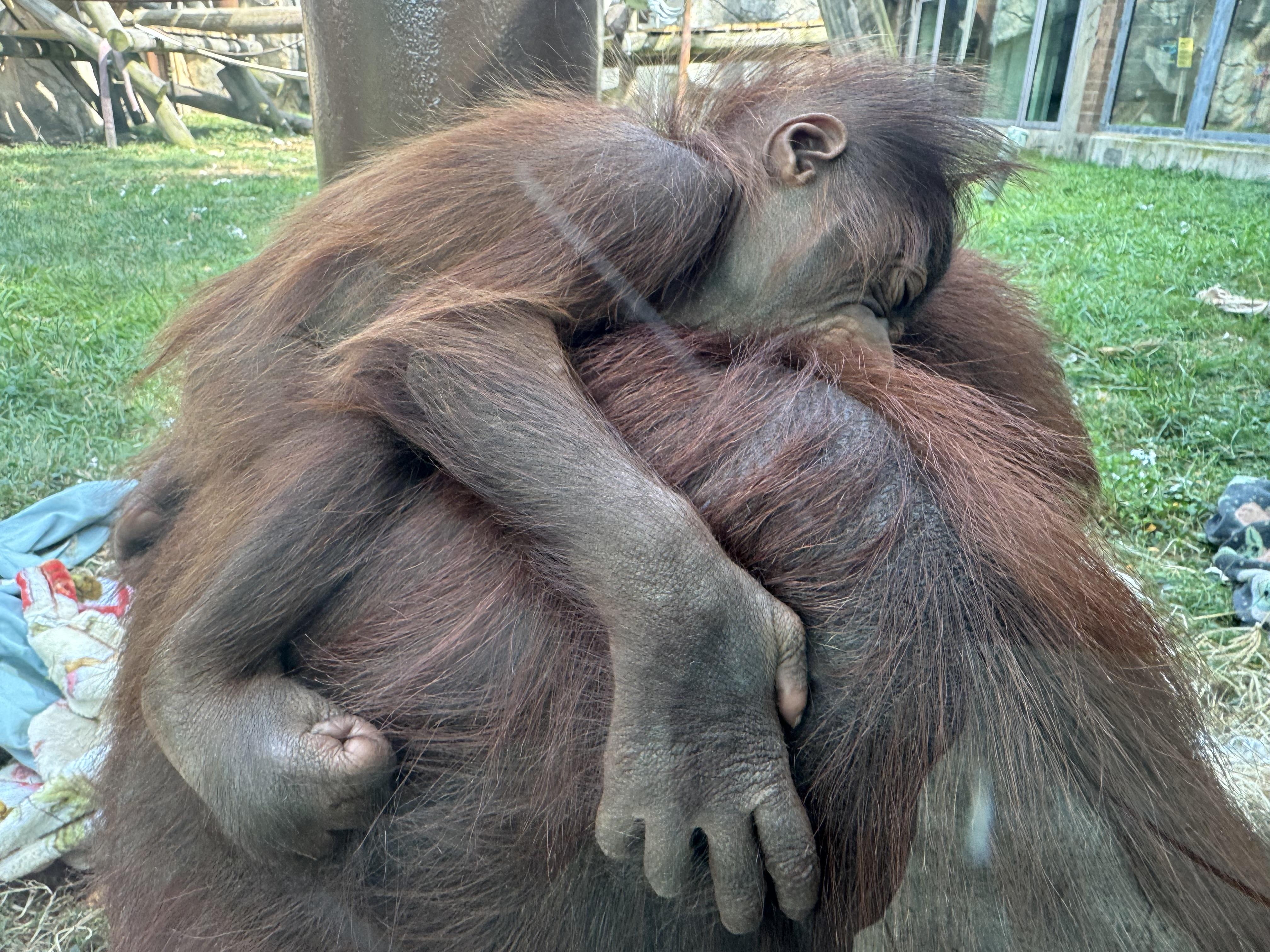
First, deterrence becomes real for the first time in the haze’s long history: a company that loses a concession and faces charges prices fire differently from one that pays a fine and carries on. Second, the evidence-sharing task force could expose the supply chains behind the clearing; the buyers of palm oil and pulp who profit from burned land without ever lighting a match. Third, ASEAN would gain, almost by accident, the enforcement instrument its 2002 treaty never had. And fourth, the fires themselves carry a cost beyond diplomacy: Sumatra, Borneo and Papua are the last strongholds of the orangutan, and every hectare burned is habitat that does not come back.
What should we watch in the weeks ahead?
The charge sheets: whether the 23 companies flagged for prosecution are named, and for what. The shape of the new prevention body; its powers, its budget, its deadline. Whether Singapore’s proposal to widen the joint task force across ASEAN is adopted at the next ministerial meeting. And the health data from Malaysia and Singapore, which will put a counted figure on a season so far described only in estimates. The haze has lifted for now; the record of what Jakarta does with the dry months ahead is what the region will judge.
What we agree on, and what remains open
Established
- On Sunday 15 November 2026, at the 49th ASEAN summit in Manila, Indonesian President Prabowo Subianto apologised to Singapore and Malaysia for the haze from wildfires that burned for nearly four months, saying his government had done its best and would take firm action against companies behind the fires.
Contested
- On whether the apology settles anything; Jakarta frames the fires as a natural disaster worsened by El Niño and stresses its firefighting effort, while the record of revoked concessions and 104 companies under investigation shows enforcement is the real test.
- On whether a regional agreement with no enforcement powers can ever prevent the next haze season.
Still open
- Which companies will ultimately be charged, and for what.
- Whether the new prevention agency will have powers the old system lacked.
- How much of the burned land was plantation land cleared deliberately.
- Or whether the 2002 haze agreement will gain enforcement before the next dry season.
What to watch
Questions, answered
Prabowo Subianto apologised at the ASEAN summit in Manila on 15 November for the haze from Indonesian wildfires that drifted over Singapore and Malaysia. The fires burned for nearly four months, and he said his government had done its best to control them. He added that the haze was not Indonesia’s fault, blaming its intensity on El Niño, but apologised on behalf of the government and people for any suffering caused.
Wildfires burned 2.88 million hectares across Indonesia in 2026, an area 18 times the size of London, according to the Nusantara Atlas monitor. The season is the country’s most intense in 11 years, with fires concentrated on Sumatra, Borneo and Papua. Indonesia deployed 71,000 firefighters; 16 died and two helicopters were lost. The smoke sickened hundreds of thousands at home and blanketed Singapore and Malaysia for weeks.
Prabowo said Indonesia has a zero-tolerance policy for companies contributing to the blazes. His government has revoked 17 concessions, has 26 companies under investigation, has charged 11, and has 23 more on the list to be charged; 104 companies under police investigation in total. Jakarta is also preparing a new body to strengthen wildfire prevention, shifting from firefighting towards systematic prevention.
The 2002 ASEAN Agreement on Transboundary Haze Pollution commits all 11 members to tackle cross-border haze through concerted national efforts and intensified cooperation. But it contains no enforcement provisions: no court can rule on it, and disputes can only be settled through negotiation. Its coordinating office in Jakarta opened only this April, nearly a quarter-century after the treaty was envisioned.