 MAGNA BUREAU
The Wire
Indonesia passes asset forfeiture law after 18 years: seize first, convict later
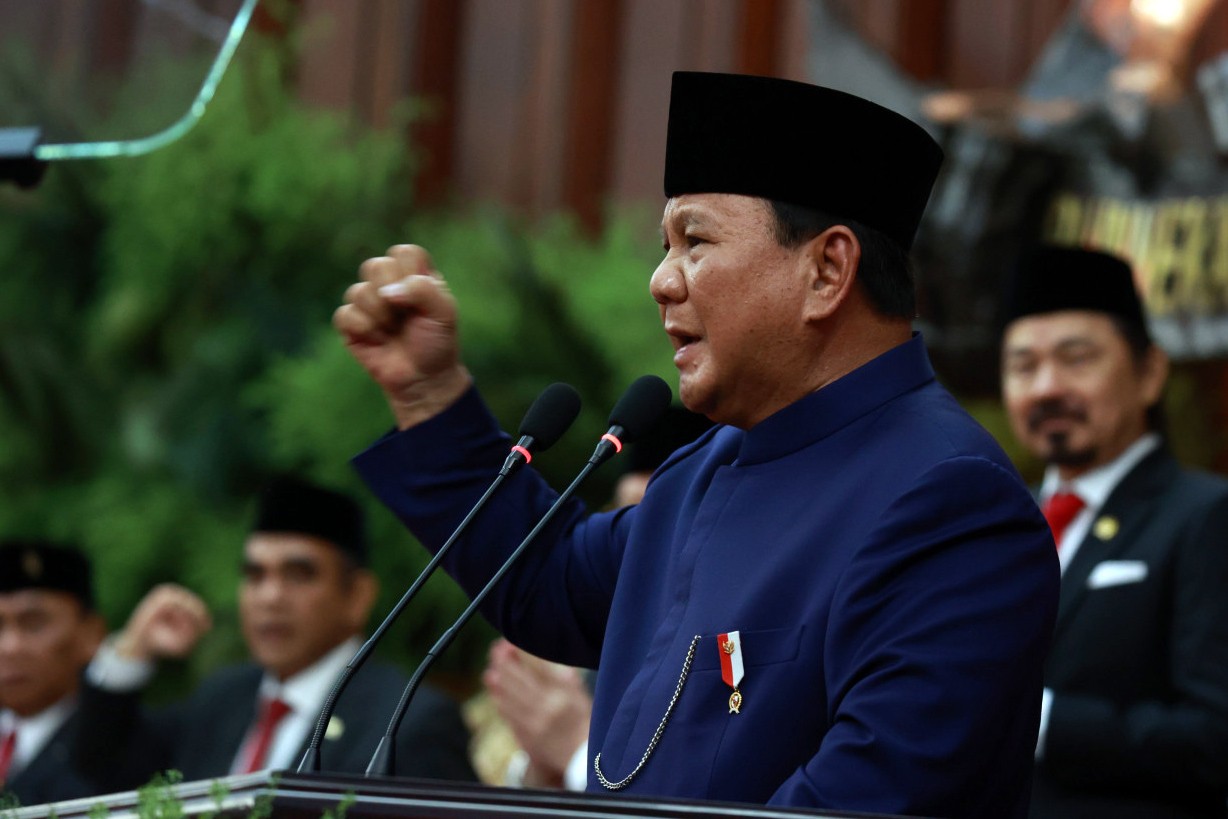
Indonesia’s parliament passed a law on Thursday allowing the state to seize assets linked to corruption and other crimes without first securing a criminal conviction; ending an 18-year wait and handing President Prabowo Subianto a flagship win in his anti-corruption drive.
Key points
- What: Indonesia’s House of Representatives passed the Bill on the Forfeiture of Assets Related to Corruption and Other Crimes into law on Thursday, 19 November 2026, in a plenary session in Jakarta; 18 years after the bill was first proposed. 1
- The mechanism: The law allows non-conviction-based asset forfeiture: authorities can freeze and seize suspected criminal assets before a court decides whether they should be forfeited, under judicial proceedings. 2
- The threshold: The non-conviction route applies only to assets worth at least 1 billion rupiah (about US$54,885), lawmakers agreed; a floor meant to keep the power aimed at serious cases. 1
- The new body: A dedicated, independent Asset Management Body (Badan Pengelola Aset Rampasan), reporting directly to the President, will manage seized assets; its head is appointed by the President subject to House approval. 4
- What’s missing: Illicit enrichment, action against unexplained increases in wealth, was left out of the law after public opposition, Commission III chairman Habiburokhman said. 5
ONE EVENT. THREE READINGS.
From Washington, London and Brussels, the story reads as a test of whether Indonesia can pair tougher enforcement with credible due process.
Western coverage stresses the same two facts: the power to seize without a conviction, and the absence of a published final text.
What this reading highlights: The emphasis falls on the guardrails, judicial proceedings, the 1-billion-rupiah floor, the separation of the asset body from law enforcement, because those are what will decide whether the law is read abroad as reform or as a tool that could be turned on political opponents.
The EU trade deal approved the same week sharpens the question: Brussels is betting on Indonesia’s institutions, and this law is now part of that bet.
Sources: Reuters (1)
From Singapore and the region, the story arrives as a neighbour’s long-delayed clean-up.
The Business Times frames it as the end of an 18-year wait and a practical instrument: confiscate the proceeds, compensate the victims, and stop letting convictions decide whether stolen money comes back.
What this reading highlights: The regional reading is less about abstract rights and more about effectiveness; whether the new body can actually trace money through crypto schemes and online gambling networks that cross borders, and whether Jakarta will publish the text quickly enough for markets and partners to judge it.
Sources: CNA (1), The Business Times (1)
From Jakarta itself, the story is told as a people’s victory eighteen years in the making.
Indonesian coverage leads with the voices in the chamber, Habiburokhman’s 18-year wait for the people, Puan Maharani’s gavel, the thanks to Dasco, and with the victims the law is meant to repay.
What this reading highlights: The sharpest domestic debate is not about the seizure power but about what was left out: illicit enrichment, dropped after public opposition, and the independence of a body that answers to the President.
In the country most affected, the question is whether the law serves the defrauded or the powerful.
Sources: CNBC Indonesia (1), ANTARA (1), detikNews (1), IDNFinancials (1)
Sources by lens: 1 West, 2 East, 4 Global South. See every source
THE POINT OF CONVERGENCE
On the facts. Indonesia’s parliament passed the asset forfeiture bill into law on Thursday, 19 November 2026, in a plenary session chaired by Speaker Puan Maharani, 18 years after the bill was first proposed. The law lets authorities seize assets linked to corruption and other crimes without first securing a criminal conviction, through court proceedings, with a 1-billion-rupiah floor for the non-conviction route.
WHAT REMAINS CONTESTED
On the balance between recovering stolen wealth and protecting due process. Supporters say seizure without conviction is the only way to reach assets held by fugitives or the dead. Critics warn that freezing assets before a court rules needs strong judicial guardrails; and that leaving illicit enrichment out leaves the largest gap in the law untouched.
The story
What did parliament actually pass on Thursday?
Indonesia’s House of Representatives passed the Bill on the Forfeiture of Assets Related to Corruption and Other Crimes into law on Thursday, 19 November 2026, closing an 18-year legislative wait. The vote came at the 13th plenary session of the House’s second sitting period of the 2026–2027 session, held at the Nusantara I building in the parliamentary complex in Senayan, Jakarta. Speaker Puan Maharani put the question to the floor, could the draft law be approved and passed into law?, and the chamber answered with a single word: Agreed.
Before the vote, Commission III chairman Habiburokhman presented the report on the bill’s deliberations, closing a committee process that had run for more than a year. Government ministers sat in for the session, including Deputy Minister of State Secretary Bambang Eko Suhariyanto, Minister of Administrative and Bureaucratic Reform Rini Widyantini, and Deputy Law Minister Edward Omar Sharif Hiariej, who told the chamber the government approved and welcomed the bill.
The day before, Commission III and the government had held their first-level meeting, where every faction agreed to send the draft to the plenary floor. Deputy Speaker Sufmi Dasco Ahmad, who steered the bill through its final stages, chaired that meeting. Habiburokhman thanked him by name on Thursday, calling the passage the end of an 18-year wait for the people.
What do we actually know about the new law?
The law’s core is a mechanism known as non-conviction-based asset forfeiture. Until now, recovering the proceeds of crime in Indonesia largely depended on securing a criminal conviction first; a limitation the government says let stolen wealth sit untouched while cases dragged on or suspects disappeared. Under the new rules, authorities may trace, freeze and seize suspected criminal assets before a court decides whether they should be forfeited, with the forfeiture itself decided through court proceedings.
The mechanism applies to assets worth at least 1 billion rupiah, about US$54,885 at current rates, a floor lawmakers set to keep the power aimed at serious cases. It covers six categories of crime beyond corruption: narcotics and psychotropic-substance offences; terrorism financing; the smuggling of arms, ammunition and hazardous materials; human trafficking; and fraud or embezzlement involving information technology or affecting the wider economy; a category whose explanatory notes name online gambling, investment fraud and cryptocurrency scams.
The law also creates a dedicated, independent Asset Management Body, the Badan Pengelola Aset Rampasan, reporting directly to the President, to manage seized assets separately from the agencies that seize them. Its head is appointed by the President subject to House approval. And it changes where the money goes: proceeds from liquidated assets will compensate victims, including victims of investment fraud, share-trading fraud and pilgrimage-travel scams, rather than flowing only to state coffers. Existing criminal penalties, including the death penalty for the gravest corruption, remain intact.
What is still missing from the public record?
The final text of the law was not immediately made public. The text is typically released only in the week after passage, which means the precise wording of the safeguards, how a court tests a seizure, what evidence the state must show, and what rights an asset holder has to challenge a freeze, cannot yet be checked against the draft that circulated on 16 November, which even Reuters said it could not immediately verify.
We do not know how the Asset Management Body will be staffed, funded or overseen in practice, beyond its presidential reporting line and the House’s role in confirming its head. We do not know how prosecutors will choose their first cases, or how courts will apply the 1-billion-rupiah threshold when an asset’s value is disputed. We do not know what happens to assets seized under earlier rules, or how the new victim-compensation mechanism will rank competing claims when the proceeds cover only part of the losses. And we do not know whether illicit enrichment, the unexplained growth of an official’s wealth, will return in a separate bill, or stay off the books entirely.
Why does this law matter beyond Jakarta?
Indonesia is Southeast Asia’s largest economy and one of its most corruption-exposed. For years its anti-corruption drive could jail offenders while the money stayed where it was: parked in property, companies and accounts the state could not touch until a conviction landed; and convictions were slow, or never came, when suspects fled, died or fell permanently ill. The new law attacks that gap directly, and it does so at a moment when Jakarta is pressing a wider economic agenda. The same week, EU governments approved a trade deal with Indonesia meant to offset American tariffs, a reminder that Jakarta’s credibility with investors and partners rests on the rule of law as much as on nickel and palm oil. EU governments approve Indonesia trade deal to offset Trump tariffs
The law also matters for the millions of Indonesians defrauded by investment schemes, fake share trading and pilgrimage-travel scams. Until now, a prison sentence for the fraudster rarely returned a rupiah to the victim. The compensation mechanism is the law’s most concrete promise to them; and the measure by which it will first be judged. For President Prabowo Subianto, whose government shepherded the bill through its final stages, passage is a flagship deliverable in his first years in office. His administration has made the recovery of stolen state assets a public priority, and Indonesia’s downstreaming push in nickel has put the same question of who benefits from the country’s wealth at the centre of politics. Indonesia nickel downstreaming 2026
How did an 18-year wait end in a single morning?
Eighteen years is a long time for a bill to sit in parliament, and the speed of its final passage is the real political story. The draft had been on the books since 2008, surviving four presidencies without reaching a vote. What changed was the alignment of three forces: a president who made asset recovery a signature promise, a parliamentary leadership willing to spend political capital on it, and a public that had spent years watching fraudsters jailed while their victims stayed poor.
The deliberations were unusually public. The House held 87 consultation sessions, visited 15 provinces and 46 electoral districts, and took the bill through Commission III in a process its chairman described as more than a year of work. That consultation also shaped the final text in a way its critics will remember: illicit enrichment was dropped after widespread public opposition, with Habiburokhman arguing the bill is procedural while illicit enrichment is substantive law. The Legal Aid Institute, which said on Wednesday the law could help fight corruption and recover criminal proceeds, is watching the same line. The bill’s backers got their seizure power; its sceptics got a narrower law than the one first imagined. Both sides will now test whether the compromise holds.
What changes first once the law takes effect?
The first change will be felt in prosecutors’ offices, where the new power gives investigators a reason to follow the money before they have a conviction in hand. Expect the earliest cases to involve the crimes the law names most clearly: large-scale investment fraud, cryptocurrency scams and online gambling networks, where the assets are visible and the victims are many.
The second change will be institutional. A new Asset Management Body, answerable to the President, must be built from scratch, staffed, funded and given rules for selling seized property and paying victims, while the agencies that seize assets watch to see whether it stays independent of them. The third change will be legal. Defence lawyers will challenge the first freezes, testing whether courts demand real evidence before assets are locked up, and the 1-billion-rupiah threshold will be argued over in every case where valuation is disputed.
And there is a political second order: Prabowo has now tied his anti-corruption record to a law whose results will be counted in rupiah returned, not in speeches given. If the body works, it becomes a model for the region. If it stalls, or is seen to serve the powerful, the 18-year wait will look like the easy part. Prabowo accuses MSCI of trying to intimidate Indonesia
What should we watch in the weeks ahead?
Watch three things. First, the text itself: the final version should be published within a week of passage, and its safeguards, the evidence a court requires, the rights of asset holders, the oversight of the asset body, will tell us more than Thursday’s vote did. Second, the appointments: the President must name the head of the Asset Management Body, subject to House approval, and the implementing regulations that give the body its budget and its rules.
Third, the first cases: which prosecutors move first, which assets are frozen, and whether victims of investment fraud see money back. The courts will be the fourth arena, as the first challenges test the law’s due-process protections. And the politics will not stop: the debate over illicit enrichment, dropped from this law, is already the next fight. Prabowo Subianto
What we agree on, and what remains open
Established
- On the facts. Indonesia’s parliament passed the asset forfeiture bill into law on Thursday, 19 November 2026, in a plenary session chaired by Speaker Puan Maharani, 18 years after the bill was first proposed. The law lets authorities seize assets linked to corruption and other crimes without first securing a criminal conviction, through court proceedings, with a 1-billion-rupiah floor for the non-conviction route.
Contested
- On the balance between recovering stolen wealth and protecting due process. Supporters say seizure without conviction is the only way to reach assets held by fugitives or the dead. Critics warn that freezing assets before a court rules needs strong judicial guardrails; and that leaving illicit enrichment out leaves the largest gap in the law untouched.
Still open
- The final published text of the law, which was not immediately made public.
- How the Asset Management Body will be staffed, funded and overseen in practice.
- How courts will apply the 1-billion-rupiah threshold.
- Whether illicit enrichment will return in a separate bill.
Questions, answered
It allows the state to seize assets linked to corruption and other crimes without first securing a criminal conviction. Authorities can trace, freeze and seize suspected criminal assets, with a court deciding whether they should be forfeited. The law covers corruption, narcotics, terrorism financing, arms smuggling, human trafficking and large-scale fraud, and it creates an independent body to manage seized assets and compensate victims.
It is a legal mechanism that lets the state pursue the confiscation of criminal assets through court proceedings without waiting for a criminal conviction. It applies when the alleged offender has fled, died or fallen permanently ill, or when a conviction cannot be secured, and in Indonesia it applies only to assets worth at least 1 billion rupiah.
Beyond corruption, the law covers narcotics and psychotropic-substance offences, terrorism financing, the smuggling of arms, ammunition and hazardous materials, human trafficking, and fraud or embezzlement involving information technology or affecting the wider economy. Its explanatory notes specifically name online gambling, investment fraud and cryptocurrency scams.
The Badan Pengelola Aset Rampasan is a dedicated, independent body created to manage seized assets separately from the law-enforcement agencies that seize them. It reports directly to the President, its head is appointed by the President subject to House approval, and it oversees the liquidation of assets and the compensation of victims.
Commission III chairman Habiburokhman said illicit enrichment, action against unexplained increases in wealth, was excluded because many members of the public opposed its inclusion. He argued the forfeiture law is procedural, governing legal procedures, while illicit enrichment is substantive law concerning legal norms, and the issue may return in separate legislation.