Grynkewich is expected to unveil NATO's 'Theory of Victory' in Warsaw, warning Moscow any attack would be blunted and beaten — while insisting the alliance stays purely defensive.
Published 12 October 2026 · 06:00 GMT
The Warsaw Security Forum opens today under a familiar shadow — the war next door. Gen. Alexus Grynkewich, NATO's supreme commander, is expected to take the stage with an unclassified 'Theory of Victory': part battle plan, part message to Moscow that any attack would be met, blunted, and beaten.
Today the Warsaw Security Forum becomes NATO's loudest stage of the year. Gen. Alexus Grynkewich, the alliance's supreme military commander, is expected to unveil an unclassified version of NATO's "Theory of Victory" — and, according to advance reporting, to warn Russia that the alliance can meet and counter any attack. One caution before anything else: the speech has not been delivered. Every line of coverage so far describes what is expected, not what was said.
Grynkewich is not a ceremonial figure. A United States Air Force general, he serves simultaneously as Supreme Allied Commander Europe — SACEUR — and as head of US European Command. That double hat makes him the alliance's senior uniformed officer and the man who would actually run a NATO war. When he speaks about how NATO would win, thirty-two capitals listen, and so does Moscow.
Deterrence first, victory if deterrence fails — that is the doctrine in one line.
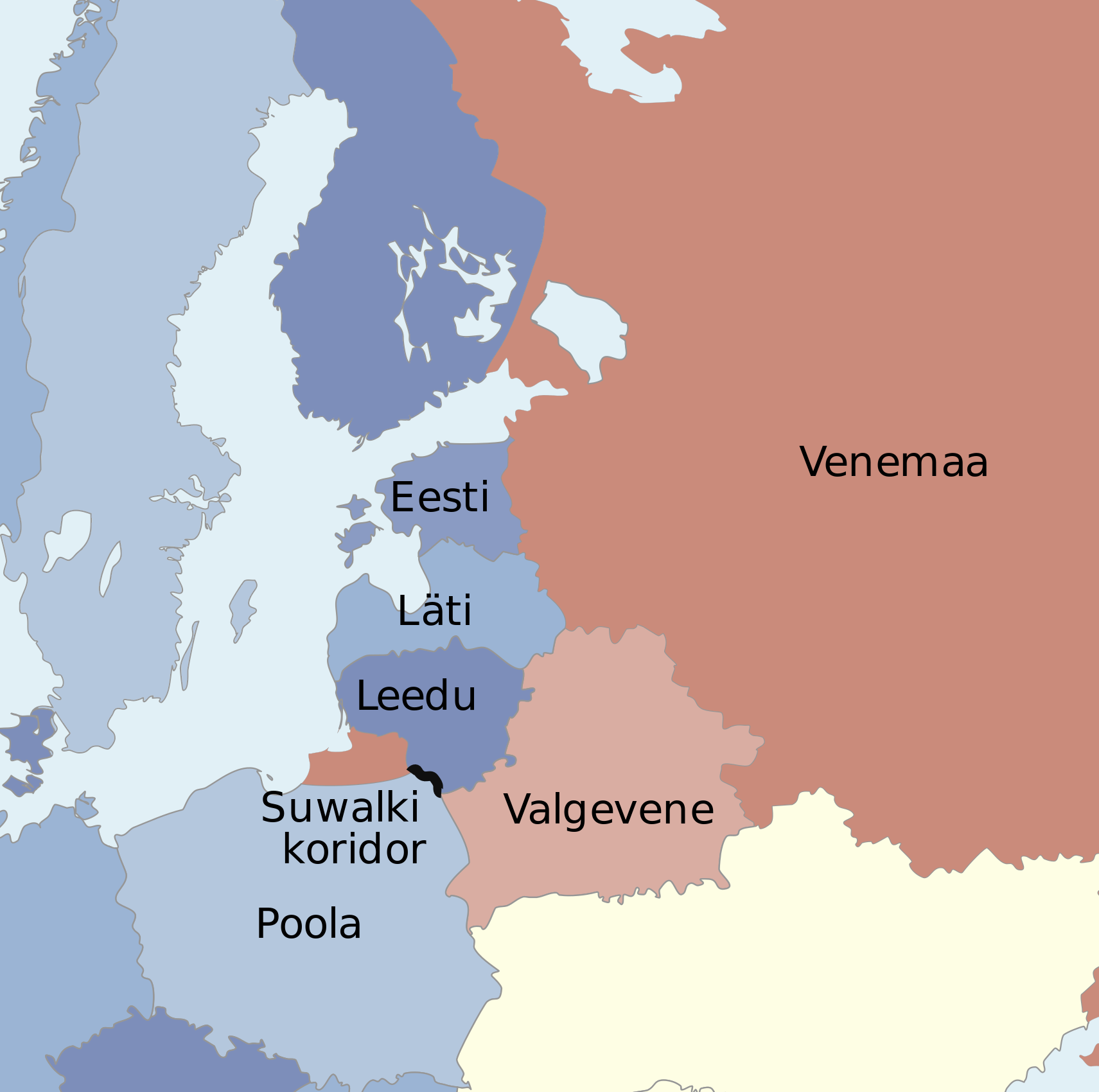
The venue matters. Warsaw sits on NATO's eastern edge, in a country that has turned defense spending into a national cause and that reads every Russian move as personal. Holding the speech here is itself a signal: the audience is not only the forum's delegates but the allies most exposed to Moscow — the Baltic states and Poland — and the Kremlin officials who will parse every sentence for intent.
The clearest preview came last week from the commander's spokesman, Col. Martin O'Donnell, who told reporters: 'The Supreme Allied Commander Europe's theory of victory is simple: maintain NATO's advantage, which is consistent with and grounded upon the alliance's deterrence and defence plans.' He added that 'given the unsettled and complex global security environment, we need to set conditions now to deter aggression and, if necessary, win if attacked.' Deterrence first, victory if deterrence fails — that is the doctrine in one line.
According to reporting by Bloomberg, Ansa, and Stars and Stripes, the unclassified document sketches a sequence for answering a Russian attack — including a surprise move in the Baltic designed to test collective defense. Forward-positioned NATO troops would blunt the incursion first, absorbing the initial shock. Then capabilities drawn from the NATO Eastern Flank Deterrence Initiative — low-cost drones, minimally crewed systems, AI-assisted targeting — would secure freedom of maneuver.
The final step is the sharpest: NATO would strike the adversary's command posts and control systems, aiming for what the reporting describes as a 'swift and decisive' defeat. Read the sequence as a whole and the logic is plain — survive the first blow, blind the attacker with cheap massed sensors and shooters, then cut the head off the operation. It is a doctrine built for speed, and for wars measured in days, not years.
The document has three stated purposes, per Bloomberg: to convince any potential attacker that victory is unattainable; to show allied publics what their increased defense spending actually buys; and to fuse traditional weapons with the capabilities that have emerged since 2022 — drones, autonomy, and software-driven targeting. It is as much a budget argument as a battle plan.
The timing is tied to what Western officials describe as a Russian 'hybrid' campaign — sabotage and interference against Ukraine's backers that stays below the threshold of open war. Reporting cites the discovery of an explosive-laden drone at a German airport among the incidents. Officials tell AFP that Moscow's actions have grown more reckless as its forces stall in Ukraine, warning the campaign could cause significant loss of life — a charge that sits alongside the grinding toll of Russian strikes on Ukrainian cities.
Here the alliance's own leadership urges care. Secretary-General Mark Rutte recently said there are no signs Russia is preparing a conventional attack on NATO — but that Europe must prepare for persistent hybrid attacks. The distinction matters: the speech is expected to warn about a war NATO does not believe is coming, while answering a shadow campaign it believes is already here.
Expectation management is in order. AFP notes the speech is 'unlikely to divulge many new details' — its purpose is signaling Moscow and reassuring eastern-flank allies, not revealing secrets. NATO officials insist the alliance has no intention of attacking Russia. The doctrine, in their telling, is a shield described in unusual detail, not a sword being sharpened. The expected warning is the message; the restraint around it is also the message.
The hybrid component may matter more than the battlefield sequence. The theory reportedly covers collective responses to hybrid threats below the threshold of armed conflict — the sabotage, cyber intrusions, and airspace probes that fill the gray zone. O'Donnell has called NATO 'purely defensive,' a phrase that will get heavy use in Warsaw. The unanswered question is what a collective response to a deniable drone actually looks like.
Ukraine is already the working demonstration. The Zambian Observer spotlights Operation Vivaldi, in which Ukrainian forces used drones and ground robots to clear some 30 kilometers of mined routes in two nights — with no sapper casualties. It is the drone-first logic of the new doctrine, field-tested: cheap machines doing the dangerous work so soldiers do not have to. The same logic drives Ukraine's deep strikes on Russian targets, covered in this edition.
The doctrine's final step — striking command posts and control systems — mirrors what Ukraine has practiced for three years: reaching past the front line to blind the other side. Strikes on bridges, refineries, and infrastructure are the grammar of this war, and NATO's theory translates that grammar into alliance doctrine. Whether thirty-two democracies could agree to execute it at speed is the question the document cannot answer.
Russia is not buying the defensive framing. Foreign Minister Sergey Lavrov, speaking after a meeting with his Timor-Leste counterpart, addressed NATO's repeated 'defensive alliance' claims — though his exact words remain unverified in the reporting. Russian outlets go further: eir.news and a-w-i-p, the latter citing Duma deputy Elena Panina, frame the speech as theatre — talk of 'victory' over Russia as offensive doctrine in defensive clothing, and the hybrid-sabotage attributions as assertion without evidence, useful mainly to justify the spending surge. Moscow denies directing sabotage inside NATO states.
Two premises in the Western telling deserve a flag. The idea that 'Moscow is considering' an incursion rests on anonymous officials; Russia denies it. And the speech itself remains pre-delivery — no transcript exists, no sentence has been uttered. A warning that has not been given cannot yet be judged by its wording, only by the expectations built around it.
Follow the money and the doctrine reads differently. Washington is weighing reductions in the military assets assigned to Europe's defense, and this summer the United States circulated a questionnaire asking allies about their defense spending and their views of Trump administration policies, according to Clash Report. A theory of victory that shows what spending buys is also a theory that justifies the bill — and answers, in advance, the American question of what Europe is paying for.
Through the five-dimensional lens, the stakes sharpen. Geopolitically, the speech reassures the exposed east while daring Moscow to test a line NATO says is drawn. Macroeconomically, it converts fear into procurement: drones, sensors, and AI targeting are cheaper than armored divisions, which is precisely the sales pitch. Technologically, it ratifies the post-2022 revolution — the war in Ukraine proved that cheap machines can blunt expensive armies, and the doctrine writes that lesson into alliance planning.
Historically, the format is familiar: Cold War commanders also gave speeches in frontier cities to make deterrence audible. The novelty is the vocabulary — 'theory of victory' is the language of war plans, not of communiqués, and Moscow hears it as such. Demographically, the doctrine quietly answers the West's hardest constraint: shrinking recruitment pools make massed manpower expensive, so machines and software carry more of the plan. Fewer boots, more drones — that is the bet.
What to watch now: whether the speech lands today as reported, and in what tone — the gap between a warning and a threat is measured in adjectives. Watch allied capitals for procurement announcements that quote the doctrine, watch Moscow's response for escalation or dismissal, and watch whether the 'purely defensive' label survives contact with a plan whose final step is striking command posts. The theory is written; the test is whether anyone believes it.
From the Western newsroom, this is deterrence done right: a commander telling the truth about how NATO would win, in the open, in a frontier capital, so no one in Moscow miscalculates. The 'Theory of Victory' is read as the missing link between soaring defense budgets and public understanding — proof the money buys something real. The hybrid warnings are treated as established fact, and Rutte's caveat as responsible calibration.
The tone is reassurance, never escalation. Every Western account stresses the 'purely defensive' label and NATO's lack of intent to attack Russia. The speech's vagueness — 'unlikely to divulge many new details' — is presented as discipline, not emptiness: deterrence works by being believed, not by being itemized.
From the Russian press, the same speech is theatre with a budget line. The vocabulary of 'victory' over Russia, they argue, is the language of offensive war plans, and the 'defensive alliance' label is the costume it wears for the cameras. The hybrid-sabotage attributions are treated as assertion without public evidence — convenient accusations that arrive exactly when parliaments are asked to spend more.
Lavrov's pushback and Duma deputy Panina's framing converge on one claim: this is normalization — getting Western publics used to the idea of a NATO–Russia war so the spending surge feels inevitable. Moscow's denials of sabotage are stated flatly, and the anonymous-official premise that Russia is 'considering' an incursion is read as the oldest trick in the briefing book.
From much of the Global South, the story is technical before it is moral. The Zambian Observer's lens is telling: what matters is Operation Vivaldi — drones and ground robots clearing 30 kilometers of mined ground in two nights without losing a sapper. For countries that cannot afford armored divisions, the doctrine's real news is that cheap machines now do what expensive armies did.
The political framing gets cooler treatment. Warnings exchanged between nuclear-armed blocs are watched the way one watches a storm two seas away — with attention, but without taking a side. The spending surge is noted as a fact about Western priorities; the 'who started the hybrid campaign' argument is left to the parties, who are not believed equally by anyone.
It is expected today at the Warsaw Security Forum in Poland, according to Bloomberg and France24 — but as of publication it has not been delivered, and no transcript exists. Everything reported so far, including the warning to Russia, describes expectations. Treat any quoted 'remarks' circulating before delivery as unverified; the reliable record begins when he actually takes the stage.
Per Bloomberg, Ansa, and Stars and Stripes, it sketches a response sequence to a Russian attack: forward-positioned troops blunt the incursion first, then low-cost drones, minimally crewed systems, and AI-assisted targeting from the Eastern Flank Deterrence Initiative secure freedom of maneuver, and finally NATO strikes the adversary's command posts and control systems for a 'swift and decisive' defeat.
No — that is the consistent official line. Spokesman Col. Martin O'Donnell calls NATO 'purely defensive,' and officials insist the alliance has no intention of attacking Russia. AFP notes the Warsaw speech is 'unlikely to divulge many new details': its purpose is signaling Moscow and reassuring eastern-flank allies. Moscow, however, reads the 'victory' vocabulary as offensive doctrine in defensive clothing.
Reporting points to an alleged Russian campaign of sabotage and interference against Ukraine's backers, including the discovery of an explosive-laden drone at a German airport. Officials tell AFP Moscow's actions have grown more reckless as its forces stall in Ukraine and could cause significant loss of life. Moscow denies directing sabotage inside NATO states, and the attributions rest on official claims rather than public evidence.
Bloomberg reports the doctrine is meant partly to show allies what increased defense spending delivers — fusing traditional weapons with post-2022 drone and AI capabilities. The context: Washington is weighing cuts to assets assigned to Europe's defense and quizzed allies on spending this summer. A theory that makes victory look purchasable is also an argument for the bill, and Ukraine's drone war, covered in this edition, is the exhibit.
