After two weeks of ultimatums from Washington, the G7 agreed to a coordinated, IEA-supervised release of up to 100 million barrels over four months, front-loaded with diesel, while Trump shelved his threat to ban American diesel exports.
Published 4 October 2026 · 06:00 GMT
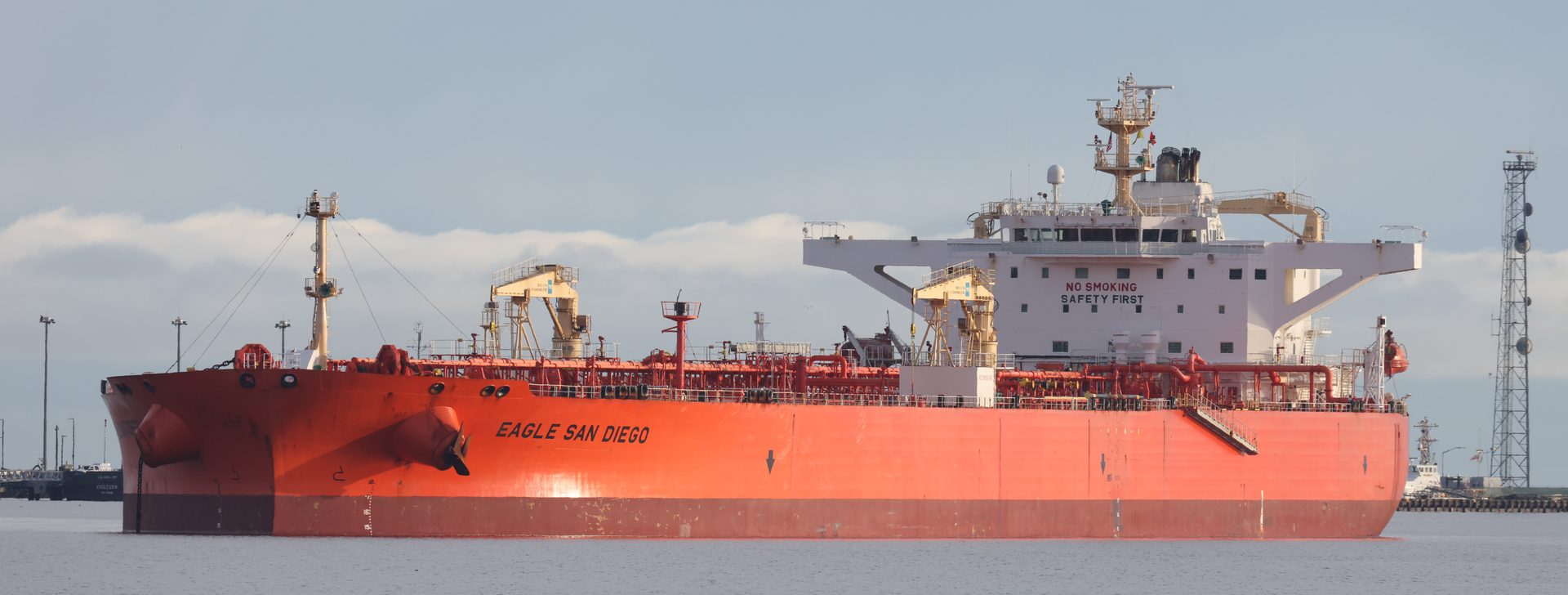
On Friday, October 2, the G7 agreed to release up to 100 million barrels of crude oil and diesel from emergency reserves over four months, in a coordinated drawdown supervised by the International Energy Agency. The emergency meeting, convened under France's rotating G7 presidency and chaired by Emmanuel Macron, commits members to a front-loaded "substantial diesel release" within the first 20 days — and, crucially, to refrain from restricting energy-product exports among themselves.
Within minutes, Donald Trump posted on Truth Social: "Europe has just agreed to release a massive amount of their heavily stocked Diesel Oil. The process will begin immediately." The diesel-export ban he had dangled over Europe for two weeks was, he told reporters later, "never really on the table." That revisionism fooled nobody: Washington had demanded the European Union release 120 million barrels of diesel over six months, singled out Germany and France as the holders of the deepest stocks, and held an October 1 coordination call with Berlin, Paris, Brussels, Rome, Dublin and London. The threat was the lever; the release was the price.
Behind the ultimatum sits the number that decides American elections: $6.53 a gallon, the record US pump price for diesel, against a national average of $6.37 on Friday, per AAA. Treasury Secretary Scott Bessent wrote on X that America's partners should accelerate delivery on commitments already made, noting the United States had supplied nearly half of the March release — while Germany has released less than a quarter of the 19.5 million barrels it pledged and France has barely touched its stocks, per an industry source. Diesel is the fuel of farmers and truckers, and with the midterms set for November 3, every rig on the highway is a rolling billboard for inflation.
One hundred million barrels buys the headline. Twenty days of diesel decides the trade.
Diesel is the working fuel of the world economy — haulage, agriculture, winter heating, militaries — and its price feeds straight into food. In Europe the pain is worse: the European Commission's Weekly Oil Bulletin put the average pump price at a record €2.24 a litre on October 1, against €1.59 before the Iran war, or $9.53 a gallon versus $7.11. Britain set its own record at 200.01p a litre on October 2, per the RAC. What makes this crisis different from a crude shock is that the shortage lives in the refined molecule: European gasoil traded at a record crack near $79 a barrel before settling around $69.70 — the barrel exists, but the diesel that moves trucks does not.
The physical causes are stacking up against consumers this winter. Russia has imposed a diesel export ban of its own after Ukrainian drone strikes hit its refineries. Chinese refiners have suspended October fuel exports to preserve domestic stocks. Middle Eastern diesel flows to Europe collapsed to about 110,000 barrels a day in September, their lowest since 2020, and J.P. Morgan puts the Gulf's product export system roughly 40 percent below prewar levels. Europe consumes far more diesel than it refines — and the United States, a $31.8 trillion economy in 2026 per IMF projections, holds the whip hand as the world's largest diesel exporter.
The war that began on February 28, when US and Israeli forces launched Operation Epic Fury against Iran, is in its 218th day, and its choke point is the Strait of Hormuz. An estimated 8.3 million barrels a day of Gulf oil — about 36 percent of it — cannot reach world markets. Brent sat near $73 before the invasion; it settled around $102.25 on Friday. On March 11 the IEA ordered the largest coordinated stock release in its history: 400 million barrels, the sixth such action since the agency's founding in 1974 — 271.7 million from government stocks, 116.6 million from obligated industry stocks, 72 percent of it crude.
That release is mostly spent: about 290 million barrels had been delivered by July, and IEA chief Fatih Birol says members have released roughly two-thirds of the March commitment. The United States supplied 172 million barrels, driving its Strategic Petroleum Reserve to 283.8 million — the lowest since October 1982. Washington's fury is that Europe's share has lagged: slow German and French delivery became the casus belli for two weeks of threats. OPEC+, for its part, held October quotas unchanged on September 6 at a combined 31.01 million barrels a day — Saudi Arabia at 10.478, Russia at 9.949 — and meets again today, October 4, to discuss 2027 quotas. The producers' refrain: the problem is not the quota, it is getting barrels to market.
Read the G7 statement closely and the headline softens. The release is "taking into account commitments that have already been fulfilled" — part of the 100 million barrels is the March pledge, recounted. The proposal discussed in Brussels, per Reuters, was 50 million barrels of European diesel plus 50 million of crude from other IEA members. A 50-million-barrel diesel draw is about 17 percent of the EU's emergency diesel and gasoil stocks and roughly 3 percent of its annual consumption, per Eurostat — significant, but not inexhaustible. EU rules demand emergency stocks covering at least 90 days of net imports or 61 days of consumption.
The fine print carries the real machinery: the IEA will monitor implementation, help stagger refinery maintenance so capacity does not shut down all at once, and report within 20 days. That is the admission this is a refining crisis as much as a crude one — no reserve release manufactures a single extra barrel of diesel, it only moves the shortage forward in time. Washington unlocked its latest 40-million-barrel SPR tranche on Tuesday as an exchange — refiners borrow the oil and repay about 25 percent more later, bids due October 6 — and earlier tranches have proven unpopular with traders when prices are expected to stay high.
Traders read the numbers coldly. One hundred million barrels over four months is about 830,000 barrels a day against a market missing 8.3 million a day at Hormuz alone. Energy strategist Clay Seigle's verdict travels the desks: "Raiding an oil supply piggybank is no substitute for solving the underlying problem which is insufficient production relative to demand." The release will compress the diesel crack before it compresses the flat price — which is why European gasoil futures fell more than 7 percent on Friday while Brent barely moved.
The threat worked because the dependence is real and recent. America exports 1.2 to 1.5 million barrels of diesel a day — the world's largest diesel supplier — and Europe's reliance has surged since it banned seaborne Russian diesel in 2023 and lost Gulf supply to the war. US diesel exports to Europe more than doubled between January 2025 and January 2026, from 167,000 to 396,000 barrels a day, per the EIA. Kpler puts the US at roughly 32 percent of the EU's extra-EU diesel imports this year, up from 17 percent in 2025 — and about 57 percent in north-west Europe. Britain takes 31 percent of its diesel imports from America.
A ban would have landed on Europe's economy going into winter. Kpler analyst Zameer Yusof notes north-west Europe would bid up replacement cargoes against the Mediterranean, Latin America and West Africa. S&P Global Energy CERA estimates an indefinite ban could force US refiners, facing a domestic diesel surplus, to cut crude runs by about 2 million barrels a day — strangling the supply Washington wants. Wood Mackenzie names China, a $20.65 trillion economy in 2026, as the only country with enough spare refining capacity to matter — the same China that just halted October fuel exports. EU Trade Commissioner Maroš Šefčovič warned of "very dramatic consequences." Brussels called it coercion, and knew it.
The ban would likely have backfired at home, too: a short ban pushes refiners to store product ahead of higher post-ban prices; an indefinite one lets them catch up on deferred maintenance after months above nameplate capacity. Rapidan Energy's Bob McNally read the room: "European strategic stock releases are a necessary, if not sufficient, condition to prevent U.S. export restrictions, which would still remain on the table given acute political anxiety in the White House about high pump prices." Europe's price for making the threat vanish was to accept the release — and to make Washington's forbearance a written condition. Macron: "President Trump, in particular, was very clear on this point." The ban is gone because Europe paid in barrels.
The clock is now physical: substantial diesel within 20 days, an IEA progress report within 20 days, an IEA ministerial in the coming days on whether more is needed. The four-month window runs straight through winter heating demand. Watch the Gulf bypass: Saudi Aramco has raised East-West Pipeline flows to nearly 6 million barrels a day — over 80 percent of its 7-million-barrel capacity — with about 4.5 million a day available for Red Sea export, a wartime high, after the September 22 restart and resumed loadings at Yanbu. Riyadh is also reportedly weighing an offensive against the Houthis to break the Red Sea chokehold, as Houthi threats of a naval blockade of Saudi Arabia hang over every tanker.
The war backdrop is darkening. The Pentagon is sending a third aircraft-carrier strike group and a Marine expeditionary unit to the Middle East — 9,000 to 10,000 more troops by end-November, per the Wall Street Journal — and Phillip Nova notes markets are pricing a risk premium for the absence of any diplomatic off-ramp. For the OPEC+ context see our November hold and Riyadh reroute reporting and China's halt of October fuel exports; Japan, a $4.46 trillion economy in 2026, was among the largest non-US contributors to the March release.
Friday's market read was orderly but unconvinced. December Brent fell 1.1 percent to $101.23, December WTI slid 2.3 percent to $90.70, US diesel futures fell 3.7 percent to $4.47 a gallon — but Brent had jumped 4.4 percent to $102.31 the day before, so the release merely erased one day of fear. Britain's Ed Miliband promised the measures would "stabilise energy supplies, build resilience in supply chains and shield households and businesses from price shocks." The test is 32 days away: November 3, with US diesel up roughly 70 percent since the war began and a fragile consumer — see our September jobs-miss coverage — deciding the midterms. The G7 has bought time. It has not bought supply.
In Washington and Brussels, the deal is being sold as alliance management under fire: Macron brokered, Trump got his barrels, and the export-ban threat — the ugliest instrument yet turned on allies — was sheathed without being used. The White House can tell voters it forced Europe to share the war's costs before November 3. European capitals can tell theirs that coordinated reserves, not coercion, set the price. Both claims are half true, and both sides know the ledger will be settled at the pump, not the podium.
The deeper Western anxiety is what the episode revealed about leverage inside the alliance. A sitting American president used access to diesel — the fuel of food and freight — as a pressure tool against Germany and France, and it worked. European officials who once lectured about "strategic autonomy" watched their emergency buffers become bargaining chips on someone else's election calendar. The release may cool prices, but the precedent will outlive the barrels: Washington now knows Brussels will pay in stocks when the pump price demands it.
For markets, the Western reading is strictly technical: this is a crack-spread operation, not a supply solution. One hundred million barrels over four months is about 830,000 barrels a day against a Hormuz gap of 8.3 million. Traders priced the diesel front-load instantly — gasoil futures fell more than 7 percent — and priced the crude reality just as fast, with Brent barely moving. The trade now is duration: how long before winter demand, refinery maintenance, or the next tanker attack erases the 20-day diesel window.
From Beijing and Moscow, the G7 release reads as an admission of exhaustion: the West's emergency cupboard is being emptied for a second time in seven months to fight a war premium of its own making, while the US Strategic Petroleum Reserve sits at its lowest since 1982. China, the only country with meaningful spare refining capacity per Wood Mackenzie, has halted its own October fuel exports — preserving its leverage while the G7 spends its buffer. Russia, holding OPEC+ discipline at 9.949 million barrels a day, watches its rival's reserves drain and its diesel export ban squeeze the same European market Washington just claimed to rescue.
The Eastern reading also notes the asymmetry of coercion: Washington threatened its own allies with an export ban and called it burden-sharing, while condemning energy weaponization everywhere else. The G7's written pledge not to restrict energy trade among members is, in this view, less a triumph of coordination than a ceasefire in an intra-Western energy war — one that began the moment a US president discovered diesel could be aimed at Berlin and Paris. OPEC+ meets today with its quotas intact; the producers' patience, not the consumers' reserves, remains the market's real backstop.
For Gulf producers, the episode is a study in who really holds the physical optionality. Saudi Aramco's East-West Pipeline now moves nearly 6 million barrels a day to the Red Sea — a wartime bypass around Hormuz that no reserve release can replicate. Riyadh and Moscow kept October output unchanged at a combined 31.01 million barrels a day, and the message is legible in any language: the barrels exist, the shipping does not, and strategic reserves are a bridge, not a destination.
In the Global South, the G7's diesel arithmetic lands differently: every dollar added to the gasoil crack is a tax on food, because diesel moves the harvest and the truck that carries it. The EU's €2.24-a-litre record is a European statistic; in import-dependent economies across Africa, South Asia and Latin America, the same war premium arrives as costlier bread and emptier markets, with no strategic reserve to draw on and no American president threatening anyone on their behalf. For them, the release is 100 million barrels of someone else's insurance.
The Southern reading is also institutional: the IEA, the vehicle for this release, represents 32 mostly wealthy member countries, while the countries that absorb the price shock have no seat at its table and no barrels in its caverns. When Washington and Brussels negotiate who empties whose piggybank, the outcome that matters in Dakar or Dhaka is simply the pump price — and the knowledge that the next ultimatum could just as easily be aimed at them, over grain, fertilizer, or the next fuel.
There is a quieter Southern calculation about refining. The crisis is a refinery crisis: Europe consumes more diesel than it makes, the US runs its plants above nameplate capacity, and the spare capacity that could matter sits in China and India. The long lesson for developing economies is the one the Gulf learned decades ago — own the molecule's full journey, from wellhead to refinery to pump, or rent your energy security from someone else's election calendar.
The G7 agreed to release up to 100 million barrels of crude oil and diesel from emergency reserves over four months, coordinated through the International Energy Agency. A substantial diesel release is front-loaded in the first 20 days, and members pledged not to restrict energy-product exports among themselves. Part of the 100 million counts commitments already fulfilled under March's 400-million-barrel release.
Trump wanted Europe to draw down its own emergency diesel stocks to bring down soaring US fuel prices ahead of the November 3 midterms. Washington asked the EU to release 120 million barrels of diesel over six months. After the G7 deal, Trump said the ban was 'never really on the table,' though he had publicly backed the idea for two weeks and repeated it as late as September 30.
Very. US diesel exports to Europe more than doubled between January 2025 and January 2026, from 167,000 to 396,000 barrels a day, per the EIA. The US now supplies roughly 32 percent of the EU's extra-EU diesel imports, up from 17 percent in 2025, and about 57 percent in north-west Europe. Britain takes 31 percent of its diesel imports from the US. No other exporter can replace those volumes quickly.
It should ease diesel prices in the short term — European gasoil futures fell more than 7 percent and US diesel futures 3.7 percent on the announcement. But analysts are skeptical about duration: 100 million barrels over four months is about 830,000 barrels a day against a market missing 8.3 million a day at Hormuz. Strategist Clay Seigle called reserve draws 'no substitute' for insufficient production. Winter demand will test it.
About 283.8 million barrels as of late September — the lowest since October 1982, and below the roughly 300-million-barrel functional floor, though above the 252.4-million-barrel statutory minimum. The US supplied 172 million barrels of the March IEA release. Its latest 40-million-barrel tranche was unlocked as an exchange: refiners borrow the oil and repay about 25 percent more later, with bids due October 6.
