On Beijing's orders, Chinese refiners have suspended all October fuel exports beyond Hong Kong and Macau. PetroChina is canceling cargoes, Asia's diesel squeeze is deepening, and the world is learning what the monthly-quota weapon is really worth.
Published 2 October 2026 · 06:00 GMT
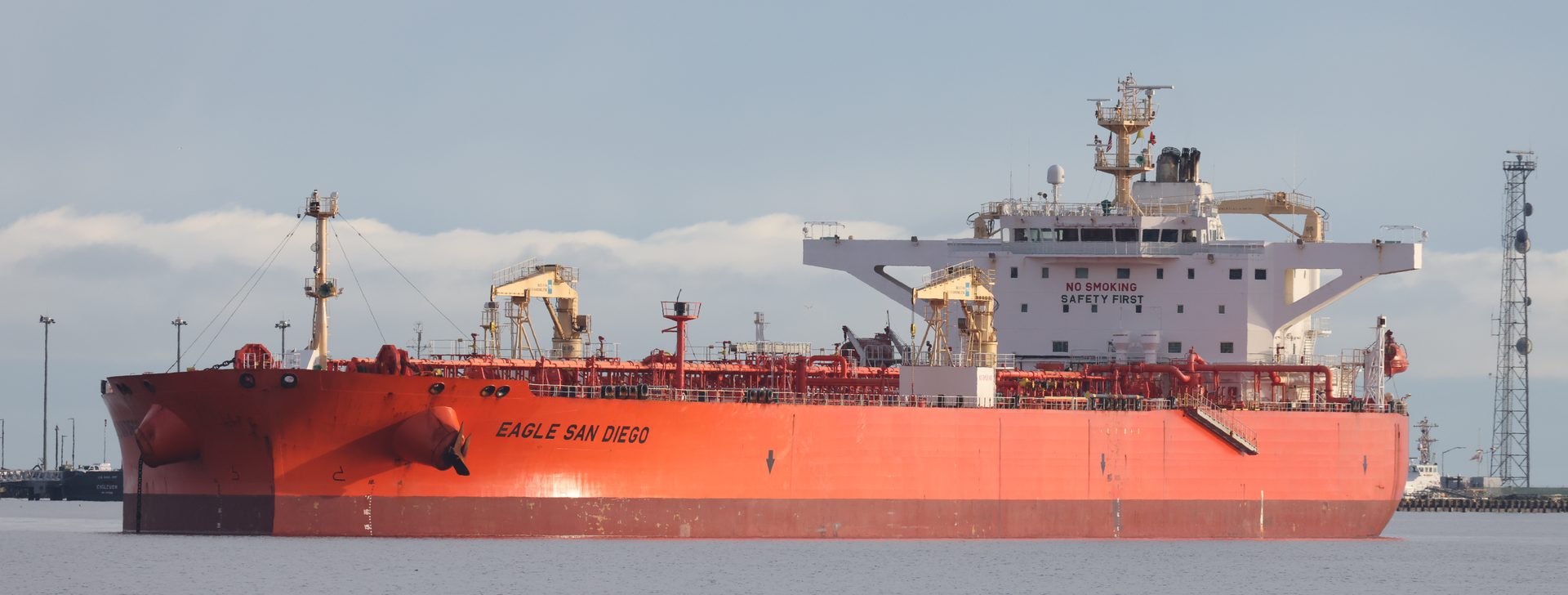
Beijing has turned off the taps. Chinese refiners suspended all October fuel exports beyond Hong Kong and Macau on government orders, PetroChina scrapped October cargoes, and Asia is staring down a diesel squeeze — at the exact moment oil markets were already reeling from war.
Thursday afternoon, Asia's trading desks got the kind of news that stops keyboards. Chinese refiners have suspended all October exports of refined oil products — gasoline, diesel, jet fuel — to every destination beyond Hong Kong and Macau, and they did it on Beijing's orders. Not a quota trim, not a rumor: an outright suspension, “until further notice,” according to four people briefed on the matter who spoke to Reuters. The timing was a gut punch. China walked into its weeklong Golden Week holiday on Thursday without giving its refiners the green light for a single October cargo to a foreign buyer, and nobody knows whether the tap reopens after October 7. State giant PetroChina — the country's biggest refiner and the first name any Asian fuel trader watches — had already moved. On Wednesday it canceled the majority of the gasoline and jet-fuel shipments it had planned for October, deals it had signed within the past two weeks. Zhejiang Petrochemical, a private refining powerhouse, scheduled no product shipments at all for the holiday week. The market's reaction was instant and violent. December Brent crude — the new front-month contract — settled up $4.28, or 4.4 percent, at $102.31 a barrel on Thursday. WTI finished at $92.87, up $2.45. And that was before the Wall Street Journal reported Washington is sending a third aircraft carrier and up to 10,000 more troops toward the Middle East, with the president openly weighing fresh strikes on Iran after the midterm elections. Oil is back above $100, Asia's diesel lifeline is being cut, and the world is learning, all at once, what it means when the planet's biggest refining hub decides to keep its fuel at home.
China is not just another supplier. It is the world's refining colossus — the swing exporter Asia leans on to smooth its diesel and jet-fuel balances whenever everyone else is tight. In August alone, Chinese refiners shipped 6.01 million tons of petroleum products abroad, up 12.7 percent from a year earlier and the most since March 2024, according to customs data cited by S&P Global. In September they moved 1.4 million tons of diesel, 500,000 tons of gasoline and at least 2 million tons of jet fuel, by industry estimates. Now every one of those tons is staying home — and the loss lands on a market that had no spare cushion. “China's pause removes a source of flexible supply at a particularly difficult moment,” said Nitesh Shah, commodity strategist at WisdomTree. “Middle Eastern disruptions have already reduced the availability of refined products, so importers have fewer alternatives.” The warning signs were flashing weeks ago. Chinese diesel inventories had slumped to multi-year lows, and GL Consulting, a consultancy owned by MySteel, told clients last week that with domestic supply already constrained and internal demand strengthening, refiners would likely prioritize the domestic market. UBS analyst Giovanni Staunovo put it bluntly: “The Chinese export ban suggests concerns about domestic product availability.” Diesel is the fuel the modern world runs on — the trucks, the tractors, the mining fleets, the construction sites, the backup generators, the heating boilers. When diesel tightens, the cost doesn't sit on a trading screen; it shows up in freight rates, food prices, and, as winter approaches, in home heating bills from New England to Normandy. A global diesel shortage fueled by the wars in Iran and Ukraine was already unlikely to ease before next year, according to storage market indicators and industry participants. Beijing just took away the one lifeline that was easing it.
When the world's refining hub keeps its fuel home, Asia's diesel market learns what energy security is worth — in real time, at the pump.
This is not Beijing's first turn of the valve. The pattern is now familiar enough to be doctrine. In March, after the outbreak of the US-Israeli war on Iran sent Middle Eastern crude supplies into chaos, Beijing restricted fuel exports to shield its domestic market. Through the spring and early summer, Chinese shipments were throttled while the Strait of Hormuz crisis scrambled Gulf supply routes and Iran's blockade of the waterway forced the world's crude flows onto ever narrower detours. Then, in mid-July, the authorities relaxed the curbs — and China's refiners roared back, boosting overseas shipments through July, August and September and measurably easing the fuel crunch across Asia. Since then, Beijing has managed diesel, gasoline and jet-fuel shipments month by month, through a quota system that gives the state a thermostat on exports: open the valve when it suits, close it when domestic shelves look thin. October's closure is the sharpest turn of that thermostat yet. And the arithmetic behind it is stark. Industry data cited by Reuters puts China's gasoline inventories at their lowest since 2011 and diesel stocks at their lowest since 2015 — more than a decade of buffer burned through in a single season of war. Every cargo loaded for a foreign buyer is fuel that cannot reach a Chinese motorist, airline, farmer or factory. Beijing's calculation, as ever, is straightforward: feed the home market first, count the export dollars later. That is not a conspiracy theory. It is the oldest instinct of any energy state — and it is now written into a monthly ritual that all of Asia has learned to watch with white knuckles.
The quota system deserves a closer look, because it is the real instrument here — quieter than an embargo, more flexible than a tariff, and just as potent. China does not simply allow or ban fuel exports; it meters them, month by month, through state-issued permits that no refiner, state-owned or private, can sail without. PetroChina, Sinopec, Zhejiang Petrochemical and the rest all need Beijing's nod for every cargo. That makes the export tap a policy dial the leadership can turn without speeches, decrees or diplomatic incidents. When stocks are flush, the dial turns and China plays the generous swing supplier — as it did all summer, to applause across Asian trading floors. When stocks sag, the dial turns the other way and the world gets a curt lesson in sovereignty. Analysts had been predicting exactly this for weeks. With gasoline and diesel inventories at seven-year lows, GL Consulting warned that October exports could fall again and tighten global fuel markets further. The surprise is not that Beijing closed the tap; the surprise is how fast it happened — PetroChina canceling deals signed barely a fortnight earlier, an entire industry swinging from “ship everything” to “ship nothing” inside days. That velocity tells its own story about the state of the tanks at home. Nobody cancels a cargo on a Tuesday unless the shelves are emptier than the ledgers admit.
There is also a calendar inside the calendar. Golden Week is one of China's great consumption surges: hundreds of millions of people on the move, on roads and in the air, burning through gasoline and jet fuel at a pace no model can fully predict. Beijing has always treated the holiday as a domestic stress test for its fuel logistics; this year the test arrives with the tanks half-empty. That is why the suspension is framed around the holiday rather than announced as an open-ended policy — it gives Beijing a dignified, temporary-looking reason to do what the inventory data was already demanding. And it gives the market a precise date to obsess over: October 7, the day the country goes back to work and the quota office must answer its mail. Asian buyers, meanwhile, are not waiting. Singapore — the region's pricing hub and the market where Chinese diesel cargoes set the tone — saw diesel refining margins spike as traders repriced physical supply. Importers in South Korea, Vietnam, the Philippines and along Africa's east coast, all regular takers of Chinese barrels, are now working the phones for replacement cargoes from the Middle East, India and Russia. Each alternative comes with its own wartime markup: Middle Eastern product competes with crude for limited pipeline and tanker capacity out of the Gulf, Indian refineries are themselves juggling export economics, and Russian barrels carry sanctions risk that many buyers would rather not touch. The scramble is the market doing what it always does — rerouting around a closed tap. But rerouting takes weeks, and every week of it is priced into the diesel at the pump. The deeper the delay, the more the October closure starts to look less like a holiday pause and more like the new baseline.
Start with geopolitics, because the calendar is screaming. Barely a week ago, during the Chinese president's state visit, the American president pressed Beijing — publicly, in a September 25 White House fact sheet — to “increase production of refined petroleum products to stabilize global supply.” Beijing's answer arrived seven days later: exports off, cargoes canceled, home market first. Read it as you like — a scheduling coincidence driven by empty tanks, or a deliberate refusal wrapped in inventory arithmetic — but the optics are impossible to miss. Max Meizlish, a research fellow at the Foundation for Defense of Democracies' Center on Economic and Financial Power, captured the cynical view in a statement: “China may temporarily restrict fuel, as it did earlier in the war, but then it will relieve those controls to save itself.” The world will then see China “as a savior despite the fact that it's actually China saving itself.” Meanwhile Washington is conducting its own energy diplomacy with a hammer. Reuters reported Thursday that the administration is pressing France and Germany to release emergency diesel reserves, warning it could otherwise bar American exports of the fuel — a lever pulled on allies in the same week Beijing pulled one on the world. US Energy Secretary Chris Wright put the new reality on the table in the Oval Office on Wednesday: “we've lost diesel exports from China,” he said, adding that some Middle Eastern supplies were being restored. Everyone is now hoarding, or threatening to hoard, or begging someone else not to hoard. That is what a wartime fuel market looks like when the refiners that used to grease it have become state instruments.
The economics run on two tracks that refuse to meet. Crude oil is recovering — Saudi Arabia resumed tanker loadings from its Red Sea port of Yanbu after restarting its East-West Pipeline around the blocked Strait of Hormuz, and UOB noted in a Thursday research note that crude flows from the Middle East were reportedly nearing pre-war levels. But fuel supplies, especially gasoline, are lagging badly behind, the bank added. David Morrison, senior market analyst at Trade Nation, said the pipeline has done “much of the heavy lifting” moving crude out of the Gulf since Iran blocked the strait — though it is nowhere near full capacity. This is the split the market is now trading: crude abundance against product scarcity, and product scarcity is winning. American distillate inventories fell 2.3 million barrels last week — nine times the expected draw — and US diesel futures jumped 4.5 percent to $5.1175 a gallon on Wednesday. The Energy Information Administration projects distillate inventories will stay below their lowest five-year levels through the end of 2026 and most of 2027, and puts average retail diesel this year at $5.07 a gallon, up from $3.66 in 2025. The American Automobile Association had diesel averaging $6.39 a gallon nationally on Thursday. “The market is taking stock of a distinctly mixed set of signals this week,” said Tim Waterer, chief analyst at KCM Trade, noting that after a disruptive Thursday, traders were “simply taking a breather.” “A healthier-looking Saudi export picture is being offset by reports of another US aircraft carrier heading toward the Gulf and by China's decision to curb refined product exports.” Brent needs to hold $100 on a closing basis to confirm the rally, technicians say; above it sits resistance near $110. None of it matters much to the trucker paying at the pump — the price of diesel is now being set by empty tanks, not by models.
The date that matters is October 7, when China's Golden Week ends and Beijing must decide whether to resume issuing export permits. Nothing in the reporting suggests the decision is made. Reuters' sources said only that the suspension lasts “until further notice” — the classic formula that keeps everyone, from Singapore traders to Paris fuel planners, guessing. If permits resume, the squeeze eases and Thursday's spike looks like a scare. If they don't, October becomes a long, dry month for Asian diesel, and the buyers who depended on Chinese cargoes will be bidding against each other for replacement barrels from the Middle East, India and Russia — at prices that have already climbed past $100. Friday's early trading offered little comfort: Brent was up another 29 cents at $102.60 a barrel, WTI up 27 cents at $93.14, with traders digesting the week rather than betting against it. Brent is on track for a 1.9 percent loss on the week, but that follows a 14 percent surge through September; WTI gained just 4 percent last month, and the product squeeze is only getting started. Watch the Asian diesel refining margins, which have risen sharply as physical supply tightens — they are the market's honest thermometer. Watch whether Washington follows through on its threat to bar American diesel exports if France and Germany don't tap their emergency stocks, because an export ban in America would turn a regional squeeze into a global one. And watch the American Northeast, where the EIA warns low inventories could push up heating-oil prices this winter; Mark Wolfe of the National Energy Assistance Directors Association already expects more families to need help paying for heat. The cold season is the hard deadline no one can negotiate with. When the first frost arrives, every missing Chinese cargo will be felt in someone's living room — in Guangdong, in Gujarat, or in Connecticut.
Step back and the lesson is structural, not seasonal. China holds the world's largest refining fleet, and it has spent three years demonstrating that the export tap is a policy instrument — on in March for diplomacy, off in spring for security, on in summer for commerce, off again in October for the home front. Energy security, in Beijing's doctrine, is not a slogan on a ministry wall; it is the first duty of the state, ahead of trade balances, ahead of foreign buyers, ahead of a White House fact sheet. The West spent decades building a global fuel market on the assumption that the cheapest refiner would always ship. This week tested that assumption at the worst possible moment — a war blocking the Strait of Hormuz, refinery infrastructure damaged in the Gulf and Russia, diesel stocks scraping multi-year lows on three continents — and found it wanting. The tap can reopen as quickly as it closed; Beijing has done it before, and the July reopening proved the dial turns both ways. But every importer in Asia is now doing the same math: a supplier that can legally vanish for a month is not a supplier you can plan a winter around. Diversification is no longer a strategy paper; it is a survival reflex. When the world's refining hub keeps its fuel home, the rest of the world learns, cargo by cargo, what sovereignty costs — and who pays it.
From Washington's vantage, the optics are damning and the lesson is urgent. The American president asked Beijing on September 25 — publicly, in a White House fact sheet — to raise refined-product output to calm world markets; Beijing answered by switching exports off. Add the timing to the Hormuz blockade, the carrier deployments and a diesel market already scraping five-year lows at home, and the Western policy reflex is predictable: strategic petroleum reserves, allied coordination, and a hard look at dependence on a single swing refiner that treats foreign buyers as a residual.
The uncomfortable corollary is that Washington is now playing the same game. Threatening to bar American diesel exports unless France and Germany release emergency stocks is energy statecraft with the velvet glove off — and it lands days after the administration watched China do precisely the same thing. The transatlantic conversation this month will be about who hoards last, and every hoarder points at the other. The Western lens sees a weaponized market; the honest Western footnote is that the weapon was loaded long before Beijing touched the trigger.
From Beijing's vantage, the outrage abroad reads as hypocrisy with a microphone. China's gasoline stocks are at a fifteen-year low and its diesel at an eleven-year low — a country that cannot fuel its own trucks, tractors and airlines is a country courting a domestic crisis, and no government on earth would export its way into one. The March and July episodes proved the quota system works exactly as designed: a sovereign thermostat, opened generously all summer when Asia needed it, closed when the tanks ran dry. Foreign buyers were never promised a right to Chinese fuel.
The deeper Chinese reading is structural. The United States — which lectured Beijing on market stability — is simultaneously threatening its own allies with a diesel export ban to extract emergency stocks. Washington reroutes Saudi crude around a blocked strait and calls it logistics; Beijing holds back its refined products and gets called a weapon. The eastern lens sees a double standard dressed as principle, and a reminder that in a wartime energy market, the state that owns the refineries writes the rules.
From the Global South's vantage — the ports of Mombasa, the farms of Punjab, the mines of Zambia — this is not a chess match; it is a bill. When China and America and Europe argue about hoarding, it is Asian and African importers who pay: diesel at $6.39 a gallon in America means diesel at ruinous prices in Nairobi, because the same global pool drains from the same shrinking barrel. Freight rates, fertilizer costs, food prices — the squeeze travels down the supply chain until it lands on people who never signed a quota order.
The southern lesson is older than this crisis: the buyers with the thinnest margins absorb the shocks of the thickest powers. August's 6.01 million tons of Chinese exports were a lifeline the South counted on without ever being consulted about; October's silence is a decision taken above their heads. The structural demand from the South is not sympathy — it is diversification, regional refining capacity, and a seat at the tables where the taps get turned. Nobody invited them to the March decision, the July reopening, or the October closure. They paid for all three.
Beijing just wrote the biggest liquidity check of the year — and changed nothing else.
The People's Bank of China will offer banks up to one trillion yuan a day — about $149 billion — in overnight funds from September 28 through October 8, covering the Golden Week holiday. It is the largest such cap since the tool's introduction in June 2026, up from 600 billion yuan in mid-September.
The calendar explains the timing. Golden Week sends hundreds of millions of Chinese traveling and spending; banks need cash the way airports need runways. The central bank is making sure the plumbing holds.
The scale, though, is the story. One trillion yuan a day is not holiday housekeeping. It is a backstop — a signal that whatever the holiday throws at the financial system, the PBoC has already covered.
And then, the other hand: nothing. Chinese banks left the one-year and five-year loan prime rates unchanged at 3.00% and 3.50% — the 16th consecutive month without a move.
Sixteen months of stillness in the price of credit, alongside the largest liquidity flood of the year. Beijing is watering the garden and refusing to lower the fence — liquidity yes, cheaper credit no.
Governor Pan Gongsheng gave the doctrine a name: slower loan growth is becoming "the new normal." Property and local-government borrowing are shrinking faster than emerging industries can borrow. The credit engine is being rebuilt mid-flight.
Liquidity is Beijing's answer to everything except the one question markets keep asking: where is the growth?
The PBoC is not idle elsewhere. It stepped up support with a net 200-billion-yuan injection through medium-term lending facility operations, reiterated its "moderately loose" stance, and kept its grip on the yuan.
The yuan, for its part, cooperated — rebounding after briefly dipping below 6.70 per dollar as US Treasury yields rose and the PBoC's grip eased.
The diplomacy helped. A US–China summit extended the trade truce to January — without new tariff cuts, but without new tariffs either. A truce, not a peace; markets will take it.
Step back and the contrast is the story. In Washington, yields cross 5% and traders bet on another hike. In Beijing, the central bank floods the system with cash and leaves rates untouched for a 16th month. Two central banks, two planets.
The logic is not mysterious. China's problem is not hot demand — it is cold credit. Pumping liquidity keeps the system liquid; cutting rates into weak demand would be pushing on the proverbial string.
The risk is the one Beijing knows best: banks awash in cash, with nowhere productive to lend it. Liquidity without lending becomes asset froth — the 2015 lesson, still fresh in institutional memory.
For the region, the signal matters more than the mechanics. A stable yuan and a liquid Chinese banking system through Golden Week is the foundation under Asia's supply chains. When Beijing sneezes, the region's exporters reach for tissues.
Watch what happens after October 8. If the trillion-yuan window closes quietly, it was holiday plumbing. If support lingers, it was something else — a central bank telling you, without saying it, that the economy needs the help.
Western coverage — Reuters and the financial wires — emphasizes the restraint: Beijing holding rates while flooding liquidity, a central bank running out of its favorite tools.
In this telling, 16 months of unchanged loan prime rates is the real headline — evidence of a policymaker boxed in by a hawkish world, a weak property sector, and the fear that rate cuts would only weaken the yuan. Liquidity is what you do when you've decided rates can't move.
Pan's "new normal" gets a skeptical hearing: an elegant phrase for a credit engine that no longer transmits. The question in Western commentary is whether "moderately loose" is a stance or a shrug.
Eastern coverage — Xinhua and Chinese outlets — emphasizes the calibration: targeted, seasonal, and exactly as doctrine prescribes.
In this telling, the trillion-yuan facility is textbook PBoC: precise, time-bound, and aimed at a known seasonal need. The unchanged rates are not paralysis but prudence — "moderately loose" means loose where it counts, steady where it matters, with the yuan's stability as the binding constraint.
The summit's truce extension gets equal billing: diplomacy buying the central bank room to maneuver, and the maneuver working — the yuan's rebound presented as policy competence, not luck.
Global South coverage — Malaysia's business press among it — emphasizes the neighborhood: what Beijing's plumbing means for everyone downstream.
The read from Kuala Lumpur: a liquid China through Golden Week is good news for ASEAN exporters, supply chains, and the region's own central banks. Yuan stability is a public good in Asia, and the PBoC just underwrote another week of it.
The caution in this coverage is borrowed from experience: when the region's biggest economy needs record liquidity to get through a holiday, the "new normal" of slower credit is everyone's normal too.
To read Beijing's move properly, you need the toolkit. Start with the overnight reverse repo — the instrument at the center of the trillion-yuan headline. In a reverse repo operation, the central bank lends cash to commercial banks overnight, taking bonds as collateral; the banks get the liquidity they need, the central bank gets the bonds back the next morning plus a sliver of interest. It is plumbing, not policy: the money created exists for a day, maybe rolled over, and its purpose is to keep the interbank market — the market where banks lend to each other — from seizing. The cap is the message. A trillion yuan a day says: whatever the holiday throws at the system, the PBoC has already covered.
The tool itself is young — introduced only in June 2026 — which makes the record cap more interesting. A new instrument's ceiling is normally discovered cautiously; jumping from 600 billion yuan in mid-September to a full trillion two weeks later is not calibration but declaration. It tells the banks, and through them the market, that the central bank will not be outbid by seasonal stress. The facility runs September 28 to October 8, covering Golden Week exactly. Time-bound, enormous, and explicitly temporary: the PBoC is writing a check it intends to tear up on the 9th. The question the article ends on — what happens after October 8 — is the only one that matters, because a backstop that lingers stops being a backstop and starts being a subsidy.
Then the medium-term lending facility — the MLF — through which the PBoC added a net 200 billion yuan. If reverse repos are the overnight overdraft, the MLF is the term loan: banks borrow for months, not hours, pledging collateral, at a rate the central bank sets. The MLF rate is the PBoC's quiet policy lever — it guides the loan prime rates without the drama of changing them. And the loan prime rates, the LPRs, are the number the article keeps returning to: 3.00 percent for one year, 3.50 percent for five, unchanged for the sixteenth consecutive month. The LPR is the benchmark for most new lending in China; holding it still while flooding the system with cash is the whole doctrine in one gesture. Liquidity yes. Cheaper credit no.
The sixteen months of stillness deserve their own reading, because stillness is also a decision — sixteen times over. In a world where Washington is hiking and yields cross 5 percent, cutting Chinese rates would narrow the already thin cushion against capital outflow and yuan depreciation; every basis point of easing is a basis point of incentive for money to leave. The PBoC's box, as the Western lens describes it, is real: a property sector that no longer transmits stimulus, local governments deleveraging rather than borrowing, and a currency whose stability is the binding constraint on everything else. Holding the LPR is not paralysis. It is the recognition that the price of credit is no longer the economy's binding constraint — and that moving it would cost more in currency stress than it buys in growth.
The calendar explains the timing, as the article says — but the calendar deserves its scale stated plainly. Golden Week is the largest annual human migration on earth compressed into seven days: hundreds of millions of Chinese traveling, spending, withdrawing cash, settling bills. The banking system's cash demand does not rise. It detonates. ATMs must be stocked, merchants' settlement accounts funded, the interbank market supplied with enough reserves to clear a week's worth of the world's second-largest economy changing hands. In normal years, the PBoC manages this with routine open-market operations. This year it wrote the biggest check in the tool's short history.
The scale, though, is the story — the article's line, and worth pressing. One trillion yuan a day is not holiday housekeeping; it is a backstop sized for something the PBoC sees and the market does not yet. Seasonal demand explains the facility's existence. It does not fully explain its size. Either the central bank is being theatrically cautious — signaling strength by oversupplying safety — or its internal read on holiday-season financial stress is darker than the public data. Both readings are consistent with "moderately loose." Only one of them is reassuring. The banks will take the cash either way; the signal is in the surplus.
There is also the consumption angle, which is where the liquidity meets the real economy. Golden Week is China's great annual test of consumer confidence: the week when households vote with their wallets on whether the economy feels safe. A banking system visibly backstopped — cash available, payments clearing, no friction — is the precondition for the spending the state wants to see. The PBoC cannot make households spend; it can only ensure that nothing in the plumbing stops them. In an economy where the consumer has been the missing piece and property wealth no longer does the spending's work, the holiday's cash registers matter more than the interbank rate. The trillion yuan is, among other things, a bet on the tills.
And the regional read — the Global South lens from Kuala Lumpur — captures what the holiday means beyond China's borders. A liquid China through Golden Week is the foundation under Asia's supply chains: exporters paid, importers funded, the region's own central banks spared the volatility of a yuan under holiday stress. Yuan stability, as the article notes, is a public good in Asia, and the PBoC just underwrote another week of it. When the region's biggest economy needs record liquidity to get through a holiday, the "new normal" of slower credit becomes everyone's normal — but a stable holiday is still a stable holiday, and Asia's exporters will take it.
Central bankers choose their phrases the way diplomats choose communiqués — every word weighed, every ambiguity intentional. When Governor Pan Gongsheng said slower loan growth is becoming "the new normal," he was not describing a statistic. He was retiring an expectation. For two decades, China's credit engine ran on a simple formula: property developers borrowed, local governments borrowed against land, and the resulting construction carried GDP. That engine is being dismantled mid-flight — property deleveraging, local-government debt discipline — faster than emerging industries can borrow to replace it. "New normal" is the doctrine that says: stop waiting for the old credit cycle to return. It is not returning.
The doctrine has a logic, and it is worth steelmanning before doubting. Credit-fueled growth bought China two decades of expansion and left it with the property crisis, the local-government debt pile, and the demographic headwinds now arriving together. Pumping cheap credit into that structure — the old playbook — would reflate the very imbalances the state is trying to defuse. Slower, cleaner credit growth, directed at manufacturing upgrades and strategic industries rather than concrete, is the quality-over-quantity bet. The PBoC is not refusing to stimulate. It is refusing to stimulate the old economy. The distinction is the entire policy.
The risk, as the article notes, is the one Beijing knows best: banks awash in cash with nowhere productive to lend it. Liquidity without lending becomes asset froth — the 2015 lesson, still fresh in institutional memory, when stimulus leaked into equity speculation rather than productive investment. The trillion-yuan facility, the 200-billion MLF injection, the "moderately loose" stance — all of it presupposes transmission channels that the "new normal" itself describes as weakened. Watering the garden, to use the article's image, works only if the soil still absorbs water. If property and local governments no longer drink, and emerging industries cannot drink fast enough, the water pools. Pooled liquidity has a history in China. It is called a bubble.
Step back and the contrast the article closes on — two central banks, two planets — is the frame that will define the autumn. Washington hikes into data it may not have, fighting inflation with the South's interest bills. Beijing floods with cash it cannot lend, defending a currency it cannot afford to let slip, waiting for a credit engine it is rebuilding mid-flight. Neither has a clean instrument. Both are improvising inside doctrines — data-dependence, the new normal — that describe the world they wish they governed. Watch October 8: if the trillion-yuan window closes quietly, it was holiday plumbing, and the doctrine holds. If support lingers, the PBoC will have told you, without saying it, that the new normal needs more help than the old vocabulary admits.
Monetary policy does not happen in a diplomatic vacuum, and the PBoC's autumn maneuver owes more to the summit than the communiqués admit. The US–China meeting extended the trade truce to January — no new tariff cuts, but no new tariffs either — and that pause is worth more to Beijing's central bank than any single instrument in its toolkit. Tariff escalation would have meant a weaker yuan, imported inflation, and capital flight arriving together; the truce removes the worst tail from the PBoC's planning. "A truce, not a peace; markets will take it," as the article says. So will central bankers.
The yuan's rebound — recovering after briefly dipping below 6.70 per dollar — is the truce's signature in the currency market. With US Treasury yields rising and the PBoC's grip easing, the currency found its footing not through intervention but through the removal of a threat. That distinction matters: a yuan steadied by diplomacy is cheaper to defend than a yuan steadied by reserves. Every week the truce holds is a week the PBoC does not have to choose between growth and the exchange rate — the choice that has boxed in Chinese policy for the better part of a decade.
But truces expire, and January is closer than it looks. The extension without tariff cuts is a freeze, not a thaw: the existing duties remain, the structural disputes untouched, the next escalation one headline away. The PBoC is therefore managing a window, not a settlement — using the diplomatic calm to get through Golden Week, to steady the currency, to buy the "new normal" time to prove itself. If January brings escalation, the trillion-yuan plumbing will look like the prelude to a harder season. Diplomacy bought the central bank room to maneuver, as the Eastern lens notes. Room is not resolution. It is rented, monthly, and the rent comes due in January.
