Drone strikes targeted Eritrean vehicles near Adigrat as Addis Ababa demanded an immediate withdrawal and Asmara denied any incursion, pulling the Horn of Africa toward open war.
Published 8 October 2026 · 18:00 GMT
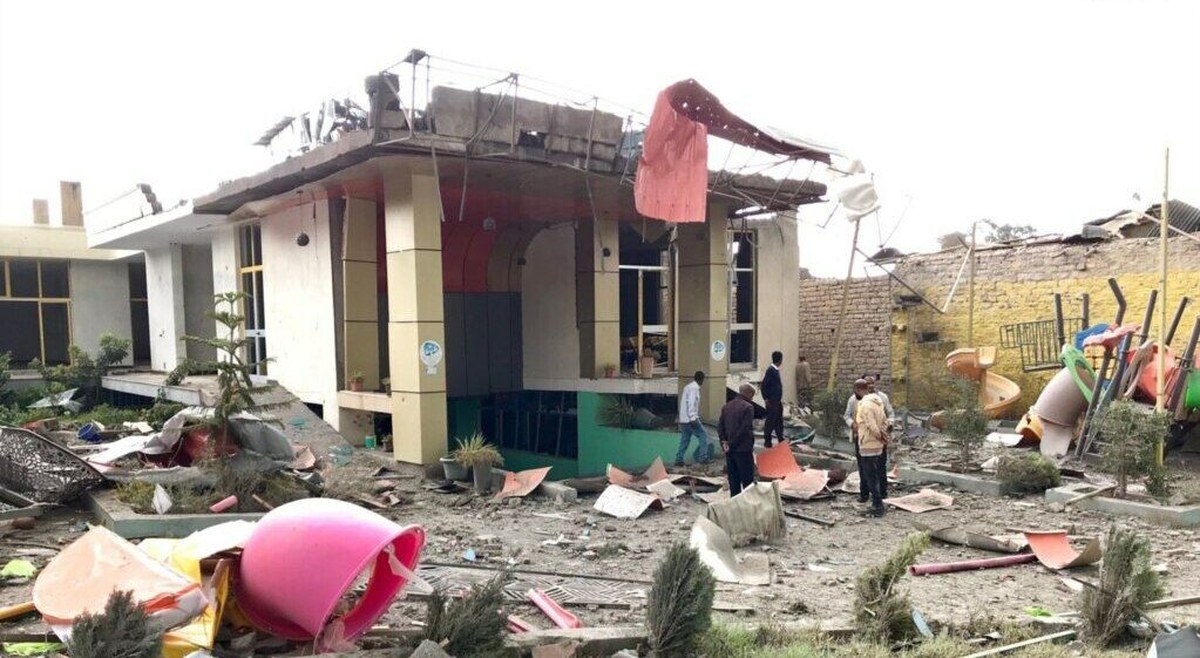
Drone strikes targeted Eritrean forces deployed inside northern Ethiopia overnight, the U.S.-based conflict monitor ACLED said on Thursday, in what would be the most direct clash yet between the two Horn of Africa neighbours since they severed diplomatic ties last week. The strikes, believed to have been carried out by Ethiopia's military on Wednesday and Thursday, hit Eritrean military vehicles near the Tigrayan town of Adigrat as they withdrew, and blasts were heard north of the town as the strikes unfolded.
Drone strikes targeted Eritrean forces deployed inside northern Ethiopia overnight, the U.S.-based conflict monitor ACLED said on Thursday, in what would be the most direct clash yet between the two Horn of Africa neighbours since their diplomatic break last week. The strikes, believed to have been carried out by Ethiopia's military on Wednesday and Thursday, hit Eritrean military vehicles near the Tigrayan town of Adigrat as they withdrew, Reuters reported. Blasts were heard north of the town as the strikes unfolded, and neither capital has offered an on-the-record account of what happened.
The strikes followed the first confirmed sighting of Eritrean forces inside Ethiopia since fighting broke out last month between Ethiopia's military and a rebel alliance. On Wednesday, witnesses saw Eritrean troops being transported in trucks through Adigrat, about 25 kilometres inside Ethiopian territory, a movement that turned a rumour of interference into a documented crossing. Ermiyas Ababu, a commander of the government-aligned Tigray Peace Force, said Eritrean soldiers had entered Adigrat on Tuesday and Idaga Hamus on Wednesday, and that Eritrean officers were conducting surveillance in Idaga Hamus, according to AP. ACLED added that the Eritrean soldiers had crossed into Ethiopia at Zelambesa and that Ethiopian military drones targeted them at Guada as they travelled toward Idaga Hamus.
The Horn is watching the border. The border is not talking.
Closer than at any point since the two countries severed diplomatic ties last week, and the answer now depends largely on what Asmara does next. On Thursday, Asmara gave no answer: the information minister did not respond to requests for comment, and the government has offered nothing beyond Wednesday's dismissal of the incursion reports. Addis Ababa's allegation that Eritrea was supporting the rebels was the stated reason for the break; Eritrea has repeatedly denied it. But denial has not stopped the slide, and a severed diplomatic channel means there is now no formal line through which a miscalculation, a stray strike or an overreaching patrol can be walked back before it hardens into policy.
For Addis Ababa, the framing is already legal, not merely military. In a meeting with UN Deputy Secretary-General Amina J. Mohammed on Thursday, Ethiopia's foreign minister Gedion Timothewos called for the immediate withdrawal of Eritrean forces from Ethiopian territory and reaffirmed Ethiopia's right to defend its sovereignty and territorial integrity under international law, the foreign ministry said on X. It was the most formal statement of the Ethiopian position since the strikes began, and it was deliberately delivered in front of the United Nations rather than in a domestic press release, a signal that Addis Ababa wants the crisis on the international record as an invasion, not a border incident.
The geography of the reported incursion is itself an escalation. Adigrat sits roughly 25 kilometres inside Ethiopia, and the ACLED account describes a deliberate movement: a crossing at Zelambesa, a push toward Idaga Hamus, officers conducting surveillance, and then drone strikes on the withdrawing column at Guada and near Adigrat. If that sequence holds, this was not a lost patrol or a hot pursuit across a poorly marked frontier; it was a probe, and the drones were the answer. The Tigrayan theatre matters too: this is the same northern ground where Ethiopia's military and the rebel alliance have been fighting since last month, and a third force entering the field changes the geometry of every engagement around it.
Asmara is saying, for now, that nothing happened. Eritrea's information minister Yemane Gebremeskel did not respond to a request for comment on Thursday; on Wednesday he had called reports of an Eritrean incursion part of an Ethiopian plan to justify a war of aggression against its smaller neighbour. Spokespeople for Ethiopia's government, its military and the prime minister's office did not respond to requests for comment either, leaving the two most important capitals in the crisis officially silent on the battlefield facts. The silence is itself information: neither side is currently willing to own the escalation in public, which keeps every option, including a wider one, on the table.
The phrase "smaller neighbour" carries the weight of the region's history. Eritrea is the far smaller state, and its leadership has long framed Ethiopian power as an existential threat; Ethiopia, for its part, has framed Eritrean interference as the spark for renewed war. When two states that broke relations a week ago begin trading drone strikes and cross-border troop movements, the risk is not only a border skirmish but a conflict that redraws the security map of the entire Horn, from the Red Sea coast to the Sudanese frontier, and pulls in every armed actor already operating in northern Tigray.
The calendar is doing some of the escalating. Fighting between Ethiopia's military and a rebel alliance broke out only last month, and the reported Eritrean entry on Tuesday and Wednesday suggests Asmara may have judged that the alliance's pressure on Addis Ababa created an opening worth exploiting. ACLED, the United States-based monitor whose reporting is currently the primary public window into the strikes, described a tight operational sequence: crossing at Zelambesa, drone hits at Guada, withdrawal near Adigrat. Whether the crossing was opportunism, a rescue of allied units, or a deliberate test of Ethiopian air defences is unknowable from the public record, and Asmara's silence ensures it stays that way.
The United Nations is now formally in the picture through Thursday's Mohammed-Timothewos meeting, but no independent UN verification of the strikes or the incursion has been reported, and neither capital has produced evidence for the other's consumption. That is the deeper problem for anyone hoping to mediate: with ties severed, spokespeople silent and the two governments' accounts irreconcilable, there is no agreed set of facts to negotiate over, only competing accusations and the smoke north of Adigrat. Regional mediators will have to build a ceasefire on a foundation that does not yet exist.
Three paths are visible, and only one of them ends quietly. Eritrean forces could withdraw under international pressure, restoring the uneasy status quo of the past week and giving diplomacy a window it currently lacks. The incursion could harden into a sustained front, with Ethiopian drones hunting Eritrean units across northern Tigray and Asmara answering through further crossings or proxies, which would fold the border crisis into the existing rebel-alliance war. Or the diplomatic vacuum could simply persist while the fighting spreads, which is how border incidents in the Horn have historically become wars: slowly, through a chain of unowned escalations, then all at once.
For now, the confirmed facts are narrow. Drones struck Eritrean military vehicles near Adigrat on Wednesday and Thursday, Eritrean troops were seen about 25 kilometres inside Ethiopia, and Addis Ababa has taken its case to the United Nations while Eritrea calls the whole thing a pretext. What is not confirmed is nearly everything else: the size of the Eritrean force, the number of casualties, and whether Asmara ordered the crossing or is still denying it happened. The Horn is watching the border. The border is not talking.
From the Western reading, this is a sovereignty violation first and a regional stability crisis second. The reported incursion, if confirmed, is the kind of cross-border aggression that Western capitals are institutionally primed to condemn, and Ethiopia's decision to frame its case in front of the UN deputy chief, in the language of territorial integrity, was pitched directly at that audience. Expect calls for restraint, for verification, and for Asmara to withdraw, with the implicit warning that a second Ethiopia-Eritrea war would be treated as a deliberate choice, not an accident.
At the same time, the more cautious Western analysts note the thinness of the evidence chain. Nearly everything the public knows comes from one monitor, ACLED, plus witness accounts and a Tigrayan commander aligned with Addis Ababa; Asmara denies it all and Addis Ababa's own spokespeople will not speak. Western newsrooms will keep the story framed as 'reported' until satellite imagery or a second independent source confirms the crossing, and diplomats will privately press both sides for access before committing to a narrative.
From the Eastern reading, this is a crisis to be managed through established channels, not a morality play. The instinct in Moscow and Beijing is to let the UN process run, to avoid taking public sides between two sovereign states, and to treat the severed diplomatic ties as the real emergency, since wars in the Horn have historically started in exactly this kind of vacuum. The emphasis will be on restoring communication lines and de-escalation mechanics rather than on assigning blame for the Zelambesa crossing.
The Eastern lens also reads the drone strikes as a data point in a larger pattern: the rapid spread of cheap unmanned strike capability to African militaries, and the way it compresses the ladder between a border incident and a war. For analysts in this camp, the question is less who crossed first than how quickly both sides can now kill each other's forces from the air, which makes the absence of any hotline between Addis Ababa and Asmara the most dangerous fact in the story.
From the Global South reading, this is a neighbourhood fire that the neighbourhood must put out. The African Union's credibility is partly measured on crises like this one, and the memory of the last Ethiopia-Eritrea war, with its tens of thousands of dead, is still a living reference for diplomats from Nairobi to Pretoria. The demand from this camp is for an African-led mediation, ideally before the UN Security Council turns the Horn into another theatre of great-power positioning, and for the facts to be established by investigators the region trusts.
There is also a harder-edged Southern reading that takes Asmara's 'smaller neighbour' framing seriously. Small states in the region have long lived with the fear that a larger neighbour can manufacture a pretext, and Eritrea's dismissal of the incursion reports as a war-justification plot resonates with governments that have their own history of unequal border disputes. That does not mean the South believes Asmara; it means the South wants proof, not press releases, before anyone's army is declared the aggressor.
No. The strikes are described as believed to have been carried out by Ethiopia's military, based on ACLED's reporting via Reuters, but spokespeople for Ethiopia's government, military and prime minister's office did not respond to requests for comment. Until Addis Ababa speaks on the record, the attribution remains the monitor's assessment rather than an official admission.
Witnesses saw Eritrean troops trucked through Adigrat, about 25 kilometres inside Ethiopia, and a Tigray Peace Force commander said soldiers entered Adigrat on Tuesday and Idaga Hamus on Wednesday. ACLED reported the crossing point at Zelambesa and drone strikes at Guada as the column moved toward Idaga Hamus, with Eritrean officers reportedly conducting surveillance there.
They broke relations last week after Addis Ababa accused Asmara of supporting the rebel alliance that has been fighting Ethiopia's military since last month. Eritrea has repeatedly denied the accusation. The severed ties removed the formal diplomatic channel just as the border crisis was escalating, which is why Thursday's incursion reports landed in a vacuum.
The UN itself has not issued an independent statement on the strikes or the incursion. What happened on Thursday is that Ethiopia's foreign minister met Deputy Secretary-General Amina J. Mohammed and used the meeting to demand an immediate Eritrean withdrawal and to reaffirm Ethiopia's right to self-defence under international law, according to the foreign ministry's account on X.
