El Niño threatens South Africa's crops, but a record maize harvest cushions the blow
The Crop Estimates Committee has put the 2025–26 maize crop at a record 17.7 million tonnes as farmers begin planting into what forecasters call one of the strongest El Niño events in living memory. The silos are full and prices are soft; the real test comes with the January rains.
Published 2 November 2026 · 15:37 GMT
The summary
17.7 million tonnes; the Crop Estimates Committee's ninth estimate for the 2025–26 maize harvest, the largest on record and up about 6% year on year. 9.78 million tonnes of white maize and 7.91 million tonnes of yellow maize, at an average yield of 6.49 tonnes a hectare.
The three lenses
- WestThe Western wire framed the story as market arithmetic: Reuters' 27 October dispatch led with the record and the year-on-year gain, and London commodity desks noted South African and regional prices moving toward export parity.
- EastAsia is already living the event South Africa is bracing for.
- Global SouthThe South African information environment is the most alarmed.
Key facts
- 17.7 million tonnes; the Crop Estimates Committee's ninth estimate for the 2025–26 maize harvest, the largest on record and up about 6% year on year. Crop Estimates Committee / Reuters, 27 Oct 2026
- 9.78 million tonnes of white maize and 7.91 million tonnes of yellow maize, at an average yield of 6.49 tonnes a hectare. The National, 28 Oct 2026
- 2.39 million hectares; commercial farmers' intended maize area for 2026–27, down 12.4% and the smallest since 2018–19; total summer grain and oilseed intentions stand at 4.5 million hectares. Crop Estimates Committee, 27 Oct 2026
- R3,700 a tonne for white maize and R3,800 for yellow in late October, down from levels above R4,000 a month earlier, with the market trading near export parity. Commodity Board / SAFEX, 29 Oct 2026
- Above-normal temperatures are very likely through at least January 2027, with below-normal rainfall the most likely outcome for October–December, according to the South African Weather Service. SAWS, Oct 2026
What the record 17.7-million-tonne count actually tells us
South Africa's best-known agricultural economist, Wandile Sihlobo, also the country's Agriculture and Land Envoy, opened November with reassurance for a nervous summer. In a Daily Maverick analysis on 2 November, he argued that farmers are planting the 2026–27 summer grain and oilseed crop from unusual strength: the Crop Estimates Committee's ninth and final estimate, released on 27 October, puts the 2025–26 maize harvest at 17.69 million tonnes, the largest ever recorded.
The timing is what makes the number matter. The Pacific has swung into what the Weather Service says could become one of the strongest El Niño events in living memory, promising a hotter, drier summer through the first quarter of 2027. Farmers are planting early into soil moisture banked by September rains and a long 2025–26 wet season. The question is whether a record harvest can buy the country enough time to ride out the dry spell.
What the harvest ledger shows; down to the tonne
The ninth estimate, carried by the Reuters wire and South African outlets, revises the crop up by nearly 169,000 tonnes from the September figure of 17.52 million, and about 6% above the 16.65 million tonnes of the previous season. White maize accounts for 9.78 million tonnes, yellow maize for 7.91 million; the average yield of 6.49 tonnes a hectare is exceptional, and the Free State, Mpumalanga and North West together produced 82% of the crop.
The forward look is more cautious. The same committee release carried the intentions survey: farmers intend to sow 4.5 million hectares of summer grain and oilseed, 2% less than last season and roughly the five-year average. Maize alone accounts for 2.39 million intended hectares; down 12.4%, or 337,000 hectares, the smallest maize area since 2018–19, according to Standard Bank's agribusiness desk. These are intentions, not plantings; the final area will only be known with the committee's preliminary planting data on 27 January 2027.
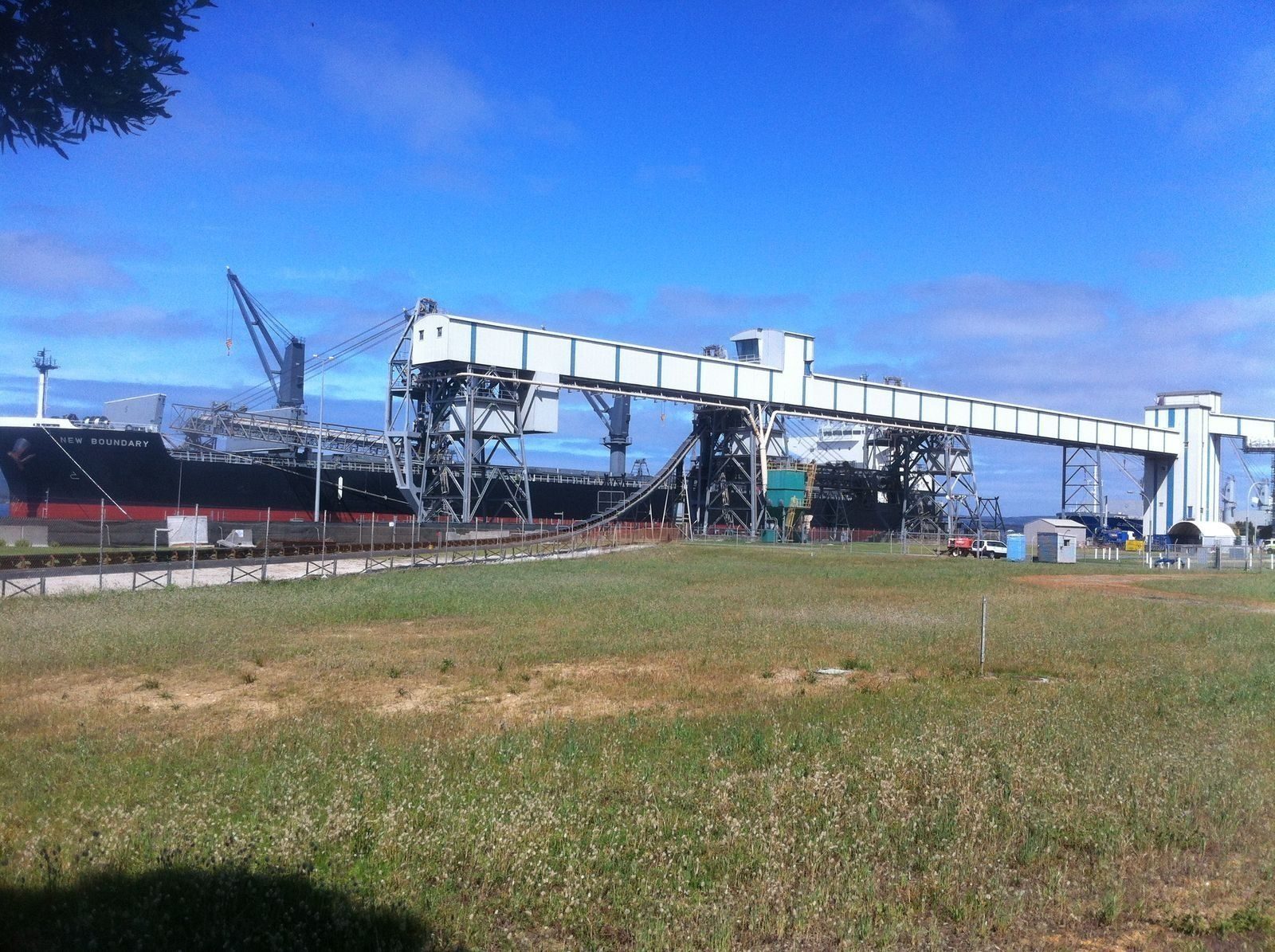
The buffer is real: roughly 2.4 million tonnes of opening stocks against annual consumption of about 12 million tonnes. Late-October prices reflected the surplus, white maize around R3,700 a tonne and yellow around R3,800, down from above R4,000 a month earlier. December 2026 SAFEX futures closed on 29 October near R3,837 for white and R3,822 for yellow, with spot prices at R3,787 and R3,800, the market trading close to export parity, a sign of comfortable domestic supply. In grain terms, South Africa is a net exporter this year.
Why the next four months decide everything
What nobody can yet say is whether farmers will hold to their stated intentions as El Niño deepens and input costs bite. The decisive variable is the January–February rainfall over the maize belt; the period that makes or breaks yields. A second unknown is the price path: as regional demand gathers pace in 2027, maize prices will probably climb from late-October levels, but how far depends on the weather and on how aggressively neighbouring buyers turn to South African grain. The size of the 2026–27 crop, and with it the supply picture for the second half of 2027, is entirely unwritten.
How food prices, not harvests, will touch households
For consumers, the crop is measured in rand, not tonnes. Full silos have kept SAFEX prices soft, cushioning the animal-feed chain and the price of staple foods; a buffer that matters in an economy where Finance Minister Enoch Godongwana has already flagged El Niño as a risk to output and production costs in his 2026 budget statement. The same low prices, however, squeeze farmers facing rising fertiliser and fuel costs. Regionally, with South Africa a net exporter and food prices under pressure elsewhere, the record harvest is already weighing on maize prices across southern Africa. A drought in one season can become a price shock in the next; which is why this record crop is being read as insurance, not victory.
What the 2015–16 playbook suggests about 2026–27
The last comparable episode is instructive. The 2015–16 El Niño brought southern Africa its worst drought on record, with five South African provinces declared disaster areas. This time the country enters the dry season with the opposite of a deficit: a record crop, 2.4 million tonnes of opening stocks, and prices with room to absorb shocks. That cushion is a one-season instrument; it protects the 2026–27 marketing year, while the risk migrates to 2027–28 if the new planting fails.
There is also a global divergence worth watching. While India braces for a 28–32% drop in maize output and Southeast Asian rice markets tighten, South Africa's surplus is pressing regional prices down; a reminder that climate risk is rarely synchronised, and that one region's harvest can steady another's shortfall. The constraint is at the farm gate: with fertiliser and diesel costs elevated, the farmers being asked to plant through a drought warning are doing so on thinning margins. The policy question is whether the state treats the grain buffer as a strategic asset to be husbanded, or lets the market run it down before the weather verdict arrives.
Where the pressure moves once the silos are full
A record crop does not distribute itself. The surplus is already reshaping trade: South African maize is flowing out while imports sit at negligible levels, and analysts expect sustained downward pressure on regional prices through the marketing year. That is good news for import-dependent neighbours and for the domestic feed, poultry and dairy chains. It is less comfortable for grain farmers, whose margins are compressed from both sides; soft output prices and firm input costs.
The second pressure point is water. El Niño is arriving on top of a municipal water crisis, and demand for boreholes, storage and emergency supply typically surges when the rains underperform; the pattern the 2015–16 drought established. The third is political: a season that begins with full silos and ends with failed plantings would flip the public conversation from food security to blame, which is why the agriculture minister and the Weather Service have been sounding public warnings since mid-October. Standard Bank's agribusiness desk is watching actual planting decisions in the coming weeks as the true signal of how the season lands.
When we will know whether the early planting survives
The calendar of the next season is already set. The Crop Estimates Committee's preliminary planting data, due on 27 January 2027, will give the first hard reading on whether farmers held their intended area; Sihlobo calls it the number to watch. Before that, the Weather Service's rolling seasonal outlooks and the December peak of the El Niño itself will shape expectations; NOAA gives a greater than 83% chance the event stays strong to very strong through January–March 2027. Through the first half of 2027, supplies are largely spoken for. What happens after mid-year depends entirely on the crop now going into the ground; and the traders' tell will be SAFEX futures and the pace of exports.
The three lenses
West Lens:
The Western wire framed the story as market arithmetic: Reuters' 27 October dispatch led with the record and the year-on-year gain, and London commodity desks noted South African and regional prices moving toward export parity. Invesco's Asia-Pacific institutional team put an 83% probability on a very strong El Niño in the fourth quarter of 2026 persisting into spring 2027; while noting Asia enters this event with stronger buffers than in 2015–16, including grain reserves above historical averages.
East Lens:
Asia is already living the event South Africa is bracing for. Malaysia's Astro Awani reported in June that hot, dry weather was disrupting planting from India's grain plains to Thailand's rice fields and Indonesia's palm-oil estates, with fertiliser shortages from the Iran war compounding the damage. India's ETV Bharat, on 2 November, described the El Niño in its strongest form in decades: below-normal monsoon rainfall, damaged kharif paddy and pulses, projected maize output down 28–32%, and the agriculture ministry lowering the 2026–27 foodgrain target as rabi wheat comes under threat.
South Lens:
The South African information environment is the most alarmed. The Weather Service says El Niño was firmly established by mid-August and intensifying at an unusually fast rate, warning it could become the strongest event in living memory. Its outlook makes below-normal rainfall the most likely outcome for October–December and above-normal temperatures very likely through at least January 2027.
The consensus
- What we agree on
- We agree the Crop Estimates Committee's ninth estimate puts the 2025–26 maize crop at a record 17.7 million tonnes, and that ample stocks and soft prices are cushioning consumers as an intense El Niño summer begins.
- What we don't agree on
- We disagree on how much protection the record harvest really buys: optimists see a full marketing year of cushion, while agronomists warn a failed 2026–27 planting could reverse the picture by mid-2027.
- What we know
- What we know: the harvest total and its white-yellow split, the planting-intention survey, late-October price levels, and the SAWS and NOAA El Niño outlooks.
- What we don't know yet
- What we don't know: whether farmers will hold their stated planting intentions, when and how much January–February rain will fall, and how far regional demand will lift prices in 2027.
- What we expect
- What we expect: the January 2027 preliminary planting data will be the first hard test of the season; supplies through the first half of 2027 look covered, with the real question being the 2027–28 marketing year.
Questions, answered
What is the Crop Estimates Committee's ninth maize estimate?
South Africa's Crop Estimates Committee put the 2025–26 maize harvest at 17.69 million tonnes in its ninth and final estimate, released 27 October 2026. That is the largest crop on record; about 6% above the previous season's 16.65 million tonnes and up from the September estimate of 17.52 million. White maize accounts for 9.78 million tonnes and yellow maize for 7.91 million.
Why are South African farmers planting less maize this season?
Commercial producers intend to plant 2.39 million hectares of maize in 2026–27, down 12.4% from last season and the smallest area since 2018–19, according to the committee's October survey. Farmers cite the expected El Niño drought and elevated fertiliser and fuel costs. Total summer grain and oilseed intentions are 4.5 million hectares, 2% lower than last year but near the five-year average.
How strong is the 2026 El Niño?
Forecasters describe it as potentially one of the strongest on record. The South African Weather Service says it was firmly established by mid-August 2026 and intensifying unusually fast; NOAA gives a greater than 83% chance it stays strong to very strong through January–March 2027. The Pacific sea-temperature anomaly passed 3°C above average in mid-September, and the World Meteorological Organization expects the warming to peak around December 2026.
Will food prices rise in South Africa in 2027?
Not immediately: the record harvest and 2.4 million tonnes of opening stocks are keeping prices soft; white maize traded near R3,700 a tonne in late October, down from over R4,000. The first half of 2027 is covered by existing supplies. The risk sits in the second half of 2027: if the new planting fails under El Niño, prices would climb as the cushion runs out.
Sources
- Crop Estimates Committee / Reuters, 27 Oct 2026
- The National, 28 Oct 2026
- Crop Estimates Committee, 27 Oct 2026
- Commodity Board / SAFEX, 29 Oct 2026
- SAWS, Oct 2026