El Mansouri represents King Mohammed VI at the Francophonie summit as the race for its leadership narrows
Morocco’s Head of Government arrived in Phnom Penh on Saturday for the 20th Francophonie Summit, which opens on Sunday with the election of the organisation’s next secretary-general; a contest reshaped on the eve of the vote when the Democratic Republic of Congo withdrew its candidate.
Key points
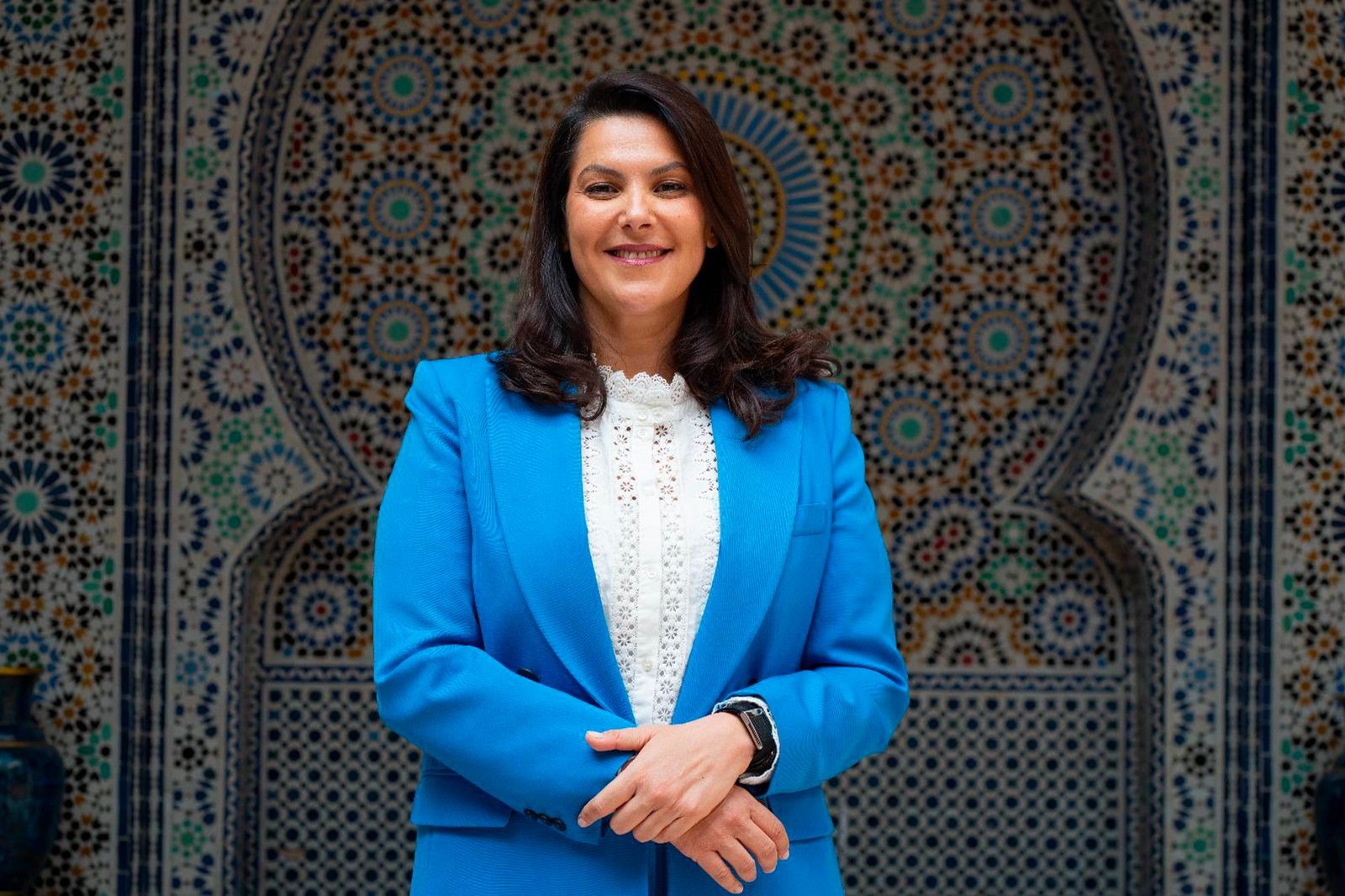
- Fatima Ezzahra El Mansouri arrived in Phnom Penh on Saturday, 14 November, to represent His Majesty King Mohammed VI at the 20th Francophonie Summit, held on 15 and 16 November. MAP / Hespress, 14 Nov 2026
- The summit gathers the leaders of the OIF’s 90 states and governments under the theme “Reinvesting in Peace for Shared Prosperity and Lasting Stability”; King Norodom Sihamoni presides over the opening ceremony. Al Jazeera, 15 Nov 2026
- On Monday, 16 November, the 53 full members elect the secretary-general for 2027-2030 in closed session, by consensus or by secret ballot under rules adopted in 2022. The New Times, 10 Nov 2026
- The Democratic Republic of Congo withdrew its candidate, Juliana Amato Lumumba, on Saturday and backed Romania’s Dacian Cioloș; the incumbent, Louise Mushikiwabo of Rwanda, stays in the race, as does Mauritania’s Coumba Ba. Al Jazeera, 15 Nov 2026
- Morocco has belonged to the OIF since 1981; the summit will also adopt the Phnom Penh Declaration and review the organisation’s 2024-2027 programme. Diplomatique, 14 Nov 2026
Three readings of the same result
Same facts, different frames. Each reading names its outlets and what it emphasizes.
The summit is a test of whether a body built on a shared language can hold its members together.
France, which funds the largest share of the organisation’s €71.7 million budget for 2026, has the most to lose from a split: President Macron arrived in Phnom Penh determined to broker consensus, and his office has made clear most members want agreement rather than a contested ballot.
Key detail Moldova’s backing for Dacian Cioloș, announced on Friday, shows the European wing treating the Romanian candidacy as serious and unifying.
The summit is Cambodia’s moment.
Hosting the French-speaking world’s gathering for the first time, Phnom Penh has wrapped it in the legacy of the late King-Father Norodom Sihanouk, who kept Cambodia inside the Francophonie through war and upheaval, and in the ambitions of Prime Minister Hun Manet’s government, which bid for the summit as a statement of the country’s diplomatic return.
Key detail Vietnam’s President To Lam is among the arrivals.
The summit is about who speaks for the French-speaking world; and how many people stand behind that voice.
The Democratic Republic of Congo, with more than 110 million people, is the largest country where French is an official language; its threat to leave if Mushikiwabo wins again claims the leadership must reflect its demographic centre of gravity.
Key detail Rwanda insists its candidate stays.
Sources by lens: 1 West, 1 East, 5 Global South. See every source
The story
What brought Morocco’s head of government to Phnom Penh?
Morocco’s Head of Government, Fatima Ezzahra El Mansouri, arrived in Phnom Penh on Saturday to represent His Majesty King Mohammed VI at the 20th Summit of La Francophonie, which opens on Sunday in the Cambodian capital. She was welcomed at Techo airport by Un Kheang of Cambodia’s foreign ministry and by Abderrahim Rahhaly, Morocco’s ambassador to Thailand and Cambodia. The summit gathers heads of state and government from the 90 states and governments of the International Organisation of La Francophonie (OIF) under the theme “Reinvesting in Peace for Shared Prosperity and Lasting Stability”, and King Norodom Sihamoni will preside over its opening ceremony. It is the first time Cambodia has hosted the summit, and only the second time it has been held in Southeast Asia since Hanoi in 1997. About twenty leaders are expected, among them Canada’s Mark Carney, Vietnam’s To Lam, Rwanda’s Paul Kagame and the Democratic Republic of Congo’s Félix Tshisekedi. French President Emmanuel Macron, who chaired the last summit in 2024, arrived on Saturday for a state visit and hands the chair to Cambodia.
For Morocco, a member since 1981, the summit is a diplomatic appointment and a decision point: on Monday, in closed session, the leaders of the 53 full members elect the next secretary-general for 2027-2030, a race reshaped on the eve of the vote when the Democratic Republic of Congo withdrew its candidate and backed a rival.
What is on the table in Phnom Penh, and what is already settled?
The summit’s formal business runs across two days. On Sunday the leaders open the meeting and set the organisation’s strategic priorities; on Monday they elect the secretary-general and are expected to adopt the Phnom Penh Declaration, alongside a review of the 2024-2027 programme and preparations for the 21st Summit in 2028. The agenda also carries Morocco’s priorities; youth employment, women’s economic empowerment, digital innovation and conflict prevention. Around the formal sessions, Cambodia has staged a Village de la Francophonie and a FrancoTech forum.
The leadership contest will define the summit. Four candidates were heard in Paris on 30 June: the incumbent, Louise Mushikiwabo of Rwanda, in office since January 2019 and seeking a third term; Juliana Amato Lumumba of the Democratic Republic of Congo; Coumba Ba of Mauritania; and Dacian Cioloș of Romania, a former prime minister and former European agriculture commissioner. On Saturday, the Congolese delegation withdrew Lumumba and backed Cioloș, seeking consensus around a unifying candidacy. Rwanda’s foreign minister, Olivier Nduhungirehe, said Mushikiwabo would stay in the race, and Ba is also still standing. Under rules adopted in March 2022, the leaders of the 53 full members choose by consensus, failing that by secret ballot, with Cambodia’s presidency naming the scrutineers and proclaiming the result. It is the first time the rules will be applied in full; in Djerba in 2022, Mushikiwabo was the only candidate and was re-elected by consensus.
Reinvesting in Peace for Shared Prosperity and Lasting Stability
What could still change before Monday’s vote?
Whether Monday ends in consensus or a ballot is the first open question. France, the organisation’s largest contributor, has pressed for agreement, President Macron’s office said most members agreed on the need for consensus, but Rwanda has said Macron asked President Kagame to withdraw his country’s candidate and that Kigali refused. The second unknown is the Congolese threat: Kinshasa has said it could leave if Mushikiwabo is re-elected, and it has not said what it would do if Cioloș, the candidate it now backs, loses. A third is the content of the Phnom Penh Declaration, negotiated until the final hours, which will show how far the members are willing to go on peace, prosperity and stability. Nor is it settled who will host the 21st Summit in 2028, or what Morocco’s delegation will say behind closed doors.
Why does a leadership vote in Phnom Penh matter to Morocco?
Morocco has belonged to the French-speaking world since 1981, and the organisation is one of the rooms where the Kingdom conducts diplomacy beyond its neighbourhood; a forum of 90 states and governments where voices from four continents sit as equals. Who leads it for the next four years will shape what it can do: whether it remains a cultural and linguistic club, or becomes a practical instrument for youth employment, digital cooperation and conflict prevention. The stakes are sharpened by recent losses: Mali, Niger and Burkina Faso announced their withdrawals in March 2025 after suspensions over military coups, and the Democratic Republic of Congo, home to more than 110 million people, the largest French-speaking population of any country where French is an official language, has now threatened to follow them out. A departure of that size would shrink its claim to speak for the French-speaking world.
The week has underlined how active Morocco’s diplomacy has been: on Friday in Essaouira, France reaffirmed that the present and future of the Moroccan Sahara fall within the framework of Moroccan sovereignty, calling the autonomy plan the only basis for settlement (France reaffirms Moroccan sovereignty over the Sahara); the same day in Rabat, Morocco signed a €434.4 million agreement with the African Development Bank for reforms and climate resilience (Morocco and the African Development Bank sign a €434.4 million deal); and Moroccan phosphate group OCP is in talks with French energy firms on uranium supply (Morocco’s phosphate could soon fuel French reactors). In Phnom Penh, the Kingdom’s delegation carries that momentum into a summit where the French-speaking world’s cohesion is on the line.
What is the Congolese withdrawal really signalling?
Kinshasa’s decision to withdraw Juliana Lumumba and back Dacian Cioloș is best read as leverage, not surrender. By removing its own candidate, the Democratic Republic of Congo turned a four-way race into a three-way one and presented the Romanian as the consensus figure, a candidate with no stake in the Rwanda-Congo dispute, a former prime minister and a former European commissioner, acceptable to Europeans and, Kinshasa hopes, to Africans who want change. It also put a price on the incumbent’s re-election: the threat to leave, which would cost the Francophonie its largest French-speaking population. The move leaves Mushikiwabo in a harder position, she must now beat a candidate backed by the organisation’s demographic heavyweight; while leaving the door open to a negotiated outcome. Whether that produces consensus on Monday, or the 2022 rules face their first secret ballot, is the question the closed session will answer.
What happens if the organisation splits; or holds?
If the Democratic Republic of Congo carries out its threat, the Francophonie would lose the country where French has the most speakers, a year after losing three Sahel members; a contraction that would raise blunt questions about what the organisation still represents. A Romanian victory would put a European at its head for the first time and test whether a secretary-general from outside Africa can hold the confidence of the African majority. A third Mushikiwabo term would preserve continuity, but would leave the Congolese grievance unresolved and the threat of withdrawal hanging over the next four years. Whichever way the vote goes, the summit’s other work, the declaration, the programme review, the preparations for 2028, will be read through the result, and the organisation’s credibility will be judged by whether it settles this dispute in the room rather than in the press.
What should we watch before Monday evening?
Sunday brings the formal opening, presided over by King Norodom Sihamoni, and a day of plenary sessions and bilateral meetings in which President Macron’s talks with his African counterparts will be watched for movement toward consensus. On Monday the leaders meet in closed session to elect the secretary-general, Cambodia’s presidency naming the scrutineers and proclaiming the result, and the summit is expected to adopt the Phnom Penh Declaration before it closes. President Macron is due to visit Angkor on Monday before leaving for Malaysia. Morocco’s delegation, led by the Head of Government on behalf of His Majesty the King, will take part in both days’ work, and the Kingdom’s positions on youth employment, women’s economic empowerment, digital innovation and conflict prevention will be tested in the resolutions adopted. The climate backdrop is set by the COP31 talks on the loss of the 1.5°C target (Nations grapple with the loss of the 1.5°C target), while in Manila a parallel gathering of Asian leaders is under way (ASEAN must deepen digital ties, harden energy security).
What we agree on, and what remains open
Established
- Fatima Ezzahra El Mansouri arrived in Phnom Penh on Saturday, 14 November, to represent His Majesty King Mohammed VI at the 20th Francophonie Summit on 15 and 16 November.
- The summit gathers the OIF’s 90 states and governments.
- On Monday the 53 full members elect the secretary-general for 2027-2030.
Contested
- On whether the secretary-general’s election can be settled by consensus; France and most members press for agreement, while the Democratic Republic of Congo’s withdrawal of its candidate and its backing of Cioloș has narrowed the race to three without yet producing a consensus.
- On the organisation’s direction; the incumbent campaigns on continuity, her challengers on a more people-centred or economically practical Francophonie.
Still open
- Whether Monday’s closed session ends in consensus or a ballot.
- Whether the Democratic Republic of Congo would carry out its threat to leave if Mushikiwabo wins a third term.
- What the Phnom Penh Declaration will commit members to.
- Or who will host the 21st Summit in 2028.
What to watch
Questions, answered
Fatima Ezzahra El Mansouri is representing His Majesty King Mohammed VI at the 20th Francophonie Summit, held in Phnom Penh on 15 and 16 November. Morocco has belonged to the International Organisation of La Francophonie since 1981, and the summit sets the organisation’s priorities for the next four years, elects its secretary-general and adopts the Phnom Penh Declaration.
Three candidates remain after the Democratic Republic of Congo withdrew Juliana Lumumba on Saturday: the incumbent Louise Mushikiwabo of Rwanda, who is seeking a third term; Dacian Cioloș of Romania, now backed by Kinshasa; and Coumba Ba of Mauritania. The leaders of the 53 full members vote in closed session on Monday, by consensus or by secret ballot.
Kinshasa backed Dacian Cioloș to allow consensus around a unifying candidacy. Congo accuses Rwanda of backing the M23 armed group in the country’s east, which Kigali denies, and it has threatened to leave the organisation if Mushikiwabo is re-elected for a third term.
Beyond the secretary-general’s election, the leaders will adopt the Phnom Penh Declaration, review the organisation’s 2024-2027 programme and prepare the 21st Summit in 2028. On the sidelines, the Village de la Francophonie runs until 17 November and the FrancoTech forum brings together the French-speaking world’s digital actors until 16 November.