
South Africa's Constitution at 30: a promise still contested, still unfinished
Thirty years after the democratic Constitution was adopted, three South African voices agree on one thing, its promises remain unfulfilled in daily life, and disagree on why. Is the fault concentrated economic power, weak implementation, or the design of the constitutional order itself? The argument, not the anniversary, is the story.
Published 28 October 2026 · 15:11 GMT
The summary
Thirty years after the democratic Constitution was adopted, three South African voices agree on one thing, its promises remain unfulfilled in daily life, and disagree on why. Is the fault concentrated economic power, weak implementation, or the design of the constitutional order itself? The argument, not the anniversary, is the story. On 28 October 2026, the Daily Maverick published a Constitution at 30 conversation in which Mbali Ntuli, Mbekezeli Benjamin and Sizwe Mpofu-Walsh agreed the Constitution's promises remain unfulfilled, while differing on where the main failure lies.
The three lenses
- WestWest; In Western constitutional commentary, South Africa's document is routinely held up as one of the world's most progressive: a Bill of Rights that reaches beyond civil and political liberty into socio-economic rights, enforced by a Constitutional Court with real power to strike down state action.
- EastEast; No dedicated East-outlet report on this 2026 Constitution-at-30 debate was found in searches of CNA, The Hindu, NHK and Kyodo; the East perspective here is therefore analytical, not cited reporting.
- Global SouthSouth; From inside South Africa, the debate is not abstract at all.
Key facts
- On 28 October 2026, the Daily Maverick published a Constitution at 30 conversation in which Mbali Ntuli, Mbekezeli Benjamin and Sizwe Mpofu-Walsh agreed the Constitution's promises remain unfulfilled, while differing on where the main failure lies. Daily Maverick (Oct 28, 2026)
- South Africa's Constitution was adopted by the Constitutional Assembly on 8 May 1996, after negotiations that followed the 1994 democratic election. Parliament of South Africa (2026)
- The Constitution was signed on 10 December 1996 and entered into force on 4 February 1997, becoming the country's supreme law, binding the legislature, the executive and the judiciary. SAnews (2026)
- Section 25 of the Constitution provides for land reform, restitution and equitable access to land; Ntuli argues it does not make land reform impossible, and that weak implementation, corruption and inadequate support have impeded progress. Daily Maverick (Oct 28, 2026)
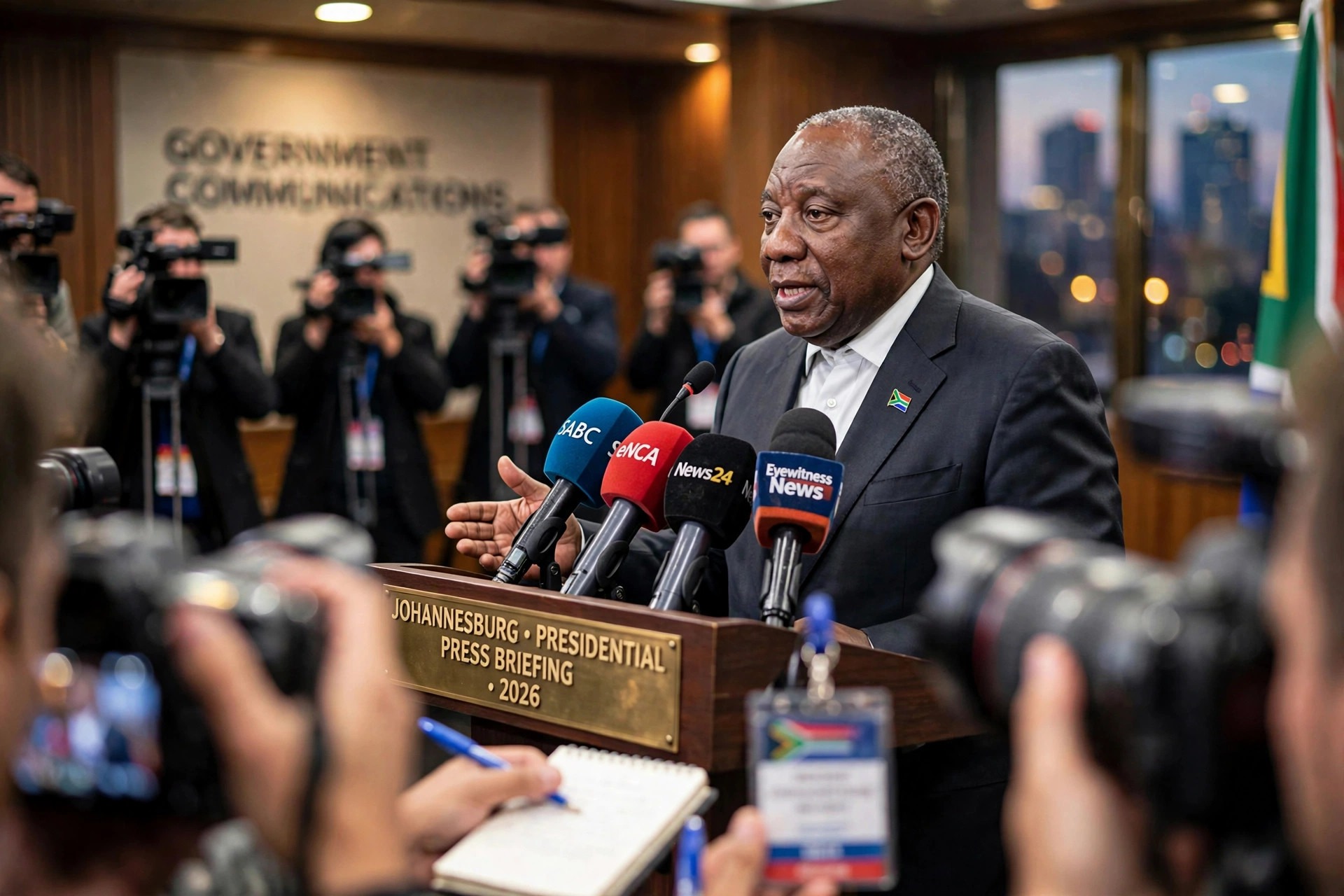
- In June 2026, both houses of Parliament held a rare joint sitting to mark the 30th anniversary, where Deputy Justice Minister Andries Nel called the Constitution the collective covenant of the people of South Africa, not the property of government, Parliament, lawyers or judges. EWN (Jun 4, 2026)
Why are three South Africans arguing about a 30-year-old promise?
Thirty years into democracy, South Africa's Constitution remains both a landmark achievement and a measure of what has yet to change. That is the starting point of a conversation published by the Daily Maverick on 28 October 2026, part of a series marking 30 years since the signing of the Constitution. Its three participants, Mbali Ntuli, founder and chief executive of the civic organisation Ground Work Collective; Mbekezeli Benjamin, research and advocacy officer at Judges Matter; and Sizwe Mpofu-Walsh, an academic and podcast host, agreed that the Constitution's promises remain unfulfilled. They differed, sharply and usefully, on where the main failure lay: unequal economic power, weak implementation, or the design of the constitutional order itself.
The conversation matters because it refuses the two easy positions. What they dispute is the diagnosis; and the diagnosis decides the remedy.
What does the 30-year record actually contain?
The dates are not in dispute. The Constitutional Assembly adopted the Constitution on 8 May 1996, after negotiations that followed the 1994 democratic election. It was signed on 10 December 1996 and came into force on 4 February 1997. Parliament describes it as the supreme law of the land, binding the legislature, the executive and the judiciary alike, and drafted to lay a foundation for healing the divisions of the past and building a society based on democratic values, social justice and fundamental human rights.
The gains the panel cites are specific. South Africans can vote, organise, speak freely and challenge the government. The Constitution has helped secure rights such as same-sex adoption and same-sex marriage, freedoms once far from guaranteed. Benjamin points to social grants, school meals and wider access to education, water and electricity as real gains, and argues that kind of freedom would not have been delivered without the Constitution. In June 2026, both houses of Parliament marked the anniversary in a rare joint sitting, where Deputy Justice Minister Andries Nel told members the Constitution belongs to all South Africans: it is not the property of government, of Parliament, or of lawyers and judges, but the collective covenant of the people.
What does nobody in this debate yet prove?
The hardest question in the conversation is also the least settled: how much of the shortfall belongs to the text, and how much to the people and institutions charged with carrying it out? Ntuli argues that Section 25 already provides for reform, restitution and equitable access to land, and that weak implementation, corruption and inadequate support have impeded progress. That claim reframes land reform as a delivery failure rather than a constitutional prohibition.
Nor does it settle the design question Mpofu-Walsh raises. He argues that debates fixate on the Bill of Rights while overlooking how the Constitution divides responsibilities among national, provincial and local government, with some functions shared across tiers, a division he says can blur who is accountable when services fail. And while Benjamin cites the Phala Phala matter, in which the Constitutional Court found Parliament had acted irrationally in its oversight role and sent a report back to be reconsidered, as evidence that accountability mechanisms still bite, one case does not prove a system. The record of the next year, what the anniversary dialogues produce, and what Parliament does with them; will test all three diagnoses at once.
Why does a South African argument travel beyond South Africa?
South Africa's Constitution is watched far beyond its borders because it attempted something unusually ambitious: to write socio-economic rights, housing, healthcare, education, social security, into the supreme law, and to demand that law be used consciously to redress a past defined by dispossession and engineered inequality. The Mail & Guardian's anniversary reflection calls it a transformative document that does not pretend law is neutral in a society scarred by structural injustice. If that project stalls, the lesson is read everywhere constitutions promise more than courts and budgets can deliver.
There is also a narrower, practical reason the debate matters now. South Africa's standing in the region and on the continent rests in part on the credibility of its constitutional order; the same order underpinning its courts, its elections and its public argument with itself. A country that can argue in public about whether its founding document works, without anyone proposing to abandon its protections, is demonstrating one of those protections. The risk, as all three imply, is drift: a gap wide enough, for long enough, that disillusionment hardens into indifference. That is why the anniversary is not a ceremony.
How do three diagnoses point to three different remedies?
The value of the Daily Maverick conversation is that its three diagnoses are not interchangeable, and each carries a different politics. Ntuli's diagnosis, political freedom real, economic freedom conditioned by birthplace, income, school and community, leads to accountability work: citizens able to read budgets, identify who is responsible for services, and demand answers, including through electoral reform. It treats the Constitution as principles and obligations, not a government programme, and refuses to choose between defending it and demanding a better society. Those two things, she says, should be inseparable.
Benjamin's diagnosis leads somewhere adjacent but distinct: practise democracy beyond election day. Choose leaders carefully, know what each sphere of government is responsible for, and stay engaged between votes. His test case is institutional, and his warning is about maintenance: democracy requires work and cannot be left to arrive on its own. Mpofu-Walsh's diagnosis is the most far-reaching. He does not propose discarding the gains, the vote, marriage equality, the Bill of Rights, but he insists the design itself must be on the table: how power and responsibility are distributed, and whether that distribution still secures accountability. The three positions share a floor, protect what was won, and diverge on a ceiling: how much change the constitutional order itself must undergo. That divergence is the debate to watch.
What does this argument change beyond the anniversary?
First, land. Ntuli's reading of Section 25, that the Constitution already authorises reform, restitution and equitable access, puts the burden back on implementation, budgets and support for beneficiaries, rather than on amendment. If that reading wins the argument, the land debate becomes a delivery debate, measurable in hectares, titles and livelihoods. If Mpofu-Walsh's design critique gains ground, the land debate becomes a constitutional debate again, with far higher stakes and a far longer fuse.
Second, accountability. The conversation's emphasis on knowing which sphere of government is responsible for what, and on electoral reform to tighten the link between voters and representatives, points toward a practical reform agenda that does not require rewriting the Constitution at all. And third, the continent: South Africa's constitutional argument is followed closely across Africa, where continental integration and governance debates turn on whether democratic institutions can deliver material change. A South Africa that narrows its promise gap strengthens that argument everywhere. The Bureau's own recent reporting on South Africa's changing continental standing and on South African identity and institutions shows how closely the country's institutional story is now read abroad.
What should readers watch before the signing anniversary?
The next fixed point is 10 December 2026, thirty years since the signing, which the anniversary programme has been building toward all year. Watch what the programme's public dialogues and youth engagements produce: are they ceremonies, or do they generate concrete proposals on electoral accountability, land delivery or service responsibility that reach Parliament in a form it must answer? Watch, too, whether any party adopts one of the three diagnoses as its platform, implementation, institutions or design,; a choice that will shape the next election debate.
Watch the courts as well. Benjamin's argument rests on institutions that bite, and the Phala Phala precedent he cites will be tested by whatever oversight disputes follow. And watch the language: if the debate stays in the register Ntuli sets, hold two truths at once, defend the document and demand more from it, it remains a constitutional argument. If it collapses into loyalty versus criticism, the public argument the Constitution was written to protect is lost.
The three lenses
West Lens:
West; In Western constitutional commentary, South Africa's document is routinely held up as one of the world's most progressive: a Bill of Rights that reaches beyond civil and political liberty into socio-economic rights, enforced by a Constitutional Court with real power to strike down state action. Read from that vantage point, the 30-year argument looks like a success story under strain rather than a failure; proof that the text created the very language in which its own shortcomings can now be named. The Western framing tends to prize the institutional achievement: free elections, an independent judiciary, a free press, and a court willing to tell Parliament its oversight was irrational.
East Lens:
East; No dedicated East-outlet report on this 2026 Constitution-at-30 debate was found in searches of CNA, The Hindu, NHK and Kyodo; the East perspective here is therefore analytical, not cited reporting. Read comparatively, the South African argument lands in a region where constitutional debates more often turn on development, stability and state capacity than on justiciable socio-economic rights. From that angle, the striking feature of the South African case is not the disagreement but the venue: a public, elite-level argument about whether the founding document itself needs rethinking, conducted in the open and reported in full.
South Lens:
South; From inside South Africa, the debate is not abstract at all. Ntuli roots it in the household without water and the child in a poorly resourced school; Benjamin roots it in the clinic queue where stolen medicine money diminishes the sense of a right to healthcare; Mpofu-Walsh roots it in the sheer scale of poverty, inequality and misgovernance. The Mail & Guardian's anniversary writing strikes the same note: the Constitution reimagined the purpose of law, but critics argue it has not delivered economic emancipation at the scale or speed required, and has at times been invoked to defend existing patterns of privilege.
The consensus
- What we agree on
- What we agree on: thirty years after adoption, South Africa's Constitution remains the country's supreme law and a landmark achievement, yet its promises, dignity, equality and socio-economic rights in daily life, remain unfulfilled for many South Africans, even as political freedoms such as voting, protest and free speech are real.
- What we don't agree on
- What we disagree on: where the main failure lies. Ntuli points to unequal economic power and weak implementation; Benjamin points to the institutions and systems meant to realise the promise; Mpofu-Walsh points to the design of the constitutional order itself, including how power and accountability are distributed across spheres of government.
- What we know
- What we know: the Constitution was adopted on 8 May 1996, signed on 10 December 1996 and in force from 4 February 1997; Section 25 provides for land reform, restitution and equitable access to land; and the record includes marriage equality, wider access to education, water and electricity, social grants and school meals.
- What we don't know yet
- What we do not know yet: which diagnosis, if acted on, would actually close the gap between promise and daily life; how far the land-restitution shortfall is a constitutional problem rather than an implementation one; and what concrete reforms, on electoral accountability, land or service delivery, the anniversary year will produce.
- What we expect
- What we expect: the anniversary programme to run through the 10 December 2026 signing milestone with further public dialogues, and the argument to sharpen rather than settle; with the next test being whether the debate produces proposals that command broad support, or remains a disagreement about first causes.
Questions, answered
When was South Africa's Constitution adopted, signed and brought into force?
The Constitutional Assembly adopted the Constitution on 8 May 1996, following negotiations after the 1994 democratic election. It was signed on 10 December 1996 and came into force on 4 February 1997. Parliament marks 2026 as the 30th anniversary year, with a programme of dialogues, civic education and youth engagements running toward the December signing milestone.
What do the three voices in the Daily Maverick conversation disagree about?
All three agree the Constitution's promises remain unfulfilled in daily life, but they locate the failure differently. Mbali Ntuli stresses unequal economic power and weak implementation; Mbekezeli Benjamin stresses the institutions and systems meant to realise the promise; Sizwe Mpofu-Walsh stresses the design of the constitutional order itself, including how power and accountability are distributed across spheres of government.
Does Section 25 of the Constitution block land reform?
No, on Ntuli's reading; and the text supports her. Section 25 provides for land reform, restitution and equitable access to land, and requires the state to take reasonable measures, within its available resources, to foster conditions for equitable access. She argues that weak implementation, corruption and inadequate support for beneficiaries, rather than the Constitution itself, have impeded progress.
What happens next in the Constitution-at-30 anniversary year?
The anniversary programme continues toward 10 December 2026, thirty years since the signing, with public dialogues, civic education, cultural events and youth engagements. The test is whether those dialogues produce concrete proposals, on electoral accountability, land delivery or service responsibility, that Parliament must answer, or whether the debate remains an argument about first causes.
Sources
- Daily Maverick (Oct 28, 2026)
- Parliament of South Africa (2026)
- SAnews (2026)
- EWN (Jun 4, 2026)