Beijing confirms Premier Li Qiang will attend the ASEAN summit in Manila
After a week in which Manila said it expected him but had no formal word, China has confirmed its premier for Sunday and Monday; and the South China Sea code of conduct will be waiting for him at the table.
Published 11 November 2026 · 09:09 GMT
The summary
Beijing announced on Wednesday 11 November that Premier Li Qiang will attend the 29th China-ASEAN Summit in Manila on Sunday and Monday, 15 and 16 November. Li will also visit Thailand from 13 to 15 November before travelling on to the Philippines.
The three lenses
- WestThe West reads a full house; and a test of Trump's return to the region Agence France-Presse, reporting from Beijing, framed the announcement around the guest list: Li joining world leaders including Trump in Manila, with the South China Sea dispute as the backdrop.
- EastAsia reads the choreography; and the silence Manila asked for The South China Morning Post, reporting from Hong Kong, read the week before the summit as carefully staged: the Philippine foreign ministry's unusual public warning to its own officials that criticism of China could undermine diplomacy, issued on Sunday after the Lazaro–Wang call, and the analysts who saw in it both a host's discipline and an internal disagreement about strategy.
- Global SouthThe South reads a host trying to hold the room together The Philippine press read the confirmation as relief with a reservation.
Key facts
- Beijing announced on Wednesday 11 November that Premier Li Qiang will attend the 29th China-ASEAN Summit in Manila on Sunday and Monday, 15 and 16 November. CNA
- Li will also visit Thailand from 13 to 15 November before travelling on to the Philippines. Reuters
- The 49th ASEAN Summit and Related Summits run from 15 to 18 November at the Philippine International Convention Center in Pasay City, closing the Philippines' year as ASEAN chair. The Philippine Star
- President Xi Jinping is not expected to attend; the Philippine foreign ministry said on 4 November that Li customarily leads China's delegation to ASEAN meetings, but that it had received no formal confirmation until Beijing's announcement. The Manila Times
- President Donald Trump will attend the ASEAN–US Special Summit on Monday 17 November; Brazilian President Luiz Inácio Lula da Silva and Canadian Prime Minister Mark Carney are also confirmed. The Philippine Star
- The code of conduct for the South China Sea, negotiated between ASEAN and China for more than two decades, is not expected to be concluded at this summit. Rappler
Beijing ends a week of waiting with one sentence
Beijing confirmed on Wednesday 11 November that Premier Li Qiang will fly to Manila for the ASEAN summit, ending a week in which the Philippines had said publicly that it expected him; and privately that it had no formal confirmation. At the foreign ministry's regular briefing, spokesman Guo Jiakun said Li would take part in the summit on Sunday and Monday, 15 and 16 November. “Through this meeting, China looks forward to strengthening solidarity and mutual trust with ASEAN member states,” Guo said. “We aim to deepen collaboration in areas such as artificial intelligence, the digital economy, energy security, connectivity, and poverty reduction and development.” Reuters reported that he will also visit Thailand from 13 to 15 November before travelling on to the Philippines for the 29th China-ASEAN Summit.
A four-day gathering, and a leaders' table led by the premier
The 49th ASEAN Summit and Related Summits run from 15 to 18 November at the Philippine International Convention Center in Pasay City, closing the Philippines' year as ASEAN chair. Eleven member states and twelve dialogue partners are expected: President Donald Trump will attend the ASEAN–US Special Summit on Monday 17 November, the Philippine foreign ministry confirmed on Wednesday, and Brazilian President Luiz Inácio Lula da Silva and Canadian Prime Minister Mark Carney are also confirmed.
The confirmation closes a question Manila had left open for a week. On 4 November the Department of Foreign Affairs said President Xi Jinping was not expected to attend, and that Premier Li had “customarily led the Chinese delegation to ASEAN-related summits in recent years”; but its spokesman, Dax Imperial, added that Manila had “not received the official confirmation of Li's attendance.” The two foreign ministers had spoken the day before, on 3 November, in a call the Philippine side described as “frank, pragmatic, and constructive”. In that call, Wang Yi conveyed that China anticipates President Ferdinand Marcos Jr.'s participation in the APEC leaders' meeting in Shenzhen on 18 and 19 November; the next stop on the calendar, and one where a meeting of Trump, Xi and Putin has been floated, though Beijing has not said yes.
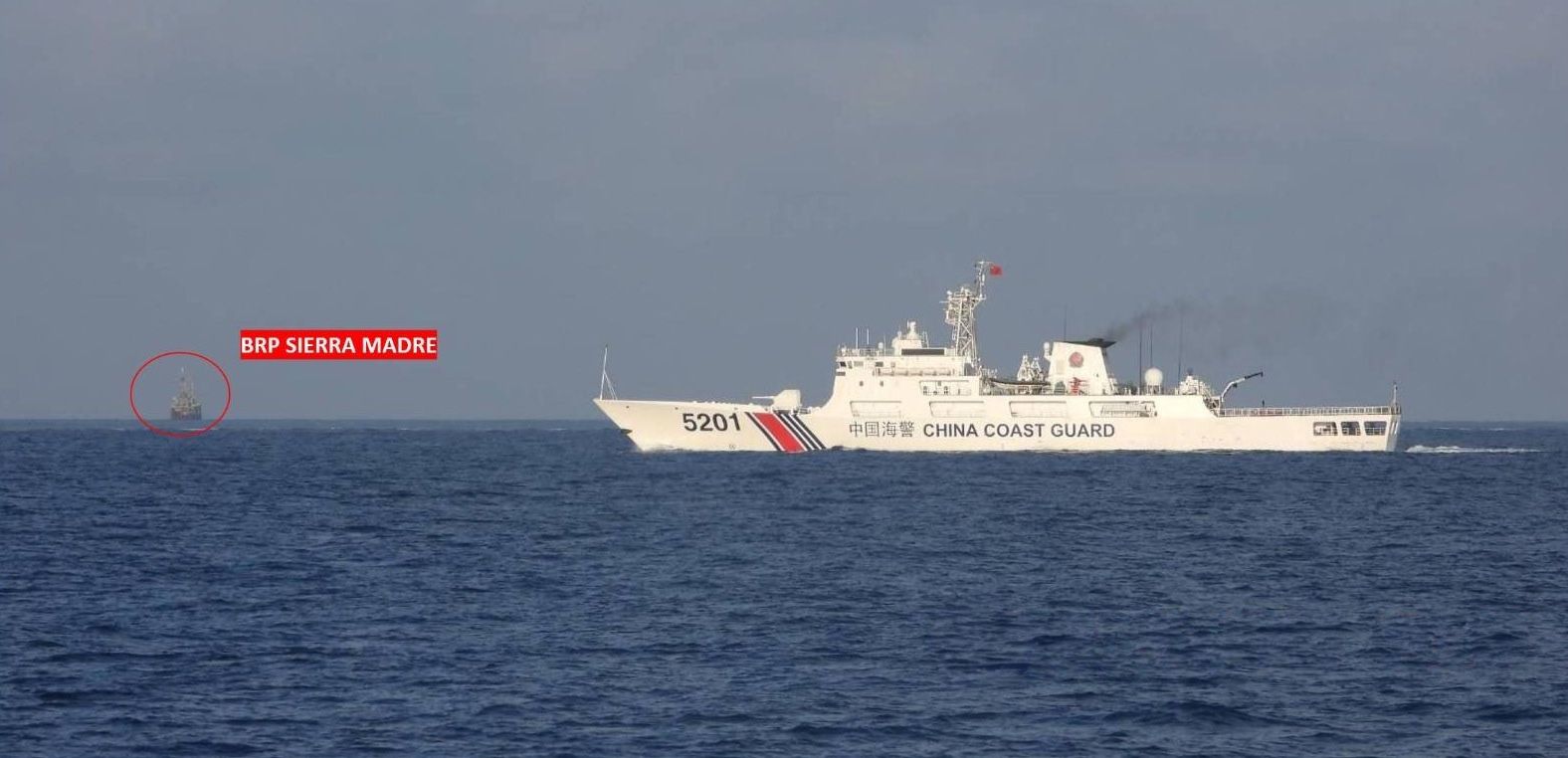
The hardest question on the Manila table is the one the summit was built to answer. ASEAN and China have negotiated a code of conduct for the South China Sea for more than two decades, and the code is not expected to be concluded at this summit. The dispute between China and the Philippines runs through the agenda: the two coast guards shadow each other around contested reefs, as Magna Bureau reported from the South China Sea, and the two capitals have traded accusations in the run-up to the meeting.
What is still not settled before Sunday?
The largest unknown is what Li's two days in Manila will actually contain. Beijing has confirmed his attendance at the summit, but neither capital has said whether he and President Marcos will sit down together, or what such a meeting would be asked to produce. A second unknown is the code of conduct itself: whether the leaders will agree any new text, a timetable, or merely another statement of intent after twenty years of talks. A third is the atmosphere. Beijing accused Manila in October of “erecting multiple obstacles” to its attendance at an ASEAN meeting in the Philippines that month, a claim the Philippine defence chief rejected, and Foreign Minister Wang Yi urged Manila to rein in politicians who had “smeared” Beijing and crossed its “red lines”. Whether that exchange stays in the past once the leaders are in the same room is untested. A fourth unknown sits outside Manila: what Li's Thailand visit will yield, and whether Xi Jinping appears at any related event; he has never personally attended an ASEAN summit.
The region's biggest table, and its oldest unfinished business
The China-ASEAN summit is the largest diplomatic table in Southeast Asia, and this year it carries an extra weight: it is the Philippines' turn to chair, and the host is also the claimant most directly at odds with Beijing. That combination is the story. A code of conduct for the South China Sea would set the rules for the world's busiest shipping lanes, the fisheries that feed tens of millions of people, and the reefs where Chinese and Philippine vessels meet each other almost daily. Twenty years without one has not stopped the trade, China is ASEAN's largest trading partner, but it has left every incident to be managed by telephone calls between foreign ministers.
The timing matters beyond the region. The summit opens days after the United States' midterm elections reshaped Washington, and closes as leaders move on to Shenzhen for APEC. For Beijing, sending the premier rather than the president keeps the meeting at working level while still putting a head of government in the room with Trump, Lula and the ASEAN leaders. For Manila, hosting the full table without a public row would itself be a result: the chair's job is to keep the meeting about the region, not about the bilateral dispute.
Why Beijing waited until Wednesday to say yes
The seven-day gap between Manila's expectation and Beijing's confirmation was not an accident of scheduling. It was leverage, spent carefully. By holding its answer until five days before the summit, Beijing kept Manila negotiating, on the tone of the meeting, on the language around the South China Sea, and on the public conduct of Philippine officials, while never actually threatening to stay away. The DFA's Sunday warning to its own officials, issued after the Lazaro–Wang call, shows the pressure worked: the host publicly disciplined its own side before the guest had confirmed.
There is a second reason for the timing. Confirming on Wednesday puts Li's attendance beyond doubt while leaving the weekend free for the substance to be negotiated in the corridors, and it pairs the announcement with Guo's agenda, artificial intelligence, the digital economy, energy security, connectivity, poverty reduction, which is the language of a China that wants the summit remembered for development rather than dispute. It is also why the AI item on Guo's list is worth watching: China is already reordering its own universities around the technology, as Magna Bureau reported, and it is now offering the same agenda to its neighbours.
The premier, not the president, is itself a message. Xi Jinping has never personally attended an ASEAN summit, and sending Li keeps the meeting at the level of government rather than head of state; high enough to matter, low enough to leave room. If the summit goes well, Beijing can claim the credit; if it goes badly, the president was never there.
The week after Manila will say more than the summit itself
The first thing to watch after the summit is Shenzhen. Marcos is expected at the APEC leaders' meeting on 18 and 19 November, on Chinese soil, two days after the ASEAN meeting closes; a sequence that turns the Manila handshake, if there is one, into a working visit. The second is Washington's parallel track: the United States has been pressing China to honour the trade understandings reached at Busan, with rare-earth and farm deliveries lagging, as Magna Bureau reported, and Trump's presence in Manila on 17 November puts that argument in the same room as the ASEAN agenda. The third is the code of conduct. If Manila produces no text, the twenty-year negotiation passes to the next chair unfinished. The fourth is domestic, in Manila: the DFA's warning will be tested the first time a Philippine politician criticises Beijing in public again.
What happens after Manila?
Four dates will tell whether the confirmation becomes a result. The first is Friday 13 November, when Li arrives in Thailand for a three-day visit that sets the tone for the week. The second is Sunday 15 November, when he reaches Manila for the China-ASEAN Summit. The third is Monday 17 November, when Trump attends the ASEAN–US Special Summit, the last event of the three-day meeting at the Philippine International Convention Center. The fourth is Wednesday 18 November, when the leaders move on to Shenzhen for APEC, and Marcos is expected on Chinese soil. Until the first of those dates produces a meeting rather than a statement, the confirmation is a premier's name on a guest list, and a week of diplomacy compressed into four days.
The three lenses
West Lens:
The West reads a full house; and a test of Trump's return to the region Agence France-Presse, reporting from Beijing, framed the announcement around the guest list: Li joining world leaders including Trump in Manila, with the South China Sea dispute as the backdrop. The Western reading is procedural: the leaders are coming, the code of conduct is the test, and the question is whether a summit built for consensus can produce more than a photograph.
East Lens:
Asia reads the choreography; and the silence Manila asked for The South China Morning Post, reporting from Hong Kong, read the week before the summit as carefully staged: the Philippine foreign ministry's unusual public warning to its own officials that criticism of China could undermine diplomacy, issued on Sunday after the Lazaro–Wang call, and the analysts who saw in it both a host's discipline and an internal disagreement about strategy. Channel NewsAsia, carrying the AFP dispatch from Beijing, kept the focus on Guo Jiakun's language of solidarity and mutual trust, and on the agenda of artificial intelligence, the digital economy and energy security. The Asian reading is about management: two governments lowering the temperature in public so the meeting can happen at all.
South Lens:
The South reads a host trying to hold the room together The Philippine press read the confirmation as relief with a reservation. The Manila Times and the Inquirer recorded the week of uncertainty in detail, the DFA's expectation and the missing formal confirmation, and Rappler framed the Lazaro–Wang call as both sides seeking to ease tensions “at least diplomatically”. The Philippine Star, reporting on Wednesday, put the code of conduct at the top of the agenda and noted that Trump would attend the ASEAN–US Special Summit on the final day.
The consensus
- What we agree on
- What we agree on: Beijing confirmed on 11 November that Premier Li Qiang will attend the China-ASEAN Summit in Manila on 15 and 16 November, after visiting Thailand on 13–15 November; the 49th ASEAN Summit and Related Summits run from 15 to 18 November; President Xi Jinping is not expected to attend; and President Donald Trump will attend the ASEAN–US Special Summit on 17 November.
- What we don't agree on
- What we disagree on: whether Li's attendance signals a genuine easing of China–Philippines tensions or a carefully managed pause for the cameras; whether the code of conduct for the South China Sea can advance while maritime incidents continue; and whether Manila's quieting of anti-China rhetoric is statesmanship by a host, or a concession extracted by Beijing.
- What we know
- What we know: the dates and the venue; spokesman Guo Jiakun's stated agenda of artificial intelligence, the digital economy, energy security, connectivity and poverty reduction; the Lazaro–Wang Yi telephone call of 3 November; Beijing's October accusation that Manila put obstacles in the way of its attendance at an ASEAN meeting; and the APEC leaders' meeting in Shenzhen on 18–19 November.
- What we don't know yet
- What we do not know yet: whether Li and President Ferdinand Marcos Jr. will hold a bilateral meeting; whether any code-of-conduct text will be agreed in Manila; what Li's visit to Thailand will produce; and whether Xi Jinping will appear at any related event, in person or by video.
- What we expect
- What we expect: Li in Bangkok from 13 November, then in Manila on 15 and 16 November; the code of conduct to dominate the China-ASEAN table without being concluded; and attention to move within days to Shenzhen, where Marcos is expected at the APEC leaders' meeting on 18 and 19 November.
Questions, answered
Why is Li Qiang, not Xi Jinping, attending the ASEAN summit?
The Philippine foreign ministry said on 4 November that the Chinese premier customarily leads Beijing's delegation to ASEAN-related summits, and that President Xi Jinping was not expected to attend. Xi has never personally attended an ASEAN summit, including the special ASEAN–China meeting in November 2021, which he joined by video link. Beijing confirmed on 11 November that Li will attend the 29th China-ASEAN Summit in Manila on 15 and 16 November.
What is on the agenda for Li Qiang in Manila?
The 29th China-ASEAN Summit, held inside the 49th ASEAN Summit and Related Summits from 15 to 18 November. Beijing's spokesman Guo Jiakun said China wants to deepen collaboration on artificial intelligence, the digital economy, energy security, connectivity, and poverty reduction. The code of conduct for the South China Sea, negotiated for more than two decades, is the hardest item on the table and is not expected to be concluded.
Why were China and the Philippines in tension before the summit?
The two countries dispute parts of the South China Sea, where their coast guards shadow each other around contested reefs. In October, Beijing accused Manila of putting obstacles in the way of its attendance at an ASEAN meeting, a claim the Philippine defence chief rejected. Foreign Minister Wang Yi also urged Manila to rein in politicians who had criticised Beijing. The Philippine foreign ministry then warned its own officials against anti-China rhetoric.
Who else is attending the Manila summit, and what follows it?
President Donald Trump will attend the ASEAN–US Special Summit on 17 November, and Brazilian President Luiz Inácio Lula da Silva and Canadian Prime Minister Mark Carney are confirmed, with the leaders of India, Japan and Australia expected. After Manila, attention moves to Shenzhen, where President Marcos is expected at the APEC leaders' meeting on 18 and 19 November.
Sources
- CNA (11 Nov 2026); Beijing's announcement, carried from AFP; Guo Jiakun's remarks; the Sunday-to-Monday dates; Trump, Lula and Carney confirmed
- Reuters (11 Nov 2026); Li to visit Thailand on 13–15 November and attend the 29th China-ASEAN Summit in the Philippines on 15–16 November
- The Philippine Star (11 Nov 2026); the summit programme; Trump at the ASEAN–US Special Summit on 17 November; the code of conduct high on the agenda
- The Manila Times (4 Nov 2026); the DFA on Xi Jinping staying away; Li customarily leads China's delegation; no formal confirmation received at that point
- Rappler (4 Nov 2026); the foreign ministers' call to ease tensions; the code of conduct not expected to conclude at the summit