Six days before Albertans vote on whether to start the road toward a binding independence referendum, the prime minister warns a divided Canada cannot build its future.
Published 13 October 2026 · 06:00 GMT
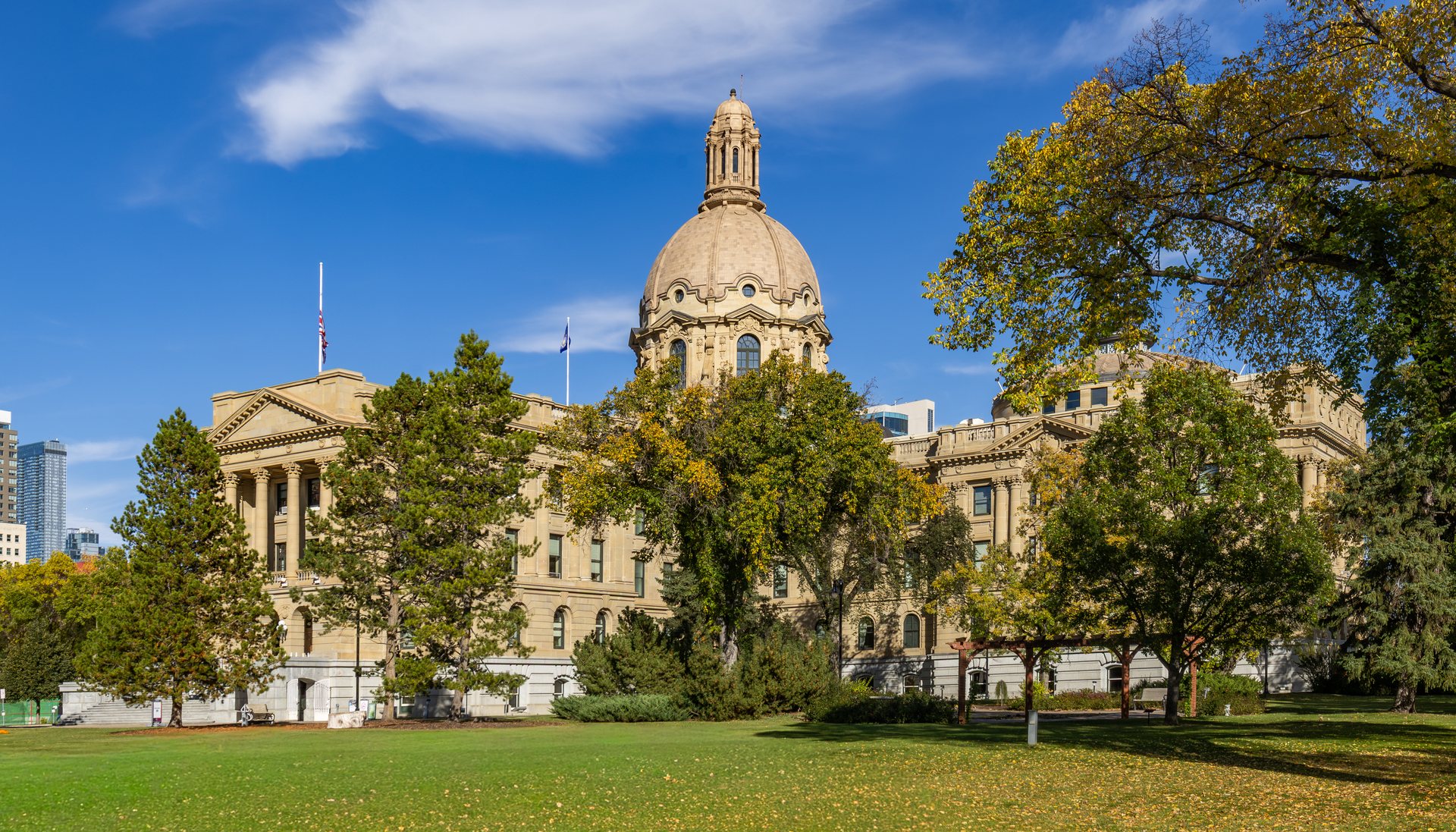
In the classroom where he once sat as a schoolboy, Mark Carney looked into a camera and told Canadians that fault lines cannot carry a country. He was filming in Edmonton on Monday - in the province where he grew up - six days before Alberta votes on whether to begin the legal road toward leaving Canada.
Six days from now, Albertans will answer ten questions. On Monday, October 19, the oil-rich province votes on immigration rules, equalization payments and election procedures - and on one explosive question: should Alberta remain in Canada, or begin the legal process toward a binding referendum on separation? A vote about whether to hold a vote - yet national unity is back at the center of Canadian life. The backdrop is laid out in Magna Bureau's Canada factbook.
The ballot question reads: "Should Alberta remain a province of Canada, or should the Government of Alberta commence the legal process required under the Canadian Constitution to hold a binding provincial referendum on whether or not Alberta should separate from Canada?" A yes would not itself separate Alberta. It would start the long legal road toward a second, binding vote - a road running through Ottawa and, almost certainly, the courts.
«We can't build big things on fault lines,» Carney said — and the country is about to find out.
Formally, nothing is binding. Voters choose between staying and starting a process, not between staying and leaving. Nine of the ten questions cover immigration, public-service eligibility and constitutional powers - most of which Alberta cannot decide alone. The independence question is the only one about the province's place in the federation, and even a strong yes would change nothing legal the morning after.
The road to October 19 runs through citizen petitions. After the Liberals won the April 2025 federal election, Premier Danielle Smith created a panel on Alberta's future in Canada and promised to honor a successful citizen-led petition for a separation vote. Her government then passed Bill 54, lowering the signature threshold for citizen-initiated referendums. In early 2026, the separatist Alberta Prosperity Project of Mitch Sylvestre launched its "Stay Free Alberta" petition, later verified at about 223,000 signatures.
On May 13, 2026, an Alberta Court of King's Bench judge quashed the petition's approval, ruling the government had failed its constitutional duty to consult First Nations on a process that could affect treaty rights. Smith promised to appeal. But eight days later, in a televised address on May 21, she added a tenth referendum question of her own - folding in the separatist petition and a rival pro-Canada petition, Thomas Lukaszuk's "Alberta Forever Canada" drive at more than 400,000 verified signatures - arguing both showed hundreds of thousands of Albertans wanted the issue decided.
Smith's own position is a study in contradiction. She says she is "fiercely loyal" to Canada and will vote to remain. In September her government launched a 4-million-dollar ad campaign urging a remain vote, and she has called the roughly 22 percent support for the separation path "still too high for my liking." Yet she put the question on the ballot anyway, and her party is split: a spring poll found 64 percent of United Conservative members lean separatist, even as more than 70 percent of Albertans overall reject the idea.
Follow the money and you find the grievance. Alberta is Canada's energy engine, and separatists say the province is treated as a cash machine by a federation that blocks its industry. Alberta has not received a federal equalization payment since 1965. Two federal laws top the separatist indictment: Bill C-69, the impact-assessment law Alberta calls the "no pipelines act," and Bill C-48, the tanker ban on British Columbia's northern coast that separatists say cut Alberta off from Asian buyers.
Ottawa's answer is the Pacific Link pipeline: a proposed one-million-barrels-per-day line to British Columbia's coast, designated a project of national interest to fast-track development. Canada and Alberta would share ownership equally, Indigenous communities would be offered a minimum 10 percent stake, and the Trans Mountain Corporation would lead construction with expertise from Pembina Pipeline Corporation.
The economics of independence are fiercely disputed. A University of Calgary report commissioned by the province puts the five-year price of independence at 50 to 170 billion dollars, depending on factors outside Alberta's control. The CanadaWest Foundation projects 258 to 333 billion dollars in added debt for Albertans and a 5.8 percent drop in disposable income. Separatist groups counter that the province would keep tens of billions in tax revenue now sent east - arithmetic their critics call fantasy.
Canada has walked this road twice. Quebec held independence referendums in 1980 and 1995; both failed, the second by a razor-thin margin. Now the question stirs again in the east: on October 5, the Parti Quebecois won the most seats - 59 of 129 - returning to power for the first time in more than a decade, though far short of a majority. Carney's Quebec lieutenant, Joel Lightbound, said it was "an election, not a referendum": a separation mandate must go through a referendum. McGill's Daniel Beland notes Quebec independence support sits near 30 percent, low by historical standards - and drew one unlikely cheerleader: Elon Musk wrote that Quebec, Alberta and Saskatchewan should all separate.
The picture is consistent: a large majority wants to stay. Leger, polling 1,001 Albertans October 2 to 4, found 70 percent for remain - up from 65 percent in August - against 22 percent for starting the separation process, with 7 percent undecided. A CBC-commissioned Janet Brown poll of 1,200 Albertans, September 8 to 21, found 72 percent for remain and 23 percent for the separation path.
The details underneath are more interesting. An August Angus Reid poll found 61 percent for remain against 33 percent for starting the process - and that 41 percent of leave-side voters saw their vote mainly as "sending a message to Ottawa" rather than endorsing actual independence. Half of Albertans expect the debate to hurt the provincial economy, and three in ten say it has already strained relations with family, friends or coworkers.
The treaties covering Alberta - Treaties 6, 7 and 8 - were signed with the Crown before Alberta became a province in 1905 and are protected under Section 35 of the Constitution Act of 1982. At an Edmonton press conference on January 29, chiefs of Treaties 6, 7 and 8 declared that any move toward independence needs the consent of the Indigenous nations whose treaties predate the province. Athabasca Chipewyan Chief Allan Adam said Alberta "does not have the authority to ask that question, let alone act on any answer." Treaty 8 Grand Chief Trevor Mercredi was blunter: the province "is a tenant on this land, not the landlord."
The opposition is organized. On July 16, 2026, the Assembly of First Nations passed an emergency resolution declaring First Nations rights non-negotiable: no province can alter, diminish or extinguish treaty rights. The Confederacy of Treaty No. 6 First Nations welcomed the May court ruling that quashed the separatist petition. Whatever Albertans decide on October 19, the treaties will still be there on October 20 - and their holders have shown they will go to court to defend them.
Washington is watching, and not idly. The debate unfolds amid Donald Trump's trade war, a new American ban on 1 billion dollars of Canadian goods, and the president's repeated talk of a 51st state - a fight traced in our reporting on Washington's import bans and the tariff backlash. A Globe and Mail investigation reported that US Republican operatives met separatist organizers in Alberta to discuss campaign strategy, and that separatist leaders had offered access to the province's water and oil royalties for American support. The separatists dispute those claims.
Carney filmed his Thanksgiving message in a classroom at St. Francis Xavier High School in Edmonton - his own former school. "We can't build big things on fault lines," he said, warning of threats to Canada's economy, security and way of life. "We have to be strong, and we are stronger together." He pointed to what Ottawa is building in Alberta: thousands of new homes, high-speed rail, and the Pacific Link pipeline.
The message was the gentle version. In May, Carney had called the vote a "very dangerous bluff" and reached for the Brexit comparison - he governed the Bank of England through Britain's 2016 EU referendum. "They're still ten years later trying to undo what people didn't think they were voting for but what they ended up having," he said then. On Monday he put it more quietly: Albertans face "a long and uncertain process" toward separation.
The law, as it stands, is on Carney's side. In the 1998 Secession Reference, the Supreme Court ruled no province can separate unilaterally: a clear vote on a clear question would oblige the rest of the country to negotiate, not to wave goodbye. Parliament's Clarity Act of 2000 sets the federal terms of clarity. And the Indigenous treaty argument adds a layer the 1998 judges could not fully foresee: the land itself is spoken for, by agreements older than the province.
Three dates matter. Advance voting runs from today through Saturday, October 17; Elections Alberta must report unofficial results within 48 hours of the October 19 polls closing. Then the interpretations: a decisive remain - the polls' current verdict - would deflate separatist momentum and vindicate Smith's bet that the question could be asked and answered. A narrow remain keeps the movement alive and wounded. A leave vote would not create a new country, but it would oblige a premier who campaigned against separation to begin legal steps toward a binding referendum she does not want.
Either way, Carney's fault lines are not going away. They run through his own government's pipeline politics, through a Quebec where separatists are back in office, through treaty territories whose holders answer to agreements older than the western map of Confederation, and through a trade war that has taught Canadians how fast the ground can shift under a country. On October 19, Alberta tells the country where it stands. The harder question - what the country does with the answer - comes after.
From Western capitals, the Alberta vote reads as a stress test of a mature democracy under pressure. The institutions are holding: courts quashed a flawed petition, the ballot question is non-binding, polls show a decisive majority for unity, and the premier herself campaigns for remain. The Quebec precedent - two lost referendums, a separatist party back in office without a mandate to leave - suggests the Canadian system absorbs these shocks rather than breaking on them.
The Trump factor sharpens the Western reading. A G7 country debating its own breakup while fighting a trade war with its largest partner looks, to allies, like a self-inflicted wound at the worst moment. Carney's Brexit analogy lands precisely because he governed the Bank of England through 2016: the lesson Western policymakers take is that referendums on vague futures produce years of uncertainty, not clean resolutions.
Eastern media frame the Alberta vote as another crack in the Western order. Russian coverage presents a G7 member questioning its own territorial integrity while its prime minister reaches for Brexit analogies - evidence, in that telling, that the liberal model struggles to hold multiethnic federations together. The energy angle gets emphasis: a province that pumps the oil questioning the capital that taxes it is a story about resource power, not just identity.
The American dimension completes the Eastern reading: US operatives meeting separatists, a US president musing about a 51st state, and a trade war squeezing the federation from outside. From Moscow and Beijing, the picture is of a Western alliance whose members are fracturing under pressure - pressure that, in this telling, Washington itself helped create.
Across the Global South, the Alberta story reads through the lens of self-determination - and its limits. The most resonant voices are not the separatists but the Indigenous nations: Treaties 6, 7 and 8, signed with the Crown before Alberta existed, asserting that their consent was never sought. For audiences familiar with decolonization, the image of First Nations chiefs telling a provincial government it is a tenant, not a landlord, is the story's moral center.
The resource question is equally familiar. A region that produces the wealth resenting the capital that spends it - over pipelines, tanker bans and equalization formulas - echoes debates from the Niger Delta to the Andes. Southern readers tend to ask the practical question first: who gets the oil, who pays the debt, and who was never asked.
No. The October 19 vote is non-binding and asks whether Alberta should remain in Canada or begin the legal process toward a future binding referendum on separation. Even a yes vote would not separate Alberta from Canada; it would authorize the province to start the constitutional and legal steps toward a second vote, which would then require negotiation with Ottawa. Think of it as a vote about whether to hold a vote. See the full context in our Canada coverage.
Through citizen petitions. After the April 2025 federal election, Alberta passed Bill 54, lowering the signature threshold for citizen-initiated referendums. The separatist Alberta Prosperity Project gathered about 223,000 verified signatures, but a court quashed the petition in May 2026, ruling the government had failed to consult First Nations. Premier Danielle Smith then added her own tenth referendum question on May 21, citing both the separatist petition and a rival 400,000-signature pro-Canada petition.
Not by voting alone. In the 1998 Secession Reference, Canada's Supreme Court ruled that no province can separate unilaterally; a clear vote on a clear question would oblige negotiation, not trigger automatic independence. Parliament's Clarity Act of 2000 sets the federal standard for clarity. On top of that, First Nations argue Treaties 6, 7 and 8 - signed with the Crown before Alberta existed and protected by the Constitution - cannot be altered by any provincial vote.
They show a solid remain majority. Leger's October 2-4 poll of 1,001 Albertans found 70 percent for remain against 22 percent for starting the separation process, with 7 percent undecided; the Writ tracker and a CBC-commissioned Janet Brown poll agree. Beneath the headline, the leave camp is more motivated: an Angus Reid poll found 41 percent of leave voters see their vote mainly as sending a message to Ottawa rather than endorsing actual independence.
It is Ottawa's main answer to Alberta's grievances: a proposed one-million-barrels-per-day oil pipeline to British Columbia's coast, designated a project of national interest to fast-track approval. Canada and Alberta would share ownership equally, Indigenous communities would be offered at least 10 percent, and the Trans Mountain Corporation would lead construction. Separatists say it is too little, too late; Cold Lake First Nations is challenging the designation in court over treaty rights.
