
News
Lula Wins Brazil's Runoff and a Historic Fourth Term After a Comeback No One Had Made Before
The electoral court called the race for the incumbent on Sunday night with 99.77 percent of polling sections counted, reversing a first-round defeat and denying the Bolsonaro family a return to the presidency.
Published 26 October 2026 · 01:32 GMT
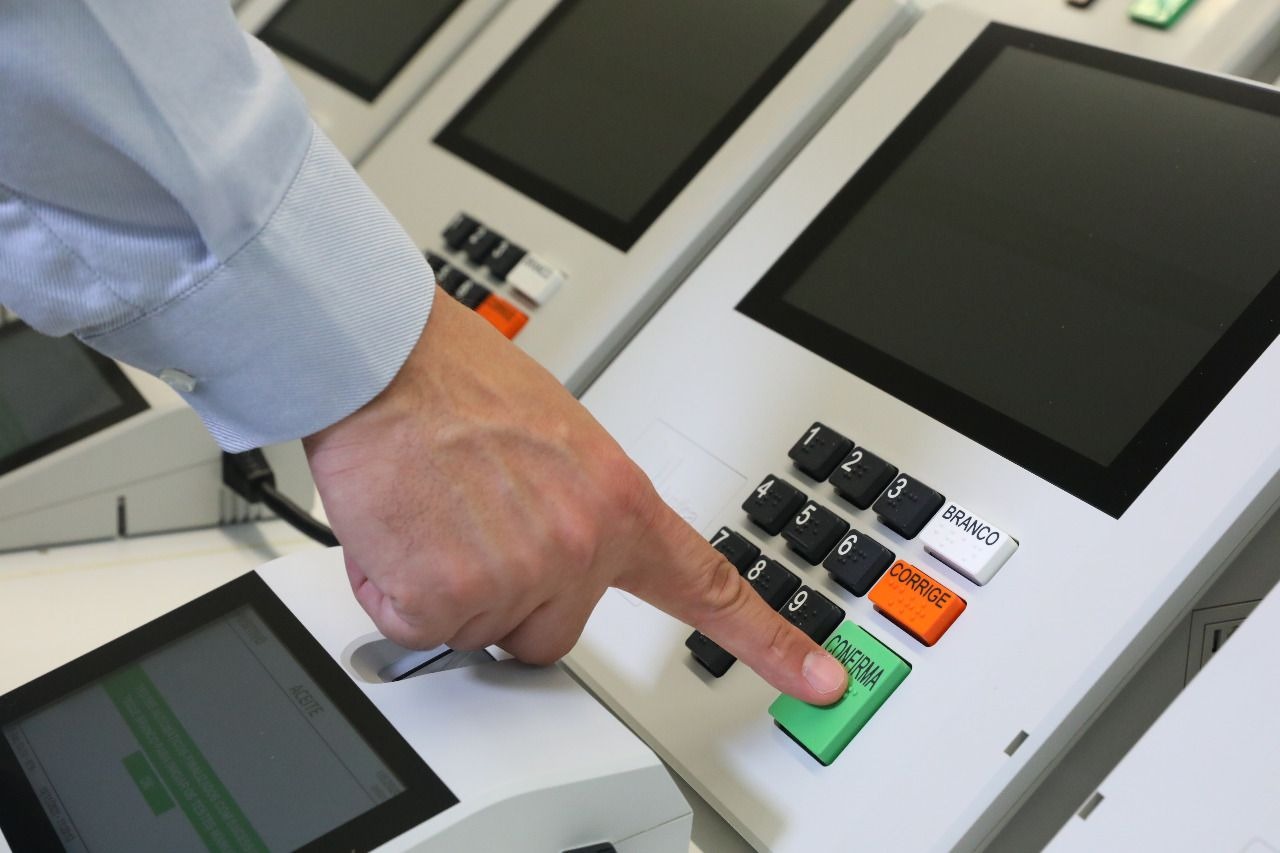
Luiz Inácio Lula da Silva has won reelection as president of Brazil. The Superior Electoral Court (TSE) called the runoff for the incumbent on Sunday 25 October 2026, defeating Senator Flávio Bolsonaro of the Liberal Party (PL) and securing an unprecedented fourth non-consecutive term.
The call came around 21:13 in Brasília on Sunday (00:13 GMT on Monday), when the court marked the race as mathematically decided. The snapshot cited in this story is the TSE update stamped 21:14:49 in Brasília, with 99.77 percent of polling sections tallied (498,112 of 499,248). At that snapshot, Lula held 51.76 percent of valid votes (64,078,503 votes) against 48.24 percent for Bolsonaro (59,728,246 votes), a margin of 4,350,257 votes. Valid votes counted stood at 123,806,749, from 127,951,256 total ballots recorded, out of a registered electorate of 158,745,502. The count continued past that snapshot, and later snapshots moved the totals slightly upward while the shares held at 51.76 and 48.24 percent. The count had not reached 100 percent, and this story will be updated when the court issues its formal declaration.
What did the electoral court call, and when?
The court called the race once the remaining uncounted sections could no longer change the outcome. With fewer than 1,200 sections outstanding at the 99.77 percent snapshot and a margin above 4.3 million votes, the result was mathematically out of reach. Reuters carried the call at 00:13 GMT on Monday, and Al Jazeera reported the court calling the race around 21:13 in Brasília with more than 80 percent of ballots counted at that earlier moment in the evening.
The result reverses the first round on 4 October, when Bolsonaro finished first with 47.03 percent of valid votes (56,104,268 votes) against 45.16 percent for Lula (53,876,617 votes). The gap then was about 2.2 million votes. No candidate who lost the first round had ever won a presidential runoff since Brazil's return to direct presidential elections, which is what makes this victory historic on its own terms, before any question of what the fourth term will do.
Lula, 80, who turns 81 on 27 October, first took office in 2003 and served two terms before returning to the presidency in January 2023, when he defeated Flávio Bolsonaro's father, former president Jair Bolsonaro. He was jailed from 2018 to 2019 on corruption charges that were later overturned. He will be sworn in for his fourth term on 5 January 2027, which will make him the oldest Brazilian president to take the oath since the country's return to democracy. Flávio Bolsonaro, 45, is the eldest son of the former president, who lost to Lula in 2022 and is serving a prison sentence over a failed coup attempt.
Why did the count swing so sharply?
The count seesawed through the evening, and the early numbers misled. Bolsonaro led at first, as votes from the south, which leans right, were reported early. When about 14 percent of votes had been counted, he stood at 50.03 percent. Lula narrowed the gap and retook the lead when about 47.6 percent had been counted, at 50.01 percent, and his lead widened steadily from there as ballots from the populous northeast, his traditional base, came in.
Lula carried all nine northeastern states, taking about 70 percent of the vote in Bahia and Pernambuco. Turnout helped him. The runoff abstention rate of about 19 percent was one of the lowest on record, after a last-minute push by musicians, celebrities and campaigners to mobilize voters who had stayed home in the first round, when abstention ran near 21 percent. Pollsters said better than expected turnout had powered the victory, with voters choosing a known path that guarantees certain rights over change that carried apprehension.
The polls had pointed the other way. Final pre-runoff surveys from Datafolha and Quaest put Bolsonaro narrowly ahead, 51 to 49 of valid votes, on the eve of the vote. The result defied those polls, and it defied the regional pattern as well. In recent years, right-wing leaders have swept presidential races in nearby countries including Peru, Colombia, Argentina, Bolivia and Ecuador, many of them riding anti-incumbent energy and enjoying support from United States President Donald Trump, who returned to office in January 2025.
Why did voting run two hours late?
Voting was scheduled to close at 17:00 in Brasília, but polls stayed open until 19:00 after an order from Supreme Court Justice Cristiano Zanin, who was Lula's lawyer before joining the court in 2023. Zanin acted on a complaint from Lula's campaign that cities in Bahia run by allies of Flávio Bolsonaro had kept buses in depots, leaving poorer voters unable to reach the polls. Lula's allies accused Bolsonaro's supporters of reducing transport to dampen the president's working-class base, and reports emerged of public transport suspensions in some areas. Heavy rain also affected southern areas considered Bolsonaro strongholds.
Bolsonaro's lawyers had separately asked the electoral court to extend voting in 17 flooded municipalities in three states. The sequence created an uneven close. Many stations had already shut their machines when Zanin's order arrived, and the system does not allow a closed machine to be reopened. The electoral court then told regional courts that only stations still open should keep receiving voters until 19:00, and Zanin narrowed his order to match. Some voters were sent home at 17:00 while others cast ballots until 19:00, and either campaign could cite that unevenness to seek an annulment. Any such request would go to the electoral court, chaired by Kassio Nunes Marques, Jair Bolsonaro's first appointee to the Supreme Court. No court had extended voting in Brazil before, which is why the extension itself became part of the story, and why legal challenges are likely even though the margin is far beyond any plausible recount.
What happens next?
The formal declaration and the final certified count are still to come, and this story will be updated when they land. Whether Flávio Bolsonaro concedes had not been verified in the wire coverage reviewed for this draft, and that response will be added when it is confirmed.
Governing will be the harder contest. The Liberal Party emerged from the first round with the largest bloc in Congress, and Lula takes his fourth term into a legislature built against him. During the campaign, Lula pointed to falling poverty and inequality, with unemployment, illiteracy and deforestation hitting record lows during his third term, and he warned that Bolsonaro would cut welfare spending, backslide on social advances and hand Brazil's sovereignty to Washington. Bolsonaro campaigned on public security, economic policy and his father's legacy, touted his proximity to the White House, and promised a heavy-handed approach to crime. The runoff settled who holds the presidency. It did not settle the balance of power around him.
The three readings
What does the West see: democracy holding under pressure, or a result stained by the voting extension?
How does the East read a result that keeps BRICS intact in Brasília?
What does the Global South hear: a point of balance, or a warning?
The West lens, read through the five dimensions
Geopolitics
From the West, the story is read as democracy holding under pressure. Reuters and Al Jazeera frame the result as the incumbent surviving a challenge from the far right, with institutions delivering a count that both camps could watch in real time and a margin too large to plausibly dispute. The emphasis falls on the halt it puts to the right-wing wave across Latin America, depriving Washington of a friendly government in the region's largest country. The open question in this reading is whether the voting extension and the annulment risk will stain a result whose margin is otherwise decisive, and whether a president with a hostile Congress can govern a country that voted for him by less than four points.
Macroeconomics
Markets had priced the opposite outcome, and the reversal was immediate. After Bolsonaro's first-round lead, the Ibovespa benchmark gained more than 8 percent in early Monday trading and passed 205,000 points, while the iShares MSCI Brazil ETF rose 12.5 percent on 5 October. On Lula's win, that same ETF fell 18 percent on Sunday night in offshore trading, state oil company Petrobras slid 12 percent, MercadoLibre fell 5 percent, and a Tokyo-listed Ibovespa fund sank 12.75 percent in early Monday trading. These are early offshore and fund moves, not the full São Paulo session, but their direction is unambiguous: investors had bet on tighter fiscal policy and lower corporate taxes under Bolsonaro, and Lula's win repriced that bet within hours. The tariff backdrop sharpens the same dimension, with Washington's tariffs on Brazilian exports already in place before the vote.
Demographic shifts
The demographic channel ran through the northeast and through voters who had stayed home. Lula carried all nine northeastern states, turnout improved on the first round's near 21 percent abstention to about 19 percent in the runoff, and a last-minute mobilization push brought first-round abstainers to the polls. Beneath that sits a structural shift noted in the coverage: an increasingly app-based economy with growing ranks of informal workers, a workforce that Lula's traditional union politics must now reach through different channels than the factory floor where he began.
Historical patterns
The pattern being broken is the one every previous runoff had kept. No candidate who lost the first round had ever won a presidential runoff since Brazil's return to direct presidential elections, and Lula's career is itself a study in reversal: first office in 2003, two terms, jail from 2018 to 2019 on charges later overturned, return in January 2023 by defeating Jair Bolsonaro, and now a fourth term won from behind. The West reading treats the result as proof that precedent is a weak predictor in a polarized electorate.
Technological trends
The technological channel is the count itself. Brazil has voted on electronic machines for 30 years, with first official results available within hours of polls closing, and that machinery is what made a mathematically decided call possible on election night. The same channel carries a dispute: Lula's campaign asked the electoral court to disqualify the senator over claims that Meta Platforms had boosted him online, a campaign claim reported by the South China Morning Post, not an established finding, and it belongs in the story as a claim, not as a fact.
The East lens, read through the five dimensions
Geopolitics
From the East, the story is read through the BRICS grouping and the China relationship. Beijing followed the election closely, Xi Jinping told Lula by phone that China supported Brazil in safeguarding sovereignty and independence and opposing external interference, and China takes the chair of BRICS next year, with Lula's programme promising closer ties to the bloc. Flávio Bolsonaro had said he might pull Brazil out of the grouping, which Washington has worked to undermine. In this reading, the result keeps the bloc intact in Brasília and keeps Latin America's largest economy out of the group of Trump-aligned governments.
Macroeconomics
The economic channel is the deepest one in this lens. Bilateral trade hit a record 143 billion dollars in the first nine months of 2026 as oil sales surged, Chinese companies put more money into Brazil than into any other country last year, with a record 6.1 billion dollars spread across 52 projects, and Lula returned from Beijing in May 2025 with 27 billion reais in investment pledges. Brazil's treasury is preparing to issue its first yuan bonds in China with a view to borrowing there regularly. The direction is a steady deepening of the financial channel between the two countries, independent of who occupies the White House.
Demographic shifts
No distinct East demographic channel is sourced for this result, and this lens states that plainly rather than filling it with a generic claim. The demographic movement in this election ran inside Brazil, through the northeast and the mobilized abstainers, and no reporting reviewed for this draft ties a Chinese or East Asian demographic channel to the outcome. That is an open question, listed in the gaps.
Historical patterns
The pattern here is a relationship built over years, not a single summit. Lula travelled to Beijing in April 2023 on a trip his government described as restarting ties that had cooled under Jair Bolsonaro, toured a Huawei research centre and called for an alternative to the dollar in trade between the two countries. Xi returned the visit with a state trip to Brasília in November 2024, when the two governments signed 37 agreements and raised their relationship to a community with a shared future. Lula was instrumental in establishing the BRICS mechanism during his earlier terms, which is why the East reading treats his continuation as continuity for the bloc rather than a new departure.
Technological trends
The technological channel is minerals and money. Lula has signed a law creating a national policy for critical minerals, including rare earths, and has argued that Brazil should not export raw minerals only to buy back technology. That argument lands directly on the supply chain question: Brazil holds deposits estimated at up to 21 million tonnes of rare minerals, second only to China, and the policy question is whether those deposits feed domestic processing or leave as raw rock. The yuan bond plan and the call for a dollar alternative in bilateral trade belong to the same channel: technology and finance as instruments of sovereignty, not just as markets.
The Global South lens, read through the five dimensions
Geopolitics
From the Global South, the story is read as a question of balance. Former foreign minister Celso Amorim told Reuters that Lula would be very important for establishing a point of balance in Latin America, and that Lula is that balance. The Rio BRICS summit of July 2025 advanced cooperation on development finance, local-currency transactions and institutional reform through the New Development Bank headed by former Brazilian president Dilma Rousseff, institutions through which countries of the Global South can reduce dependence on Western-dominated structures. The runoff result decides whether the largest country in Latin America stays inside those institutions or leaves them.
Macroeconomics
The economic channel runs through livelihoods before markets. During the campaign, Lula pointed to falling poverty and inequality, with unemployment, illiteracy and deforestation hitting record lows during his third term, and his government moved after the first round with a debt relief programme for small businesses, a promise of free public transportation on weekends, and Senate approval for ending the six-day working week. The market verdict ran the other way, with Brazilian stocks falling sharply on the win after soaring on Bolsonaro's first-round lead, which is itself the tension in this lens: the economy that voters live in and the economy that investors price are telling different stories about the same result.
Demographic shifts
The demographic channel is the northeast, the abstainers and the diaspora. Lula's sweep of all nine northeastern states, the mobilization that cut abstention from near 21 percent to about 19 percent, and the working-class base that Lula's allies said transport cuts were meant to dampen are the human mechanics of the win. Beyond Brazil, the African thread runs through the same lens: Brazil and Nigeria have pursued openings in trade, aviation, education, research and cultural exchange, and their shared history through the African diaspora gives continued engagement a foundation that a change of government would have tested.
Historical patterns
The pattern is Lula's own trajectory set against Brazil's democratic history. A metalworker and union leader who first took office in 2003, served two terms, was jailed and then returned, now becomes the first candidate since the return of direct presidential elections to lose a first round and win the runoff, and the first to hold four non-consecutive terms. TeleSUR, reporting from Caracas, tracked the same arc from the first round onward, noting the far right's advance in Congress and Lula's appeal to voters who had stayed home, which is why the South reading treats the result as a democratic milestone and a warning at once: the institutions held, and nearly half the country voted for the other side.
Technological trends
The technological channel is the vote and the minerals. The electronic voting system, used for 30 years, delivered first official results within hours and made the mathematically decided call possible on the night, which is the institutional technology that underpins the result's credibility. The industrial technology is the minerals question: deposits of up to 21 million tonnes, second only to China, plus a new national critical minerals policy, decide whether Brazil processes what it digs or exports rock and imports technology. That choice, more than any single mine, is the technological stakes of the fourth term.
The Brain: what this result moves
Read through the Bureau's own system, the result moves four things at once, and a reader who only learns that Lula won has missed most of it.
The problem it solves, for Lula's camp and for the South's institutions, is continuity: Brazil stays inside BRICS, inside South-South development finance, and inside the China channel that now carries record trade and investment. The problem it creates is governing: a president with a fourth term faces a Congress where the Liberal Party holds the largest bloc, a polarized electorate that split 51.76 to 48.24, and a legal opening over the uneven close that either camp could use to seek annulment. The result settles the presidency. It does not settle the balance of power.
The chokepoints and signals it touches are three. First, critical minerals and rare earths: Brazil's deposits, second only to China's, plus a new national minerals policy, make the country a supply chain chokepoint for the energy transition, and Lula's argument against exporting raw rock is a signal about who captures the value. Second, oil and energy: Brazil's oil sales surged after war in Iran disrupted Gulf supply, which makes Brazilian output a signal for global energy flows whenever Gulf supply tightens. Third, BRICS finance: local-currency transactions, the New Development Bank and the planned yuan bonds are a signal about whether the South builds financial channels outside the dollar, and Brazil staying in the bloc keeps that signal alive.
For rankings, the meaning is continuity, and the draft states it plainly so no reader mistakes a reelection for a switch. Lula was already president, so Brazil's leader record stays Lula, no leadership switch is triggered, and no rankings change follows from this result alone. The signal for the rankings system is not a new name but a held position: the region's anchor stays put while the rightward wave took Peru, Colombia, Argentina, Bolivia and Ecuador around it.
For bloc formation, the result draws three lines. It keeps Brazil inside BRICS, against a challenger who had said he might pull the country out. It restores a point of balance in South America, in Celso Amorim's phrase, after the region tilted right. And it denies Washington a major addition to its bloc of friendly right-wing Latin American governments, which is the United States factor in this election: tariffs, sanctions on a Supreme Court justice, and a campaign that Lula's side described as intervention all failed to deliver the outcome Washington preferred.
For friction against smoothness, the map is clear. Friction points: a hostile Congress, the annulment risk from the uneven close, a polarized electorate, and tariff and sanctions pressure from Washington. Smooth points: the electronic count delivering a decisive margin within hours, the BRICS and China channel carrying record trade and investment, and the northeast turnout machine cutting abstention to about 19 percent. The sweet spot is that turnout machine itself: low abstention plus a regional sweep is the mechanism that produced a margin no recount could plausibly erase. The ease point is the voting system: machines used for 30 years, results within hours, a process whose speed is what made a mathematically decided call possible on the night. Where the result eases movement is in the South's institutions and the China channel. Where it grinds is at home, in Congress and in the courts.
Agreement, Disagreement, Unknown
Agreement
every source reviewed agrees on the core facts. Lula won, the race is mathematically decided, the shares are 51.76 to 48.24 percent, the victory reverses a first-round defeat, and the term is a fourth, non-consecutive one.
Disagreement
exact snapshot figures vary by timestamp, because the count moved through the night (99.77, 99.83 and 99.86 percent of sections in successive snapshots, with totals rising slightly and shares unchanged). The meaning of the voting extension is contested between the camps: Lula's allies describe suppressed transport for poorer voters, while Bolsonaro's camp pointed to flooded municipalities and sought its own extension. The camps also disagree on what the result means for governing, with Lula's side reading a mandate for continuity and Bolsonaro's side reading a near half of the country that voted for change.
Unknown
the final certified count at 100 percent; whether Flávio Bolsonaro concedes; whether any annulment challenge is filed over the uneven close; what governing coalition Lula assembles in a Congress where his opponents hold the largest bloc; and how the fourth term handles the critical minerals, trade and BRICS questions that the campaign put on the table. ---