The bank is expected to hold its rate at 1.25 per cent on Friday and to judge that underlying inflation has roughly reached its 2 per cent target, a symbolic end to a nearly 14-year fight; and the starting gun for a debate about a December rise.
Published 26 October 2026 · 04:06 GMT
The bank is expected to hold its rate at 1.25 per cent on Friday and to judge that underlying inflation has roughly reached its 2 per cent target, a symbolic end to a nearly 14-year fight; and the starting gun for a debate about a December rise. The Bank of Japan is expected to hold its policy rate at 1.25 per cent at its two-day meeting ending Friday, October 30, forgoing a back-to-back rise to give past hikes more time to work through lending.
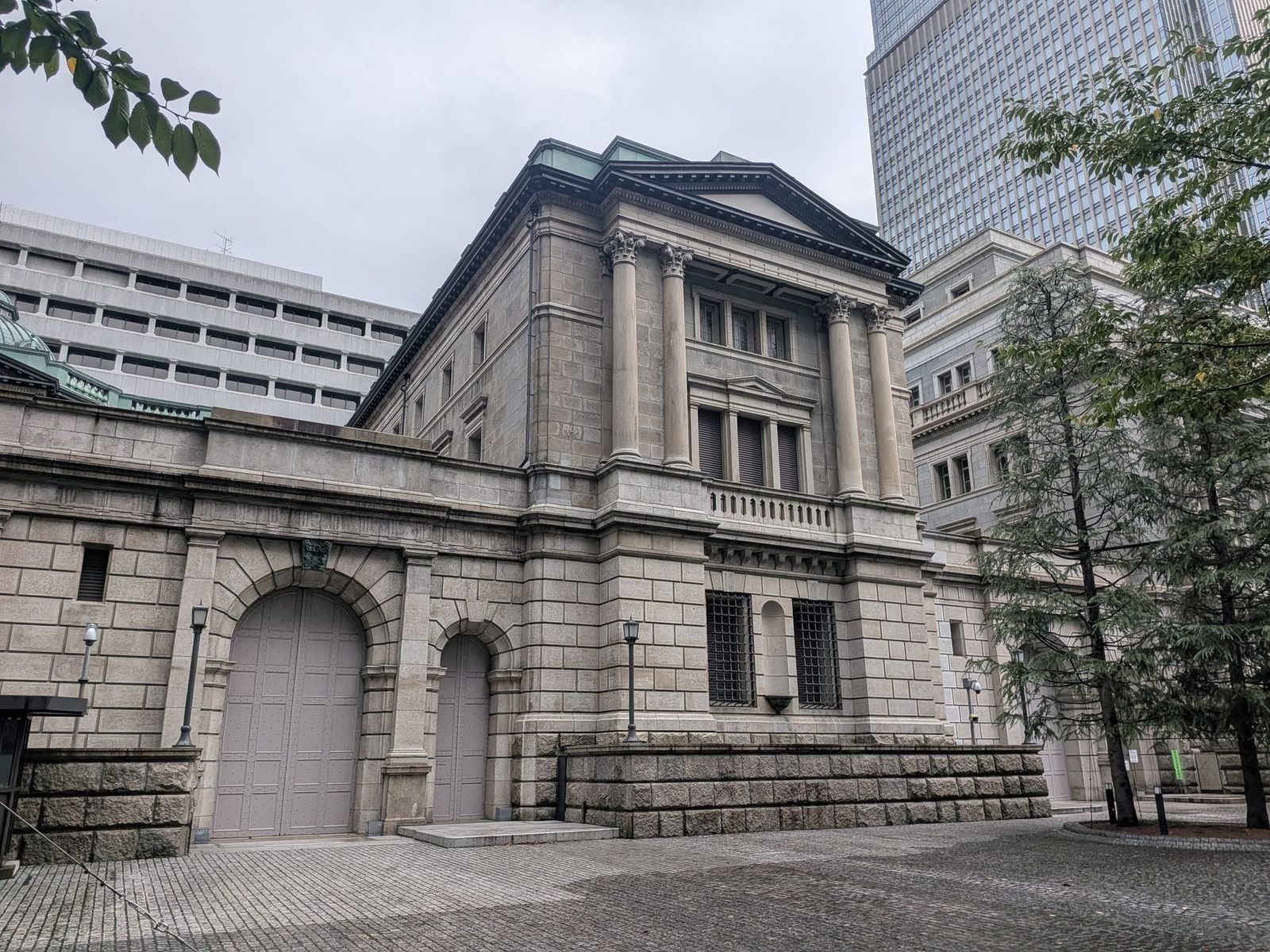
On Friday, the Bank of Japan is expected to leave its policy rate at 1.25 per cent and, in the same breath, to declare a kind of victory. People familiar with the bank's thinking have told Reuters that its quarterly Outlook report will judge underlying inflation to have roughly reached the 2 per cent target set in January 2013. After nearly fourteen years of trying to fire up prices, the statement's language is expected to turn: from coaxing inflation upward to keeping it from overshooting. The hold surprises no one after June and September rises took rates to a 31-year high. What matters Friday is the wording, hawkish enough to keep a December rise on the table, careful enough not to jolt jittery markets, ahead of Governor Kazuo Ueda's press conference at 3:30 p.m. Tokyo time.
Under former governor Haruhiko Kuroda, the bank deployed massive stimulus from 2013 to pull Japan out of deflation, then moved cautiously after ending its unorthodox easing in 2024. That caution broke this year: a June rise, then a September rise from 1 per cent to 1.25 per cent in a 7-2 vote; the fastest pace since 1990. In the Reuters poll of October 13-19, 54 of 78 economists expected 1.50 per cent this quarter, about 80 per cent of those naming a month chose December, and only 2 per cent chose October. Bloomberg found 83 per cent expecting December, up from 35 per cent a month earlier. Core prices have risen over 2 per cent a year for four years since 2022, and Ueda said in Bangkok on October 16 that anchoring inflation near target is becoming the bank's main task.
The consequential questions stay open. The first is wording: former executive director Eiji Maeda told Bloomberg he does not expect the bank to state plainly that the 2 per cent target has been achieved, though it would not surprise him if the assessment moved forward somewhat. The second is the vote: September's 7-2 split, with two members nominated by Prime Minister Sanae Takaichi dissenting, showed a board divided over speed. The third is the destination: the median Bloomberg economist sees a terminal rate of 1.75 per cent, yet 51 per cent of Reuters respondents see 2.00 per cent or more. And the fourth is timing: strategist Naomi Muguruma of Mitsubishi UFJ Morgan Stanley Securities said the bank will scrutinise upcoming data in deciding whether to raise rates in December or hold until January; with Tokyo's October prices due Friday morning.
The distinction between a pause and a stop is the whole story. If the bank declares its fourteen-year target roughly met, its job description changes in public: from stepping on the accelerator to learning to use the brakes, in Muguruma's phrase. For households, the transmission runs through import prices and a weak yen, as stubbornly high energy costs already add to inflationary pressure. The timing matters globally, too. The US Federal Reserve is seen skipping a rise at its meeting concluding Wednesday, and the European Central Bank is set to hold at 2.5 per cent on Thursday; yet separate polls point to December rises on both sides of the Atlantic. A hawkish Japanese hold would therefore reinforce expectations of a synchronised year-end tightening, with brisk artificial-intelligence demand and the Middle East war's energy shock worsening inflation pressures. Asian markets have already been trading that tension, with shares stalling and Brent slipping as oil's war premium meets a week of central-bank decisions.
The expected hold is classic gradualism: move, watch, move again. A person familiar with the bank's thinking, echoed by two more, summed up the stance to Reuters: with price and wage rises moderate, the bank will keep raising rates gradually, without rushing. Politics sharpens the dilemma: nearly three-quarters of Reuters respondents said further dissent at the next hike could weigh on the yen, and the camps are visible, hawks Hajime Takata and Naoki Tamura may push for the next rise on Friday, while dovish members Toichiro Asada and Ayano Sato have dissented against recent rises. The bank's own caution about its neutral-rate range, staff put it at 1.1 to 2.5 per cent but warn it is unobservable; is a further reason to move in steps. The bank has warned before about fast-moving market risks, and Friday's wording will show how much of that warning survives into the tightening phase.
Second-order effects fan out from Tokyo in three directions. First, bonds: Japanese government bond yields have already been moving on the prospect of steady quarterly rises, and a December confirmation would tend to lift yields further while supporting the yen. Second, Asia's importers: a stronger yen eases imported energy costs across the region but tightens financial conditions for borrowers linked to Japanese funding, and the yen's path near 156-158 to the dollar, only about 4 per cent above its 2026 low near 164, leaves little room for complacency. Third, the fiscal arithmetic: nearly two-thirds of Reuters respondents expect the government to keep new bond issuance below 40 trillion yen for fiscal 2027, a discipline that fits a bank moving toward neutral; while the artificial-intelligence boom cuts both ways, supporting growth while concentrating market risk, as Japan's own bruising week for technology firms has shown.
The calendar from here is crowded. Friday morning brings Tokyo's October consumer prices and September jobs, industrial output and retail sales; the decision follows, then Ueda's press conference, and the full Outlook text is due November 2. Hot Tokyo prices would strengthen the December case, while a soft yen or an energy spike would argue for urgency rather than patience. Beyond that, the next meeting on December 17-18 is the focal point, with a further rise to 1.50 per cent the central expectation . Watch three things in the meantime: whether Friday's statement repeats the pledge to keep raising rates toward neutral, whether any hawk dissents in favour of an immediate rise, and whether the bank revises next fiscal year's price forecast upward.
Washington and Frankfurt read a tightening race From Washington, London and Frankfurt, the story reads as synchronisation: a Federal Reserve and a European Central Bank both expected to hold this week and to rise in December, and a Japanese tightening cycle that, if confirmed, narrows the rate gap driving capital out of Tokyo. The risk in this telling is delay.
Tokyo reads the end of a fourteen-year war From Tokyo and Singapore, the story reads as a turning point: a target set in 2013, pursued through a decade of stimulus, now judged roughly met, with wages finally rising and core prices above 2 per cent for four years. The debate is not whether to tighten but how plainly to say the old war is over.
Delhi and Bangkok read the spillover first From Delhi, Bangkok and Manila, the story reads as spillover: a yen that shapes import bills and capital flows across Asia, a December rise that could steady regional currencies while tightening funding, and a governor who chose Bangkok to signal the shift.
The bank raised rates in June and again in September, to 1.25 per cent, and officials are said to want more time to judge how those rises affect lending. Surveys agree: none of Bloomberg's respondents expected an October move, and only 2 per cent of Reuters respondents who named a month chose October. The hold is therefore a pause to gather data, not a change of direction.
It means the bank judges underlying inflation, price rises excluding one-off factors and driven by domestic demand, to have roughly reached the target set in January 2013. The shift matters because the bank's task changes from pushing inflation up to keeping it from overshooting. Former officials caution the bank may move its assessment forward without stating the achievement plainly.
In the Reuters poll of October 13-19, 54 of 78 economists expected 1.50 per cent this quarter, and about 80 per cent of those naming a month chose December. A Bloomberg survey found 83 per cent expecting December, up from 35 per cent a month earlier. Market pricing agrees, implying roughly an 80 per cent chance of a rise by the December 17-18 meeting.
The neutral rate is the level that neither cools nor overheats the economy. Bank staff estimate Japan's at between 1.1 per cent and 2.5 per cent, so the current 1.25 per cent rate sits inside that range. How far the bank must still go depends on where inside the range neutral truly lies; and the bank itself warns the figure is unobservable and sensitive to assumptions.
Hotter Tokyo inflation data, a sharply weaker yen, or an energy price spike could bring the rise forward or harden the bank's language. Conversely, weak data, market turmoil, or a divided board could push the move to January, as strategist Naomi Muguruma has suggested is possible. Friday's statement wording, vote split, and forecast revisions will be the first clues.
