The four countries signed the Badr Memorandum of Understanding in Doha on 21 October 2026, pledging joint defence production, research and training — the latest brick in a fast-changing Middle Eastern security architecture.
Published 21 October 2026 · 22:25 GMT
The four countries signed the Badr Memorandum of Understanding in Doha on 21 October 2026, pledging joint defence production, research and training — the latest brick in a fast-changing Middle Eastern security architecture. On 21 October 2026, Türkiye, Qatar, Pakistan and Indonesia signed the ‘Badr’ Memorandum of Understanding in Doha, pledging cooperation in defence production, military capabilities, research and development, and joint training.
On 21 October 2026 in Doha, Türkiye, Qatar, Pakistan and Indonesia signed the Badr Memorandum of Understanding on defence-industrial cooperation — defence production, military capabilities, technical training, research and development, and joint exercises.
We diverge: on what the pact primarily is. The Reuters wire frames it inside the Iran-war security context and Ankara’s regional posture; Pakistani and Qatar-facing outlets frame it as industrial policy — self-reliance, joint production and technology transfer.
The memorandum’s full text or legal weight; timelines, budgets, or named joint programmes; how it connects operationally to the August 2026 Makkah mutual-defence pact; or how outside capitals will respond.
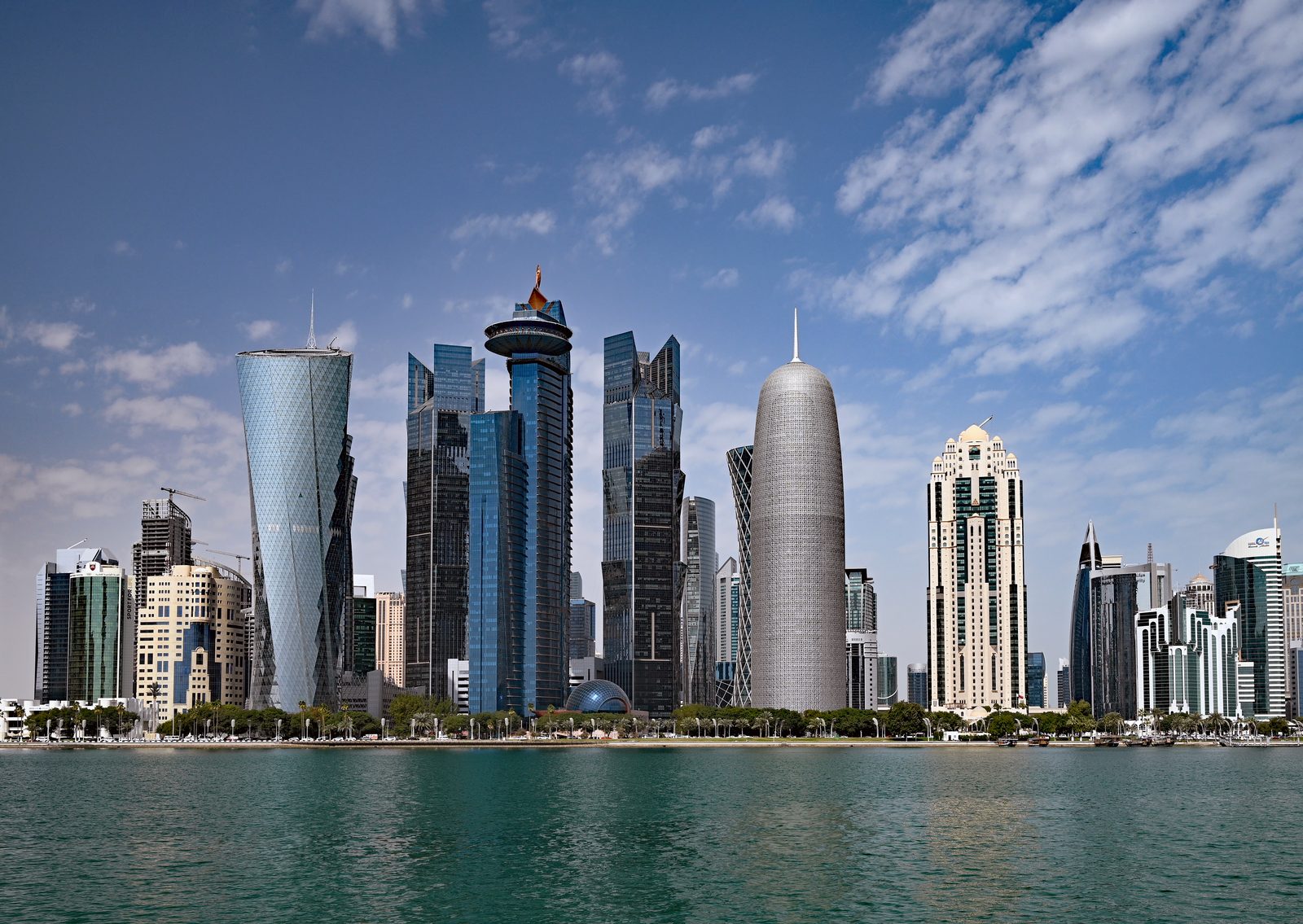
On Wednesday, 21 October 2026, the defence establishments of four countries put their names to a single document in Doha. Türkiye, Qatar, Pakistan and Indonesia signed the “Badr” Memorandum of Understanding, a framework for cooperation in defence production, military capabilities, research and development, and joint training, according to a statement from Türkiye’s Ministry of National Defence carried by Reuters.
The ceremony brought together the four countries’ defence leadership. Pakistan’s Defence Minister Khawaja Muhammad Asif signed on Islamabad’s behalf; Türkiye’s Defence Minister Yaşar Güler, Qatar’s Deputy Prime Minister and Minister of State for Defence Sheikh Saud bin Abdulrahman bin Hassan Al Thani, and Indonesia’s Deputy Defence Minister Yusuf Jauhari signed for their governments. Haluk Görgün, the head of Türkiye’s Presidency of Defence Industries, attended alongside them.
Qatar’s defence ministry said the memorandum binds together the four defence ministries with Pakistan’s defence-production establishment and the Turkish defence-industries presidency — an industrial, not purely military, architecture.
The Turkish defence ministry’s statement, the pact’s founding document in public, describes an agreement of “substantial economic importance” aimed at fostering cooperation in military production, boosting military capabilities, and deepening collaboration in technical military training, research and development. Military exercises and joint training are explicitly included.
The statement’s central formula is worth quoting in full: “By leveraging the unique military production capabilities of each country, the initiative will facilitate cooperation and integration, enhance defense industrial capacities, and enable the fulfillment of the needs of allied and friendly nations.” In plainer terms, the four want to build weapons systems together — and sell them together.
Türkiye’s state-run Anadolu Agency, cited by Pakistani press, reported that the arrangement would support “solutions and industrial capabilities aligned with advances in modern defense systems.” The name itself carries symbolism: “Badr” means “full moon” in Arabic.
Pakistan’s Defence Minister Khawaja Asif, writing on X after the ceremony, said Islamabad “places great importance on strengthening defense cooperation with trusted partners,” calling the memorandum a reflection of “our shared commitment to contributing to regional peace and stability.” He pointed to self-reliance, joint production and technology transfer as the partnership’s dividends — language that frames the pact as industrial policy as much as strategy.
The full text of the memorandum has not been published, so its legal weight is unconfirmed: memoranda of understanding typically create political commitments rather than binding treaty obligations, but the Badr text itself is not public. No timelines, funding figures, or named joint projects were announced. No secretariat, review mechanism, or dispute process has been described.
It is also unclear how the Badr framework relates, operationally, to the separate mutual-defence pact Türkiye signed with Pakistan and Saudi Arabia in August 2026 — the Makkah agreement, under which an attack on one party counts as an attack on all. The Badr MoU’s language is industrial; whether it carries any mutual-defence understanding is unstated.
Official reactions from outside the four signatories — Washington, Tehran, New Delhi, Tel Aviv — had not been reported at the time of writing. Indonesia’s domestic political framing of the signing, and the Indonesian parliament’s posture toward it, likewise remain unreported in the sources available this cycle.
Defence-industry agreements rarely make headlines; this one should be read as a positioning move. The four signatories combine complementary assets: Türkiye’s mature defence-industrial base and export machine, Pakistan’s production capacity and manpower, Qatar’s capital and hosting power, and Indonesia’s market scale and non-aligned credibility.
Reuters frames the signing against the backdrop of the Iran war and notes that Ankara — home to NATO’s second-largest army — has been helping Gulf states, where it keeps a military base in Qatar, to strengthen their defences. The Badr MoU lands two and a half months after the August Makkah mutual-defence pact, suggesting a two-track architecture: a hard security guarantee among three states, and now a wider industrial-cooperation ring drawing in a fourth, Indonesia.
For the region, the signal is industrial sovereignty: middle powers building the capacity to arm themselves — and one another — rather than depending entirely on Washington, Moscow, or Beijing. Qatar’s role as host and financier, Türkiye’s as technology exporter, and Indonesia’s as the Southeast Asian anchor give the pact a genuinely trans-regional footprint, from the Gulf to the archipelago. The Iran war’s shadow over Gulf security planning is the context every signatory understands, whether or not the communiqués name it.
Read through the 5D lens, the Badr MoU is best understood as industrial policy with strategic after-effects. Geopolitically, it formalises a middle-power circuit that routes around the traditional arms-supply oligopoly. Economically, the Turkish ministry’s own phrase — “substantial economic importance” — is the tell: this is about production lines, export markets, and technology transfer, the unglamorous machinery of sovereignty. Historically and structurally, it gathers four Muslim-majority states across three regions, echoing the Makkah pact’s logic without its mutual-defence teeth.
The structural trend is the real story: the post-2022 rearmament wave taught middle powers that arsenals are only as reliable as their supply chains. Türkiye’s drone-export success gave Ankara a template — sell the system, transfer the know-how, lock in the partnership — and the Badr framework generalises it across four flags. Pakistan brings a production base hungry for orders; Indonesia brings scale and a doctrine of non-alignment that makes the pact look like diversification rather than bloc politics; Qatar brings the capital that turns memoranda into factories.
The honest caveat: memoranda are cheap and factories are expensive. Until working groups meet, budgets are committed, and a first joint programme is named, Badr remains a declaration of industrial intent — significant as a signal, unproven as a machine.
First-order effects will be bureaucratic: joint working groups, staff talks, and the slow alignment of procurement catalogues. Second-order effects are where the pact bites. A functioning Türkiye–Pakistan–Qatar–Indonesia production circuit would give Gulf and Southeast Asian buyers an alternative to American, European, Russian, and Chinese suppliers — with fewer political conditions attached, at least in theory.
Watch three spillovers. One: training pipelines — the MoU’s explicit mention of technical military training suggests personnel exchanges that build long-term doctrinal alignment, the quietest form of alliance. Two: export competition — jointly developed systems marketed to “allied and friendly nations” will compete directly with Western and Chinese offerings in Africa and Central Asia. Three: reactions — New Delhi will read Pakistani–Turkish industrial integration through the lens of its own rivalries; Tehran will read any Gulf defence-industrial consolidation as encirclement; Washington will weigh whether the circuit complements or undercuts its own Gulf posture. None of these reactions had surfaced on the record at the time of writing.
The memorandum’s credibility will be set by what happens in the next ninety days: whether the four ministries publish the text, name a secretariat or working-group calendar, and announce a first joint programme with a budget attached. Defence-industry watchers should track the SSB’s and Pakistan’s defence-production establishment’s forward calendars for Badr-branded activity.
Three questions will decide whether Badr becomes machinery or memorabilia. First, does Indonesia’s parliament debate or merely note the signing — Jakarta’s domestic politics will reveal how binding the commitment feels in Southeast Asia. Second, do Western capitals respond, and in what register: endorsement, indifference, or quiet pressure? Third, does the framework expand — Egypt’s foreign minister has said Cairo is seriously considering joining the separate Makkah pact, and any Badr enlargement would confirm the industrial ring is meant to grow. This bureau will track each milestone as it lands.
The West: the wire’s spare, context-heavy account Western coverage runs almost entirely on the Reuters wire, which stays close to the Turkish defence ministry’s statement and adds the context Western editors consider essential: Türkiye’s NATO standing, its base in Qatar, the Iran war, and the August Makkah pact. The tone is institutional — no named Western official is quoted, and no Western capital has reacted on the record. The story is presented as Ankara’s announcement, verified but not independently advanced; the wire reports what was signed, not what it will become.
The East: no independent reporting found this cycle Targeted searches of East Asian outlets — CNA, The Hindu, NHK, Kyodo News — and of Indonesia’s Antara news agency returned no independent reporting on the Badr signing in the sources reachable this cycle. The absence is itself a datum: a four-nation defence-industrial pact with an Indonesian signatory had not, at the time of writing, registered in the East Asian information environment surveyed. This bureau records the gap openly and will update it if East-sourced reporting appears.
The Global South: the granular account The most detailed reporting comes from the Global South. Al Jazeera’s video newsfeed carried the signing from Doha. Nigeria’s Voice of Nigeria and Pakistan’s press — The Diplomatic Insight, Pakistan TV, the Pakistan defence press — supplied the granular layer the wire omitted: the full signatory roster, Haluk Görgün’s presence, the SSB’s institutional role, and Minister Asif’s complete X statement on self-reliance and technology transfer.
The Badr MoU is a defence-cooperation framework signed on 21 October 2026 in Doha by Türkiye, Qatar, Pakistan and Indonesia. Announced by Türkiye’s defence ministry, it covers joint defence production, military capabilities, technical training, research and development, and military exercises — with an explicit industrial goal: building the four countries’ defence industries and jointly supplying allied nations.
Pakistan’s Defence Minister Khawaja Muhammad Asif signed for Islamabad; Türkiye’s Defence Minister Yaşar Güler, Qatar’s Deputy Prime Minister and Minister of State for Defence Sheikh Saud bin Abdulrahman bin Hassan Al Thani, and Indonesia’s Deputy Defence Minister Yusuf Jauhari signed for their governments. Haluk Görgün, head of Türkiye’s Presidency of Defence Industries, attended the Doha ceremony.
The August 2026 Makkah agreement between Türkiye, Pakistan and Saudi Arabia is a mutual-defence pact: an attack on one party counts as an attack on all. The Badr MoU is a different instrument — an industrial-cooperation memorandum on production, research and training, with no published mutual-defence clause. One is a security guarantee; the other is a factory-building framework.
It formalises a middle-power circuit for designing and building weapons together — and selling them together — outside the traditional supplier oligopoly. For Gulf buyers it promises alternatives with fewer political conditions; for rivals from New Delhi to Tehran it reads as a shifting regional geometry; for Washington it tests whether allied industrial cooperation complements or undercuts American posture in the Gulf.
