Project Yellowstone would monetise sulphur storage and export terminals as the oil giant taps its industrial empire for tens of billions.
Published 6 October 2026 · 06:00 GMT
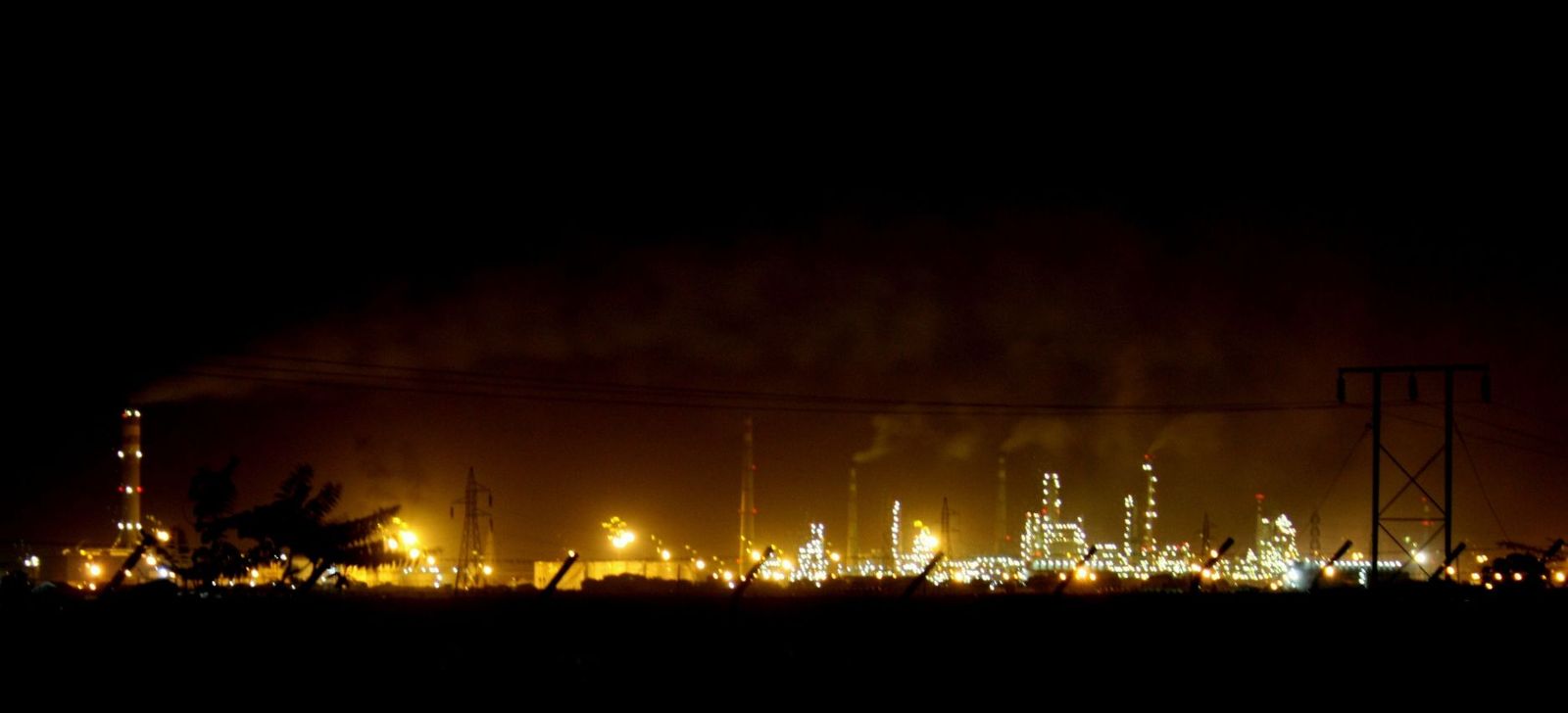
Saudi Aramco is weighing the sale of a stake in its sulphur business, a deal known internally as Project Yellowstone that could raise up to $7 billion, as the world's biggest energy company accelerates a plan to monetise its infrastructure empire for as much as $50 billion.
Three people with knowledge of the matter told Reuters that Aramco invited banks to pitch in May for the sulphur transaction, and that one source put the potential value at up to $7 billion. The assets under review centre on sulphur storage and export terminals. Aramco is still deciding which assets would be included, and a formal sale process is not expected before 2027. The company declined to comment. For Saudi Arabia, where the state, the Public Investment Fund and related entities own more than 97 percent of Aramco, every line of this pipeline is a fiscal decision, not merely a corporate one.
The simplest answer is arithmetic. Aramco is the kingdom's biggest single source of revenue through the dividends and royalties it pays, and the company has been seeking outside capital to fund the diversification agenda known as Vision 2030. Reuters has described the push as a response to mounting fiscal pressure, and the company itself has been selling assets, improving efficiency and cutting costs. Monetising infrastructure — pipelines, terminals, processing plants — converts concrete into cash without touching the oil reserves that underpin the kingdom's leverage. The proceeds can flow, directly or indirectly, toward the state projects that Vision 2030 demands.
The world's biggest oil company is selling the yellow byproduct of its gas plants to pay for the kingdom's post-oil future.
That is why the scale matters more than any single deal. Project Yellowstone is one line in a fundraising programme whose total could reach around $50 billion, according to one of Reuters' sources and the agency's calculations. The assets already identified read like a catalogue of the oil giant's industrial skeleton: oil export terminals valued at up to $25 billion, the real-estate portfolio including the Dhahran headquarters campus at around $10 billion, water infrastructure for crude production at roughly $500 million, and — reported last year — pipeline assets and up to five gas-fired power plants.
The template for these transactions was cast in 2021, when investment groups including BlackRock and EIG bought stakes in Aramco's oil and gas pipeline subsidiaries through leaseback arrangements that raised nearly $28 billion. Aramco kept control of the assets; investors received tariffs backed by minimum throughput commitments. The model was repeated in 2025 with the Jafurah gas processing facilities: an $11 billion lease-and-leaseback with a consortium led by BlackRock's Global Infrastructure Partners, with Aramco retaining a 51 percent stake in the new Jafurah Midstream Gas Company. The pattern is deliberate: the company raises funds while keeping operational control, and investors get long-dated, stable cash flows.
The queue now forming follows the same logic. The $25 billion oil export terminals package — the largest single asset in the pipeline, spanning facilities at Ras Tanura, Red Sea ports and terminals abroad — is on hold, with sources telling Reuters the company is waiting for regional tensions to ease before launching the process. The strain on Gulf export routes has made this the one part of the portfolio that cannot be monetised at speed. The real-estate and water assets, by contrast, face no such constraint, and Citigroup has been selected to advise on the terminals process.
Alongside the asset sales, a second, quieter restructuring is under way. Aramco's iktva programme — In-Kingdom Total Value Add — has reached its 70 percent local-content milestone, meaning that proportion of its goods and services procurement is now sourced inside the kingdom, and the company has set a new target of 75 percent by 2030. Aramco puts the programme's contribution to Saudi GDP at more than $280 billion since its launch in 2015, with $9 billion in inward investment and more than 200,000 direct and indirect jobs. Chief executive Amin Nasser has described its impact as transformational. Two hundred-plus localisation opportunities have been identified across 12 industries, drawing more than 350 investments from 35 countries and enabling the first domestic production of 47 strategic products.
Sulphur is the unglamorous byproduct of cleaning raw gas: when hydrogen sulphide is stripped out to make the gas suitable for export, the residue is elemental sulphur. Aramco sells it through its trading arm and describes itself as one of the largest exporters from the Gulf and Red Sea region. The main end market is fertiliser manufacturing, followed by chemicals. The assets Aramco is reviewing for Project Yellowstone — storage and export terminals — are the logistics layer of that business: the point at which a waste stream becomes a revenue stream.
That the deal is under review at all says something about the company's gas trajectory. The $100 billion Jafurah mega project, potentially the biggest shale gas development outside the United States, began operating in its first phase at the end of 2025, and Aramco aims to increase gas production capacity by 60 percent by 2030 from 2021 levels. More gas processing means more sulphur. Project Yellowstone is, in effect, a monetisation of the byproduct of the gas pivot — selling the logistics of a waste stream at the moment its volume is about to grow.
Five dimensions frame what this deal reveals. The geopolitics are visible in the pause on the $25 billion terminals sale: Aramco will not launch the largest piece of its programme until regional tensions ease, a reminder that the same geography that produces the kingdom's wealth also prices its risk. Investors watching Gulf export infrastructure are simultaneously watching the crude flows around Iran and the strait, where Iranian oil movements to China have become a barometer of the region's temperature.
The macroeconomics are the pressure gauge. The kingdom is funding a diversification programme whose bills arrive on schedule regardless of the oil price, and the state-owned giant is the most direct lever Riyadh has. The 2021 pipeline deals, the 2025 Jafurah transaction and now Project Yellowstone form a sequence: each sale converts fixed infrastructure into liquid capital while the crown retains control. The historical pattern is familiar — resource-rich states recycle the industrial skeleton when the fiscal math tightens — but the scale, at up to $50 billion, is without precedent for a single company.
The demographics and the structural trends converge in iktva. Seventy percent local content is a labour-market policy as much as a procurement rule: 200,000 jobs and $9 billion of inward investment are the domestic counterpart of the outward sale of assets. Structurally, the gas pivot underpins everything — Jafurah's first phase is meant to displace oil burned domestically, freeing more crude for higher-margin export, while sulphur volumes rise in lockstep with gas processing. Project Yellowstone sits at the intersection: monetising the tail end of the very gas expansion the kingdom is betting on.
The first marker is the calendar: no formal process is expected before 2027, and Aramco is still reviewing which assets would be included. Bank mandates, deal structure and pricing will be the signals that the review has concluded. The second marker is the terminals queue — whether the $25 billion oil export package moves once regional tensions ease, and whether real-estate and water assets sell first as the easier lines. The third is where the money goes: into dividends that feed the state budget, into the PIF, or directly into Vision 2030 projects such as the gas expansion. The oil market backdrop will set the price of patience. And the fourth is precedent: if Aramco proves that even sulphur terminals can fetch infrastructure multiples, every Gulf national oil company with midstream assets will be watching the terms.
In London and New York, Project Yellowstone reads as another entry in the Gulf's great infrastructure bazaar. Pension funds and sovereign-adjacent asset managers have learned the Aramco template since 2021: minority economics, tariff-backed cash flows, Aramco operatorship, and a state counterparty whose payment risk is priced near sovereign. The due-diligence question is not whether the cash flows exist — they do — but what a minority buyer actually controls when the seller is both operator and regulator-adjacent.
There is also a governance lens that Western institutions cannot switch off. Aramco sits inside the kingdom's fiscal architecture: dividends and royalties are the budget's ballast, and asset-sale proceeds can be redirected by a government that is simultaneously shareholder, customer and tax collector. That opacity is priced in — yields compensate — but it keeps some fiduciary boards at arm's length, preferring the listed pipeline vehicles or co-investment structures with clearer minority protections.
From Beijing and New Delhi, the sulphur terminals are interesting for a different reason: they sit at the logistics end of the fertiliser chain. Asia's growing agricultural economies are structural sulphur importers, and long-dated Gulf infrastructure — the Jafurah deal with BlackRock's GIP showed the template — is an asset class where Eastern sovereign funds and conglomerates compete comfortably with Western managers. A stake in Project Yellowstone would be, for such buyers, a hedge across both energy and food-security supply chains.
The broader read in Asia is strategic rather than transactional. Aramco's monetisation programme is understood as the financial engineering of a managed transition: selling the skeleton to feed the muscle of gas expansion and industrial localisation. For Beijing, which has anchored its Gulf policy on long-term energy partnership, each such deal is another datapoint in the kingdom's reliability as a counterparty — one that keeps exporting molecules while recycling the infrastructure that moves them.
In the Global South, the story lands on two registers at once. The first is fiscal: resource-rich states watching Riyadh convert midstream concrete into budget space will recognise the playbook — monetise what the market will price, keep what the state must control. The second is industrial: iktva's 70 percent local-content milestone, with its 200,000 jobs and $280 billion claimed GDP contribution, is exactly the kind of localisation programme that developing economies debate endlessly, and Aramco has now run it at continental scale.
There is a third, quieter register: sulphur as fertiliser feedstock. For agricultural economies across Africa and South Asia, the price and availability of sulphur-derived inputs is a food-security variable. A change of ownership at the Gulf's export terminals is unlikely to alter physical flows, but it concentrates another link of the fertiliser chain under financialised ownership — a reminder that the infrastructure of food production is increasingly priced in the same markets as the infrastructure of energy.
Project Yellowstone is the internal codename for a potential sale by Saudi Aramco of a stake in its sulphur business, centred on sulphur storage and export terminals. Three sources told Reuters that banks were invited to pitch in May and that the deal could raise up to $7 billion. Aramco is still reviewing which assets would be included, and no formal sale process is expected before 2027.
Aramco, more than 97% owned by the Saudi state, the Public Investment Fund and related entities, is the kingdom's biggest single revenue source. The company has been seeking outside capital to fund the Vision 2030 diversification agenda amid fiscal pressure. Selling infrastructure — pipelines, terminals, plants — converts fixed assets into cash while the state keeps operational control.
Around $50 billion in total, according to one of Reuters' sources and the agency's calculations. The identified assets include oil export terminals worth up to $25 billion, real estate including the Dhahran headquarters campus at around $10 billion, water infrastructure at roughly $500 million, and Project Yellowstone's sulphur terminals at up to $7 billion.
Sulphur is a byproduct extracted when raw gas is stripped of hydrogen sulphide to make it suitable for export. Aramco sells it through its trading arm as one of the largest exporters from the Gulf and Red Sea region. The main end market is fertiliser manufacturing, followed by chemicals. Volumes are set to grow as the $100 billion Jafurah gas project ramps up production.
Iktva (In-Kingdom Total Value Add), launched in 2015, is Aramco's programme to maximise domestic sourcing of goods and services. It has reached its 70% local-content target and aims for 75% by 2030. Aramco says the programme has added more than $280 billion to Saudi GDP, attracted $9 billion in inward investment, and created over 200,000 direct and indirect jobs.
