The vice president suspended Microsoft and six outsourcing giants from the green-card program, accusing them of replacing Americans with cheaper foreign workers, while nine universities face fraud probes over exchange visas.
Published 9 October 2026 · 06:00 GMT
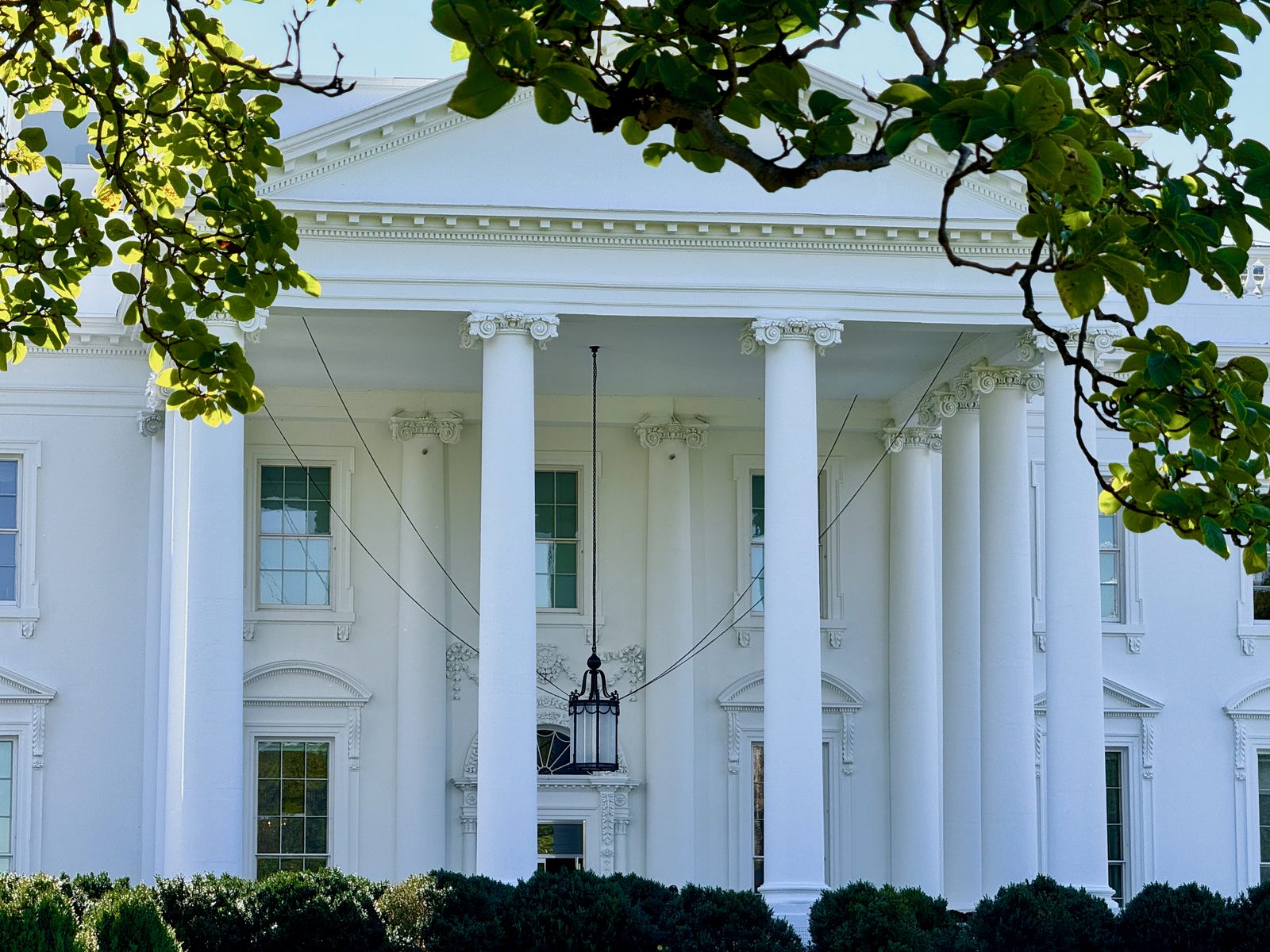
On Thursday, October 8, Vice President JD Vance took the podium in the Eisenhower Executive Office Building and announced the Trump administration's most aggressive move yet against employment-based immigration. Microsoft is barred indefinitely from the federal program it uses to sponsor foreign workers for green cards, six IT outsourcing giants face the same suspension, and nine elite universities face federal investigations over a separate exchange-visitor program. Hours later, President Donald Trump presented Microsoft CEO Satya Nadella with the National Medal of Technology and Innovation. The split screen, Vance said, was not a contradiction: 'There has been no company in the United States, unfortunately, that has abused the system more than Microsoft,' he told reporters.
The briefing room lineup told the story of a campaign, not a press conference. Flanking Vance were Attorney General Todd Blanche, Labor Secretary Keith Sonderling, Labor Department Inspector General Anthony D'Esposito, Federal Trade Commission Chairman Andrew Ferguson, and White House deputy chief of staff Stephen Miller. Vance chairs the White House Task Force to Eliminate Fraud, and the Thursday announcement was the first time that body has named corporate targets and ordered concrete penalties rather than warnings.
The offensive runs on two fronts. The first is the Labor Department's PERM program, the permanent labor certification process through which employers sponsor foreign workers for employment-based green cards. The second is the J-1 exchange visitor program, which lets universities bring in foreign students, researchers and teachers. In both cases, the administration's charge is the same: institutions are using foreign workers to undercut American wages, and the government will now treat the pattern as fraud.
Washington just turned the visa line into an election line.
The timing invited awkward questions. As Vance accused Microsoft of systematic abuse, Trump was scheduled to award Satya Nadella, the company's Indian-born chief executive, the National Medal of Technology and Innovation, the nation's highest honor for technological achievement. Vance waved off the contradiction. Microsoft is a great American company with which the administration has a great relationship, he said, but it must learn to thrive by employing and empowering its fellow Americans. The White House, it seems, can hold a medal in one hand and a suspension order in the other.
The vice president's arithmetic was simple and built for the cameras. Last year, Microsoft laid off roughly 6,000 American workers while employing 6,300 non-citizens it had brought to the country on H-1B visas, and it sponsored nearly 3,000 of its workers for green cards. 'For every worker that Microsoft laid off, they replaced that worker with one and a half foreign indentured servants,' Vance said. The administration alleges the company misrepresented its labor needs when applying for permanent residency, arguing the PERM program is meant for hyper-specialized skill sets that cannot be found in the United States, the very category at the heart of the AI talent boom.
Several outlets noted that Vance's remarks did not establish that each visa or green card represented a new hire who replaced a laid-off worker. Microsoft pushed back in a statement posted on its website, saying that 80 percent of the roughly 6,000 H-1B applications it filed last fiscal year were to extend or change the status of existing employees, not to hire new ones, and that the rest went to people already legally in the country. 'We pay our employees some of the highest compensation in the tech sector,' the company wrote, insisting its H-1B employees earn the same as Americans doing comparable work. The dispute is not new: Vance first criticized the company in July 2025 after it cut about 9,000 jobs, under 4 percent of its workforce, while continuing to seek visas.
PERM is not a hiring permit; it is the bridge between a temporary work visa and permanent residency. Employers must demonstrate that no able, willing and qualified American worker is available for the position and that hiring a foreign worker will not hurt American wages. Under the suspension, Microsoft and the others can no longer use PERM to sponsor their H-1B employees for green cards, and the Labor Department says any new or pending requests involving the suspended firms will not be considered. The suspension is indefinite, and Vance laid out no specific steps for the companies to regain access, saying only that they should change their behavior, improve their behavior and actually get better.
Vance also came armed with wage figures. H-1B workers earn $20,000 less than Americans hired for the same position, he claimed, and $48,000 less when brought in through foreign outsourcing firms. Newsmax reported that he did not identify the studies or data behind those comparisons. A related claim about the universities: American graduate students and researchers earn about $20,000 more than workers brought in under J-1 visas, again with no methodology disclosed. The numbers did their job on television; their sourcing will be tested in the weeks ahead.
Microsoft was the headline name, but not the only one. Software maker Adobe was suspended from PERM indefinitely, and immigration site VisaVerge reported in September that all 215 of Adobe's pending applications had been listed as application on hold. The outsourcing giants named by Labor Secretary Sonderling were Cognizant, Infosys, Tata, Wipro, HCL and Capgemini. Since 2009, he said, those companies alone requested almost 3 million foreign workers, received more than 230,000 H-1B approvals and obtained over 100,000 permanent labor certifications, jobs that he said were taken from American workers.
The hit lands hardest on India's technology pipeline, which supplies the largest share of H-1B workers and staffing-firm placements. It follows a series of earlier restrictions: a $100,000 fee on certain new H-1B petitions, and an order directing labor, homeland security and state officials to weigh employers' layoff records when reviewing petitions. The White House says its 2025 proclamation drove a 92 percent drop in H-1B registrations from the largest outsourcing firms and a nearly 97 percent decline in consular processing requests. Whether those declines reflect deterrence or simply rerouted hiring is one of the open questions the new suspensions will sharpen.
The second front targets higher education. The universities under scrutiny are Harvard, Yale, Stanford, Brown, the University of Pittsburgh, the University of California at Davis, the California Institute of Technology, Arizona State University and the Massachusetts Institute of Technology. Vance accused them of using the J-1 exchange visitor program, meant for students, researchers and teachers, to undercut the wages of American graduate students and researchers. His evidence: a 61 percent rate of J-1 use on federally funded grants at the nine schools, against a national average of 38 percent, though he did not explain how the figures were calculated.
The Labor Department's inspector general, Anthony D'Esposito, said subpoenas had already been served and that investigators would examine visa abuse, foreign influence and improper financial relationships tied to federally funded research. It is an escalation from July, when Vance announced dozens of subpoenas in Milwaukee and the inspector general described schemes involving fraudulent applications, coerced wage kickbacks and pay below legally required levels. For universities already bruised by federal funding fights, a fraud-task-force probe of their research hiring is a new and sharper blade.
Geopolitics. The suspensions turn a work visa into an instrument of state power. By hitting Indian outsourcing giants and naming elite universities, Washington is telling partners and institutions alike that access to the American labor market is conditional. New Delhi must decide how loudly to respond; the firms are major employers at home, and their executives straddle both sides of the United States corridor.
Macroeconomics. The fraud framing lets the administration talk about jobs and wages without touching tariffs or interest rates. With less than a month until the midterm elections on November 3, 'American jobs for American workers' is the simplest message available, and the $20,000 wage gap, sourced or not, lands in households already anxious about affordability.
Demographics. Behind the politics sits a real labor market: universities and tech firms depend on foreign researchers and engineers to fill roles in fast-moving fields. Graduate students, many of them American, are the cheapest highly skilled labor in the country, and squeezing the J-1 pipeline could ripple into research output years from now.
History. The H-1B program dates to 1990, and nearly every administration since has swung between expanding it for competitiveness and restricting it for protection. The 2026 version is distinctive for its enforcement theater: subpoenas, named targets and a task force, rather than new statutes from a Congress that has been unable to pass immigration reform for decades.
Structure. The AI boom makes every restriction a bet on scarcity. Tech firms are laying off generalists while competing fiercely for specialized machine-learning talent, precisely the hyper-specialized category PERM was built for. Cut the pipeline and the question is not whether AI investment slows, but where it moves.
CNN called the move the administration's latest attempt to show it is cracking down on government fraud ahead of the midterms, and the choreography supports the reading. Vance also used the week to urge lawmakers from both parties to rewrite the H-1B statute: 'If you want the H-1B visa program to stop being used to defraud the American taxpayer and to undercut the wages of American workers, get to work, and we will help you,' he said. Congress, out until after the vote, is unlikely to act. The administration will, which is the point. Every suspension order is a campaign artifact that doubles as policy.
First, the paper trail: whether the task force publishes any of its fraud findings, since the evidence for the wage claims and the layoff-to-visa arithmetic has so far been asserted, not shown. Second, the courts: Microsoft and Adobe have not said whether they will challenge the suspensions, but PERM disputes have a long litigation history. Third, the universities: nine subpoenaed institutions and their research budgets. Fourth, Congress after November: whether the post-election lame duck produces the H-1B rewrite Vance says he wants, or whether the task force keeps governing by press conference.
Through the Western lens, Thursday was electoral theater staged as enforcement. American coverage splits between the administration's telling, a long-overdue reckoning with corporate visa abuse, and Microsoft's, a suspension built on arithmetic that confuses correlation with proof. The split screen with the Nadella medal gave the press a ready-made irony: Washington punishing the company with one hand while honoring its chief executive with the other.
The deeper Western question is whether the task force's evidence will ever appear. Without published findings, the wage figures and the layoff-to-visa math remain claims, and American business press is already treating them that way. That said, the midterms framing lands: with Congress on recess and voters anxious about affordability, governing by press conference may be the only immigration policy available.
No major Eastern outlet, Chinese or Russian, carried original reporting on the Thursday announcement in what we could verify; coverage of the story is overwhelmingly Western plus Indian and Singaporean. That silence is itself a data point: Beijing and Moscow gain nothing from amplifying a domestic American labor dispute, though both will quietly note the pressure on Indian tech firms, since it rearranges the bargaining chips in their own dealings with New Delhi.
An Eastern analyst would read the move as America rationing access to its own innovation engine. From that vantage, the suspensions are not really about fraud; they are about who gets to sit inside the American technology stack at the moment AI talent becomes the decisive resource. The wager is that cutting foreign pipelines strengthens the home team; the risk, from Beijing's perspective, is that the talent simply relocates, and relocates east.
The Global South lens lands squarely in India, where Gulte framed the suspensions as another blow to Indian professionals in America. Thousands of engineers who planned their lives around employer-sponsored green cards now face frozen applications and deep uncertainty. For New Delhi, this is the third escalation after the $100,000 H-1B fee and the drop in visa approvals, and it turns a labor-mobility question into a diplomatic one.
The broader Southern reading is about who bears the cost of rich-country labor politics. When Washington weaponizes the green-card queue, the pain concentrates in the very countries that trained the engineers, a subsidy from South to North that rarely enters the American debate. Universities across the South will also watch the J-1 probes closely: if research hiring becomes a fraud risk, the exchange programs that fed their own talent pipelines for decades may thin out.
Microsoft was suspended from PERM on October 8, alongside Adobe and six major IT outsourcing firms; nine universities are under investigation for J-1 use. Every outlet covering the Thursday briefing agrees on these facts, from CNN and Newsmax to IBTimes Singapore and India's Gulte.
What they do not agree on is whether the action is justified. The White House calls it documented fraud against American workers; Microsoft says its H-1B filings were overwhelmingly renewals for existing staff at top-tier pay, and several outlets note the administration has published no specific evidence tying each visa to a laid-off American.
We know the suspension is indefinite, covers new and pending PERM applications, and leaves existing H-1B status and granted green cards untouched. We know subpoenas have been served in the university probe, and that a $100,000 fee on certain new H-1B petitions is already in force.
We do not yet know what specific filings triggered the suspensions, how the administration calculated its wage comparisons, or what the suspended companies must do to regain access. None of the targeted firms or universities has been charged with a crime.
Expect court challenges to the suspensions, pushback from affected industries and possibly New Delhi, and heavier use of the fraud frame on the midterm trail. Congress is unlikely to rewrite H-1B law before the vote, so the task force will keep acting by order rather than statute.
PERM is the Labor Department's permanent labor certification process, the employer-sponsored step through which many foreign workers obtain employment-based green cards. Suspension means Microsoft and the other named firms can no longer sponsor their H-1B employees for permanent residency, and pending applications are frozen. Existing H-1B status and already-granted green cards are not affected.
The administration has shown none publicly. Vance cited 6,000 layoffs against 6,300 H-1B visas and nearly 3,000 green cards, but outlets noted he did not establish that each visa went to a new hire replacing a laid-off worker. Microsoft says 80 percent of its H-1B filings last year were extensions for existing employees, and that its H-1B pay matches American workers' pay.
The administration alleges Harvard, Yale, Stanford, Brown, Pittsburgh, UC Davis, Caltech, Arizona State and MIT misused the J-1 exchange visitor program to undercut American graduate students' wages. Vance cited a 61 percent J-1 use rate on their federally funded grants versus 38 percent nationally, without explaining the calculation. The Labor Department inspector general says subpoenas have already been served.
The November 3 elections shape the choreography. CNN described the move as the administration's latest bid to show it is cracking down on government fraud, framing immigration as a jobs-and-wages issue for anxious voters. Vance also pressed Congress to rewrite H-1B law, knowing the recessed chamber cannot act, which leaves the task force governing through orders that double as campaign messaging.
