Overnight strikes set the Saint Petersburg oil terminal and an oil depot ablaze, killed one person, and deepened the rift between Kyiv and Washington over attacks on Russian energy infrastructure.
Published 18 October 2026 · 17:16 GMT
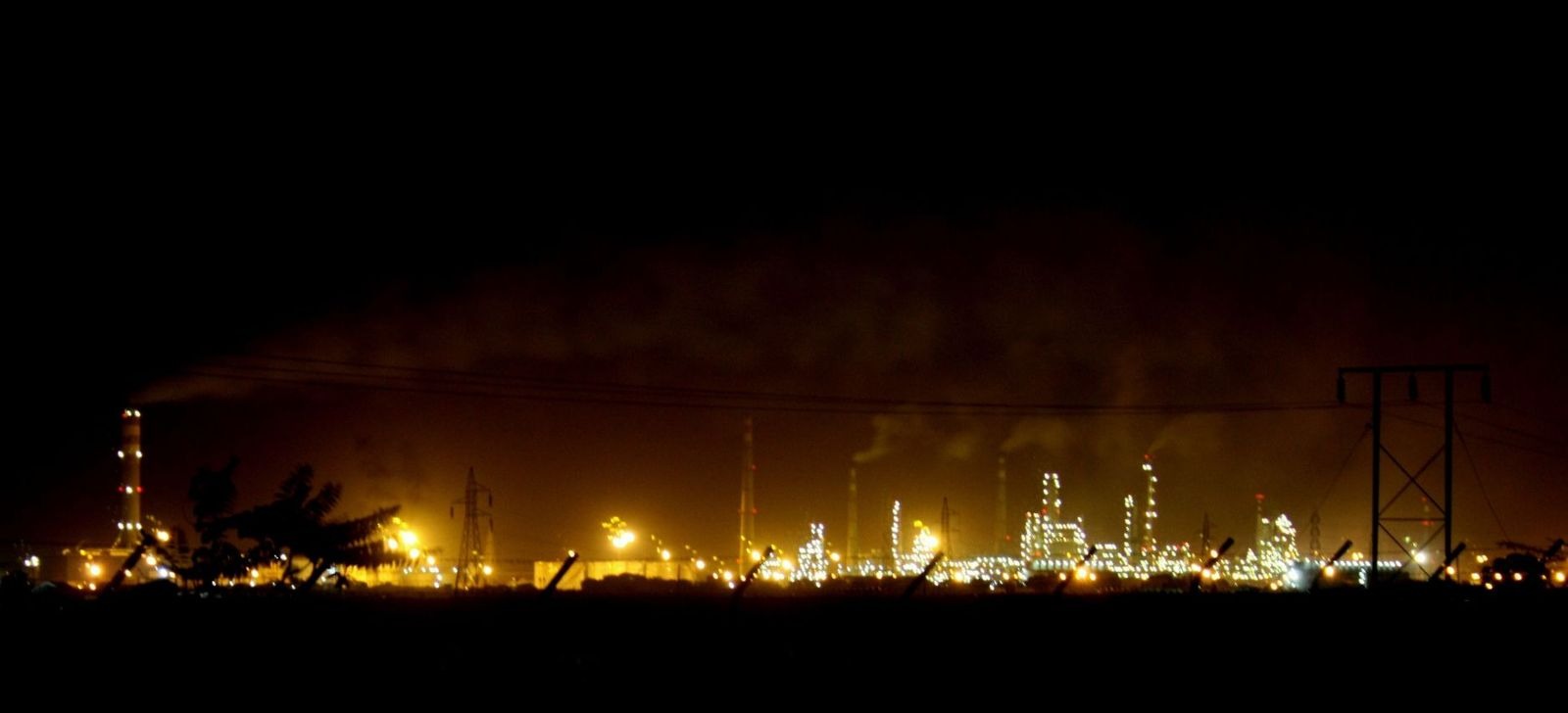
Overnight between October 17 and 18, waves of Ukrainian drones swept across Russia's second city, Saint Petersburg, and the surrounding Leningrad region, striking oil infrastructure, logistics sites and a technology company's data centre. Fires broke out at the Saint Petersburg Oil Terminal and the Ruchi oil depot, and Russian officials said one person was killed in the attack. It was among the largest aerial assaults of the war on Russian territory, arriving one week after Washington's announced “energy ceasefire” collapsed before it ever began.
The scale of the operation was immediately apparent. Russia's defence ministry said its air defences had destroyed 1,015 Ukrainian drones overnight across 15 Russian regions, the annexed Ukrainian peninsula of Crimea and the Black Sea. The head of the Leningrad region, Alexander Drozdenko, said air defences had shot down 144 drones locally, and state media described the assault as the largest attack on the city since Russia's full-scale invasion began in 2022.
Beyond the oil facilities, the strikes reached deep into the commercial and digital life of the region. Russian e-commerce company Ozon said its logistics hub in Saint Petersburg was on fire; staff were evacuated and no one was injured. Two transformer substations in Yanino were struck, leaving about 20,000 people without power on Sunday morning.
The attack happened overnight into Sunday, October 18, 2026, and was attributed by Russian authorities to Ukraine. Kyiv had not publicly commented on the strikes at the time of the initial reporting, though the Ukrainian drone producer Fire Point said on Sunday that the Ukrainian military had struck the VK data centre near Saint Petersburg.
Saint Petersburg governor Alexander Beglov confirmed fires at the Saint Petersburg Oil Terminal, the Ruchi oil depot and industrial warehouses in the Kolpinsky district. Emergency crews worked through Sunday morning to extinguish the blazes. The terminal, a petroleum-products export facility on the Baltic Sea with an annual throughput of 12.5 million tonnes, had been struck before — most recently in July.
Casualty and damage figures were still moving as the day developed. Beglov reported one death and five injured in the city; a later Reuters dispatch put the toll across the city and the Leningrad region at one dead and 15 injured. Twelve apartment buildings and two homes were damaged, Pulkovo Airport was temporarily closed, and Beglov warned that mobile internet disruption was possible.
The full extent of the damage remains unverified. The operators have not published a damage statement, and Russian officials spoke only of fires being fought — not of the terminal's operational status.
Ukraine has not claimed the attack, so the objectives of the operation can only be inferred from the target set: a blend of energy-export infrastructure, e-commerce logistics and digital infrastructure that points to economic pressure rather than purely military aims. It is also unclear how many of the more than 1,000 drones Russia says it downed were actually launched toward their targets, and how many reached Saint Petersburg itself; the defence ministry's figures are official Russian claims and have not been independently verified.
The discrepancy in casualty reporting — five injured in the city versus fifteen across the city and region — has not been reconciled, and no final accounting exists. Nor is it confirmed whether the strike will translate into another round of the fuel shortages that hit Russian petrol stations earlier this year, a consequence ordinary Russians fear most: one Saint Petersburg resident told reporters his first thought was to fill up his car before petrol ran out.
This is the energy war breaking its bounds. For months Ukraine has campaigned against Russian refineries and depots to choke the revenue stream feeding Moscow's war effort — a campaign that already produced nationwide fuel shortages in Russia earlier this year.
The timing is the story's second axis. The attack landed one week after United States President Donald Trump announced an “energy ceasefire” — a declaration neither Moscow nor Kyiv had agreed to beforehand. Ukraine had paused its own refinery strikes for three days, then resumed them earlier in the week. Washington is now visibly angry at Kyiv, with Trump blaming the refinery campaign for a surge in global fuel prices.
The third axis is the widening of the target set. Ukraine's decision to resume strikes on Russian refineries already defied Washington's wishes; hitting a VK data centre and an Ozon logistics hub extends the campaign into civilian digital and commercial infrastructure. That escalation invites the question the Kremlin is now posing: what "systematic, large-scale strikes" — Peskov's phrase — will Russia mount in return, and against which Ukrainian cities, as winter approaches?
Read through the five dimensions, the Saint Petersburg attack is a forcing function — it makes visible what each power in this triangle actually values. Economically, the target set reveals the logic — petroleum exports are the fiscal backbone of the Russian state, and each depot burned is a fiscal wound.
Historically, the pattern is unmistakable. Since October, Ukraine has systematically struck data centres — Yandex facilities in Vladimir, Ryazan and Kaluga, and now VK's — extending the campaign from hydrocarbons to the digital economy. The Saint Petersburg raid is the campaign's logic arriving at Russia's doorstep. And technologically, the sheer claimed scale — more than a thousand drones in one night — shows how unmanned warfare has become the poor power's air force: distance no longer protects capitals.
The decisive variable is Washington. Trump's anger at Kyiv, his waiver of the Graham Act sanctions, and Zelensky's frantic Sunday outreach to Witkoff and Kushner show a relationship under real strain. Ukraine is betting that battlefield results will buy it leverage in Washington; Washington is signalling that economic pain at home buys Kyiv nothing. One of those bets is wrong.
The first-order effects are visible — fires, blackouts, a dead civilian. The second-order effects will move slower and cut deeper. If the terminal's export capacity is degraded, Baltic tanker traffic reroutes, marine insurance reprices, and the diesel markets already tightened by G7 stockpile moves tighten further. European and Asian refiners watching Gulf of Finland loadings will hedge, and the price signal will reach pump prices within weeks — the exact outcome Trump fears.
Russia's response is the second thread. The war is converging on a grim symmetry: both sides blacking out each other's cities. Meanwhile, Ukraine's refinery campaign has already shown it can create domestic fuel shortages inside Russia; another summer of empty petrol stations would be a political fact the Kremlin cannot censor, however it frames the drones.
The third thread is institutional. The VK data-centre strike, claimed by a Ukrainian drone manufacturer as a military operation, pushes the war into the infrastructure of everyday civilian life — the Russian equivalent of Facebook's servers, an e-commerce giant's warehouse. Each side is redrawing the boundary of legitimate targets in real time, and the redrawing always outruns the diplomacy.
Three trajectories are now in play. The first is retaliation: Russia's promise of "systematic, large-scale strikes" points to heavier attacks on Ukrainian energy infrastructure in the coming days, timed for maximum effect as temperatures fall. Zelensky's count of 76 Russian strikes in a week suggests the retaliation cycle is already running.
The second is the Washington rupture. Trump has now both waived sanctions on Russia's oil industry and rebuked Kyiv for the refinery campaign; Zelensky's Sunday calls with Witkoff and Kushner were damage control.
The third is the market. If damage to the terminal proves substantial, the diesel and fuel-oil curves will carry a war premium through the winter, and the countries of the Global South will pay it. The Bureau will be watching three indicators: Russian refinery-throughput figures, Baltic tanker loadings, and whether Ukrainian drones return to Saint Petersburg a second time.
The Western lens frames the attack as Ukraine exercising a legitimate right of self-defence against the infrastructure bankrolling Russia's invasion. Trump's fury at Kyiv over fuel prices is reported as a strain on the alliance, with Zelensky's rebuke — that siding with Russia would be a "historic mistake" — given full weight. The West reads a battlefield logic: the refinery campaign is the one lever Kyiv has against a larger economy.
The Eastern lens, from Singapore's CNA to Asian syndicated coverage, reads the attack as proof that the war's centre of gravity has shifted from territory to infrastructure — and that great-power mediation is failing. For Asia, the operative fact is material rather than moral — Baltic export terminals burning means energy-market volatility, and volatility is what the region fears as winter demand rises.
The Global South lens asks who pays. For African, Latin American and South Asian audiences, another escalation in the energy war means one thing first: prices. Trump himself connected the refinery strikes to a surge in global fuel prices, and the memory of 2022's food-and-fuel shock is fresh from Dakar to Dhaka.
Between October 17 and 18, waves of Ukrainian drones struck Russia's second city and the surrounding Leningrad region. Fires broke out at the Saint Petersburg Oil Terminal, the Ruchi oil depot and industrial warehouses. One person was killed, and between five and fifteen were injured as casualty counts were updated. An Ozon logistics hub and a VK data centre were also hit, and about 20,000 people lost power in Yanino.
Kyiv says the strikes target the main revenue stream funding Moscow's war effort, aiming to degrade Russia's fiscal capacity and force the Kremlin toward negotiations. The campaign has already caused nationwide fuel shortages in Russia earlier this year. Ukraine treats refinery and depot strikes as fair retribution for years of Russian attacks on its own energy infrastructure, which Zelensky says were hit 76 times in the past week alone.
On October 11, President Trump announced an “energy ceasefire” that neither Moscow nor Kyiv said they had agreed to beforehand — Zelensky called the announcement “news for me.” Moscow kept striking Ukraine's power grid, so Kyiv resumed its refinery campaign after a three-day pause. Trump is now angered by the strikes, blaming them for rising global fuel prices, which has strained his relationship with Zelensky.
Russia's defence ministry said its forces destroyed 1,015 Ukrainian drones overnight across 15 regions, Crimea and the Black Sea — an official claim, not independently verified. The Leningrad region's governor reported 144 drones downed locally. If the figures hold, it ranks among the largest aerial attacks of the war, and state media called it the biggest assault on Saint Petersburg since 2022.
