Foreign Minister Abbas Araghchi told diplomats in Tehran that only "negotiations based on justice and fairness" can end the eight-month war — as a collapsed Hormuz deal clouds the way forward.
Published 5 October 2026 · 00:03 GMT
Iran's foreign minister used a gathering of foreign ambassadors in Tehran on Sunday to deliver a message aimed as much at Washington as at the diplomats in the room: the war with the United States cannot be won by force, and it cannot be won by sanctions either. "There is no military solution, nor any solution based on new sanctions," Abbas Araghchi said. "Only negotiations based on justice and fairness" could end the conflict, he added — while warning that "if our enemies again choose the path of military confrontation, our response will be stronger than before."
The remarks landed as the diplomacy looks exhausted. Indirect talks on the sidelines of last month's UN General Assembly produced no breakthrough; Washington then cut short the Iranian delegation's New York stay after Qatari-mediated contacts stalled, and President Donald Trump publicly rejected the proposal Tehran says it tabled — seven conditions for reopening the Strait of Hormuz — while leaving the door open to both further talks and renewed strikes.
Araghchi's formulation was deliberate: telling Washington that pressure will not produce surrender, and telling the world that Tehran is ready for a deal — on its terms. "Justice and fairness" is Iran's code for sanctions relief and an end to the American blockade of its ports. What is new is the timing, eight months into a war that was supposed to be short.
The war was launched by the United States and Israel in late February 2026, and a heavy bombardment campaign failed to end it decisively — the single most important fact of the conflict's second half. Washington has since dialled back military operations in favour of economic pressure, and has not struck Iran since September 1: a pause Tehran reads as the exhaustion of the military option and Washington describes as a deliberate pivot.
Diplomatically, the trail is clear. A June memorandum meant to frame a permanent settlement collapsed over the Strait of Hormuz, which Iran has sought to control since the war began — attacking vessels that transit without its authorisation. At the UN General Assembly's 81st session, Iran presented a seven-day proposal to reopen the strait; last week brought indirect talks on the assembly's sidelines, with Tehran tabling seven conditions. Trump rejected the proposal. According to Axios, top cabinet members met Friday to discuss the Iran war and the Yemen conflict, where Tehran-backed Houthis fight government forces and attack Saudi Arabia.
The substance of the negotiation remains opaque. Tehran's seven conditions have not been published, and Araghchi noted that mediators have not formally conveyed an American rejection — Iran says it awaits Washington's definitive position. Until one side puts terms on paper in public, claims about who is being reasonable are theatre for domestic audiences.
Nor is it clear what Washington wants. Trump's line — the war would end "very quickly", oil prices would fall — sits uneasily with rejecting Iran's proposal while keeping both talks and strikes on the table. Grand bargain, humiliating climbdown, or slow economic strangulation? The Friday cabinet meeting suggests the war is managed as one front in a wider regional campaign.
It matters because both sides have stopped pretending the war is about to end and started positioning for what comes after. Araghchi's speech is the diplomatic equivalent of digging in: telling Iran's public, its allies and the oil markets that the conflict has entered a phase of endurance, not escalation. For the country making that bet, see our Iran country profile — and for the other side, the United States profile.
It matters because of the water. The Strait of Hormuz is why a local war became a global economic event: every tanker attacked is a tax on the world economy, and Iran's seven conditions make explicit what was implicit — Hormuz is Tehran's hostage, and its release has a price. The Yemen profile shows the same logic on the Red Sea front.
And it matters because the pause since September 1 is fragile. A war neither side can win and neither will concede drifts — until a tanker explodes or a proxy miscalculates. Araghchi's warning of a "stronger" response was aimed not at the ambassadors in the room, but at the Friday cabinet meeting in Washington.
Strip away the ceremony and Araghchi made three moves: closing the door on Washington's narrative that Iran is one bombing campaign from folding; pre-emptively discrediting the sanctions track before it can be declared a success; and defining the only acceptable exit — "justice and fairness" — as sanctions relief, precisely what the US least wants to give. A maximalist opening bid presented as a plea for peace.
From Tehran's perspective the formulation costs nothing and buys time. Every week without American strikes is a week of adaptation: new smuggling routes, new payment channels, deeper understandings with Beijing and Moscow. The seven-day Hormuz proposal keeps diplomats discussing a mechanism while the balance of power shifts — and the "stronger response" warning is deterrence on the cheap.
The risk is that performance becomes policy. A government that declares the military option finished and sanctions doomed narrows its own room to compromise. If Friday's cabinet meeting concludes pressure is working — and Trump's "very quickly" rhetoric suggests the administration needs a win — this speech may be remembered as the last confident statement before the vice tightened.
The most immediate knock-on effect is on oil markets and the Gulf states between the belligerents. Every statement hardening the Hormuz standoff reprices tanker risk, and the Gulf monarchies — American security partners within Iranian missile range — have the most to lose. Their quiet diplomacy, including Qatar's mediation, signals the region's money wants this over even if its politics cannot say so.
The second is Yemen, which Friday's cabinet meeting explicitly linked to the Iran file. The Houthis give Tehran a second lever and Washington a second headache; a Hormuz settlement ignoring Yemen leaves the Red Sea burning, while Yemen escalation hardens Iran on the strait. Two chokepoints, one negotiation.
Watch three things: whether Washington formally answers the seven conditions — Araghchi's complaint suggests the ball is theatrically in the American court; whether the September 1 strike pause holds through October; and the tankers — another hit like the British agency's latest report would spike oil prices and force both sides to choose between escalation and embarrassment.
The likeliest path is the undramatic one: stalemates end in exhaustion, not breakthrough — a quiet Hormuz understanding, easing sanctions enforcement, a war fading into blockade into cold peace. This speech may read one day as the moment Iran stopped trying to win the war and started trying to win the peace after it.
Western capitals read the speech as a regime negotiating from weakness: eight months of bombardment plus crushing economic pressure have shrunk Tehran's options, and "no military solution" is less principle than admission. From this vantage, the seven conditions are a ransom note dressed as diplomacy, and Trump's rejection was the right answer. The open question is whether economic pressure alone can force a settlement — or merely teaches Tehran to live with less.
From Beijing and Moscow, the same events read as the failure of American force: a war launched in February promising a swift outcome has produced stalemate, a hostage strait and a retreat to sanctions — the sanctions that have failed to change Iranian behaviour for decades. In this telling, "justice and fairness" is the reasonable position, and Washington must choose between a settlement and endless pressure. Russia and China prefer the stalemate to an American victory: every month the US spends on Hormuz is a month not spent on their neighbourhoods.
Across the Global South, the speech is another chapter in a war that was never theirs but whose costs they pay daily. For Asia's and Africa's oil importers, Hormuz is a lifeline, not a bargaining chip; every week of confrontation is fuel prices and food inflation. The Southern reading is unsentimental: Iran is leveraging a global waterway, America is waging a war of choice with global consequences. Both capitals seem to prefer the leverage of the crisis to the risk of the deal.
Abbas Araghchi is Iran's foreign minister. Speaking to foreign ambassadors in Tehran on October 4, 2026, he said there is "no military solution, nor any solution based on new sanctions" to the conflict with the United States, adding that "only negotiations based on justice and fairness" could end it. He warned that if enemies "again choose the path of military confrontation, our response will be stronger than before."
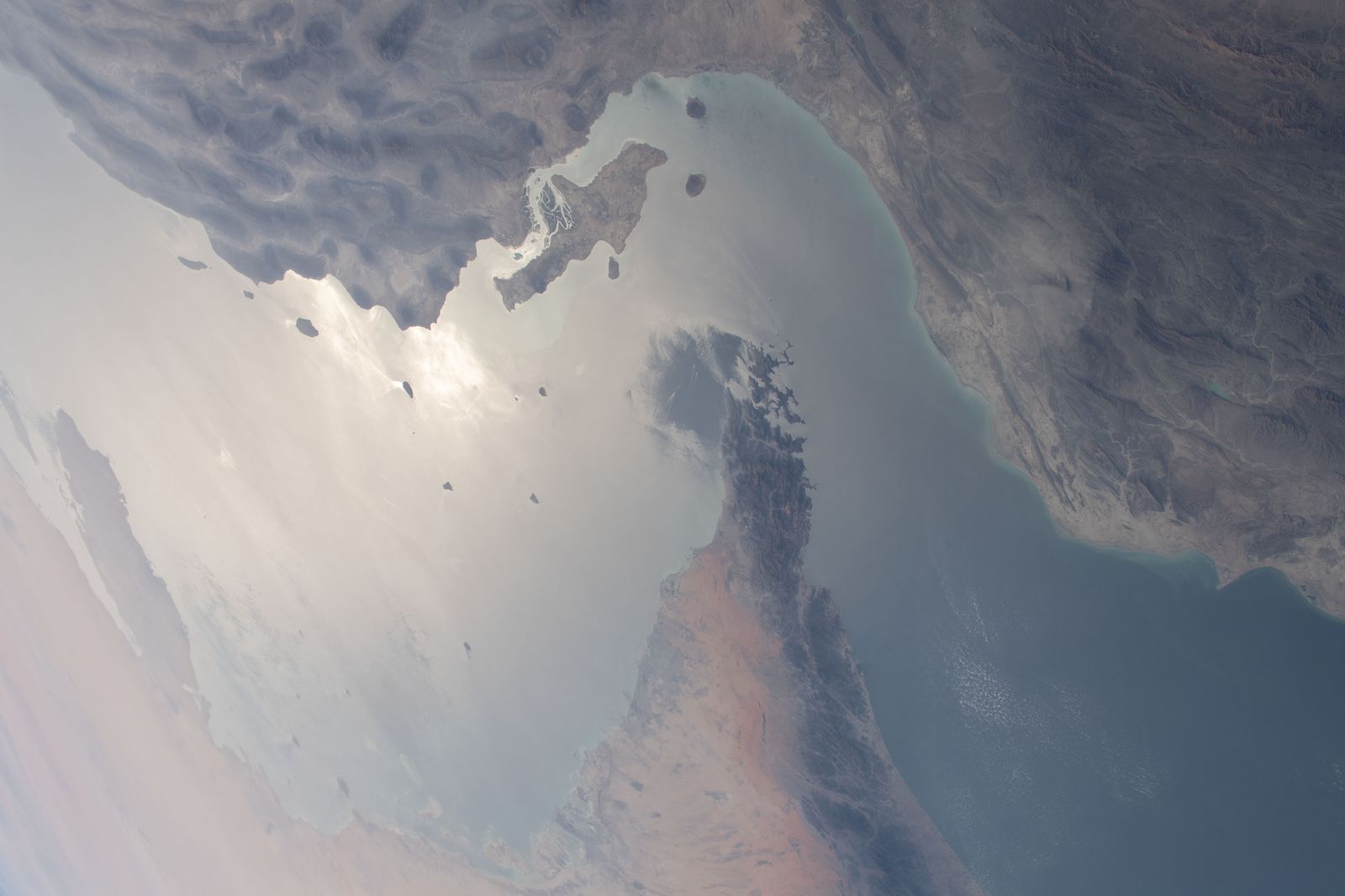
The strait carries a large share of the world's seaborne oil, and Iran has sought to control it since the war began, attacking vessels that transit without its authorisation. A June memorandum meant to frame a permanent settlement collapsed largely over Hormuz. Iran now ties reopening the lane to seven conditions, including an end to sanctions on its oil — making the waterway the conflict's main bargaining chip.
In June 2026 the two sides agreed a memorandum of understanding meant to provide a framework for a permanent resolution of the conflict. The deal fell apart, largely because of disagreements over the Strait of Hormuz. Its collapse pushed both sides back to indirect contacts, including talks on the sidelines of September's UN General Assembly session in New York.
After the UN General Assembly session, US Secretary of State Marco Rubio instructed Iran's delegation to leave New York earlier than planned, following a weekend of Qatari-mediated contacts that produced no movement. Tehran disputed the account, saying the departure followed a schedule shared with the State Department in advance. The episode underlined how little trust remains between the two capitals.
