On October 8 the United States sanctioned seventeen vessels and their owners as the final core of Iran's shadow fleet, choking off Tehran's last major illicit revenue stream while Brent held above one hundred dollars.
Published 10 October 2026 · 06:00 GMT
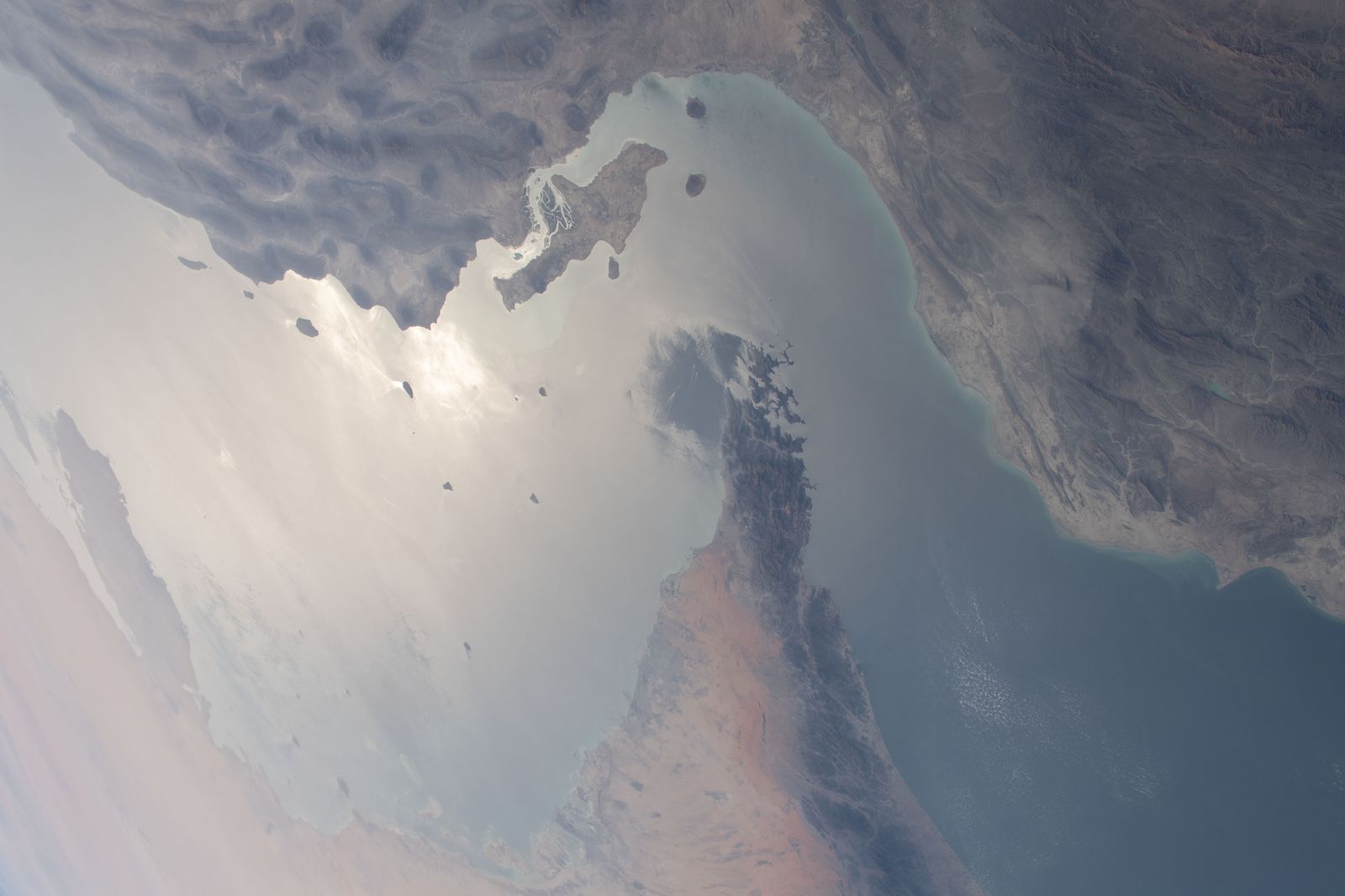
WASHINGTON, The United States opened its sharpest campaign yet against Iran’s covert oil trade on October 8, sanctioning seventeen tankers and the companies behind them under an operation Treasury calls Economic Outcast. The designation, paired with separate State Department measures against five more vessels and a string of trading firms, is presented by Washington as the decisive blow to the shadow fleet that has kept Iranian crude flowing to Asia despite years of pressure. Tehran dismissed the move as desperation. With Brent crude settling near one hundred and four dollars and tanker attacks mounting in the Strait of Hormuz, the sanctions land on a market already priced for danger.
On October 8 the US Treasury Department designated seventeen vessels and eighteen related companies as the remnants of Iran’s shadow fleet, the covert armada that moves Iranian crude, oil products and petrochemicals to buyers in South and East Asia. A Treasury official told reporters the action represents the most significant blow yet to Iran’s remaining illicit maritime infrastructure, and claimed it effectively neutralizes the vast majority of the network. Treasury Secretary Scott Bessent said the department is starving what he called the tyrannical regime in Tehran of the money it uses to wage war, and warned that no enabler of Iranian sanctions evasion is safe.
The designations were issued under Executive Order 13902, the standing authority Washington uses against sectors of Iran’s economy. OFAC added the vessels and entities to its Specially Designated Nationals list: any property they hold in the United States or in the control of US persons is blocked, and US persons are generally prohibited from dealing with them. The familiar fifty-percent rule applies, so any company owned half or more by a blocked person is itself treated as blocked. Treasury also put banks, insurers and shippers on notice that transacting with the network could expose them to civil, criminal or secondary sanctions, the lever that has historically done more damage than the hull-by-hull approach. The vessels sail under flags from more than a dozen jurisdictions, with ownership traced through front companies in the Marshall Islands, Hong Kong, China and the British Virgin Islands.
Operation Economic Outcast was unveiled on August 24 as what the administration called Economic D-Day for Iran, a campaign aimed at cutting the funding streams behind the war with the United States, missile construction, cyberattacks and the Islamic Revolutionary Guard Corps. The October 8 package is its sharpest maritime move, and it follows a summer of escalation: Washington reimposed its blockade of Iranian ports on July 14 after a memorandum of understanding with Tehran collapsed, and September brought strikes on shadow-fleet tankers at sea. Treasury officials now say Iran has stopped loading and offloading crude oil vessels altogether. Kpler data show no Iranian crude loaded for export since August 25, and Tehran is estimated to have only about twenty million barrels left on vessels outside the blockade, off Singapore, Malaysia and China. The world consumes roughly one hundred million barrels of oil a day.
Washington is betting that this round’s corporate designations raise the cost of adaptation faster than new cutouts can be invented.
The Treasury release names the ships that Washington says carried the trade. The tanker Shenzhen is accused of moving more than three and a half million barrels of Iranian crude since November 2025. The Vanuatu-flagged Tina 5 allegedly carried more than one and a half million barrels in August alone. The Panama-flagged Starway, owned by a China-based company, is tied to more than three million barrels of Iranian naphtha since 2025, and the King Chain is credited with several million barrels of Iranian methanol shipped to China since 2023. The Comoros-flagged Paritosh moved more than one hundred thousand barrels of Iranian bitumen this year, the Panamanian Bitu more than one hundred and seventy thousand, and the Bahamas-flagged Gas Lucky over five hundred thousand barrels of Iranian ethylene since 2025. Each figure reflects cargoes attributed by US authorities, not the total of Iran’s exports.
The Treasury action was only half of Thursday’s strike. The State Department separately sanctioned five vessels, ten entities and six individuals involved in trading Iranian petroleum and petrochemical products, and named two Mumbai firms, SSPL Solutions and Samudra Marine Services, along with five Indian nationals. The move extends the compliance perimeter deep into India’s trading houses, a signal that Washington is willing to price secondary-sanctions risk into South Asian commerce. Treasury also gave Samudra Marine a limited wind-down authorization through October 23. In the other direction, two ships came off the list: the Hakuna Matata and the Pinocchio were removed after Treasury determined they had left Iran’s shadow fleet and were sold to operators not subject to sanctions, a reminder that the list has an exit door for owners who genuinely sell out of the trade.
The sanctions landed on a market already straining. Brent crude settled at one hundred and four dollars and twenty-eight cents on October 9, up about four percent, after Iran warned it would block unauthorized shipping routes through the Strait of Hormuz and a Gulf of Mexico storm shut in offshore production. The US Energy Information Administration now expects Brent to average about one hundred and five dollars in the fourth quarter. Kpler reported a record ten tankers struck in the strait between September 28 and October 4, while a US Navy-led maritime center counted at least twelve attacks on tankers carrying crude, liquefied petroleum gas and liquefied natural gas between September 28 and October 2. Only seven tankers transited the strait on one recent day, the lowest figure since late July and less than half the seven-day average.
Analysts quoted by Reuters urged caution about the economic effect. The new designations arrived after Iran had delivered virtually all of its oil at sea, they noted, so the direct hit to Tehran’s revenues will be muted, and CNBC reported the action is not expected to change Iran’s economy on its own. Treasury’s counterargument is that the target is not the cargoes but the compliance web: when banks, insurers and charterers treat seventeen named hulls as toxic, the fleet’s operating costs rise across the board. This edition’s energy file tracks how that web has absorbed every previous round, from the maximum-pressure years to the July blockade, and rebuilt around new cutouts within months.
Iranian Foreign Minister Abbas Araghchi rejected the package outright, saying the shift from military operations to sanctions shows Washington is running out of options and recycling the same old plans. Tehran insists it has already endured blockades and military pressure and will withstand this round too. The regime is also working the map: President Masoud Pezeshkian used the October 8 Caspian Sea Environmental Summit in Turkmenistan to meet Russian, Azerbaijani, Turkmen and Armenian leaders about expanding trade and countering Western unilateralism, part of an effort to route imports overland through the Caspian and the Caucasus as the US campaign constricts air and sea routes. The IRGC Navy claimed an attack on the Vietnamese-flagged tanker NV Sunshine in the Strait of Hormuz on October 9, a reminder that Tehran retains escalation options at the chokepoint.
The 5D read on this package starts with geopolitics: sanctions are now the financial wing of a campaign that includes the July port blockade and September’s strikes at sea, and the naming of Indian firms shows the net widening toward the buyers, not just the carriers. Macroeconomics follows: Brent above one hundred dollars, war-risk premiums and shrinking Hormuz transits mean every barrel carries a risk tax that lands first on Asian importers and then on global consumers. Structurally, the shadow fleet is a decade-old adaptation, built hull by hull and shell company by shell company, and Washington is betting that this round’s corporate designations, with their secondary-sanctions warning, raise the cost of adaptation faster than new cutouts can be invented.
Four markers will show whether Economic Outcast bites or fades. First, the October 23 wind-down deadline for Samudra Marine Services: compliance, not defiance, is the first data point. Second, Chinese buying patterns, since naphtha, methanol and ethylene flows to China were the named cargoes and Beijing’s demand is the engine of the whole shadow economy. Third, Hormuz transit data from Kpler and the Navy-led center, the physical pulse of the crisis. Fourth, the talks President Trump described on October 8 as productive discussions, set against his pledge of no attack on Iran before the November 3 midterm elections. Pressure and off-ramp are being offered at the same time.
The shadow fleet has survived maximum pressure, a war that began on February 28, and a full naval blockade. It survives because every previous round priced the risk and found the workarounds. This round’s test is different: it aims at the companies and the bankers behind the hulls. If the compliance wave follows, October 8 will read as the day the fleet’s business model broke. If new cutouts appear within months, it will read as another expensive lesson in how adaptation outruns enforcement.
The Western lens reads October 8 as enforcement finally catching up with evasion. After a decade of cat-and-mouse, Washington has mapped the fleet’s corporate web and is using secondary sanctions to make the business model unbankable. The blockade, the September strikes and now Economic Outcast form one coherent campaign, and the delisting of two ships that sold out proves the system rewards compliance. In this reading, the shadow fleet’s era is ending.
The same lens sees the market handling the shock. Brent above one hundred dollars reflects genuine risk, but global inventories, the planned G7 stock release and recovering Gulf flows give the system buffers. The lesson of past pressure campaigns is that prices spike on headlines and settle as rerouting absorbs the loss. What matters now is whether Asian buyers, especially in China and India, treat the October 8 warning as a red line or a speed bump.
From Tehran’s vantage point, the October 8 package is proof that Washington’s military campaign has failed and only the old sanctions playbook remains. Foreign Minister Araghchi called it desperation, and the regime’s answer is diversification: President Pezeshkian’s October 8 meetings with Russian, Azerbaijani, Turkmen and Armenian leaders aim to shift trade overland through the Caspian and the Caucasus, beyond the reach of the naval blockade. Iran has survived eight years of maximum pressure and intends to survive this round.
Beijing’s position completes the Eastern picture. Chinese buyers absorb the naphtha, methanol and ethylene that Treasury named, and as long as that demand holds, new intermediaries will replace the sanctioned ones. The Eastern lens treats sanctions as a tax that gets priced into discounted barrels, not a wall. The real contest is over whether secondary-sanctions threats can force Chinese and Indian firms to choose between Iranian barrels and the dollar system.
The Global South lens sees collateral before geopolitics. India’s trading houses are now named in a US sanctions action, and South and Southeast Asian buyers, shippers and insurers face a compliance burden imposed from Washington. Malaysia and Singapore, whose waters host the ship-to-ship transfers that keep the trade alive, are being pulled into an enforcement regime they did not choose. The October 23 wind-down for Samudra Marine is being watched as a test of how much room smaller firms get.
The Southern lens also reads the price signal first. Brent above one hundred dollars is a tax on every developing economy that imports fuel, and the Hormuz attacks that lifted it hit Asian consumers hardest. From this angle, the campaign’s success would be measured not in designated hulls but in cheaper, safer energy flows. Until then, the South pays the premium while the North litigates the blockade.
A shadow fleet is a network of aging tankers and front companies used to move sanctioned oil while hiding its origin. Ships switch off transponders, conduct ship-to-ship transfers, fly flags of convenience and sail through layers of shell companies. Iran’s version has kept crude, naphtha and petrochemicals flowing to Asia despite years of US sanctions, and the October 8 designations aim at its last major operating core.
The package is the maritime spearhead of Operation Economic Outcast, launched August 24 as Washington’s economic campaign against Iran. It follows the July 14 reimposition of the port blockade, September strikes on shadow-fleet tankers, and record attacks in the Strait of Hormuz. Treasury says Iran’s illicit exports are nearly exhausted and this round finishes the job; analysts caution the oil has largely already been delivered.
Secondary sanctions threaten penalties against non-American banks, insurers and shippers that deal with designated parties, even when no US law is broken. That warning, attached to the October 8 designations, is meant to make seventeen named hulls toxic across the global compliance system. Previous rounds targeted ships; this one targets the companies and intermediaries, raising the cost of finding new cutouts.
Brent settled near one hundred and four dollars on October 9, with the US energy agency expecting about one hundred and five dollars on average in the fourth quarter. Prices now carry a double risk premium: record tanker attacks in the Strait of Hormuz and the sanctions tightening on Iranian flows. Relief would require either a real de-escalation at the strait or progress in the talks Washington describes as productive.
