The Spanish federation will take FIFA to sport's highest court over a $20,000 fine and partial stadium closure imposed for Islamophobic chants during the Egypt friendly — arguing the chant was offensive, but not discriminatory.
Published 16 October 2026 · 22:20 GMT
MADRID — Spain's football federation will take its fight with FIFA to the Court of Arbitration for Sport, escalating a dispute over Islamophobic chants by supporters during a World Cup warm-up match against Egypt in March. The Royal Spanish Football Federation (RFEF) confirmed it will appeal to CAS — the highest authority in sports disputes — after FIFA rejected its challenge to sanctions imposed for the behaviour of fans at Barcelona's RCDE Stadium.
FIFA fined the federation $20,000 and ordered it to close at least 15 per cent of available seats for Spain's next home friendly, a verdict confirmed in recent days by FIFA's appeals body after an initial ruling by three disciplinary judges. A FIFA spokesperson told Reuters the federation's appeal was dismissed last week, prompting the Spanish move to Lausanne. The RFEF argues the sanction misreads both the chant and the rulebook — and is now staking its case on convincing sport's supreme court.
The facts of the night are not in dispute. On 31 March, Spain drew 0-0 with Egypt in a friendly at the RCDE Stadium, home of LaLiga club Espanyol near Barcelona. In the 10th and 47th minutes, a section of Spain supporters chanted “If you don’t jump, you’re a Muslim”. After the second occurrence, the stadium announcer issued a warning over the public-address system and the scoreboard displayed a message against discriminatory behaviour.
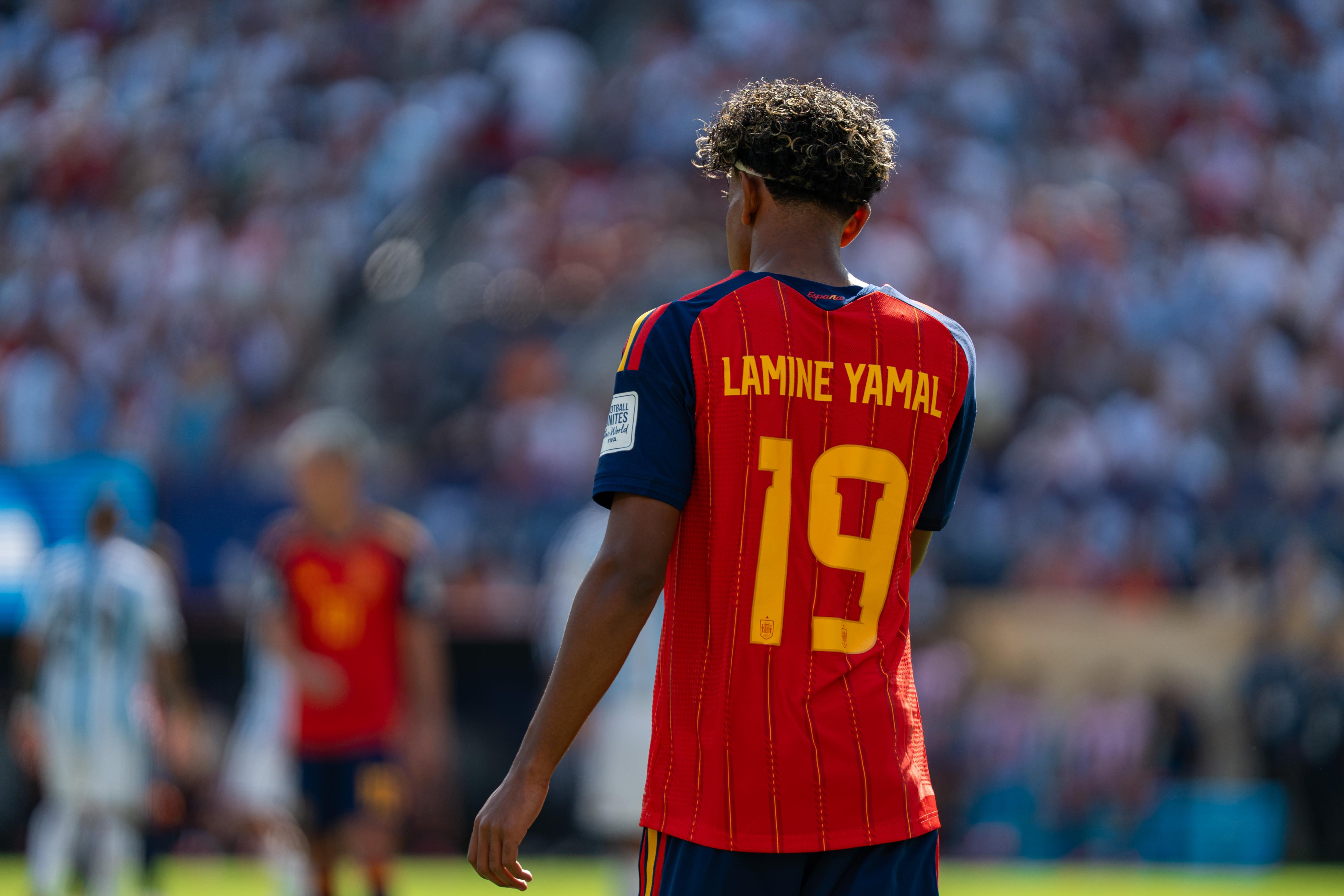
Spain winger Lamine Yamal, who is Muslim, condemned the chants at the time as “disrespectful and intolerable”, calling those responsible “ignorant and racist”. Writing on Instagram in April, the Barcelona star added: “Using a religion as a taunt on the field makes you look ignorant and racist.” Spanish police launched an investigation the following day, and FIFA opened disciplinary proceedings against the RFEF.
FIFA's disciplinary judges wrote in their verdict that “harsh sanctions were necessary”, while noting it was a first offence for the Spanish federation — which, the judges said, had reacted quickly, publicly condemned the chants, put preventive measures in place before the game, cooperated fully with match officials and worked to identify the fans responsible. The partial closure must cover 15 per cent of seats, which may instead be filled with special-interest groups “such as families, students, and anti-discrimination organizations”.
What remains unknown is the shape and timetable of the Lausanne battle. The RFEF has announced its intention to appeal but has not disclosed when the formal filing will land at CAS, which lawyers will argue it, or whether it will request a stay that would suspend the fine and the partial closure until the court rules. CAS procedures in football disciplinary cases typically run several months; an expedited track is possible but not confirmed.
Unknown too is the fate of the individuals involved. Spanish police opened an investigation the day after the match, and FIFA's judges praised the federation's efforts to identify the fans — but no arrests, charges or stadium bans have been publicly reported. Whether the RFEF's cooperation extends to lifetime exclusions, as some federations have imposed in comparable cases, is an open question the CAS proceedings may force into the open.
The stakes reach well beyond a $20,000 fine — trivial money for a federation of Spain's size. At issue is the legal boundary of discrimination in football stadiums, and who draws it. If CAS upholds FIFA's reading of Article 15, the ruling becomes a continent-wide precedent: federations become strictly liable for chants that weaponise a protected identity even without an explicit slur, and the “we meant no insult” defence loses its last refuge. If the RFEF prevails under Article 17, FIFA's anti-discrimination enforcement loses a degree of its deterrent edge.
There is a reputational dimension Madrid cannot ignore. Spain will co-host the 2030 World Cup with Morocco and Portugal, and the image of Islamophobic chanting in a Spanish stadium — condemned by the national team's own Muslim superstar — is the wrong prelude to a tournament the country intends as a showcase. How the federation conducts this appeal, win or lose, will be read in Rabat, in Zurich and in living rooms across the Muslim world as a statement of what Spanish football actually stands for.
Because the money was never the point; the classification is. Under FIFA's disciplinary code, Article 15 (discrimination and racist abuse) carries a moral stigma and a heavier sanctioning logic than Article 17 (political, ideological, religious or offensive messages). The RFEF's argument — that ‘Muslim’ is “neither insulting nor pejorative” and therefore the chant belongs under Article 17 — is an attempt to move the offence from the racism column to the bad-manners column. FIFA's disciplinary committee closed that door explicitly: Article 15, it ruled, does not require the explicit use of a slur, and a term becomes discriminatory when deployed in context as “an insult, taunt, or marker of inferiority”.
That reasoning is the real target of the CAS appeal. The federation is asking the Lausanne court to second-guess not the facts — which it does not contest — but FIFA's interpretive jurisdiction over context. It is a bold ask: CAS traditionally grants sports governing bodies a margin of appreciation in disciplinary matters, and overturning a reasoned interpretation of the federation's own code is a high bar. The RFEF's strongest cards are the ones FIFA's judges themselves dealt it — first offence, instant condemnation, full cooperation, preventive measures praised on the record. Expect the appeal to lean less on “we did nothing wrong” and more on “the punishment mislabels what we did”.
The case also lands in a crowded season for Spanish football's institutions. Real Madrid's open war with LaLiga over refereeing and governance has already put the country's football politics under a harsh light, as this newsroom has reported. A federation-versus-FIFA legal battle fought in public adds another front — and every hearing in Lausanne will replay the chant itself, the one thing the RFEF most wants the world to stop hearing.
Beyond the courtroom, the case is already reshaping incentives. Federations across Europe will read the Article 15 reasoning as a warning: the “no slur, no discrimination” defence is dead, and stewarding plus in-stadium messaging are now legal necessities rather than public-relations extras. Stadium technology vendors — audio monitoring, fan identification, targeted PA interventions like the one that stopped the chant's third occurrence — gain a powerful sales argument every time a federation pays for the lack of them.
There is also a quieter commercial calculus. Sponsors of the 2030 World Cup will be watching how Spain handles the reputational overhang; a federation seen to be minimising an Islamophobic incident is a harder brand partner than one seen to be confronting it. And the episode feeds a broader European conversation about xenophobic violence that extends beyond stadiums — from anti-migrant violence in South Africa to street-level tensions at home — in which football, for better or worse, remains the most visible stage.
The immediate next step is procedural: the RFEF must lodge its statement of appeal, after which CAS will constitute a panel — typically three arbitrators — and set a timetable for written submissions and a hearing. The federation may ask for a stay of execution; without one, the sanctions stand while the case runs. Given the next home friendly is not expected until June 2027 or March 2028, the practical pressure for interim relief is low — but the reputational pressure for a relatively swift ruling is high.
Watch three things. First, whether CAS accepts the Article 15 interpretation or reclassifies under Article 17 — the entire case turns on that hinge. Second, whether the panel adjusts the sanction: CAS can reduce, increase or confirm, and the RFEF's first-offence record plus documented cooperation gives the court room to trim without endorsing the federation's legal theory. Third, what the RFEF does at home meanwhile — fan identifications, stadium bans, education programmes — because the best argument in Lausanne is a federation that has already made recurrence impossible.
The Western lens frames this as a rule-of-law story about football's maturing anti-discrimination regime. The Associated Press and American outlets foreground the procedure — three disciplinary judges, an appeals body, now CAS — and FIFA's careful calibration: harsh sanctions, but mitigated by the federation's exemplary response. In this telling, the system worked: the chant was identified, condemned by the team's own star, punished proportionally, and the federation retains full due process in Lausanne. The precedent strengthens the norm that intent is no defence when context discriminates.
The Eastern lens reads the case as a sovereignty stress test for FIFA's universal jurisdiction. From this vantage point, the striking feature is a national federation — of a World Cup-winning, 2030-hosting nation — submitting to a Swiss court's judgment over words sung in a Barcelona stadium, under rules written in Zurich. The interest lies less in the chant than in the architecture: who gets to define discrimination across cultures and languages, and whether CAS, for all its neutrality, ultimately ratifies the governing body's interpretive monopoly. A federation winning on Article 17 would be read here as a rare successful pushback against that monopoly.
The Southern lens centres the people the chant targeted. From Cairo to Casablanca to Jakarta, the story is not primarily about Swiss procedure but about a European stadium where ‘Muslim’ was used as a taunt — and about Lamine Yamal, a young Muslim superstar of Moroccan and Equatorial Guinean heritage, having to condemn his own supporters. That Spain's opponent that night was Egypt, and that Spain will co-host the 2030 World Cup with Morocco, sharpens the resonance: the Global South watches whether European football's anti-racism machinery protects Muslims with the same seriousness it has learned to apply elsewhere. The fact that Morocco itself recently took a football dispute to CAS — as this newsroom reported — makes Lausanne a familiar, not foreign, arena in this telling.
During the 0-0 draw at Barcelona's RCDE Stadium on 31 March, some Spain fans twice chanted “If you don’t jump, you’re a Muslim”, in the 10th and 47th minutes. After the second occurrence the stadium announcer issued a warning and the scoreboard displayed an anti-discrimination message. FIFA judged the chant Islamophobic and sanctioned the Spanish federation with a $20,000 fine and a partial stadium closure.
The RFEF argued the word ‘Muslim’ is “neither insulting nor pejorative”, so the conduct should fall under FIFA's Article 17 — covering political, ideological, religious or offensive messages — rather than Article 15, which deals with discrimination and racist abuse. FIFA's disciplinary committee rejected that reading, ruling that Article 15 needs no explicit slur and that a term discriminates when used as “an insult, taunt, or marker of inferiority”.
CAS, based in Lausanne, Switzerland, is the highest authority in sports disputes. The RFEF is appealing there after FIFA's own appeals body confirmed the sanctions. A CAS panel — usually three arbitrators — will review the case and can confirm, reduce, increase or annul the $20,000 fine and the partial stadium closure. Such procedures typically take several months, and the federation may seek a stay suspending the sanctions meanwhile.
FIFA ordered at least 15 per cent of seats closed — or filled with families, students and anti-discrimination groups — at Spain's next home friendly. That match is not expected until June 2027 or March 2028, which gives the CAS appeal time to run its course first. If the Lausanne court has not ruled by then, or if no stay is granted, the sanction will bite at that fixture.
