Launch is cheap, orbit is crowded, and the Moon has a queue. Space is no longer exploration. It is logistics, law and leverage.
Published 14 October 2026 · 06:00 GMT
Last updated: October 2026
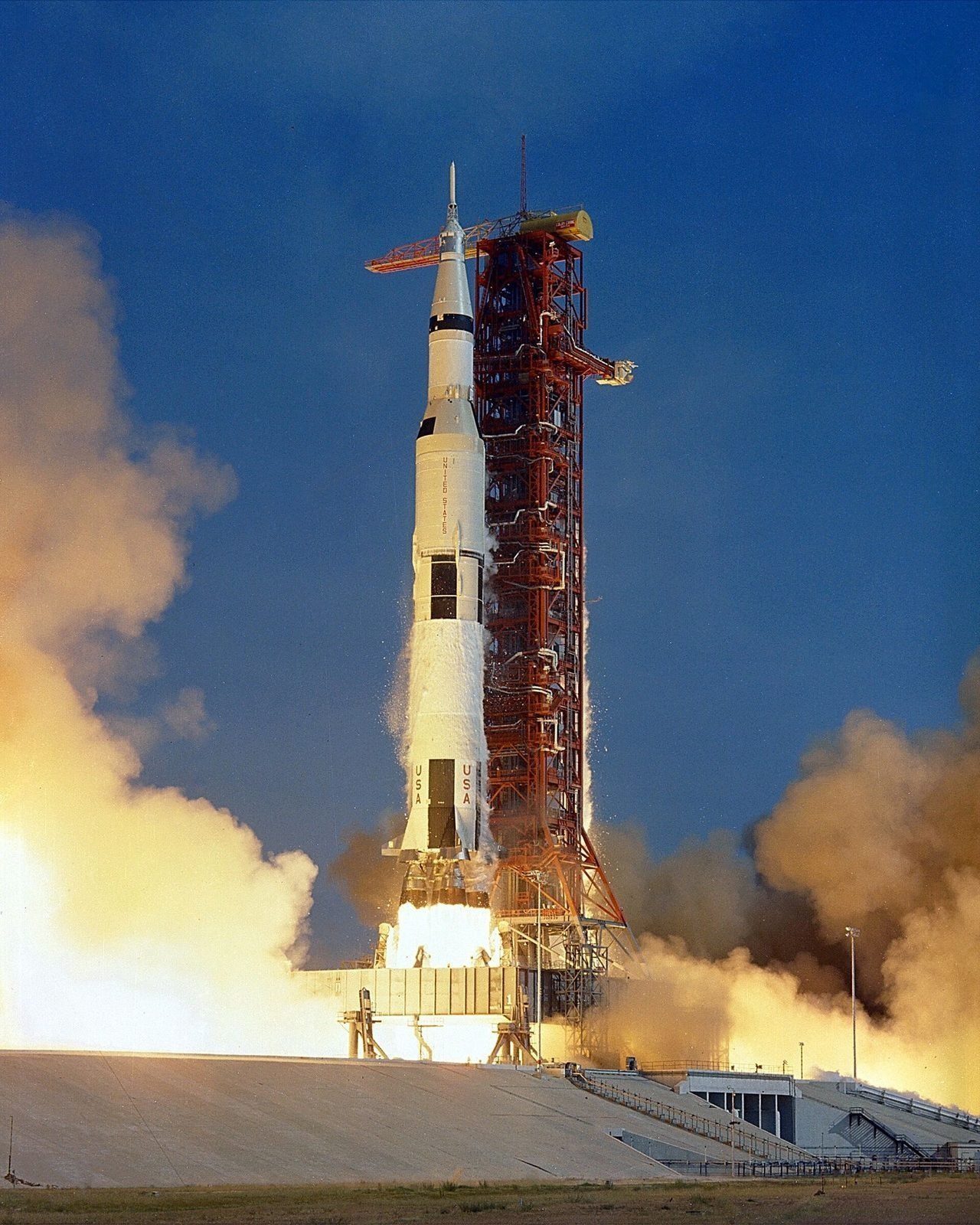
For half a century, the space story was a rocket story. Every launch was a national event, every failure a humiliation, every success a proof of greatness. That story is over. Reusable rockets turned launch from a rare feat into a scheduled service, and the price of reaching orbit fell far enough that the interesting question is no longer whether you can get there. It is what you do once you are there. Space has stopped being a project and become infrastructure — like undersea cables, like container ports, like the power grid. Nobody holds a ceremony when a container ship docks. Nobody should mistake the routine for the unimportant. Infrastructure is where power lives. The countries and companies that own the orbital infrastructure of the next thirty years will own leverage over communications, navigation, observation, and war. The second orbital economy is not about flags on the Moon. It is about who runs the rails.
For half a century, the space story was a rocket story. Every launch was a national event, every failure a humiliation, every success a proof of greatness. That story is over. Reusable rockets turned launch from a rare feat into a scheduled service, and the price of reaching orbit fell far enough that the interesting question is no longer whether you can get there. It is what you do once you are there. Space has stopped being a project and become infrastructure — like undersea cables, like container ports, like the power grid. Nobody holds a ceremony when a container ship docks. Nobody should mistake the routine for the unimportant. Infrastructure is where power lives. The countries and companies that own the orbital infrastructure of the next thirty years will own leverage over communications, navigation, observation, and war. The second orbital economy is not about flags on the Moon. It is about who runs the rails.
Low Earth orbit is now the busiest place humans have ever built without living there. Thousands of active satellites, most of them in a handful of commercial mega-constellations, provide broadband to ships, planes, villages, and armies. Earth-observation satellites photograph the planet daily — crop health, oil storage, troop movements, deforestation — and sell the pictures to anyone who can pay. This is a genuine revolution: a farmer in Kenya, a fisherman in Indonesia, and a brigade commander in Ukraine all use the same sky. It is also a traffic jam with no traffic police. Satellites dodge each other by private arrangement, debris warnings come from a patchwork of military and commercial trackers, and there is no binding global rule for who moves, who pays, or who is liable when two objects collide at twenty-seven thousand kilometres per hour. Every collision would create thousands of fragments, each a bullet, each threatening everything in the same orbit. The sky is crowded, the rules are voluntary, and the consequences of the first major collision will be measured in decades.
Beyond orbit, the Moon has become a construction site with a waiting list. The American Artemis programme aims to return astronauts to the lunar surface and build a sustained presence. China plans its own lunar missions on a similar timetable, with a research station at the south pole. Commercial landers — American, Japanese, and others — are already attempting deliveries. The prize is not prestige, though prestige matters. The prize is water ice in permanently shadowed craters: water for drinking, oxygen for breathing, and hydrogen and oxygen for rocket fuel. Whoever controls the best craters controls the fuel depot for the rest of the solar system. That is why the legal questions that sounded academic for fifty years suddenly matter. The Outer Space Treaty bans national appropriation of celestial bodies. It says nothing clear about mining, nothing about extraction rights, nothing about safety zones around a working mine. The Artemis Accords offer one interpretation. China and Russia offer another. The Moon has a queue and no landlord. That combination has never ended well on Earth.
Every discussion of the space economy that ignores the military is a fairy tale. The same satellites that provide broadband also guide missiles. The same imagery that tracks crops also tracks armies. The same rockets that launch constellations can launch weapons. Space is already militarised — it has been since the first reconnaissance satellites — and the trend is accelerating: dedicated space forces, anti-satellite tests, jamming, dazzling, and cyberattacks on ground stations. The war in Ukraine made this visible to everyone. Satellite broadband kept an army connected when its terrestrial networks were attacked. Satellite imagery made the battlefield transparent. And the vulnerability was equally visible: a constellation is a single point of failure if it depends on one company, one country, or one man's decisions. Europe's scramble for sovereign constellations, and the Global South's interest in independent capacity, both begin from that lesson. The second orbital economy will be built by commerce. Its shape will be decided by war.
Western coverage reads the orbital economy as a contest between an open, commercial, rules-based model and a closed, state-directed one. The American model — NASA buying services from private companies rather than owning every rocket — is presented as the engine that made launch cheap. The Artemis Accords are presented as the constitutional draft for the Moon: transparency, interoperability, safety zones, resource extraction permitted. Europe's contribution is regulation and sovereignty: a homegrown constellation, debris rules, and launch capacity that does not depend on American goodwill. The Western lens has real achievements to point to, but also a blind spot: the system it calls open is dominated by a single American company whose launch cadence and constellation size dwarf every competitor combined. A rules-based order in which one private actor is the rules is not quite the order advertised. The West's task is to build competition inside its own model before it lectures others about theirs.
From Beijing and Moscow, the orbital economy is a sovereignty project. China's programme — its own space station, its own navigation constellation, its own lunar plans, its own commercial launch sector — is built on a single principle: never depend on a system another power can switch off. Russia, diminished as a launch power but still dangerous as a spoiler, shares the instinct and has demonstrated willingness to test anti-satellite weapons that endanger everyone's orbit. India belongs in this lens too, with a low-cost programme that landed on the Moon's south pole and a commercial sector growing fast. The Eastern lens reads Western talk of rules as an attempt to freeze an advantage: the countries that got there first write the traffic code. Its answer is parallel infrastructure — parallel navigation, parallel constellations, parallel lunar plans — so that no single set of rules can ever be imposed. The risk is fragmentation: two skies, two Moons, two rulebooks, and a debris problem that belongs to everyone.
For most of the world, the space economy is not about the Moon. It is about the ground. A satellite that tells a farmer when to plant, a herder where the water is, or a coastal city when the flood is coming is worth more than any lunar flag. The Global South lens therefore measures the orbital economy in services delivered, not rockets launched — and on that measure the record is mixed. Broadband constellations reach remote areas that fibre never will, but the pricing, the ground terminals, and the terms of service are set elsewhere. Earth observation data is abundant, but the analytics — the part that turns a picture into a decision — is concentrated in rich countries. The African Space Agency, Latin American programmes, and Arab space agencies are attempts to change this: not to race to the Moon, but to own the capacity to use space for development. The most important space technology for the Global South in the next decade may not be a rocket at all. It may be a cheap ground terminal and a data policy.
Watch the debris count: the first major collision in a mega-constellation shell will force the rule-making that diplomacy has delayed. Watch the lunar south pole: the first overlapping claims on the same crater will test whether the Accords or raw presence decides. Watch launch competition: whether any rival closes the gap with the dominant provider, because a monopoly over the rails is a monopoly over the economy. And watch the ground terminals: who gets affordable access, on what terms, will decide whether the second orbital economy belongs to everyone or to its builders.
It is the shift of space from a project to infrastructure — like undersea cables, container ports, or the power grid. Reusable rockets turned launch from a feat into a service, and the price of reaching orbit fell enough that the question is no longer whether you can get there, but what you do once you are there. The countries and companies that own the orbital infrastructure of thirty years will own leverage over communications, navigation, observation, and war.
The American Artemis programme aims to return astronauts to the lunar surface and build a sustained presence. China plans its own lunar missions on a similar timetable, with a research station at the south pole. Commercial landers are already attempting deliveries. The prize is water ice in permanently shadowed craters: water for drinking, oxygen for breathing, and hydrogen and oxygen for rocket fuel — whoever controls the best craters controls the fuel depot for the rest of the solar system.
Every collision in orbit creates fragments that threaten everything else in the same orbit. Low Earth orbit is now the busiest place humans have built without living there, and satellites dodge by private arrangement, with debris warnings from a patchwork of military and commercial trackers. No binding global rule exists for who moves, who pays, or who is liable when two objects collide at 27,000 kilometres per hour — and the consequences of the collision will be measured in decades.
Watch the debris count: the first major collision in a mega-constellation shell will force the rule-making that diplomacy has delayed. Watch the lunar south pole: the first overlapping claims on the same crater will test whether the Accords or raw presence decides. Watch launch competition: whether any rival closes the gap with the dominant provider. And watch the ground terminals, because who gets affordable access will decide whether this economy belongs to everyone or to its builders.
