An engineer home from Beirut died on an unexploded shell in Froun; hours later, Israeli tank fire killed a farmer inspecting his trees in Yater — and the harvest was called off.
Published 12 October 2026 · 06:00 GMT
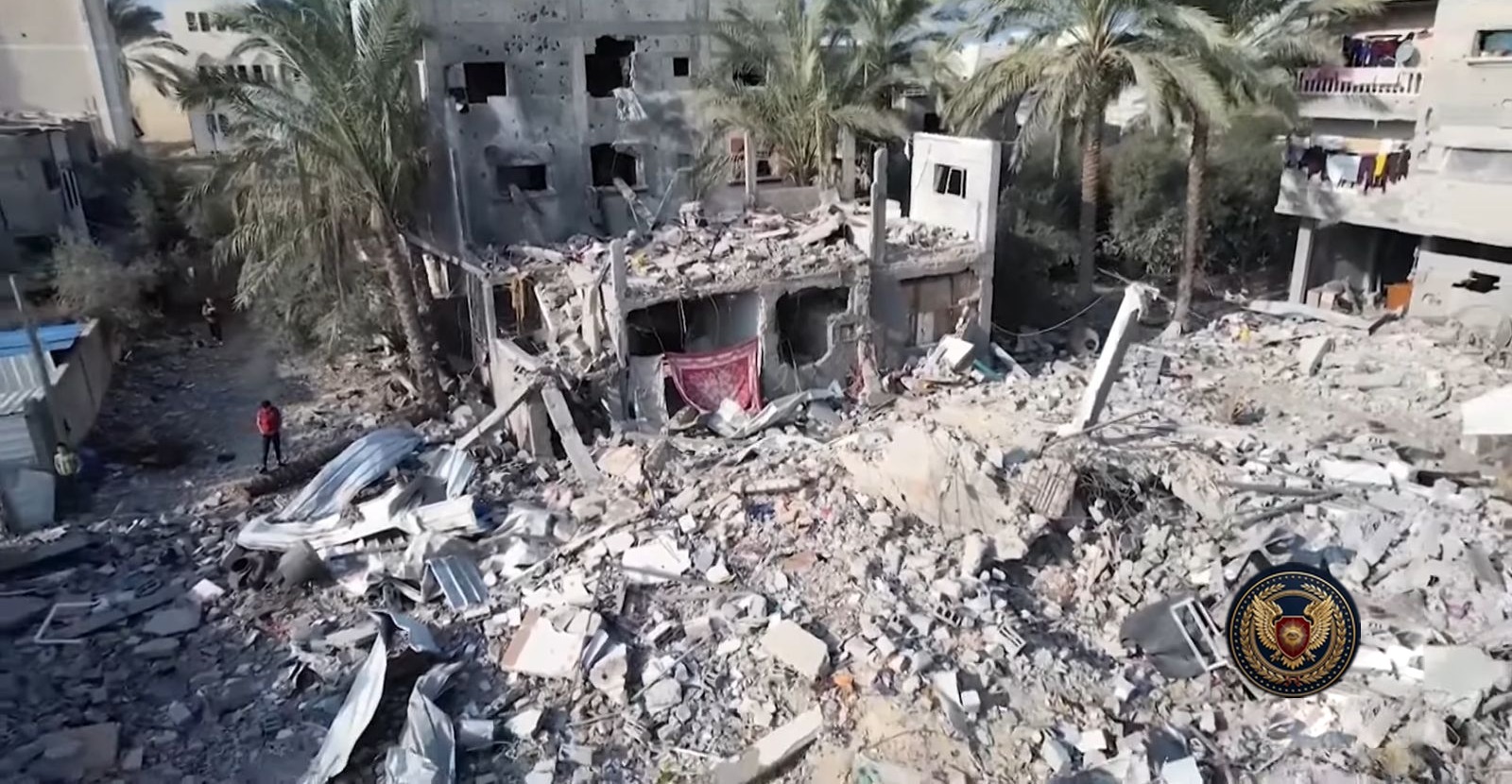
The olives were ready in Bint Jbeil. At first light, families spread through the groves with baskets and ladders — an engineer down from Beirut among them. Then the harvest turned into a battlefield: a shell detonated beneath the trees in Froun, and Israeli tank fire killed a farmer inspecting his land in Yater.
The annual olive harvest is southern Lebanon's oldest ritual, and it always begins the same way. Long before the heat, the villages of the Bint Jbeil district empty into the groves: grandparents, children, and the ones who left — the engineers and shopkeepers of Beirut — who drive south for the season and pick alongside their families. This year the engineer from Froun came down from the capital like the rest. He never went home.
He died tending his trees when a “foreign object” exploded beneath them. The phrase comes from the first wire reports; in Lebanese framing, it was an unexploded munition left behind by previous Israeli operations — a description that could not be independently verified. Froun's mayor, Hassan Bazzi, confirmed the death to the AFP news agency. The man's name has not been released; he is identified only as an engineer, a Beiruti come home for the harvest.
The olives were ready in Bint Jbeil — and the harvest turned into a battlefield.
Hours later, a second man died in Yater, a few kilometres away. The official National News Agency (NNA) reported that Israeli shelling “targeted the outskirts of the town while he was inspecting his land and olive harvest.” The Lebanese army blamed Israeli tank fire and called the ongoing attacks “a flagrant breach of existing agreements.” Yater's municipality urged residents “to avoid the outskirts of the town and refrain from crossing the earthen barrier separating some unsafe neighbourhoods” for fear of Israeli attacks. Whether the Yater shelling was deliberate targeting or proximity fire remains disputed.
The municipality's warning carries its own map of the war. Yater's earthen barrier — a ridge of packed soil marking where civilians may go and where they may not — divides the town's “unsafe neighbourhoods” from the rest. It is a frontier drawn in dirt: cross it, the municipality says, and you are in range. The harvest ignores such lines. Olive trees do not grow in safe zones; they grow where they were planted generations ago, and the pickers must go to them.
Sunday, October 11, was not an isolated incident — it was a pattern. The same day, Israeli warplanes and artillery also struck Kfar Tebnit and Mansouri elsewhere in southern Lebanon, according to the NNA. The two deaths fit a ledger of violence that has never quite stopped: the south has been absorbing killings near the Israeli-occupied areas and drone strikes on its villages all year, and the harvest season simply moved civilians into the line of fire.
Residents of Froun have now called off the harvest pending decontamination of the village by the Lebanese army — an extraordinary decision in a district where the olive season is both income and identity. No Israeli response to Sunday's killings had been found as of publication, leaving the attribution entirely one-sided: Lebanese authorities, Lebanese media, and the bereaved villages on one side, silence on the other.
An olive grove is not a crop you can pause. The trees of Bint Jbeil are decades old, some centuries; the oil they yield is one of the few incomes a hill village can count on without leaving the hill. Abandon the harvest and the fruit rots on the branch — and a grove left untended through a season of war starts to die. That is the arithmetic behind the army's decontamination order: clearing Froun is not just safety work, it is the difference between a village that can feed itself next year and one that cannot.
Because the ceasefire is a framework, not a fact. In June 2026, the United States brokered a framework agreement between Lebanon and Israel that reduced the violence but never stopped it. Al Jazeera's framing is blunt: “Despite a ceasefire agreement reached between Israel and Lebanon in June, Israeli attacks continue.” Sunday proved the sentence. The agreement governs armies and their movements; it does not clear the soil.
And the soil is the problem. Southern Lebanon is layered with the residue of seven months of bombardment and older wars before that — shells that never detonated, waiting in the groves where families have picked olives for centuries. Harvesting means walking that ground slowly, bent over, hands in the branches. For the engineer from Froun, the grove was a minefield wearing an orchard's face. The army's decontamination teams now have to declare the land safe before the ladders come back out.
The answer arrived the same day, from the north. Volunteers from Jebchit near Nabatieh, from Akkar, and from Sidon travelled south to join the harvest — a convoy of solidarity from districts the war had spared. “From north to south, one people and one land,” said Ahmad Chahhal, one of the organisers, to AFP. The harvest may be suspended in Froun, but the symbolism is doing the work the ceasefire cannot: holding the south inside the national story.
The wider war explains why the south is a front at all. Lebanon was pulled into the conflict on March 2, 2026, when Hezbollah struck Israel in support of Tehran during the US-Israel war on Iran. Israel answered with a bombing campaign and a ground invasion. The human ledger since then: Lebanon's Public Health Ministry counts 4,387 killed and 12,424 wounded between March 2 and October 11. In August, Prime Minister Nawaf Salam accused Israel of deliberately targeting homes and civilian infrastructure; the International Organization for Migration recorded some 350,000 internally displaced people in late August.
The institutional scaffolding is cracking too. Efforts to find a replacement for UNIFIL, the United Nations force in the south, have failed amid Israeli opposition to any new European presence — “Pressure mounts in the south,” as LBCI put it on October 11. A peacekeeping vacuum is opening exactly where the farmers are trying to work.
Read through the five dimensions and the story sharpens. Geopolitics: the harvest zone doubles as bargaining leverage — every shell on the outskirts reminds Beirut what escalation costs. Macroeconomics: olive oil is real income for villages with little else, and the harvest employs the displaced who drifted back. Demographics: 350,000 displaced, many of them the harvest's own workforce, scattered north. Historical patterns: south Lebanon has harvested under fire before, and the ritual always returns — it is the most stubborn fact in the district. Structural trends: American-brokered frameworks are becoming the region's diplomatic architecture, even as parallel diplomacy — like Iran's offer to mediate between Saudi Arabia and the Houthis — shows the same region negotiating on several tables at once.
There is a rhythm to this that the south knows by heart. Southern Lebanon has harvested under fire before — the groves emptied during the civil war, during the 2006 war, and now again — and each time the pickers came back, because the alternative was to let the land go. The ritual is the most stubborn fact in the district: governments sign frameworks, armies draw barriers, and the families of Bint Jbeil return to the ladders at first light.
What to watch now: whether the Lebanese army's decontamination of Froun lets the ladders return before the olives rot on the branch; whether the June framework survives another Sunday like this one; and who, if anyone, will stand on the blue line when UNIFIL's future is finally decided. The harvesters of Bint Jbeil will be back in the groves at first light either way. The only question is what they will be walking on.
The Western wire tells this story in the attribution tense. The AFP dispatch leans on the official National News Agency, on the mayor of Froun, on the Lebanese army's statement — every hard claim carried by a named carrier, every Israeli action described through Lebanese accusation rather than independent confirmation. It is factual, careful, and structurally one-sided: with no Israeli response on the record, the wire can only report what Beirut says happened.
The Western reading of the context is institutional. A US-brokered framework agreement from June 2026 is the diplomatic architecture, and Sunday's killings are filed under its failure — “despite the ceasefire” is the load-bearing phrase. The UNIFIL replacement question reads the same way: a European presence blocked by Israeli opposition, a vacuum opening on the blue line, and no obvious mechanism to close it.
As of publication, no Russian or Chinese state-media coverage of the October 11 killings could be found. The East is silent on this story. That silence is itself the datum: Moscow and Beijing, both permanent members of the Security Council and both with equities in the region, have not picked up two civilian deaths in Bint Jbeil — whether through editorial triage, wire-feed gaps, or a deliberate choice about which southern Lebanon stories travel.
The absence shapes the reading. With no eastern frame in circulation, the interpretive field belongs to the Western wire and the Global South press — and to the American-brokered architecture of the June agreement, which any eastern commentary would have to start from. If Moscow or Beijing speaks, it will likely be about the framework's credibility and the UNIFIL vacuum; until then, the eastern lens on this harvest is an empty chair.
The Global South press drives this story, and it frames it as ceasefire-violation news. Al Jazeera's line — “Despite a ceasefire agreement reached between Israel and Lebanon in June, Israeli attacks continue” — puts the June agreement on trial in the headline's shadow. The story is not an incident report; it is evidence in an ongoing case that the framework protects no one in the groves.
The primary reporting comes from inside Lebanon: the NNA's field dispatches, the army's “flagrant breach” language, LBCI's “pressure mounts in the south.” And the human texture is southern too — the volunteers from Jebchit, Akkar and Sidon driving down to pick, Ahmad Chahhal's “From north to south, one people and one land.” In this reading, the harvest is the nation holding together under fire, and the olives are the argument.
Neither victim has been publicly named. The man killed in Froun was identified only as an engineer who lived in Beirut and had returned to tend his olive trees. The second man, killed by shelling in Yater while inspecting his land and harvest, has not been named either. Their anonymity is typical of early wire reporting from the south, where village officials confirm details before names reach the press.
A US-brokered framework agreement signed in June 2026 reduced the fighting but did not end it. Al Jazeera's framing is blunt: despite the ceasefire agreement reached between Israel and Lebanon in June, Israeli attacks continue. The Lebanese army has called the ongoing strikes a flagrant breach of existing agreements, and Sunday's killings in Bint Jbeil show how little protection the framework gives farmers in the south.
The groves of Bint Jbeil sit inside a war zone layered over old battlefields. Unexploded munitions from previous Israeli operations litter the soil — the Lebanese framing for what killed the engineer in Froun, though this has not been forensically verified. Israeli forces also shell the district's outskirts regularly. Residents of Froun have called off the harvest entirely until the Lebanese army decontaminates the village.
UNIFIL is the United Nations peacekeeping force stationed in southern Lebanon. Efforts to find a replacement for it have failed, with Israel opposing any new European presence in the south, according to LBCI reporting on October 11 headlined Pressure mounts in the south. The force's uncertain future leaves a vacuum along the border zone exactly where the harvest killings happened.
Lebanon's Public Health Ministry reports 4,387 people killed and 12,424 wounded between March 2 and October 11, 2026. The war began when Hezbollah struck Israel in support of Tehran during the US-Israel war on Iran, triggering an Israeli bombing campaign and ground invasion. The International Organization for Migration recorded about 350,000 internally displaced people in late August.
