The next node is no longer only about physics. It is about power, water, talent and who gets to build at all.
Published 14 October 2026 · 06:00 GMT
Last updated: October 2026
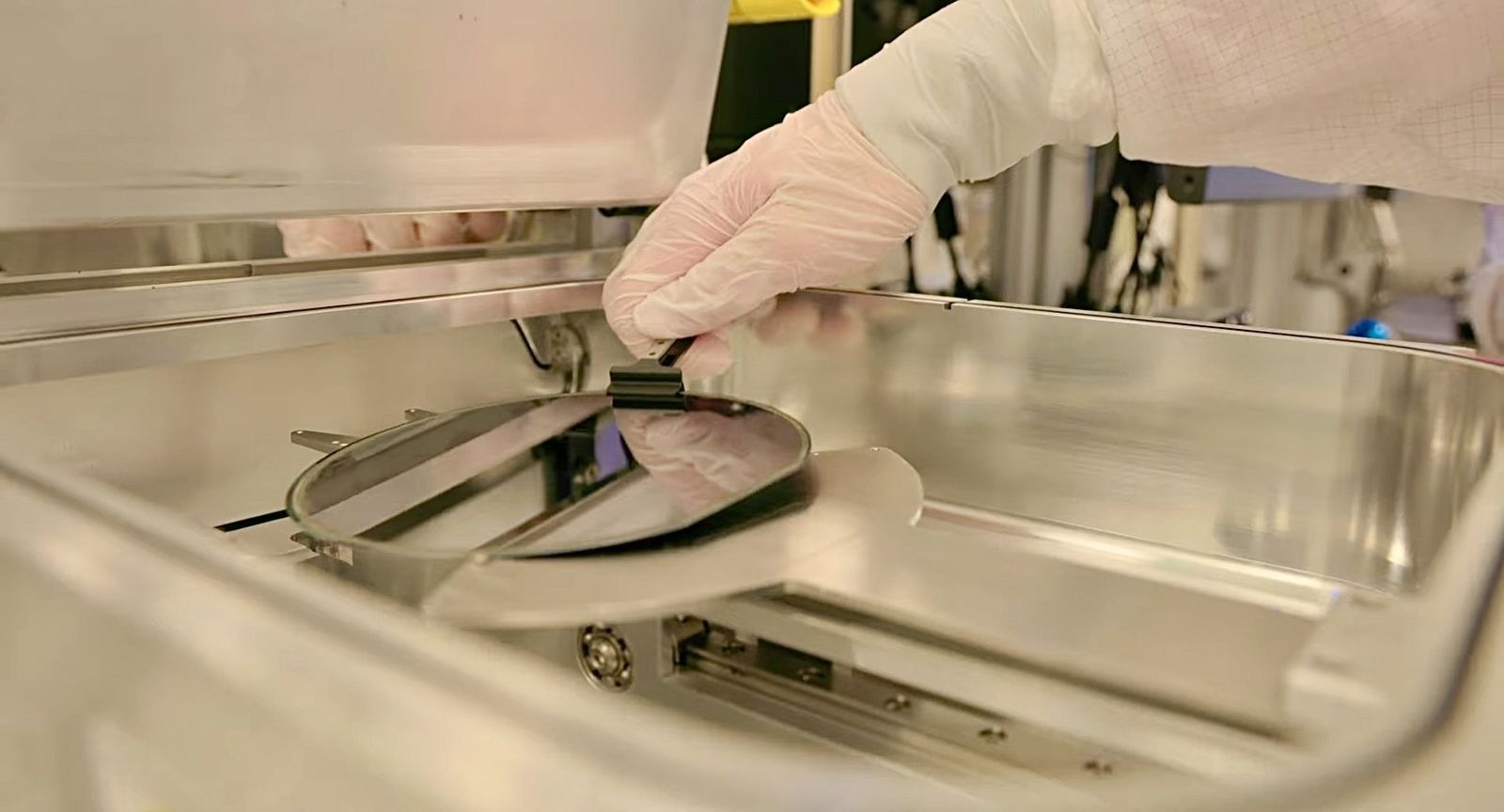
Every phone, every server, every missile guidance system still begins in the same two places: a factory town in the Netherlands and an island off the coast of China. That sentence was true when Magna Bureau first mapped the chip chokepoints, and it is still true today. What has changed is what comes next. The industry is crossing into two-nanometre production and beyond, and the crossing is exposing a truth the industry preferred to ignore: the bottleneck was never only physics. Physics was the part engineers could solve. The harder bottlenecks are power, water, talent, politics, and money — and on every one of those, the world is less prepared than the roadmaps pretend.
Every phone, every server, every missile guidance system still begins in the same two places: a factory town in the Netherlands and an island off the coast of China. That sentence was true when Magna Bureau first mapped the chip chokepoints, and it is still true today. What has changed is what comes next. The industry is crossing into two-nanometre production and beyond, and the crossing is exposing a truth the industry preferred to ignore: the bottleneck was never only physics. Physics was the part engineers could solve. The harder bottlenecks are power, water, talent, politics, and money — and on every one of those, the world is less prepared than the roadmaps pretend.
A modern transistor is a structure measured in atoms. Printing it requires extreme-ultraviolet light at a wavelength of 13.5 nanometres, mirrors polished to atomic smoothness, and machines that cost hundreds of millions of dollars each. The next step, High-NA EUV, pushes the optics further still, with a larger numerical aperture that squeezes more detail onto the wafer — at the price of new factories, new handling, and tools so expensive that only a handful of customers on earth can afford them. Samsung has committed to High-NA tools in memory production by 2028. TSMC and Intel are racing on their own schedules. The engineering is magnificent. It is also a filter: each generation concentrates the industry further, because each generation raises the entry ticket beyond the reach of almost everyone. The number of companies that can play at the frontier is shrinking toward a number you can count on one hand.
A fab is not a factory in the ordinary sense. It is a machine for maintaining purity — air filtered to a level cleaner than an operating theatre, water purified to near-perfect levels, vibration damped, temperature held within fractions of a degree, all of it running without interruption for years. That takes staggering amounts of electricity and water. A leading-edge fab can consume as much power as a small city and millions of gallons of ultra-pure water a day. Multiply that by the dozens of fabs now planned or under construction across Arizona, Kumamoto, Dresden, and elsewhere, and the chip race becomes an energy race and a water race. The countries winning fab announcements are not always the countries with the grid or the aquifers to run them. The first fab to be delayed not by politics but by a drought or a grid failure will not be the last, and the industry has barely begun to talk about it honestly.
Fabs take five years to build. Talent takes a generation. The engineers who can run an EUV line, debug a yield collapse, or maintain a cleanroom at three in the morning are not interchangeable labour. They are the product of decades of technical education, apprenticeship, and institutional memory concentrated in Taiwan, South Korea, the Netherlands, Japan, and parts of the United States and Germany. Every country now building fabs is competing for the same small pool. Taiwan cannot staff the world's fabs alone. The United States cannot import its way out of a training deficit in a single election cycle. Europe cannot wish a semiconductor workforce into existence with subsidies. The most honest executives in the industry will tell you privately what they will not say on earnings calls: the binding constraint on the next decade of chipmaking is not machines. It is people who know how to use them.
Since 2022, governments have committed hundreds of billions of dollars to bring chipmaking home: the American CHIPS Act, the European Chips Act, Japanese support for Rapidus and TSMC Kumamoto, Korean and Indian programmes. Some of this was necessary. Concentration in one strait is a genuine strategic risk, and the 2021 shortage proved what concentration costs. But subsidies have created their own distortions. Every country wants the leading edge. Almost nobody wants to subsidise the mature nodes — the unglamorous chips that run cars, appliances, and weapons systems and whose shortage actually stopped assembly lines. The result is a coming glut at the frontier and continued fragility in the middle. Worse, subsidy races reward announcements over operations: groundbreakings photographed, timelines slipped, costs overrun. A fab that opens three years late at twice the budget is not resilience. It is an expensive lesson in the difference between industrial policy and industrial capacity.
Western coverage reads the chip race as a security emergency with an economic wrapper. The argument, from Washington to Brussels, is that concentration in Taiwan is an unacceptable single point of failure and that export controls on advanced tools and AI accelerators are the price of keeping the lead. There is real force in this. A Taiwan crisis would halt the AI economy within weeks. But the Western lens has a blind spot: controls leak, workarounds proliferate, and every restriction accelerates the target's drive to build its own supply chain. The RTX PRO episode — a workstation-class chip reportedly positioned to slip past export curbs — is the pattern, not the exception. Controls buy time. They do not buy victory. The West's deeper problem is that it wants both decoupling and cheap chips, both security and speed, and the physics of the industry refuses to grant both at once.
From Beijing, the chip race is a story of encirclement and response. Export controls are read not as safety measures but as containment, and the response has been a national mobilisation: massive investment in domestic lithography, materials, and design tools, plus the cultivation of open-source ecosystems that reduce dependence on foreign software. Huawei's advances with older factories — squeezing more performance from mature nodes through clever packaging and design — show that the containment strategy has limits. From Taipei and Seoul, the lens is different again: these are democracies that built the world's most important industry and now watch great powers bargain over it as if it were a piece on a board. Their interest is not in anyone's decoupling. It is in being indispensable to everyone, because indispensability is their security. The Eastern lens reminds the West of a fact it keeps forgetting: the countries that actually make the chips have agency, and they intend to use it.
For most of the world, the chip race is something that happens to them. Africa, Latin America, and much of Asia import every chip they use and have no seat at the table where the rules are written. When export controls tighten, they do not get a vote; they get delays, higher prices, and second-tier access. When a shortage hits, their factories stop first and restart last. The Global South lens therefore reads the subsidy race with scepticism: hundreds of billions for rich countries to duplicate each other's fabs, while the countries that would benefit most from a single mature-node plant cannot finance one. There are exceptions — India's fab ambitions, Morocco's electronics assembly, Vietnam's growing role in packaging and testing — but the structure is stark. The chip economy, like the oil economy before it, distributes its risks downward and its profits upward. Until that changes, the Global South's rational strategy is the same one it has always pursued with strategic resources: get into the value chain at any point, and never depend on a single supplier for anything essential.
Watch yields, not announcements: whether 2-nanometre lines hit volume at profitable yields, and whether High-NA tools deliver on schedule. Watch the water and the grid: the first fab delayed by a drought or a blackout. Watch the mature nodes: whether anyone subsidises the chips the world actually runs on. And watch the workaround market: every export control produces a legal grey zone, and the grey zone is where the next decade of the chip war will actually be fought.
TSMC manufactures roughly 90% of the world's most advanced logic chips, those below 7 nanometres, making Taiwan the single most consequential island in the technology economy. Every phone, server, and missile guidance system still begins in a factory town in the Netherlands and on that island. A Taiwan crisis would halt the AI economy within weeks, which is why concentration there is treated as an unacceptable single point of failure.
High-NA EUV is the next step in the optics that print the most advanced chips, using extreme-ultraviolet light at 13.5 nanometres and mirrors polished to atomic smoothness. It squeezes more detail onto the wafer with a larger numerical aperture — at the price of new factories and tools so expensive that only a handful of customers can afford them. Samsung has committed to High-NA tools in memory production by 2028, with TSMC and Intel racing on their own schedules.
A fab is not a factory in the ordinary sense. It is a machine for maintaining purity — air filtered cleaner than an operating theatre, water purified to near-perfect levels, vibration damped, temperature held within fractions of a degree, all running without interruption for years. A leading-edge fab can consume as much power as a small city and millions of gallons of ultra-pure water a day, so the chip race is also an energy race and a water race.
Watch yields, not announcements: whether 2-nanometre lines hit volume at profitable yields, and whether High-NA tools deliver on schedule. Watch the water and the grid: the first fab delayed by a drought or a blackout. Watch the mature nodes: whether anyone subsidises the chips the world actually runs on. And watch the workaround market, because every export control produces a legal grey zone where the next decade of the chip war will actually be fought.
