Saudi Arabia's Energy Minister vows a 'serious' response as King Khalid International Airport stays shut through Saturday after three straight days of Houthi missile and drone attacks.
Published 13 October 2026 · 06:00 GMT
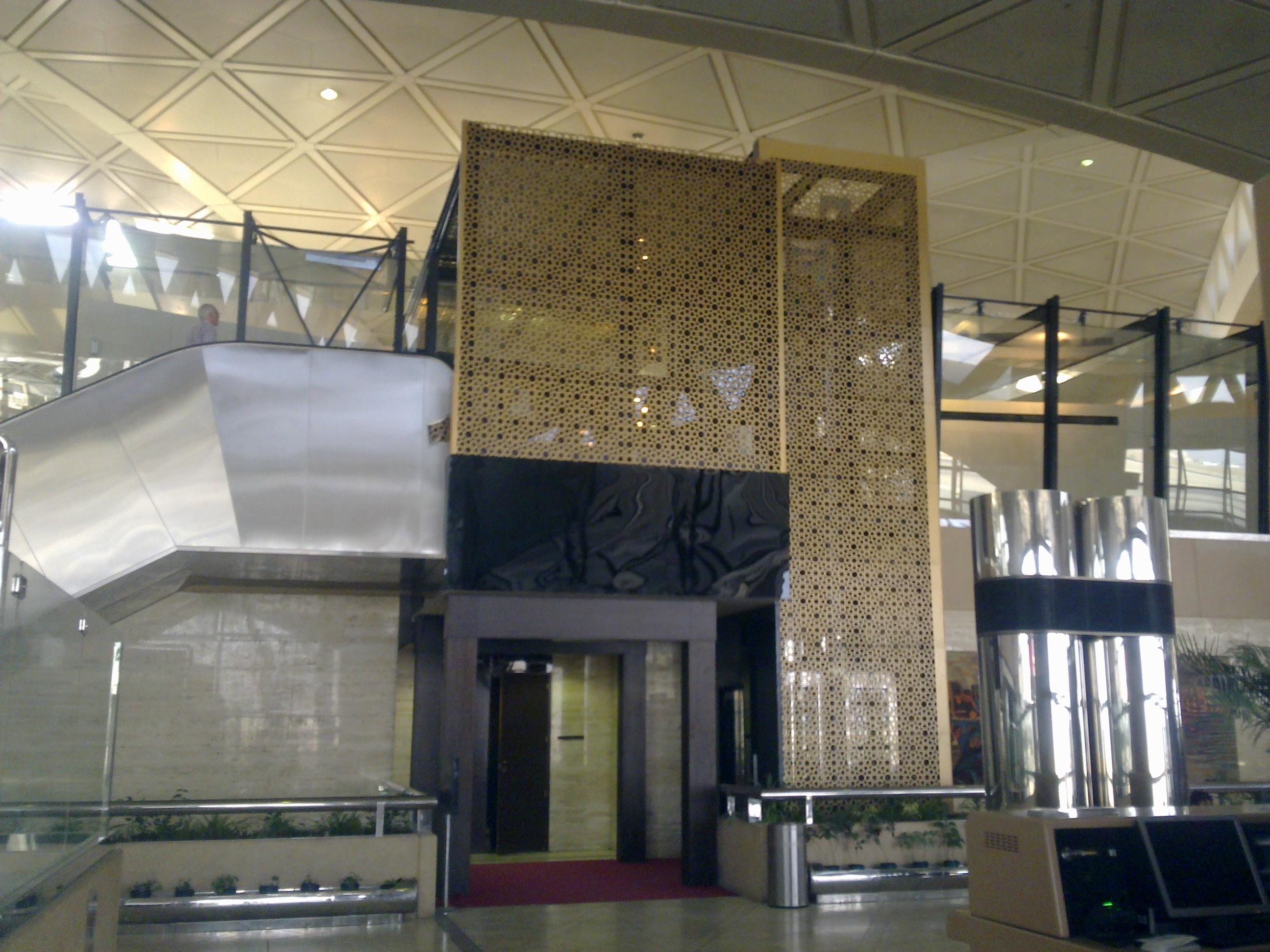
On Monday night, phones across Riyadh lit up with a government text alert: an aerial threat was incoming. Moments later, explosions cracked over the Saudi capital. It was the third straight day of strikes claimed by Yemen's Houthis — and the kingdom's main airport, hit twice over the weekend, is now shut through Saturday.
Monday night's volley fits a grim new rhythm. The Saudi-led coalition's spokesman, Turki Al-Maliki, said the Houthis fired one ballistic missile at Riyadh and two toward Khamis Mushait, a city in the southwest with a military airbase — all three "intercepted and destroyed." The Houthis said their target had been King Khalid International Airport in Riyadh, and their military spokesman, Yahya Saree, renewed a warning to international airlines against flying to Saudi airports outside the holy cities of Mecca and Medina, calling the facilities "unsafe."
The airport had already paid a heavy price over the weekend. On Saturday, a missile struck the complex housing Terminals 3 and 4 for domestic flights, killing 13 people and wounding more than 300 — the deadliest attack in the kingdom in more than a decade. On Sunday, a projectile hit Terminal 4 again, killing a Pakistani resident and wounding 11. The kingdom's civil aviation authority has now extended the suspension of operations through Saturday, October 17, saying it needs to "ensure the safety and operational readiness of the airport's facilities."
"The events of recent weeks are serious. Our response must be equally serious." — Saudi Energy Minister
The condemnation was swift and wide. UN Secretary-General António Guterres said he was "deeply shocked," warning that attacks on civilians and civilian infrastructure violate international law; the UN human rights chief urged both sides to de-escalate. The United States, Britain, Germany, Canada and Spain told their citizens to avoid the airport. The Houthis, for their part, say Saudi air strikes are killing Yemenis too — their health ministry reported a child killed and six people wounded in a Saudi strike on a home in Sanaa on Sunday. Neither claim about the other side’s casualties could be independently verified.
The skies above the capital have emptied. Aviation analytics firm Cirium said 99.7 percent of scheduled flights at the airport were cancelled on Sunday, and roughly 60 percent of Monday's were expected not to operate. Lufthansa has cancelled all flights to Riyadh until October 16, Air France-KLM extended its suspension to the end of the month, and Abu Dhabi's Etihad scrapped around 20 flights to Riyadh, Jeddah and Dammam on Monday and Tuesday. The US Federal Aviation Administration advised American carriers to exercise caution flying to or over Saudi Arabia, and Europe's aviation safety agency warned of rising risks to civilian aircraft.
Saudi Arabia's Energy Minister, Prince Abdul Aziz bin Salman, struck a defiant note on Monday at the WPC Energy Congress in Riyadh, held about 10 kilometres from the airport. "The events of recent weeks are serious. Our response must be equally serious," he said, as state television reported more than 70 ministers and 300 company executives attending. He insisted the attacks had tested the country's resilience but that Vision 2030, Crown Prince Mohammed bin Salman's plan to diversify the economy, "must continue. Investment must continue."
The Houthis say they are answering what they call "brutal Saudi aggression." On Sunday evening, Yahya Saree said his forces had launched missiles and drones at Riyadh and Dammam's airports and two oil and gas facilities in the Eastern Province, in response to 124 Saudi air strikes in Yemen over the previous 24 hours. He vowed the group would "continue their escalating operations deep inside Saudi, imposing the equation of 'a blockade for a blockade' and 'an escalation for an escalation'" until, in his words, "the aggression ceases and the siege on our dear people is lifted."
Because the airport is the lever that hurts. A four-year informal ceasefire began to unravel in July, when the Houthis announced a "maritime embargo" against Saudi Arabia and resumed strikes on airports, energy facilities and Red Sea tankers — retaliation, they say, for a Saudi blockade of ports and airports in Houthi-held territory. The escalation now rides on top of a wider regional war: the United States and Israel's campaign against Iran has widened the map, and Yemen's battlefields — the Red Sea coast, the Bab el-Mandeb strait, the road to Sanaa — are its newest front. The diplomatic backdrop, including Iran's offer of mediation, is covered in our earlier report.
Not everything circulating online is real. France 24's Truth or Fake unit found that some viral pictures purporting to show the Riyadh strikes were AI-generated or taken out of context — including footage from a 2017 fire at Jeddah airport and a 2016 stock photo tied to a Goldman Sachs airport deal. BBC Verify checked four videos and found some were misleadingly presented. Readers should treat unverified strike footage with caution: dramatic images spread faster than confirmed facts.
Very — and not only militarily. King Khalid is the kingdom's second-busiest airport after Jeddah, and aviation is the circulatory system of an economy racing to diversify beyond oil. Each closure strands a measurable cost: cancelled business trips, shaken investor confidence, and oil prices that jumped as traders priced in the risk to the world's top exporter. "This level of sustained intense attack on civil aviation is unprecedented," said Mark Zee, founder of the aviation-safety group OPSGROUP. The dead themselves tell a demographic story: among Saturday's victims were four Saudis, two Bangladeshis and citizens of the United States, Egypt, Jordan, Syria, Palestine, Sudan and India — a cross-section of the kingdom's guest-worker economy.
The crisis is pulling Washington in. On Saturday, after the deadliest strike, US President Donald Trump said he would "make a decision" about joining Saudi strikes on the Houthis: "We may. We're going to look at it. We just found out about the recent attack, so we'll make a decision. We move very quickly." On Monday he added: "The Houthis are misbehaving very badly. They're misbehaving very badly. No good." The US military is already reported to be providing intelligence and targeting support to the Saudi-led coalition.
The economic shockwaves travel fast. Crude prices jumped as traders priced in the risk to the world’s largest oil exporter, and the strikes landed amid a regional energy crunch already strained by the wider US–Israel war with Iran. Aviation is not the only casualty: the WPC Energy Congress went ahead only kilometres from a shuttered airport, a split-screen image of a kingdom projecting business-as-usual while its skies are closed. Mark Zee of OPSGROUP called this level of attack "unprecedented" for a reason — no major Gulf hub has ever absorbed such a sustained assault on civil aviation.
The Houthis answered with a threat of their own. "If the US becomes involved in the aggression against Yemen, we will not deliberate over the decision to respond; rather, there will be a swift and painful response targeting the US and all its interests in the region," Houthi political bureau member Mohammed Al Bukhaiti told AFP on Monday. The warning puts American bases, embassies and shipping across the Middle East on the map of possible targets.
The calendar now does the talking. The airport's closure runs through Saturday, October 17 — its reopening will be the first hard test of whether Riyadh's skies are safe again. Trump's decision on direct US involvement is the second: a "yes" would widen the war into a direct American campaign, the first since the 2025 Red Sea bombing campaign ended in a halt-attacks deal. And the Houthis have promised the attacks continue as long as Saudi air strikes do. UN Secretary-General António Guterres said he was "deeply shocked," warning that attacks on civilians and civilian infrastructure violate international law. What remains is the question of who blinks first. Meanwhile the Houthis have warned airlines "for the last time" against operating in Saudi airspace, which they describe as a theater of military operations. Delta is among the carriers delaying planned service, and Europe’s safety agency has expanded its guidance on Saudi airspace.
In Western capitals, the story reads as an attack on civilian infrastructure and on the rules that keep global aviation safe. Governments in Washington, London, Berlin and Canberra have warned their citizens away from Saudi airports, and aviation regulators on both sides of the Atlantic have flagged the risk of misidentification — the danger that an airliner is mistaken for a military target during an interception.
The Western response is measured in commitments: continued intelligence support for the Saudi-led coalition, travel advisories, and a debate — led by Trump — over whether direct American strikes would deter the Houthis or simply widen a war that is already straining shipping lanes and energy markets.
In much of the region's own telling, the strikes are the latest turn of a cycle that began when Saudi air strikes resumed against Houthi-held Yemen. Al Jazeera and Arab outlets foreground the Houthi framing — retaliation for 124 Saudi air strikes in a single day and a blockade of Houthi ports and airports — and give equal weight to the Houthi-run health ministry's account of a child killed in a Saudi strike on Sanaa.
From this vantage point, the airport closures matter less as an aviation story than as proof that the war can no longer be kept at a distance from Saudi daily life. The question asked here is not only who fired, but what ends the cycle: dialogue, as Iran has offered, or the "serious response" Riyadh promises.
For much of the Global South, the human ledger comes first. The dead at Riyadh's airport included Pakistanis, Bangladeshis, an Indian and citizens of Sudan, Egypt, Syria, Jordan and Palestine — migrant workers and travellers caught in a war they did not choose. Indian and Bangladeshi outlets have followed the funerals and the consular response as closely as the strategy.
The economic ledger follows. For oil-importing countries in South Asia and Africa, another spike in crude prices and the disruption of Gulf air hubs translate directly into fuel bills, remittance routes and ticket prices. From this angle, the war's cost is counted in household budgets, not communiqués.
No. King Khalid International Airport has been closed since the missile strike on Saturday, October 10, and Saudi aviation authorities extended the suspension through Saturday, October 17, at the latest. Analytics firm Cirium said 99.7 percent of Sunday's scheduled flights were cancelled. Airlines including Lufthansa, Air France-KLM and Etihad have suspended or cancelled Riyadh services. Check directly with your carrier before travelling.
Saudi authorities say 13 people were killed and more than 300 wounded when a missile hit the airport's domestic terminal complex on Saturday, October 10. A separate projectile strike on Terminal 4 on Sunday killed a Pakistani resident and wounded 11. The Saturday victims included four Saudis, two Bangladeshis, and citizens of the United States, Egypt, Jordan, Syria, Palestine, Sudan and India.
The Houthis say the strikes are retaliation for Saudi air strikes and a blockade of ports and airports in the territory they control. Their military spokesman cited 124 Saudi air strikes in Yemen in 24 hours and vowed a 'blockade for a blockade'. A four-year informal ceasefire began to unravel in July, when the Houthis announced a 'maritime embargo' against Saudi Arabia and resumed attacks on airports and energy facilities.
President Donald Trump says he is weighing it. After Saturday's strike he said 'We may' join Saudi strikes and 'we'll make a decision. We move very quickly.' On Monday he called the Houthis 'misbehaving very badly'. The US military already provides intelligence and targeting support to the Saudi-led coalition. The Houthis warn that any US entry would trigger a 'swift and painful response' against American interests across the region.
Some are not. France 24's Truth or Fake unit found that viral pictures claiming to show the Riyadh strikes were AI-generated or taken out of context, including footage from a 2017 fire at Jeddah airport and a 2016 stock photo. BBC Verify checked four videos and found some misleadingly presented. The strikes themselves are confirmed by Saudi authorities and multiple news agencies, but treat unverified footage with caution.
