Saudi Arabia's civil aviation authority said King Abdullah bin Abdulaziz airport in Jazan and Najran airport were struck on Monday evening — three people wounded, facilities damaged. The Houthis said their forces targeted airports and military sites across southern Saudi Arabia.
Published 6 October 2026 · 14:42 GMT
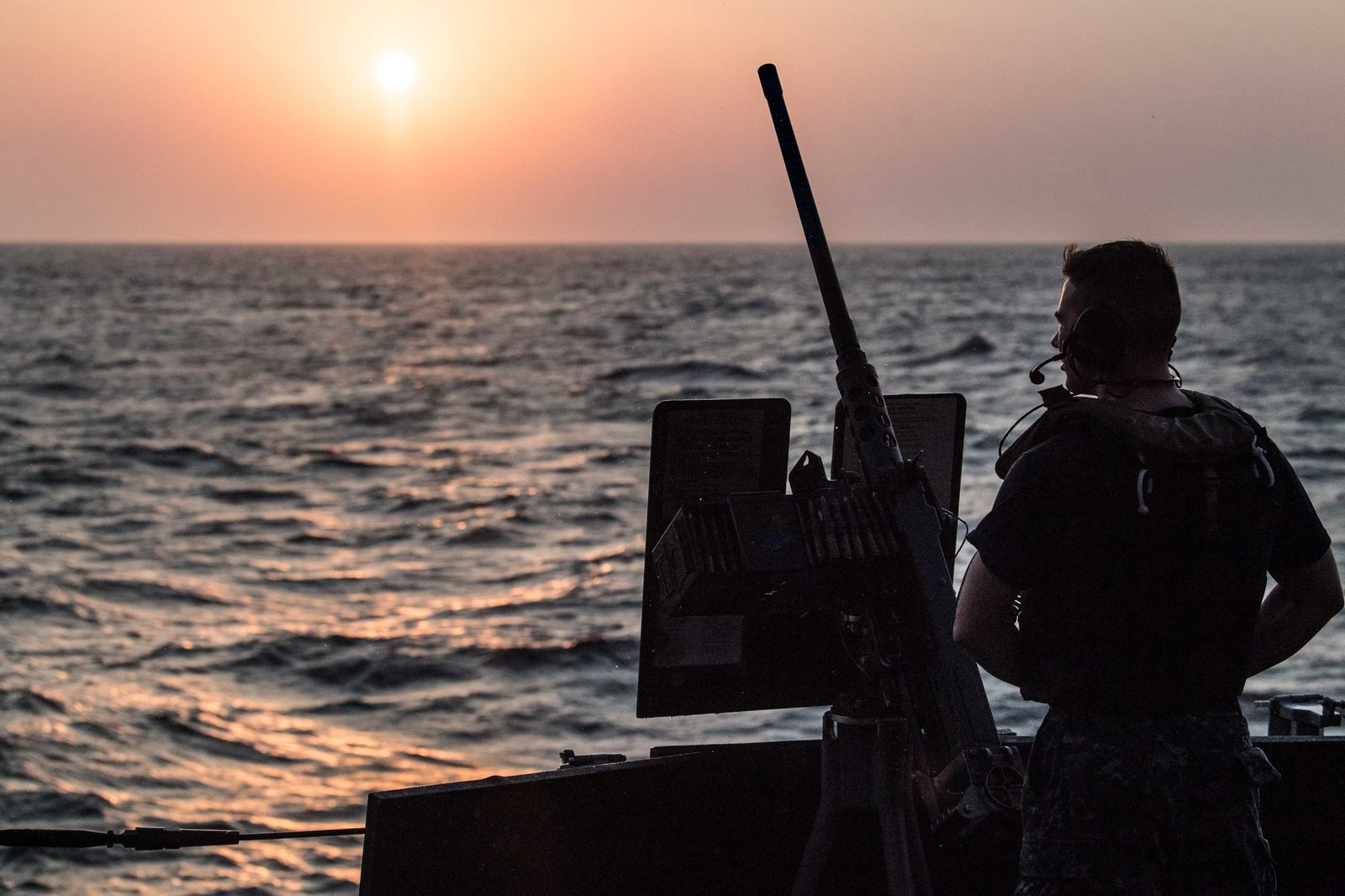
Saudi Arabia's General Authority of Civil Aviation said on Tuesday that two southern airports — King Abdullah bin Abdulaziz airport in Jazan and Najran airport — were struck on Monday evening, wounding three people and damaging airport facilities. According to the statement, the injured suffered “minor injuries”, were taken to hospital, and specialised teams responded to the sites immediately. The authority gave no further detail on the weapon used.
Hours earlier, Yemen's Houthis — formally Ansar Allah — had said their forces had targeted sites across southern Saudi Arabia late Monday, including airports and military sites. The group's statement, reported by Al Jazeera, did not specify the type of projectiles. Riyadh has not publicly confirmed the Houthi account, but the timing and geography line up: both airports lie close to the Yemeni border in the kingdom's southwestern corner and have been targeted repeatedly since the war in Yemen began.
What is on the record: Saudi authorities acknowledge the strikes, the three wounded — officially described as sustaining “injuries of varying severity”, with later reports specifying minor injuries — and material damage at both airports; Al Jazeera carried the aviation authority's statement. The Houthis claimed the operation as theirs. Regional reactions followed within hours: Gulf Cooperation Council Secretary-General Jassim al-Budaiwi called attacks on airports and civilian facilities “a dangerous escalation” and urged a “firm stance”, while Kuwait's foreign ministry condemned what it called the Iran-aligned group's “continued brazen and disgraceful attacks” on Saudi Arabia.
The strikes landed in a week of sharp escalation inside Yemen itself. The Saudi Press Agency reported that the Saudi-led coalition destroyed a ballistic missile launch platform in Sanaa and a missile storage facility in Saada holding 20 ballistic missiles. Yemeni government forces, meanwhile, launched a counteroffensive that retook the port city of Mocha and asserted control over the strategic Bab al-Mandeb strait — the narrow passage between Yemen and Djibouti through which a large share of global shipping passes. The coalition confirmed its participation with 100 fighter jets providing air support, plus a naval operation against the Houthis in Hodeidah governorate.
The Saudi statement did not say what weapon was used — drones and ballistic missiles have both figured in Houthi cross-border attacks in the past — and Riyadh has not yet attributed the strike to the Houthis directly. It is also unclear exactly how the three injuries occurred or where inside the airport complexes the strikes landed. Civil aviation officials said damage assessments were continuing, and the air traffic status at Jazan and Najran was not specified in the statements reported so far.
Nor is it clear whether Monday's operation marks the beginning of a sustained cross-border campaign or a single retaliatory gesture. The Houthi statement offered no claim about future operations, and Saudi officials have not said what response — if any — is planned. What is known is that the Saudi defence minister, Khalid bin Salman, used the week to underline a new alliance: he said Turkiye, Pakistan and Saudi Arabia had agreed to activate “deterrence measures” under a mutual defence pact and rapidly deploy forces to the kingdom, writing that the alliance had “reaffirmed the solidarity and unity of our countries”. Whether that pact is now put to the test is one of the open questions.
Because it carries the war back into Saudi Arabia's own airspace. The kingdom has spent a decade absorbing cross-border attacks — drones, missiles, strikes on oil infrastructure at Abqaiq and Khurais in 2019 — and has built one of the world's densest air-defence nets around its oil heartland. An attack that wounds civilians inside airport terminals in Jazan and Najran challenges the narrative that the southern front had quieted, and it forces Riyadh to decide, publicly, how it responds when civilian aviation becomes the target again.
The timing also matters because it collides with two larger currents. The first is the coalition's new offensive posture: 100 fighter jets over Mocha, a naval operation off Hodeidah, missile launchers destroyed in Sanaa and Saada — the war's heaviest week in months. The second is the defence pact with Turkiye and Pakistan, whose “deterrence measures” were announced as a signal to Riyadh's adversaries. A successful Houthi strike in the same week that pact was unveiled is a message in itself: deterrence is only real when it is tested. The region's markets, airlines and insurers will be watching the Saudi response as closely as the Houthis will.
Geopolitically, the strike sits at the intersection of three contests: the Saudi–Houthi war entering a heavier phase, the new Turkiye–Pakistan–Saudi axis being tested within days of its unveiling, and Iran's shadow over the Houthi arsenal — the group is described by Gulf states as Iran-aligned, a charge Tehran has never fully owned and Riyadh never stops repeating. Macroeconomically, airports are economic infrastructure: every projectile that reaches a terminal raises the insurance price of flying to the kingdom and of shipping through the Red Sea, and the Bab al-Mandeb corridor — now contested around Mocha — is the hinge of Asia–Europe trade. Demographically, the southern provinces of Jazan and Najran are home to millions living within drone range of Yemen; the strike is a reminder that the war's geography never respected the border. Historically, the pattern is familiar: the Houthis struck Abqaiq and Khurais in 2019, shutting down half the kingdom's oil output for days, and the lesson of that week — that cheap projectiles defeat expensive defences — has only been reinforced since. Structurally, the deepest signal is the coalition's own escalation: retaking Mocha, 100 jets, a naval operation off Hodeidah, missile launchers hit in Sanaa and Saada — the Saudi side has moved from containment to rollback, and Monday evening's airport strikes are the other side's answer to that move.
The second-order consequences split along Riyadh's choice. If the kingdom answers with the new coalition — Saudi, Pakistani and Turkish forces under the mutual defence pact — the war in Yemen takes on a new character: a formal multinational campaign rather than a Saudi-led one, and the Houthis' cross-border reach becomes the pact's first operational test. If Riyadh holds its fire, the precedent is the opposite: that airports can be struck with limited consequence, inviting more. Either way, the aviation and insurance markets price the risk the same morning: higher premiums for Gulf airspace, higher freight rates through the Red Sea, and renewed pressure on the Bab al-Mandeb corridor just as government forces claim to hold it. The mediation question raised by former UN Security Council adviser Fernando Carvajal — whether Pakistan can mediate, and whether the Houthis will only talk to the Saudis — becomes more urgent the hotter the exchange gets.
Watch three things. First, Riyadh's response: whether the “deterrence measures” under the new pact produce a visible military answer or a quiet diplomatic one, and whether Jazan and Najran airports resume normal operations. Second, the coalition's ground campaign: Carvajal told Al Jazeera that Mocha is the key — government forces must now prove they can hold a city “surrounded by Houthis from all three sides”, and a Houthi counterattack there would rewrite the week's gains. Third, the Houthis' next move: the group has said nothing about further operations, but its late-Monday statement claimed sites across southern Saudi Arabia, and the GCC's call for a “firm stance” gives Riyadh the political cover to answer in kind.
Western coverage has framed the attacks as a test of the new Turkiye–Pakistan–Saudi defence pact and of Washington's posture in the Gulf: Riyadh's willingness to absorb the blow or answer it will be read as a measure of American-backed deterrence. The emphasis falls on civilian vulnerability — three wounded inside airports — and on the question Western analysts have asked for a decade: after years of air campaigns and sanctions, how does the Houthi arsenal keep reaching deeper? The strike is being read less as a battlefield event than as a signal aimed at Riyadh, Washington and the coalition's new partners at once.
Eastern coverage has treated the strikes as the predictable backlash to the coalition's own escalation: a naval operation off Hodeidah, 100 fighter jets over Mocha and missile strikes on Sanaa and Saada invite a reply, and the reply arrived at Jazan and Najran airports. The commentary emphasises symmetry — both sides now strike each other's rear — and reads the Turkiye–Pakistan pact as the kingdom outsourcing its deterrence, a sign of strain rather than strength. The Kuwaiti condemnation and the GCC's “firm stance” language are noted, but framed as ritual: the real question is whether the new alliance changes the military arithmetic.
Southern coverage has focused on what the escalation means for the region's people and shipping lanes: the Bab al-Mandeb strait, now partly back in government hands, is the chokepoint through which Asia–Europe trade flows, and every exchange of strikes around it raises insurance premiums and food-import costs that the Global South pays first. The commentary notes that the three wounded civilians barely register next to the war's Yemeni toll — a conflict that has produced one of the world's worst humanitarian crises — and reads the moment as another chapter in a decade-long failure of diplomacy to end it.
King Abdullah bin Abdulaziz airport in Jazan and Najran airport, both in Saudi Arabia's southwest near the Yemeni border. The civil aviation authority said three people were wounded and facilities were damaged, with the injured taken to hospital. Both airports have been targeted before in the Yemen war, and lie within range of Houthi cross-border projectiles.
Yemen's Houthis, formally Ansar Allah, said late Monday that their forces had targeted sites across southern Saudi Arabia, including airports and military sites. Riyadh has not publicly confirmed the Houthi account or specified the weapon used. The timing and geography of the strikes line up with the Houthi claim.
GCC Secretary-General Jassim al-Budaiwi called the attacks on airports and civilian facilities “a dangerous escalation” and urged a “firm stance”. Kuwait's foreign ministry condemned what it called the Iran-aligned group's “continued brazen and disgraceful attacks” on Saudi Arabia. The language gives Riyadh political cover for a military answer.
The war is at its heaviest in months. The coalition destroyed a missile launch platform in Sanaa and a Saada facility holding 20 ballistic missiles, flew 100 fighter jets over the Mocha counteroffensive, and opened a naval operation off Hodeidah. Government forces retook Mocha and claimed the Bab al-Mandeb strait, while Turkiye, Pakistan and Saudi Arabia activated a mutual defence pact.
