Russia's foreign minister arrived in Iran on Monday for his first visit since February 2025, a day after Gulf states urged Moscow to press Tehran for “serious dialogue” and a reopened Strait of Hormuz.
Published 19 October 2026 · 14:15 GMT
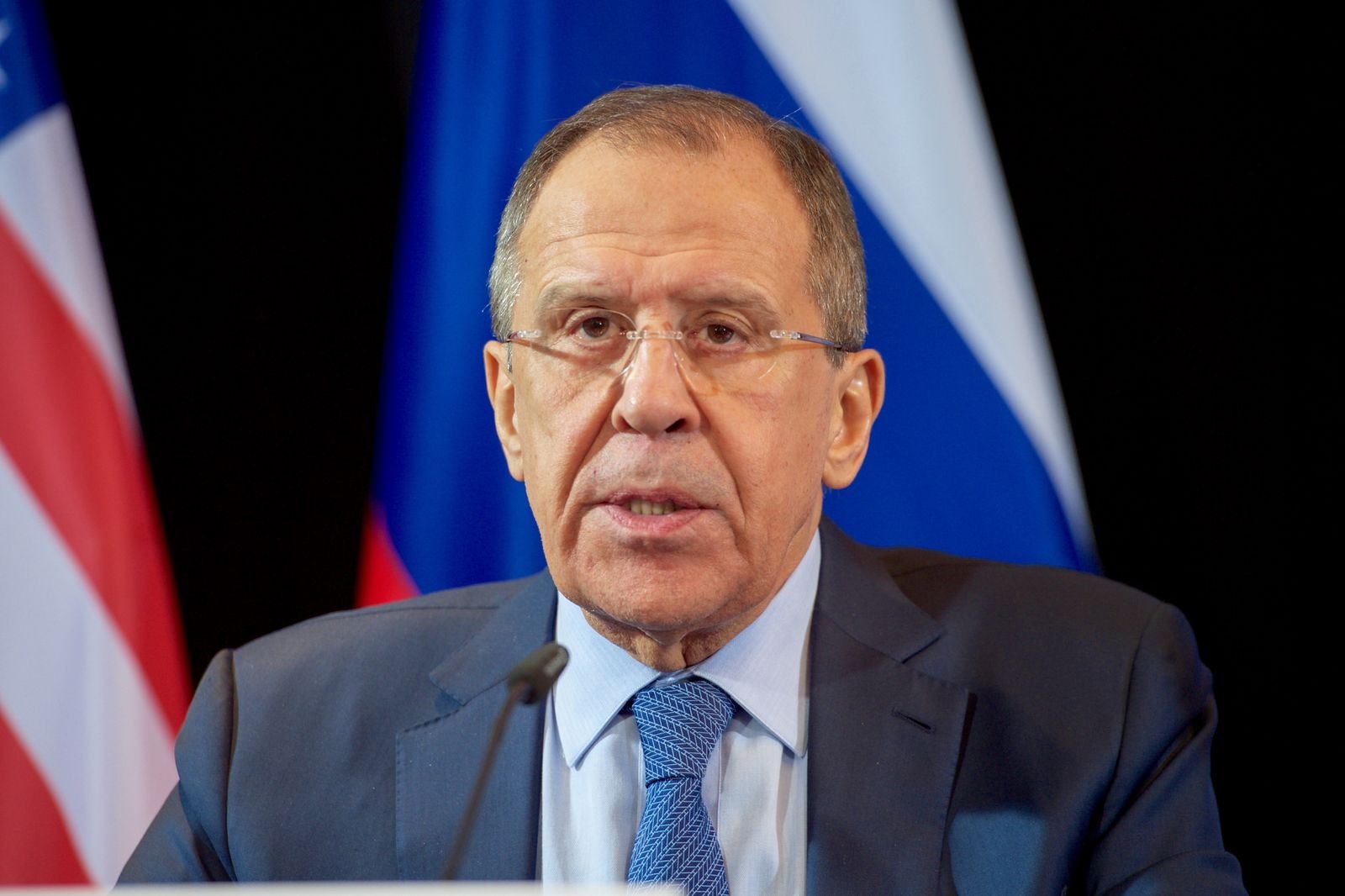
Russian Foreign Minister Sergey Lavrov landed in Tehran on Monday afternoon for talks with Iran's leadership, arriving barely a day after Gulf Arab states asked Moscow to use its influence to press Iran toward “serious dialogue” and to restore shipping through the Strait of Hormuz.
Iranian Foreign Minister Abbas Araghchi received Lavrov at the airport, and the two diplomats began negotiations immediately. A meeting with President Masoud Pezeshkian is scheduled during the visit — Lavrov's first to Iran since February 2025, the month before the United States and Israel launched their war on Iran on February 28.
The visit closes a 48-hour diplomatic swing through the Gulf. On Sunday, Lavrov was in Manama, Bahrain, for the ninth ministerial meeting of the Russia–Gulf Cooperation Council strategic dialogue, sitting across from the foreign ministers of all six GCC states. They urged Russia to play an active role in pressing Tehran to comply with United Nations resolutions, halt attacks on its neighbours and return to negotiations.
Moscow framed the mission in its own terms. The Russian Foreign Ministry said the Tehran talks would cover “the situation in the Persian Gulf and ways to resolve the acute international crisis triggered by the unlawful US and Israeli aggression against Iran,” alongside energy, transport and economic projects.
The visit itself is confirmed on every side. Lavrov's arrival in Tehran was reported by Al Jazeera, PressTV, Russia's TASS agency and India's ANI wire, and Iran's Foreign Ministry spokesman Esmaeil Baghaei described it as part of the framework of ongoing consultations between Tehran and Moscow, aimed at advancing previously signed agreements.
The rhythm of contact is intense. This is the fourth in-person meeting between Lavrov and Araghchi in 2026, on top of 14 telephone conversations, ANI reported, citing the Russian ministry. The two presidents — Vladimir Putin and Masoud Pezeshkian — met on September 1 in Bishkek and again on October 8 in Avaza, Turkmenistan; the Tehran talks will review the agreements reached at those summits, with trade, energy and transport projects on the agenda.
The Manama leg is equally documented. At Sunday's ninth Russia–GCC dialogue, GCC Secretary-General Jasem Al-Budaiwi said member states had faced more than 7,000 Iranian missiles and drones since the war began, striking airports, ports, power stations and desalination plants. In their closing statement, the six Arab states said Iran's nuclear and missile programmes, and its support for armed groups, must be part of any future talks to end the war.
The weekend's rhetoric sharpened on all sides. Trump warned Washington could “soon finish the job” unless Tehran changed course; Araghchi answered on X that Iran had “unfinished jobs too.” Iran's newly confirmed defence minister said the country was ready to respond to any US attack involving the “Mother of All Bombs,” while a senior Revolutionary Guard adviser spoke of a “father of missiles” ready to strike enemy energy infrastructure.
On substance, Lavrov told the Gulf ministers the region was “once again teetering on the brink of a full-scale war” and proposed a regional architecture for “collective security” — combining initiatives from the region's own countries with proposals from Russia and China — aimed at restoring maritime traffic and achieving lasting peace. He also endorsed the June memorandum of understanding between Iran and the United States, brokered with Pakistani mediation, which collapsed a month later, as a framework for reducing tensions.
What was actually said behind closed doors in Tehran is not public, and may not be for some time. Moscow has not published a readout of the Lavrov–Araghchi talks, and it is unclear whether the visit produced any new negotiation framework or merely restated existing positions.
It is also unknown whether the Gulf's request — that Russia press Iran — has any prospect of succeeding. Analysts note Moscow's leverage over both Tehran and Washington is limited, and Russia has its own interests in the war's economic fallout. Whether the Strait of Hormuz reopens, and on whose terms, remains unresolved: Tehran insists on monitoring traffic through the waterway and wants a return to the collapsed June agreement; Washington has set up its own shipping route and shows no sign of accepting Iranian conditions.
This matters because the war's economic blast radius now extends far beyond Iran and Israel. The Strait of Hormuz, the narrow waterway between Iran and Oman through which a significant share of global oil supplies normally passes, has become the conflict's central pressure point. An oil tanker struck a naval mine in the strait's southern reaches on Sunday, according to Iran's Revolutionary Guard navy — the latest in a string of attacks that have severely disrupted commercial shipping (the Bureau's Hormuz coverage).
The Gulf monarchies are bearing costs without being parties to the war. More than 7,000 missiles and drones have struck their airports, ports, power plants and desalination stations since February, in the GCC's own accounting. Meanwhile Washington is both escalating and hedging: President Donald Trump threatened to “soon finish the job” in Iran, even as his administration issued sanctions waivers for Russia to bring down fuel prices driven up by the war — waivers that have infuriated Russia hawks in Congress.
Control of the waterway is the one issue every party needs resolved and none can impose alone. Iran wants traffic monitored on its terms; the Gulf states want pre-February normality; Washington runs its own escorted route. Whoever writes the rules of Hormuz writes the region's energy future — which is why Lavrov carried a Gulf security plan from Manama to Tehran rather than the other way round.
The choreography is the message. Landing in Manama on Sunday and Tehran on Monday, Lavrov is performing the role analyst Nikita Smagin described to Al Jazeera: Moscow wants to be seen approaching every regional player “on broadly equal terms,” preserving its status as a mediator even as the Ukraine war has dented its global standing.
Because the war serves Russian interests even as its escalation threatens them. Smagin notes Russia has a partial interest in the conflict continuing: high oil prices fill Moscow's coffers, and with Iranian crude largely cut off from China, Beijing is forced to buy Russian oil at a premium. Yet a wider war could spiral unpredictably — and Russia's actual leverage over Tehran or Washington is, by most accounts, limited. The mediation pitch is therefore both genuine and self-serving: a way to convert limited influence into maximum relevance, and to keep a chair at every table where the Gulf's future is decided.
The immediate knock-on effects run through energy markets and shipping lanes. Every escalation in Hormuz reprices oil and insurance overnight; every diplomatic signal — a Lavrov visit, a Trump threat — moves the same markets back. Gulf states are meanwhile accelerating the logic of self-reliance: the Saudi foreign minister's separate bilateral with Lavrov in Manama, focused on Yemen and navigation threats, shows Riyadh building its own channels rather than waiting on Washington or Moscow.
There is also a sanctions subplot with teeth. Washington's waivers for Russia — issued to lower war-driven fuel prices — have infuriated Russia hawks in Congress, who see sanctions relief flowing to Moscow while the United States is at war with a Russian partner. If the waivers survive, they quietly rewire the sanctions architecture built around the Iran war.
The near-term calendar is crowded. The Tehran talks' readout — if Moscow publishes one — will show whether Lavrov carried anything concrete from Manama or merely goodwill. Araghchi's proposal to reopen Hormuz within seven days under Iranian conditions remains on the table, rejected by Washington when first presented in September. And with US midterm elections on November 3, every American move will be read through a domestic lens.
The question to watch is whether the June memorandum — dead for three months — can be revived as a framework, or whether the parties are simply marking time until the next escalation. The Strait of Hormuz, mined and contested, will give the answer before any communiqué does.
From Washington, the picture is one of managed pressure with an election clock ticking. Trump couples threats of escalation with a striking claim that Russia is doing “very little, if anything” to help Iran — a line that drew bipartisan anger in Congress over his easing of Russia sanctions. US intelligence reports cited in American media allege Moscow and Beijing supply Tehran with satellite imagery and weapons components; Trump publicly contradicted those reports, saying both capitals have “too much to lose.” On the water, US warships escort tankers through Hormuz while sanctions squeeze Iranian ports.
From Moscow, the framing is strategic patience and even-handedness. Lavrov presents Russia as the one power that talks to everyone — Gulf monarchies on Sunday, Tehran on Monday — and blames the crisis on what he calls the “unprovoked aggression” of the United States and Israel. The proposed collective-security architecture, drawing on Russian and Chinese initiatives, would institutionalise that role.
From the Gulf capitals, the mood is exhaustion with a ledger attached. The GCC states did not start this war, yet their airports, power stations and desalination plants have absorbed thousands of Iranian projectiles. Their ask in Manama was specific: use your influence, Moscow, to make Tehran stop.
The visit is Moscow's bid to position itself as mediator in the US–Israel war on Iran, eight months in. It follows the October 18 Russia–GCC dialogue in Manama, where Gulf states asked Russia to press Tehran toward negotiations and a reopened Strait of Hormuz. Lavrov is also reviewing bilateral energy, transport and trade projects with President Pezeshkian and Foreign Minister Araghchi.
The six GCC foreign ministers asked Moscow to play an active role in pressing Tehran to comply with UN resolutions, halt attacks on its neighbours and pursue “serious dialogue.” GCC chief Jasem Al-Budaiwi said member states had faced more than 7,000 Iranian missiles and drones since February 28, and the bloc wants Iran's nuclear and missile programmes included in any future talks.
Lavrov proposed a regional architecture for “collective security” that would combine initiatives from the region's own countries with proposals from Russia and China, with possible backing from the Arab League, the Organisation of Islamic Cooperation and the UN Security Council's permanent members — aimed at restoring maritime traffic and achieving lasting peace in the Gulf.
The strait is the war's central pressure point: a significant share of global oil supplies normally passes through it, and attacks on commercial vessels have severely disrupted shipping. Iran wants traffic monitored on its terms; the Gulf states want pre-February normality; Washington runs its own escorted route. An oil tanker struck a naval mine there on Sunday.
