A speedboat carrying migrants from Turkey collided with a Hellenic Coast Guard patrol vessel and overturned off Lesvos early Monday, killing six people including an infant. Hours later, a second boat capsized off Samos, killing six more — twelve dead in a single day on the Aegean route.
Published 19 October 2026 · 10:05 GMT
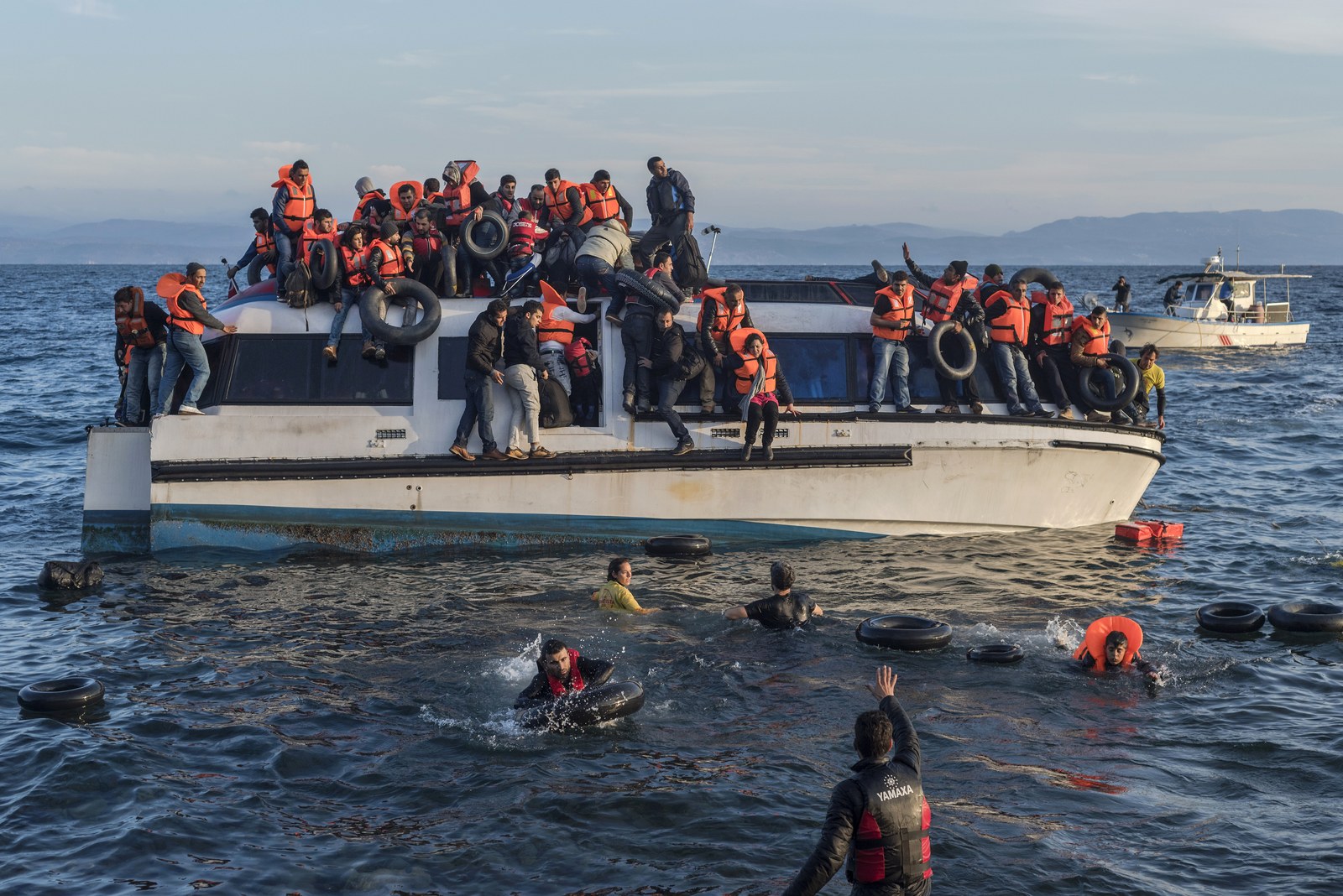
Six migrants, including an infant, died in the early hours of Monday, October 19, 2026, after the speedboat carrying them from the Turkish coast collided with a Hellenic Coast Guard patrol vessel and overturned about 3.5 nautical miles south of Agrilia, off the southeastern shore of Lesvos. The crash, which unfolded during a nighttime pursuit, ranks among the deadliest incidents on the Aegean migrant route in recent weeks — and it was not the day's only tragedy: hours later, a second boat capsized off the island of Samos, killing six more people.
According to the Hellenic Coast Guard, the speedboat had been trying to evade the patrol vessel, executing dangerous maneuvers at high speed before the collision. Shipping Minister Vassilis Kikilias said initial evidence indicated the migrant boat's bow struck the port side of the coast guard vessel, though he stressed that the exact circumstances remained under investigation. Rescuers recovered six bodies from the sea. Reuters and the Greek outlet Athens24, citing the coast guard, report four men, one woman and an infant; an AFP dispatch quoting a coast guard official describes a baby and four women among six victims — a discrepancy that has not yet been resolved.
Eight survivors were pulled from the water and transferred to Mytilene General Hospital. Among them was a 37-year-old Turkish national whom authorities identified as the alleged operator of the speedboat and arrested on suspicion of migrant smuggling. Minister Kikilias blamed traffickers for the deaths, writing on X: “Our position is non-negotiable: zero tolerance for smugglers.”
Twelve people died in the Aegean on Monday across two incidents, and twenty-two survived. Off Lesvos, the collision site sits about 3.5 nautical miles south of Agrilia, in the strait between the island's southeastern coast and the Turkish mainland — one of the shortest and therefore busiest irregular crossings in the eastern Mediterranean. Off Samos, the capsizing occurred roughly 3.7 nautical miles north of the island, after the boat made a sharp manoeuvre at high speed.
The arrests came fast. On Lesvos, the 37-year-old Turkish national survived the collision and was identified by authorities as the alleged operator of the speedboat; he now faces investigation as a suspected smuggler. On Samos, fourteen people were rescued, and one of them — described by the coast guard as a presumed Iranian organizer of the crossing — was arrested on suspicion of migrant smuggling. Coast guard vessels and an Air Force helicopter took part in the Samos search-and-rescue operation.
Athens moved quickly to frame the day's events. Kikilias called the smugglers “ruthless criminals who, in order to get rich, do not hesitate to lead desperate people, families, and innocent children to their deaths,” and said the tragedy filled Greeks “with sorrow and rage.” The competent authorities have opened investigations into the exact circumstances of the Lesvos collision.
The single most important unresolved fact is the composition of the six Lesvos dead: two independent evidence chains (Reuters and Athens24, both citing the coast guard) say four men, one woman and an infant, while an AFP dispatch quoting a coast guard official describes a baby and four women among six victims. Until the authorities publish a reconciled list, the Bureau reports both versions and flags the conflict.
Beyond that, the precise choreography of the collision is unknown: who maneuvered, when, and whether the pursuit itself contributed to the outcome — the very questions the investigation must answer. The identities, ages and nationalities of the dead have not been released, nor has the infant's age. And it is not known whether the Lesvos and Samos boats belonged to the same smuggling network or were two independent departures on a busy night.
Greece has long been the favoured gateway to Europe for migrants and refugees from the Middle East, Africa and Asia. In 2015–16, the country stood at the frontline of Europe's migration crisis, when nearly one million people landed on its islands, most of them departing from Turkey. The flows never fully stopped; they shrank, hardened, and professionalized — and the Aegean crossings grew more dangerous as interdiction intensified.
Monday's double tragedy matters because it compresses the entire politics of the route into a single day. For Athens, it is proof that smuggling networks remain active and lethal, and ammunition for the government's deterrence-first posture — a posture that human rights groups have long accused of crossing into unlawful pushbacks, a charge Greece denies, insisting its coast guard acts with full respect for human life and rights. For the smugglers' clients, it is a reminder that the short crossing is not a safe one: overloaded boats, night departures, and high-speed evasion turn a few nautical miles of sea into a graveyard.
The timing also matters. Each deadly incident on the EU's external border reopens the same unresolved argument in Brussels: whether deterrence alone can ever close a route, or whether it merely pushes the crossings into darker, faster, more dangerous hands. Monday's answer, written in twelve bodies, was bleak.
Geography is the first answer. The straits between the Turkish coast and the Greek islands are, in places, only a few nautical miles wide — close enough that a speedboat can attempt the crossing in under an hour. That proximity is the route's economic engine: short crossings mean fast turnarounds, lower fuel costs, and the ability to run multiple departures per night, which is why the networks have invested in ever-faster boats.
The second answer is deterrence itself. As Greece hardened its posture — more patrols, faster interceptors, and a political doctrine of zero tolerance — the smugglers did not stop; they adapted. Night crossings, overloaded hulls, and evasion maneuvers are the market's response to interdiction, and each adaptation raises the lethality of the crossing. Monday's Lesvos collision is the sharp end of that escalation cycle: a pursuit at sea between a patrol vessel and a boat whose business model depends on not being caught.
The third answer is demand. As long as legal pathways to Europe remain narrow, the price of a seat on a speedboat — and the profits of the networks selling it — stay high enough to absorb the risk. The arrests of a Turkish alleged operator and a presumed Iranian organizer in a single day hint at the transnational structure of that business: recruitment, logistics and piloting spread across nationalities, with the Aegean as the chokepoint. Smashing one crew, as Athens vows to do, disrupts a node; it does not dismantle the network. Readers following the wider European debate can trace the same logic in the continent's other migration flashpoints, from the anti-migrant violence shaking South African cities to the strains on Turkey's own maritime security posture.
The investigation into the Lesvos collision will be the story's second act. Collisions between interdicting vessels and migrant boats are among the most politically sensitive events in border enforcement: the official account — the speedboat abruptly changed course and smashed the pursuing patrol boat — will be tested against survivor testimony, vessel data and the physical evidence. How transparently Athens conducts that inquiry will shape whether the zero-tolerance pledge reads as resolve or as deflection.
The two prosecutions will test the smuggling laws' reach: a Turkish national accused of operating the Lesvos boat, and an Iranian national accused of organizing the Samos crossing. Convictions would validate the government's narrative of ruthless profiteers; acquittals or dropped charges would complicate it. Meanwhile, the humanitarian ledger — twelve dead, an infant among them — will feed the parallel argument over interdiction tactics, an argument Greece has weathered before and will weather again, denying any wrongdoing while rights groups keep their own count.
Expect the collision investigation's preliminary findings within days, formal charges against the two arrested men, and the slow, painful work of identifying the dead and notifying families. Patrols in the eastern Aegean will intensify — they always do after a deadly day — and smugglers will adjust again, because that is what the market does. The deeper question, the one no minister's post on X can answer, is whether twelve deaths in a single day will move the European debate beyond deterrence. On the evidence of the last decade, the Bureau would not bet on it.
The Western framing — carried by Reuters, the Greek press and the British tabloids — reads Monday as a law-enforcement tragedy: a smuggler's reckless evasion, a collision, and a government's righteous anger. The villains are the traffickers; the state is the rescuer that pulled eight people from the sea and the avenger promising zero tolerance. The uncomfortable questions — about pursuit tactics, about the victim-count discrepancy, about a decade of deterrence that keeps producing bodies — sit at the margins of this telling.
The Eastern information environment is strikingly quiet on this story: searches of Xinhua, CNA, The Hindu and Kyodo/NHK surface no independent original reporting as of publication — the day's coverage is a Western wire monopoly. Yet the East is materially present in the facts: the boats departed the Turkish coast, a Turkish national allegedly piloted the Lesvos speedboat, and a presumed Iranian organized the Samos crossing. The route is, in operational terms, a Turkish-Iranian-Greek triangle, even if the cameras are all Western.
The Global South framing begins with the people in the boats: migrants from the Middle East, Africa and Asia, for whom the Aegean is one leg of a journey that started in war, poverty or persecution. Southern outlets — Pakistan's ARY News, Nigeria's NaijaPodNews, India's Devdiscourse — carry the story only as wire copies, which itself says something: the South reports the deaths but does not yet investigate them. The humanitarian ledger, and the question of whether interdiction tactics contributed to the dying, belongs to this lens — and it is the lens with the fewest original voices on the record.
In the early hours of October 19, 2026, a speedboat carrying migrants from Turkey collided with a Hellenic Coast Guard patrol vessel about 3.5 nautical miles south of Agrilia, off Lesvos, and overturned. Six people died, including an infant, and eight survived. The coast guard says the speedboat was evading pursuit with dangerous maneuvers; the minister says its bow struck the patrol boat's port side. The exact circumstances are under investigation.
That is genuinely unresolved. Reuters and the Greek outlet Athens24, both citing the coast guard, report the six dead as four men, one woman and an infant. But an AFP dispatch quoting a coast guard official describes a baby and four women among the six victims. The authorities have not published a reconciled list or released identities, ages or nationalities. Until they do, the Bureau reports both versions and flags the conflict.
Hours after the Lesvos collision, a small migrant boat capsized about 3.7 nautical miles north of Samos after a sharp manoeuvre at high speed. Six people died — five men and one woman — and fourteen were rescued in an operation involving coast guard vessels and an Air Force helicopter. One survivor, described as a presumed Iranian organizer of the crossing, was arrested on suspicion of migrant smuggling.
Shipping Minister Vassilis Kikilias blamed migrant traffickers, calling them ruthless criminals who lead desperate people and innocent children to their deaths for profit, and wrote on X that Greece's position is non-negotiable: zero tolerance for smugglers. He said the Lesvos tragedy filled the country with sorrow and rage. Investigations into both incidents are under way, and two suspected smugglers — a Turkish national and a presumed Iranian organizer — have been arrested.
