The Kremlin said on Thursday that Kyiv's renewed strikes on Russian oil refineries stand in "serious contradiction" with American peace efforts, after an overnight drone hit a refinery south of Moscow — the first since Trump's declared energy ceasefire.
Published 15 October 2026 · 14:13 GMT
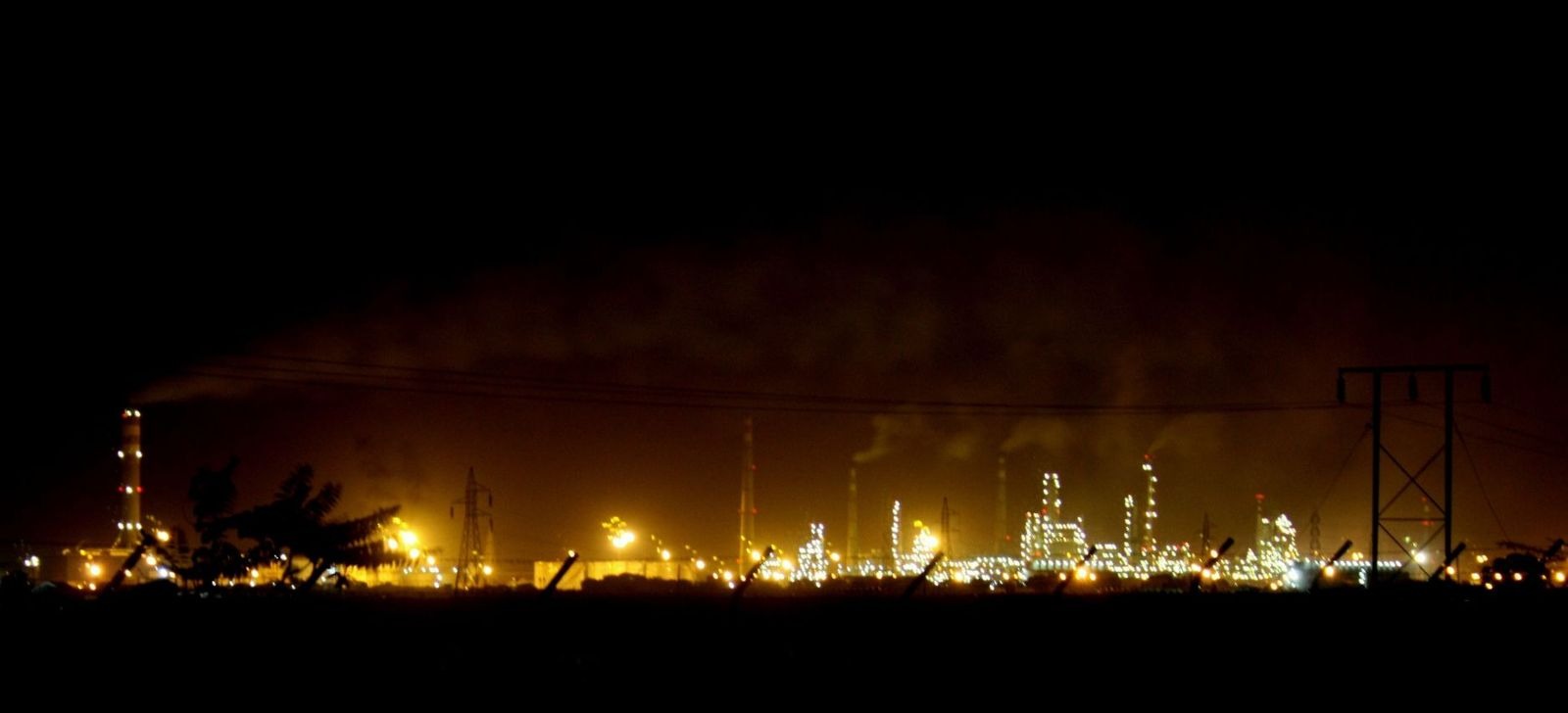
The Kremlin's accusation arrived on Thursday morning, October 15, 2026, packaged in a single phrase. Dmitry Peskov, the Kremlin spokesman, told reporters that Ukraine's continued strikes on Russian oil refineries stand, quote, "in serious contradiction with the peace efforts of the United States." The trigger was an overnight Ukrainian drone strike on an oil refinery in Russia's Ryazan region, roughly 180 kilometres south of Moscow. Russia's Defence Ministry said falling drone debris started a fire inside the refinery complex; the extent of the damage and any casualties were not immediately established.
It was the first Ukrainian strike on a Russian refinery since Donald Trump abruptly declared an "energy ceasefire" between Moscow and Kyiv on Sunday, October 11 — a truce neither side says it ever formally agreed to. Kyiv had said it was pausing its refinery campaign; by Wednesday, Volodymyr Zelenskyy told the Financial Times the pause was finished. "The block [on attacking refineries] is out. We're done," he said, adding that the gap in US intelligence sharing was "dangerous." Moscow's reply came within a day: the accusation, the Ryazan strike, and the collapse of Washington's unilateral truce effort all folded into one story.
Peskov went further than a one-line protest. He said Moscow had not perceived that Kyiv ever complied with the ceasefire, called the fresh Ryazan strike "nothing new," and then assigned blame at the top: "The Ukrainian regime in Kyiv continues to strike these facilities, thereby, of course, coming into serious contradiction with the peace efforts of the United States and of the American negotiators who are indeed making very vigorous efforts to somehow initiate the peace process. But so far, these vigorous attempts have been thwarted by the unwillingness of the Kyiv regime — and of (President Volodymyr) Zelenskiy personally — to make peace."
Kyiv's account is the mirror image: it observed the pause for three days — no energy strikes at all, not even responses — while Russia kept hitting Ukrainian energy infrastructure. "They attacked us, our gas stations, infrastructure, etc.," he said. On Wednesday Russia itself said the "scope" of the ceasefire had never been determined, even as it reported striking seven Ukrainian energy infrastructure facilities that same day. The terms of Trump's declared energy ceasefire were never published by either side.
What is known about the American terms comes from US officials quoted in the press: Russia agreed not to hit Ukraine's oil refineries and gas stations if Kyiv stops its drone assault on Russian refineries. But Ukraine has no operating oil refineries, so the Russian half of the bargain is nearly costless — and Vladimir Putin never agreed to stop attacks on other Ukrainian targets, including the electricity grid, the infrastructure that decides whether Ukraine's cities stay lit through winter. Days before the truce collapsed, Trump also announced a deal for Russia to supply millions of tonnes of diesel to US and global markets: more than 300,000 metric tons this month, 500,000 in November, and one million in December.
How much damage the Ryazan refinery actually took is unconfirmed — Russia reported only a fire caused by debris, with no assessment of lost capacity. Nobody has published written terms of the energy ceasefire, so every claim about who violated what rests on verbal, press-reported accounts. It is not publicly known whether the diesel deal was a condition of the ceasefire, a side arrangement, or merely parallel diplomacy running on Trump's domestic fuel clock. Ukraine has not said whether the refinery campaign now resumes indefinitely or pauses again if Russian strikes ease. And it remains unclear whether the United States will treat Kyiv's resumed strikes as a breach — or as the predictable result of a truce that asked Ukraine to stop while Russia's own bombing continued.
Because energy has become the currency of this negotiation. The average American driver now pays about $6.30 a gallon for diesel — nearly double the $3.66 of a year ago, down only slightly from an all-time high of $6.53 in late September, according to AAA. US refiners have been running at mid-to-high nineties percent of capacity since March, distillate inventories are dangerously low, and the industry is heading into fall turnaround season with no spare capacity to bring online. Ukrainian drone strikes on Russian refineries, the eight-month Iran conflict throttling Hormuz shipping, and full-tilt American plants together explain the crunch. Rising fuel costs are passed straight to consumers, and inflation has already ticked back up to 3.7 percent in September.
The second reason is strategic: Putin conceded refineries and gas stations but never the power grid. An "energy ceasefire" that leaves Ukraine's electricity system fair game is, for Kyiv, a truce that protects Russia's fuel while leaving Ukraine's winter exposed — which is why the failure of this truce previews the failure of any wider deal that trades fuel flows for a winter bombing campaign on Ukraine's cities. The global energy crunch is now both the motive for the deal and the reason it may not survive contact with the battlefield.
The failure mode of this truce was built into its announcement. Trump declared it unilaterally on a Sunday; Ukraine said it learned of it from the media; Russia never confirmed it. A ceasefire with no published terms, no verification, and an undefined "scope" is not a ceasefire — it is a press release with a fuse. The fuse was lit by the asymmetry: Kyiv was asked to halt its most effective economic weapon, the drone campaign that had driven Moscow's refining sector to the edge, in exchange for Russian restraint on targets Russia had never committed to spare anyway. Ukraine's three-day pause was the experiment; Russia's continued strikes on Ukrainian energy were the result; the Ryazan drone was the conclusion. The deeper read is that Putin has discovered he can sell the same concession twice — once as a ceasefire, once as diesel — while keeping the grid campaign that actually wins wars of attrition.
The first knock-on effect runs through the sanctions regime. Zelenskyy warned on Thursday that Russia had "deliberately escalated" its strikes after "receiving a relaxation of sanctions and seeing attempts to pressure Ukraine" — and a diesel deal that pays Moscow while Kyiv is told to stop shooting is, in Kyiv's accounting, exactly that kind of signal. The second runs through Europe's winter: a truce that never touched the power grid leaves Ukraine's heating and lighting as the season's bargaining table. The third runs through Washington itself: if the diesel shipments arrive before the midterms, the administration can claim delivery on fuel costs; if Kyiv keeps hitting refineries and Moscow answers on the grid, the images that dominate November may be burning apartment blocks rather than cheaper pumps. Truces that collapse in days teach everyone — including Moscow — that unilateral American declarations are cheap to outlast.
First, the Ryazan damage assessment: if the refinery loses meaningful capacity, expect Moscow to frame the next escalation as retaliation and Kyiv to frame it as proof the truce was fiction. Second, the refinery campaign itself — whether Kyiv sustains the strikes through the autumn or pauses again under American pressure. Third, the diesel: the first Russian cargoes are expected before the US midterms, and their arrival — or failure to arrive — will set the domestic verdict on the deal. Fourth, the grid: Russia's winter campaign on Ukraine's electricity is the variable the "energy ceasefire" never touched, and it is the one that will decide how civilians experience this war. Finally, the fraying US-Ukraine relationship over intelligence sharing and satellite support — the next pressure point after fuel.
Western coverage treats the collapse as a market and management story as much as a war story. The frame runs through prices, capacity, and elections: American drivers squeezed by diesel near record highs, refiners at redline, a midterm election approaching, and a president reaching for the fastest available lever — Russian fuel. The reporting emphasis is on whether the shipments actually arrive and what they buy: breathing room for US refineries to schedule deferred maintenance, some downward pressure on distillate prices, and a narrative for the midterms that the administration is "doing something" about fuel costs. Underneath that is unease about the price of the arrangement: a ceasefire announced unilaterally, never confirmed by either belligerent, that collapsed within days. The Western question is whether this was diplomacy or discount shopping.
The Russian framing, delivered through Peskov, is that Washington is trying hard and Kyiv is the spoiler. In this telling, American negotiators are making "very vigorous efforts" to start a peace process, and Ukraine's continued strikes — on refineries, on energy infrastructure, as a matter of routine — are the obstacle, personally attributable to Zelenskyy. Moscow presents itself as the party that observed a truce it never formally signed, and casts Kyiv's three-day pause as fiction: "nothing new," Moscow "did not perceive" compliance. Left out of the frame is Russia's own account of striking seven Ukrainian energy facilities on Wednesday, and its insistence that the ceasefire's scope was never defined. The Russian lens is symmetrical by design — every Ukrainian claim of Russian violation is mirrored by a Russian claim of Ukrainian sabotage.
From the Global South the story reads as another round of fuel-price diplomacy where the bill lands elsewhere. Diesel is the freight fuel of the developing world — it moves trucks, tractors, generators, and ships — so a $6.30-a-gallon American price is a warning siren in Nairobi, Dhaka, and São Paulo too. When the world's two largest commodity theatres, Hormuz and the Black Sea, both run hot at once, importers face the same equation: higher transport costs, higher food prices, tighter foreign exchange. The southern reading is sceptical of truces that trade Russian fuel for American midterms while the war's price is socialised across the planet.
Kremlin spokesman Dmitry Peskov said Ukraine's continued strikes on Russian oil refineries stand in "serious contradiction with the peace efforts of the United States." The accusation followed an overnight Ukrainian drone strike on a refinery in Russia's Ryazan region, about 180 kilometres south of Moscow — the first refinery strike since Trump declared an energy ceasefire on October 11.
Kyiv says it paused strikes on Russian energy targets for three days after Trump's announcement but resumed when Russia continued attacking Ukrainian energy infrastructure. President Zelenskyy said Ukraine did not strike any energy objects during the pause and did not respond while Russia hit Ukrainian gas stations and infrastructure, so the pause was lifted.
Days before the truce collapsed, Trump announced Russia would supply millions of tonnes of diesel to US and global markets — over 300,000 metric tons this month, 500,000 in November, and one million in December. The deal aims to ease US diesel prices near $6.30 a gallon, with the first cargoes expected before the midterms, while American refiners run near maximum capacity.
It was announced unilaterally by Trump with no written terms and no confirmation from either side; Russia itself said the "scope" was never determined. Ukraine has no operating refineries to spare anyway, and Putin never agreed to stop hitting Ukraine's electricity grid. The truce asked Kyiv to abandon its most effective economic weapon while Russia's bombing of Ukrainian energy continued.
Watch the Ryazan damage assessment, whether Kyiv sustains its refinery campaign, and whether the first Russian diesel cargoes arrive before the midterms. The decisive variable is the one the truce never covered: Russia's campaign against Ukraine's electricity grid as winter approaches, and the state of US-Ukraine relations over intelligence sharing and satellite support.
