Thousands took to the streets on October 14 in the first major protest against President Abelardo de la Espriella's austerity drive. Congress has until Tuesday to decide how the 2027 budget is spent.
Published 15 October 2026 · 06:00 GMT
The rain came down over Bogota in sheets on Wednesday afternoon, and the crowd marched through it anyway. Thousands of umbrellas rose along the avenue from the Parque Nacional toward the Plaza de Bolivar, moving behind a banner that carried a caricature of President Abelardo de la Espriella. Former president Gustavo Petro walked near the front, and the chant rolled through the wet streets in Spanish: "it will fall." Sixty-seven days after de la Espriella took office, the opposition found its voice.
And of course, this was no routine march. It was the first major demonstration against a two-month-old government that has promised a sharp free-market turn, a crackdown on armed groups, and spending cuts deep enough to satisfy bond markets. On one side: teachers, trade unionists, Indigenous communities, students, and feminist activists defending the reforms of the Petro years. On the other: a president with a police decree signed the day before, expanded powers for riot police, and a Tuesday deadline in Congress that will decide where the 2027 money goes.
¡Va a caer! The chant rolled through Bogota's rain: it will fall.
The coalition was deliberately broad. The CUT and CGT trade-union federations called the action; the Fecode teachers' union mobilized from 10:00 a.m. at the Parque Nacional; Bogota's district educators' association announced a 24-hour strike; Indigenous communities marched in the Cauca department; university students and feminist collectives joined in Bogota, Medellin, Cali, Pereira, Barranquilla, Bucaramanga, and Armenia. The government counted 62,000 people mobilized nationwide. Petro, who announced he would march in the capital, led the Bogota column alongside the opposition Pacto Historico and former presidential candidate Ivan Cepeda. Their demand, in the simplest terms: defend what the previous government built. Under Petro, Colombia expanded free access to public universities, pushed through record minimum wage increases, and strengthened labour protections, including extra pay for night work. "Our rights are threatened," Unzo Vargas, a 44-year-old public employee marching with a rainbow flag, told Agence France-Presse. "Everything we fought for over so long is now in peril."
That's why the slogans reached beyond budgets. Placards read "Abelardo hates us" and "First the rural class." Ester Guerra, a 32-year-old primary-school teacher in the capital, told AFP she fears losing "the little we obtained." The protesters also turned their anger outward: many waved Palestinian flags, and one large American flag was burned in Bogota. The restoration of relations with Israel, severed under Petro, and the rapprochement with Washington have become protest issues of their own.
Because Tuesday, October 20, is the legal deadline for Congress to decide how next year's budget will be distributed, and the arithmetic is brutal. Congress already approved a 2027 spending bill of 634.9 trillion pesos, roughly 206.6 billion dollars, back in September. That budget projects a record fiscal deficit of 9.4 percent of GDP, meaning that for every 100 pesos of output the country produces, the state plans to spend 9.4 more than it collects. Borrowing is set to reach 71.7 billion dollars in 2027, more than double what was initially planned. Finance Minister Miguel Gomez has promised a tax reform package called the Rescue Law aimed at pushing the deficit back down to 7.2 percent, the level projected for 2026. The government has already raised this year's deficit target from 5.3 to 7.2 percent of GDP. Lower tax revenue, expanded spending under the previous government, persistent inflation, and the costs of a 7.4-magnitude earthquake that struck in August have combined into what the finance ministry calls the most critical fiscal situation in the country's history. The IMF has held financing talks with Bogota, and Gomez recently pitched investors in New York on a plan to shrink the fiscal gap by more than four percentage points by 2030.
The cuts have a concrete shape. Joint congressional committees have initially approved cutting the Special Jurisdiction for Peace, the transitional justice court created under the 2016 peace deal, by nearly 17 percent for 2027. Senator Enrique Gomez, a close ally of the president, spearheaded a proposed cut of 100 billion pesos, about 30 million dollars, arguing the court is too slow on convictions and too expensive. The court, which is set to operate through 2033, investigates former FARC rebels and military personnel for war crimes and human rights abuses, and has nine ongoing cases including sexual violence and child recruitment. Officials warn the cuts would crimp those trials and hinder the Search Unit for Disappeared People, which is trying to locate and identify 137,000 people who vanished during Colombia's long conflict. The peace tribunal, meanwhile, has just charged former FARC members with crimes against Indigenous communities, a case that matters deeply in departments like Cauca, where Indigenous marchers walked on Wednesday against a government proposal to regulate their Indigenous guard, the civilian force that defends ancestral territories in regions where guerrillas and drug-trafficking groups operate.
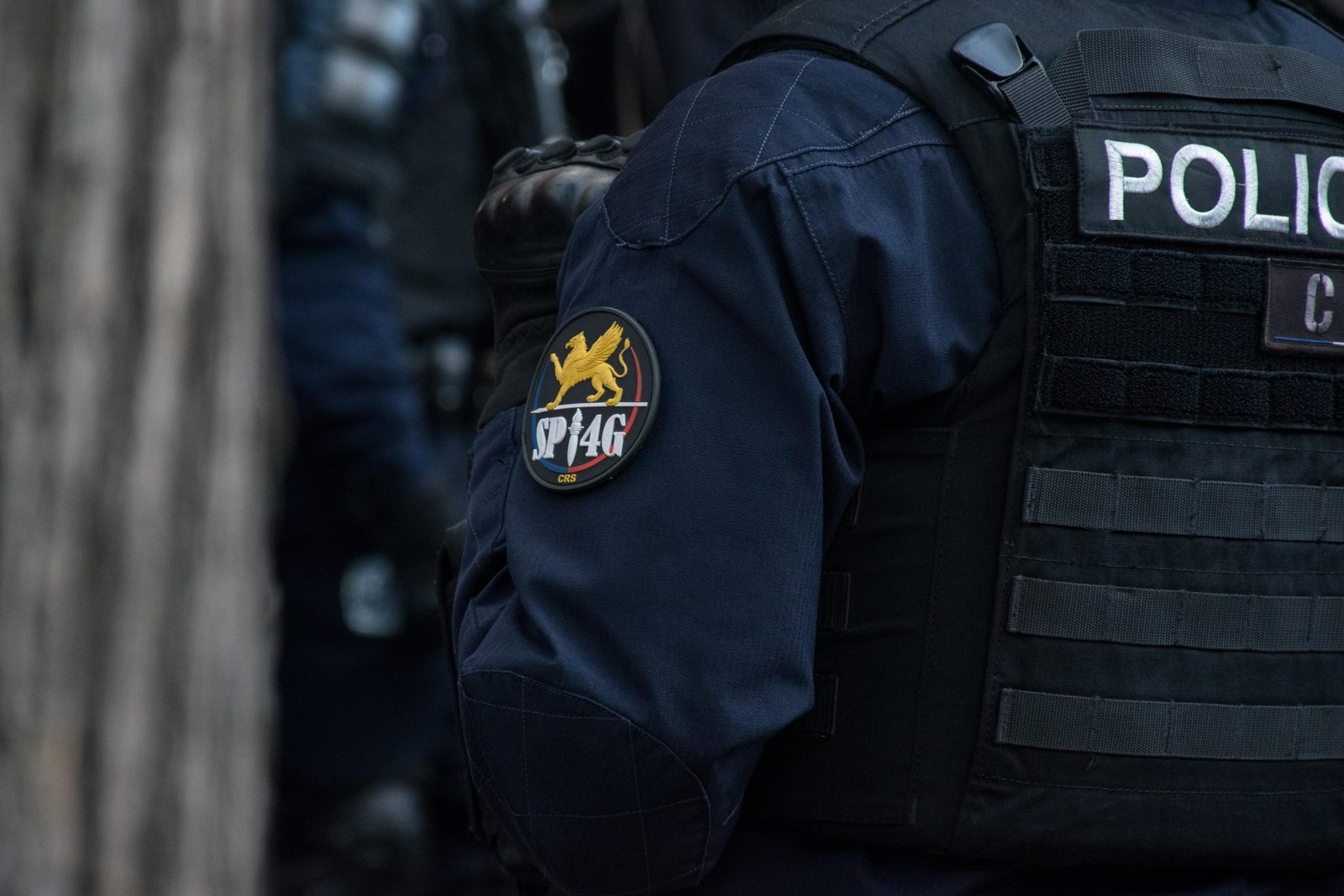
On Tuesday, October 13, the day before the marches, de la Espriella signed Decree 1525 of 2026, handing expanded powers to police ahead of the protests. The decree lets law enforcement move faster against protesters who vandalize public property or disrupt access to essential services, and while it says authorities should seek dialogue, dialogue is not a precondition for intervention. "The right to protest is respected, but there is no right to destroy, attack the security forces, assault others or sow chaos," the president said in a social media statement announcing the decree, adding that "violence, vandalism and blockades that trample on the rights of millions of citizens will not be tolerated." Road blockades are a traditional protest tool in Colombia, sometimes lasting weeks. The decree was, by the opposition's reading, aimed directly at them. "They are trying to intimidate the population so it doesn't go out and march, but this right is enshrined in the Constitution," Oscar Perez, a 40-year-old teacher, told AFP.
The day stayed largely peaceful. De la Espriella reported that 98 percent of the demonstrations were peaceful and that six people were arrested, in flagrante, for alleged vandalism, including graffiti and damage to a TransMilenio bus. The riot police intervened at six points, two in Bogota and two in Ibague, plus Popayan and Pereira. In Bogota, a senator and a city councillor reported tear gas, water cannon, and stun grenades used against demonstrators; in Popayan, unrest broke out in front of the mayor's office and the regional government headquarters. De la Espriella, posting his balance of the day, called the 62,000 "a small minority that wants to stop," adding that "the great majority of Colombians want development, progress, future."
Quietly and then all at once, Colombia is changing sides. The same day the marches filled Bogota, Colombia opened its new embassy in Jerusalem and restored free trade with Israel, reversing Petro's break with Tel Aviv. The government has also extradited an armed-group leader to the United States in what observers describe as a shift toward Washington, and de la Espriella has pledged a free-market turn aligned with US President Donald Trump. Protesters read the pivot as surrender. "No to Trump's interventionism in Colombia," one banner read; another: "We are nobody's backyard." Jimena Rodriguez, a 20-year-old student, accused the president of wanting to "deliver the country to the United States, to Israel," telling AFP: "I feel dark times are coming." The geopolitical subtext was literal: Palestinian flags everywhere, Israel's restored trade deal denounced, and the Stars and Stripes burned in the capital. Colombia's neighbours are watching the same tilt from across the border: Venezuela, long at odds with Washington, has every reason to read the Jerusalem embassy and the extradition as a signal, while Brazil watches a regional ally swing right. The Trump connection is no secret; de la Espriella, a lawyer and millionaire businessman who was a political newcomer when he ran this year on a hardline ticket and won a June runoff by a narrow margin, campaigned openly as an admirer of the US president.
Colombia has always been a pendulum country, and the pendulum is now swinging hard. Gustavo Petro was the first leftist president in the country's history, elected in 2022; four years later the electorate chose a right-wing government promising to dismantle much of his legacy. Petro himself drew a darker historical parallel in recent speeches, linking the extermination of the Union Patriotica, a leftist party destroyed by violence in the 1980s and 1990s, to the current moment. Ivan Cepeda, the senator and former presidential candidate, warned the march intends to "plunge millions of people whom our government had lifted out of misery into poverty," and called the protest decree a move that "buries dialogue." The demographics of the march tell their own story: students like the 20-year-olds Jimena Rodriguez and Samuel Molina, teachers like Ester Guerra and Oscar Perez, and Indigenous communities from Cauca, a young, urban, and rural coalition defending a social contract it only recently won. Negotiations for the 2027 minimum wage are just beginning, with no figure yet on the table, and Petro has warned that an insufficient increase against food prices would hit household purchasing power.
And the markets are watching from the other side of the street. Since de la Espriella took office, the peso is up almost 18 percent against the dollar, topping the developing-world pack, and the country's dollar bonds have returned 4.1 percent against a 0.3 percent emerging-market average, according to a Bloomberg index. The 10-year local bond yield holds near 12.7 percent. Investors, in other words, are betting on the austerity. The protesters are betting it will cost them everything. Both readings can be true at once: fiscal adjustment can steady a currency while hollowing out the schools, courts, and wage floors that millions rely on.
Three dates matter. Tuesday, October 20: Congress must finalize how the 2027 budget is distributed, including whether the 17 percent cut to the peace court survives the plenary. Then: the Rescue Law, the promised tax reform meant to drag the deficit from 9.4 to 7.2 percent of GDP, which will test de la Espriella's congressional coalition. And then: the minimum wage talks for 2027, where a number will finally appear, plus the anti-terrorism statute Cepeda warns about and the future use of Decree 1525 at the next demonstration. The streets delivered their message in the rain; Congress answers on Tuesday.
Western capitals read Bogota through the fiscal lens: a record 9.4 percent of GDP deficit is the emergency, the peso's 18 percent rally the vindication. From Washington, the embassy in Jerusalem and the extradition to the US are the story, proof that a key partner is back in the fold. The protesters' flags, Palestinian and otherwise, register as noise around an investor thesis.
European editorial rooms, meanwhile, split: fiscal discipline is admired, but cutting a peace court hunting 137,000 disappeared people sits badly. The decree expanding police powers a day before the march draws the sharper pen.
Eastern capitals see the street, not the spreadsheet. A Washington-aligned government signing protest restrictions the day before a march, opening an embassy in Jerusalem, and extraditing to the US reads as one script: sovereignty surrendered. The 62,000 marchers are evidence that the script is contested, and the burning of the American flag is the image that travels.
The Global South reads Colombia as its own future argument. TeleSUR and regional press frame the march as the defense of conquests, free university, record minimum wages, night-shift pay, against a government that answers Washington first. The Jerusalem embassy lands here as a betrayal of the Palestinian cause Petro defended, and the decree as the oldest Latin American reflex: the riot police before the negotiating table.
For the region's left, the question is organizational: can Petro's street power convert into a congressional blockade of the budget and the Rescue Law, or does this march stay a first pulse that fades?
Congress has until October 20 to decide how the 2027 budget of 634.9 trillion pesos, about 206.6 billion dollars, will be distributed. Joint committees have already approved cuts, including nearly 17 percent from the peace court. The plenary vote decides whether those cuts become law, which is why the October 14 march was timed to pressure lawmakers.
Signed on October 13, the decree expands police powers ahead of protests, letting law enforcement intervene more quickly against vandalism, property damage, or blockades of essential services. It calls for dialogue with demonstrators but says dialogue is not a precondition for intervention. The opposition calls it an intimidation tool aimed at criminalizing road blockades, a traditional protest method.
Petro, Colombia's first leftist president from 2022 to 2026, expanded free access to public universities, pushed record minimum wage increases, and strengthened labour protections including extra pay for night work. He also severed relations with Israel over Gaza. Protesters say de la Espriella's austerity and Washington alignment now threaten those gains.
Very serious by the numbers. The 2027 budget projects a record deficit of 9.4 percent of GDP, and borrowing is set to reach 71.7 billion dollars, more than double the initial plan. The government has raised this year's target from 5.3 to 7.2 percent. The finance ministry blames lower tax revenue, expanded prior spending, inflation, and August's earthquake; it is holding IMF financing talks.
The Washington alignment was a core protest theme. The same day as the march, Colombia opened its embassy in Jerusalem, restored free trade with Israel, and, days earlier, extradited an armed-group leader to the US. Protesters waved Palestinian flags and carried banners reading 'We are nobody's backyard,' framing the pivot as a surrender of sovereignty.
