Producers are expected to freeze November quotas at Sunday's meeting while Saudi Arabia pumps 3.5 million barrels a day through its desert pipeline, bypassing a shuttered Strait of Hormuz.
Published 1 October 2026 · 06:00 GMT
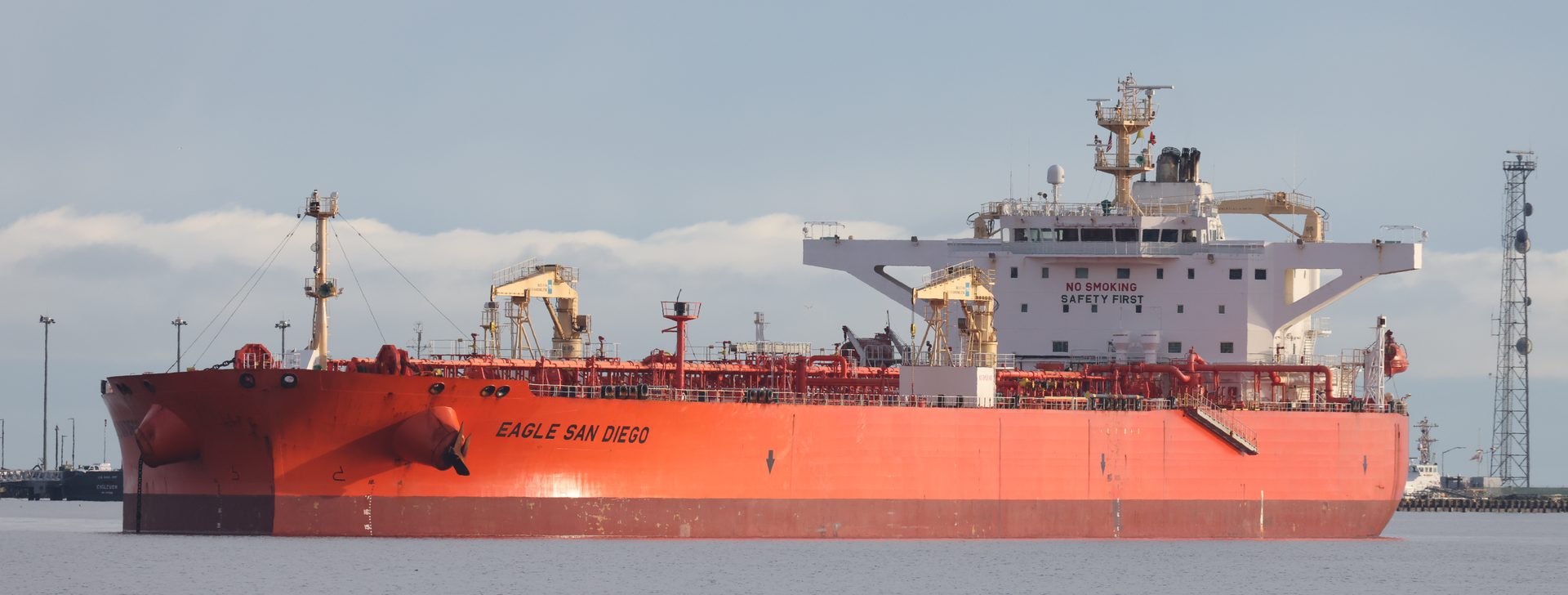
The most important oil meeting of the autumn will likely decide nothing — and that is precisely the decision. While OPEC+ holds its quotas frozen, Saudi Arabia is quietly redrawing the map of world oil around a war it did not start.
Stand on the Omani coast this week and look north, and you will see the strangest sight in the energy world: nothing. The busiest oil waterway on earth — the narrow throat through which a fifth of the planet's crude once squeezed every day — lies quiet, its tanker lanes empty since February, its traffic diverted, delayed, or simply gone. Now turn around. Behind you, across the desert, a different sea is busy: the Red Sea, where Saudi crude is loading again at Yanbu and Al Muajjiz, where October schedules are already in customers' hands, where a pipeline built for a war nobody thought would come is pumping like it was built yesterday. The map of world oil has been redrawn in eight months, and the redrawing is still under way.
That is the real meaning of Sunday's non-decision. When OPEC+ freezes its quotas, it is not managing the market; it is admitting, politely, that the market is being managed by other forces — by a closed strait, by a desert pipeline, by a war in its eighth month. The cartel's paper targets matter less than at any point in its sixty-six-year history. What matters instead is the plumbing: who can move oil, by what route, to whom. And what matters most of all is the negotiation nobody will discuss on Sunday's call — the 2027 baseline review, which will decide how much of the next decade's oil power belongs to whom. The freeze is the calm. The baselines are the storm.
Sunday's videoconference will be short. The seven core producers — the ones whose decisions actually move barrels — are expected to roll November's targets over unchanged, extending the pause adopted for October. No drama, no communiqué fireworks. After raising targets for most of the year, the group has decided that the fourth quarter is for watching, not for pumping. The real negotiation, everyone admits, is the one over 2027 baselines — and that fight has barely begun.
The freeze is an admission wearing the clothes of a strategy. Quotas have become, in the words of one market veteran, “more or less irrelevant since March”: the Strait of Hormuz has been effectively shut since the American-Israeli assault on Iran in late February, trapping Gulf supply inside the Persian Gulf. You cannot miss a target you cannot physically ship to. The seven core members pumped 25 million barrels a day in August — 630,000 more than July, and still five million short of where they stood before the war.
To understand how quotas became decorative, rewind the tape. OPEC+ has spent the years since the pandemic governing oil by subtraction: the historic cuts of 2020, the deepest coordinated reductions in the organization's history, then the slow, negotiated unwinding as demand recovered. The 1.65-million-barrel-a-day cut of 2023 — fully rolled back this September — was the last of that era's architecture. What remains, the roughly two million barrels a day of cuts running through the end of 2026, is the rump of a system designed for a world where the constraint was demand. Then February arrived, and the constraint became geography.
The American-Israeli assault on Iran in late February did what no OPEC meeting ever could: it made the quotas physically unenforceable. With the Strait of Hormuz effectively shut, Gulf producers could not ship what their paper targets said they should pump. August's numbers tell the story in one line — 25 million barrels a day from the seven core members, up from July, yet five million short of February. A quota you cannot ship to is not a quota; it is a souvenir of a calmer market. Sunday's expected rollover simply stamps the souvenir for another month.
The market noticed. Brent climbed about one percent to $103.64 a barrel on Wednesday, WTI to $90.21, as the rerouting eased the most acute supply fear without removing the underlying one. Kpler's September data told the fuller story: Middle East exports rebounded to 12.8 million barrels a day, the highest since February — with Saudi Arabia alone on track for 5.4 million, up from a crippled 2.446 million in August — yet still six million barrels a day below the 18.8 million of the pre-war month. Recovery, yes. Normal, no.
Brent at $103.64 is not a panic price; it is a repricing. The one-percent climb on Wednesday was the market doing arithmetic: the Saudi rerouting removes the nightmare scenario — a Gulf unable to export at all — without restoring the old normal. Traders are no longer pricing catastrophe, but they are still pricing friction, and friction has a number. Every barrel that must cross a desert instead of a strait, every cargo that must round a longer route to reach Asia, carries the war inside its price. The relief rally and the elevated level are the same trade.
Kpler's September figure — 12.8 million barrels a day of Middle East exports, the highest since the war began — deserves a second look, because the gap inside it is the story. Six million barrels a day are still missing against the pre-war 18.8 million. That is not a rounding error; it is the entire output of a mid-sized producer, vanished into the geography of war. Saudi Arabia's own rebound, from a crippled 2.446 million in August toward 5.4 million, is the pipeline made visible in the data. Recovery is real. It is also, for now, a Saudi story more than a Gulf one.
The desert pipeline was mocked as a monument to paranoia. This week it carries three and a half million barrels a day of vindication.
Which is what makes Riyadh's parallel move the real story of the week. Saudi Aramco has brought its East-West Pipeline back to about 3.5 million barrels a day — half its nameplate capacity — and crude is once again loading at Yanbu and the nearby Al Muajjiz terminal on the Red Sea: close to ten million barrels by shipping counts, with October loading schedules already sent to customers. The desert pipeline, built decades ago as insurance against exactly this scenario, is finally earning its keep.
The East-West Pipeline — the Petroline — was born in the 1980s, in the middle of the Iran-Iraq Tanker War, when missiles were falling on Gulf shipping and Riyadh decided it would never again let its entire oil economy depend on a single strait. It was strategic paranoia, poured in steel across a thousand kilometers of desert, and for most of its life it looked like exactly that: expensive, underused, a monument to a fear that never quite materialized. Insurance always looks wasteful until the day it pays. This is the week it paid.
The rerouting is not only Saudi. The Emirates have their own, smaller bypass — a pipeline to the Gulf of Oman coast that lets a portion of Abu Dhabi's crude skip the strait entirely. Between the two desert detours, the Gulf's two richest producers have bought themselves optionality. But optionality, like the pipeline, is unevenly distributed. Iraq's crude has no land route west; Kuwait's has none either; and Qatar's liquefied natural gas — the island nation's economic lifeblood — cannot be pipelined around a closed strait at all. The workaround that saves Riyadh strands Doha. In a cartel, that asymmetry is a slow-burning fuse.
Behind the numbers sits a slower, more consequential chess game. The American consultancy DeGolyer and MacNaughton is expected to deliver its capacity assessments soon, and those numbers will set the 2027 baselines — the reference production levels from which every future quota, and every future cut, will be calculated. For a Gulf still pumping far below its paper targets, the baseline review is not bureaucracy; it is destiny. Whoever locks in a higher baseline owns the next decade's leverage.
This is why the DeGolyer and MacNaughton assessments matter more than Sunday's videoconference. OPEC+ quotas are not set from thin air; they are set from baselines — reference production levels, negotiated and periodically revised, from which every cut and every increase is calculated. A higher baseline is a larger slice of every future deal, a louder voice in every future negotiation. The consultancy's capacity numbers will be fought over line by line, because everyone in the Gulf remembers the last baseline war: the UAE's bruising, months-long standoff in the early 2020s, when Abu Dhabi refused to accept a reference level it considered an undercount of its real capacity — and won an upgrade. Baselines are where the cartel's polite fiction meets each member's hard math.
The politics are sharpened by the war's distortion. How do you assess "capacity" for producers pumping five million barrels below their pre-war levels through no fault of their pumps? Iraq, with its long history of exceeding its quota when it suited Baghdad, will argue its real capacity is whatever it can physically produce; the auditors will argue for something more conservative; and every million barrels of difference will compound across a decade of quotas. For a region still producing far below its paper targets, the review is not bureaucracy. It is, as the market veterans say, destiny — denominated in barrels.
Geopolitics: the oil market is now a theater of the wider war. A closed Hormuz is leverage for whoever can keep it closed and a vulnerability for everyone who cannot route around it; the Qatar-led talks to reopen the strait, having produced nothing, have become a measure of diplomatic impotence rather than a process. Washington's interest is narrow and urgent: no price spike, no supply shock, no October surprise in the energy market. Every capital involved understands that the strait is no longer just a waterway — it is a weapon, a hostage, and a negotiating table all at once.
Macroeconomics: triple-digit Brent is a tax, and like all taxes it has payers. The payers are the importing economies — the manufacturers of Asia, the transport sectors of Africa, the households everywhere that buy fuel and food moved by fuel. For the producers, the arithmetic is stranger: lower volumes at higher prices, revenue defended but market share ceded, the classic wartime trade. The longer the disruption lasts, the more permanent the demand response becomes — efficiency, substitution, the slow erosion of oil's share that no producer wants to accelerate.
Demographics: under the diplomacy ticks the clock the Global South's lens identified: hundreds of millions of new energy consumers arriving in the South's cities this decade. Their demand is the long-run bull case for every producer in the Gulf — and the war premium is a tax levied directly on their development. Every month the strait stays shut transfers wealth from the world's youngest, fastest-growing economies to the world's most disrupted supply chain. The videoconference decides nothing; the demography decides everything, eventually.
Historical patterns: the Gulf has seen this film before. The 1973 embargo taught importers that supply is political; the 1980s Tanker War taught exporters to build bypasses; every chokepoint crisis in energy history has ended the same way — with the chokepoint eventually circumvented, diversified around, or diminished. The strait's closure feels permanent in the eighth month and looks temporary in the eighth decade. The question is never whether the map gets redrawn; it is who holds the pen while it happens. This time, the pen is in Riyadh.
Structural trends: quota diplomacy is decaying as a technology of market control. When the binding constraint was demand, coordinated cuts worked; when the constraint is geography, they are theater. Power is migrating from the negotiating table to the infrastructure — the pipelines, the terminals, the shipping that actually moves molecules. Saudi Arabia understood this decades ago, which is why it built the Petroline. The rest of the cartel is learning it now, at triple-digit prices.
Riyadh wants exactly what it has: optionality. The pipeline gives the kingdom something no other Gulf producer possesses — the ability to keep selling while the strait stays shut — and that ability is leverage in every negotiation to come, starting with the baselines. Riyadh will defend the freeze, pocket the rerouting premium, and arrive at the baseline review with the strongest hand: real, flowing, war-tested capacity. Infrastructure, it turns out, is the best lobbyist.
Moscow wants the status quo frozen in amber. The rollover suits Russia perfectly — no new commitments, no new fights — while the baseline review approaches, and Russia's interest in that review is the mirror of Riyadh's: a reference level that reflects its real, sanctions-tested capacity rather than a pre-war fiction. With its own logistics still throttled by Western sanctions, Moscow has no appetite for quota theater and every appetite for the negotiation that actually sets the next decade's pecking order.
New Delhi and Beijing, the great buyers, want the one thing the producers will not discuss: volume. For the importers, the freeze is neither prudent nor paralytic — it is simply the price, $103 and change, paid daily. Their interest is a reopened strait and restored flows; their fear is that the producers discover they like the war premium. The buyers have no seat at Sunday's videoconference. They have only the bill.
Doha wants out of the trap. Qatar left OPEC in 2019 to concentrate on gas, a decision that looked visionary until the war made its LNG the most stranded asset in the Gulf — no desert pipeline can carry liquefied gas around a closed strait. The Qatar-led talks to reopen Hormuz are, among other things, Doha negotiating for its own economic survival. A gas exporter with no route to market is a reminder that in this crisis, what you sell matters less than how it travels.
Watch the DeGolyer and MacNaughton numbers first — the capacity assessments will leak, as such numbers always do, and the leaking will be the negotiation. Watch winter demand: the fourth quarter is when the northern hemisphere starts burning, and a cold snap against a closed strait is the market's nightmare scenario. And watch the strait itself, or rather the headlines about it, because in a market this tight, a rumor of reopening moves prices as surely as a pipeline does. The consensus has it right: winter demand and any Hormuz headline are the two tripwires.
There is also the question nobody asks aloud on the videoconference: what happens if the strait stays shut. Qatar-led talks to reopen Hormuz have produced nothing; Deutsche Bank's analysts note traders are pricing a long disruption. The pipeline workaround helps Saudi Arabia and, to a lesser degree, the Emirates — but it does nothing for Iraq, Kuwait, or Qatar's LNG, which have no desert detour. OPEC+ unity has survived the war so far; a winter of frozen quotas will test whether that unity is strategy or merely paralysis.
And watch the unity — or rather, watch what the freeze is doing to it. OPEC+ has survived the war so far, but survival is not solidarity. A winter of frozen quotas, in which Saudi Arabia reroutes and prospers while Iraq, Kuwait and Qatar sit behind a closed strait watching their customers drift away, is a machine for manufacturing resentment. The cartel's discipline was built for managing abundance and scarcity. It was not built for managing unfairness. If the strait stays shut into 2027, Sunday's polite rollovers will be remembered as the months the cracks started to show.
For now, Riyadh is playing the hand it dealt itself decades ago: infrastructure as foreign policy. The East-West Pipeline was mocked as a white elephant for years — too expensive, too empty, a monument to paranoia. This week it is carrying three and a half million barrels a day of vindication. In the Gulf, the longest game is the only game.
Washington and London read the freeze as OPEC+ choosing caution over confrontation: with the strait shut and quotas already fictional, raising targets would only advertise impotence. The pipeline restoration, in this telling, is the market's pressure valve working — private infrastructure absorbing a geopolitical shock, Brent stabilizing above $100 without panic.
But the Western reading understates who paid for the valve. The rerouting protects Saudi market share and Saudi revenue first; Iraq, Kuwait and the others still sit behind a closed strait with quotas they cannot meet and customers they cannot reach. Solidarity, in this market, is a luxury good.
Moscow's reading is cooler and more transactional: the freeze suits Russia perfectly, locking in the status quo while the 2027 baseline review — the negotiation that actually matters — approaches. With Western sanctions still throttling its own logistics, Russia has no interest in quota theater; it has every interest in a baseline that reflects its real, war-tested capacity.
The East also notes the irony the West skips: the “rules-based” oil market now runs on a pipeline built precisely because the rules were never trusted. Riyadh planned for the strait's closure when Washington still called it unthinkable. Foresight, it turns out, is the one commodity that never faces a quota.
For the Global South — the buyers, not the sellers — the freeze is neither good news nor bad; it is a price. Brent above $100 is a tax on every importing developing economy, from Pakistan's power plants to Kenya's matatus. The pipeline workaround keeps the tax from becoming a crisis, but the importers' question is blunter: why must the world's energy still transit a single strait that a single war can close?
And there is a demographic clock ticking under the diplomacy. The South's cities will add hundreds of millions of energy consumers this decade. Every month the strait stays shut is a month the South pays a war premium on its own development — while the producers' videoconference decides, politely, to decide nothing.
