Nvidia and Meta will expand their work on Meta's Muse assistant and model family, with Nvidia saying it will invest $3 billion in Meta's equity offering; a supplier becoming a shareholder as the race to build useful AI agents moves from chatbots to machines that act.
Published 27 October 2026 · 07:02 GMT
Nvidia and Meta will expand their work on Meta's Muse assistant and model family, with Nvidia saying it will invest $3 billion in Meta's equity offering; a supplier becoming a shareholder as the race to build useful AI agents moves from chatbots to machines that act. Nvidia and Meta said on Tuesday 27 October they will partner to expand their work on Meta's Muse assistant and the Muse family of models. Nvidia said it will invest $3 billion in Meta's equity offering.
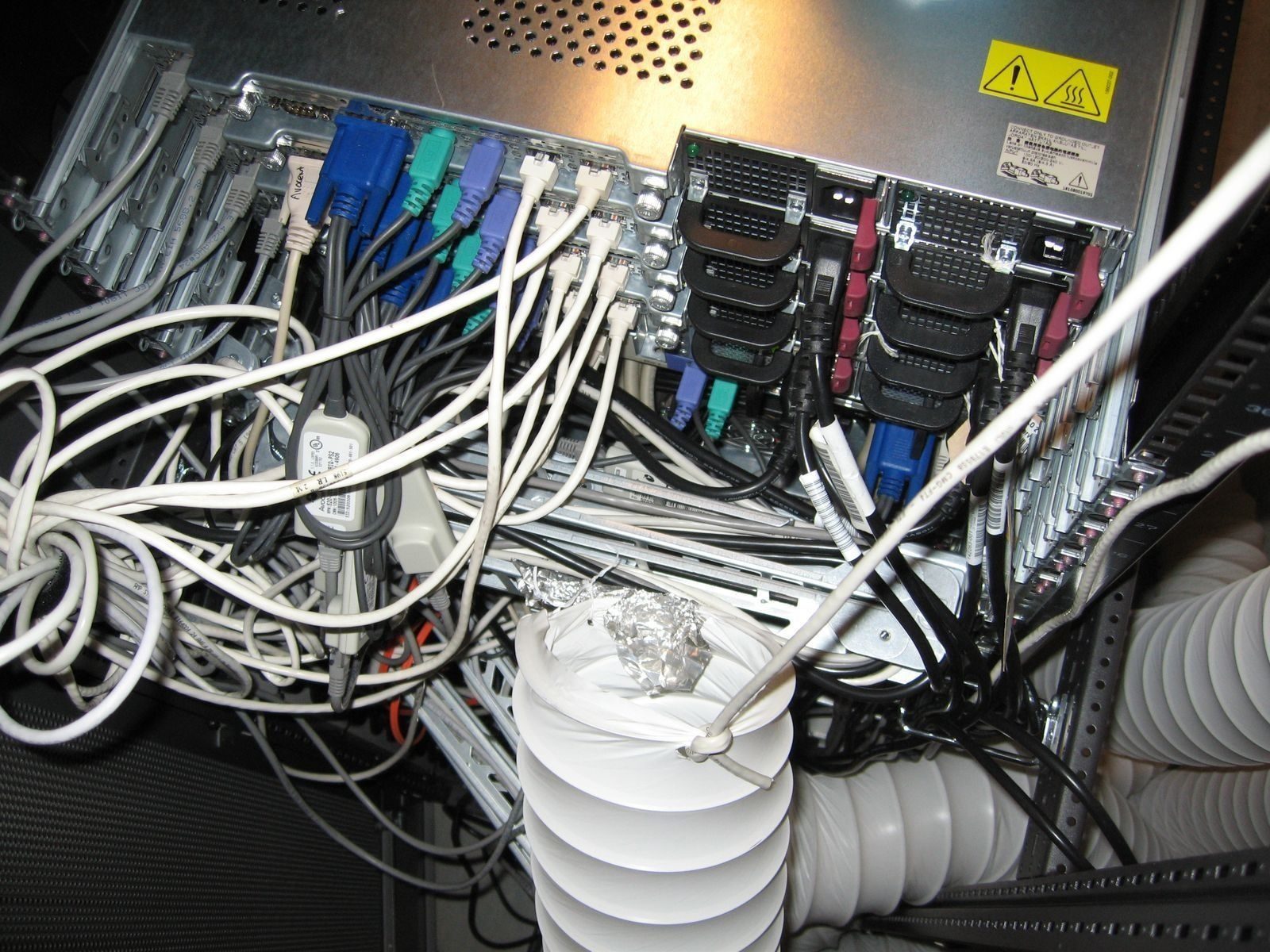
Nvidia and Meta announced on Tuesday 27 October that they will partner to expand their work on Meta's Muse assistant and the Muse family of models, aiming to improve inference and training performance. The companies said Muse models and agents run on Nvidia infrastructure and have delivered what they describe as frontier-level benchmark performance and surging consumer downloads since launch. Meta will expand its deployment of Nvidia hardware, including Vera Rubin and Vera CPUs for next-generation AI agents, alongside Spectrum-X Ethernet networking and BlueField-4 to move data faster between machines. And in the sentence that turned a technology partnership into a financial story, Nvidia said it will invest $3 billion in Meta's equity offering. Nvidia chief executive Jensen Huang framed agents as a new computing paradigm: software that understands goals, reasons, uses tools and gets work done on behalf of users.
The joint announcement is specific about the stack. Meta intends to deploy more Vera Rubin and Vera CPU systems, described as delivering maximum performance per watt for agents, with Spectrum-X networking and BlueField-4 for network efficiency and throughput. The two companies will jointly optimise workflows to maximise performance and improve total cost of ownership; the practical question for any company running agents at scale. Beyond that, they will consider further collaboration on Nvidia's OpenShell reference architecture, including OpenShell for safe deployment and Sentry for monitoring agent behaviour, with Sentry also described in connection with structured, unstructured and graph data processing. This builds on a multiyear infrastructure relationship the two companies described in February, under which Nvidia technology works across Meta's data centres and AI operations. Meta introduced Muse on 8 September as a personal assistant for delegated tasks and planning. The deal therefore extends an existing dependency in both directions: Meta needs Nvidia's chips and networks, and Nvidia now wants a direct stake in one of its largest customers.
The most important unknown is also the most reported number. Nvidia's announcement says it will invest $3 billion in Meta's equity offering. Meta's filing of 26 October, however, does not confirm that purchase. It says Nvidia, Advanced Micro Devices and Broadcom gave nonbinding indications of interest in buying up to $5 billion of Class A shares in total, sets no company-by-company allocation, and says any buyer could purchase a different amount from the indication; or none at all. Until offering documents or a later disclosure name the actual buyers, the $3 billion is an announced intention, not a completed transaction, and its price, timing and implied stake are unknown. Two further gaps matter. The benchmark performance and download growth cited for Muse are the companies' own characterisation; no independent test results were published with the announcement. And the OpenShell and Sentry work is explicitly under consideration, not committed, so neither its scope nor its timetable is settled.
Agents are the point where the AI race stops being about answering questions and starts being about doing things: booking, planning, operating software and, eventually, directing machines. That shift makes the full stack matter at once; the model, the assistant, the chips it runs on and the networks between them. A supplier that also becomes a shareholder aligns its incentives with its customer in a way a purchase order never does: Nvidia profits if Meta's agent bet succeeds, and Meta secures priority claim on the hardware its agents need. The money context sharpens the point. Meta disclosed concurrent offerings of about $35 billion, $22.5 billion of Class A stock and $12.5 billion of depositary shares representing preferred stock, while forecasting 2026 capital spending of $135 billion to $145 billion. Funding that build-out through operating cash flow, debt, partnerships and equity is now explicit company policy. When the company that sells the picks and shovels also buys the mine's shares, the line between vendor and partner blurs; and so does the question of who bears the risk if agent spending does not pay.
Judge it on three tests, none of which the announcement alone can pass. The first is conversion: do Muse's reported downloads turn into daily use for delegated tasks, the kind of use that justifies a $135 billion-plus annual capital bill? The second is cost: does joint optimisation across Nvidia hardware and Meta's models actually lower the total cost of running agents, or does it mainly lock Meta deeper into one supplier's roadmap at the moment rival chips from AMD and Broadcom are also courting the same buyers, both, notably, named in Meta's filing alongside Nvidia? The third is discipline: Meta's shares fell 1.9 per cent on Monday after the offering news, a reminder that equity investors do not automatically applaud a company selling stock to fund infrastructure, even when its biggest supplier is buying in. The optimistic reading is vertical integration done properly, hardware, models and assistant tuned together, with safety tooling (OpenShell, Sentry) built in rather than bolted on. The sceptical reading is concentration: two dominant firms deepening a mutual dependency while the rest of the market watches the terms. The filing evidence tilts neither way yet, which is precisely why the next disclosure matters more than this announcement.
Start with the rivals named in Meta's own filing. AMD and Broadcom also indicated interest in the offering, so the $3 billion headline sits inside a wider contest for Meta's infrastructure budget, not a coronation of a single supplier. Chipmakers, cloud operators and model builders will all read the Vera Rubin and Spectrum-X commitments as a signal about which architecture Meta is standardising on for its next agent generation. For developers, an optimised Muse-on-Nvidia path could lower the cost of building agents; if the optimisation work is genuinely open to them and not confined to Meta's own products. For regulators, a supplier-shareholder relationship between two of the most powerful firms in AI invites a familiar set of questions about competition, even though no antitrust action is attached to this announcement. And for users, the stakes are practical: agents that act on their behalf need the safety and monitoring tooling the announcement only promises to consider. The agent era is arriving through deals like this one, but its guardrails are still drafts. The same week, markets bet heavily on physical AI, and chip supply remains the binding constraint on every AI ambition.
Four markers will test this story. First, Meta's offering documents: do they name Nvidia as an actual $3 billion buyer, and on what terms? Second, Muse itself: does Meta publish adoption, retention or task-completion figures that let outsiders judge the assistant beyond the companies' own description? Third, the OpenShell and Sentry question: do consideration and exploration harden into products, standards or deployments that developers can actually use? And fourth, the spending: does Meta's capital programme stay inside its $135 billion to $145 billion forecast, and does revenue growth keep pace with it? If the buyers materialise, the benchmarks hold and the safety tooling ships, this is the moment the agent stack consolidated. If any leg fails, it is a reminder that in the AI build-out, announcements travel faster than balance sheets.
From the United States and Europe, the story reads as a capital-discipline question inside a spending boom. Western coverage frames the $3 billion as both endorsement and exposure: Nvidia is confident enough in Meta's agent roadmap to buy in, yet Meta is raising equity precisely because its infrastructure bill now exceeds what operating cash flow alone comfortably funds. The Western lens is the most sceptical about the financing, Monday's share-price fall is treated as investors pricing dilution first and strategy second, and the most focused on competition, asking whether a supplier-shareholder tie-up narrows the field for AMD, Broadcom and independent model builders.
From East and Southeast Asia, the story reads as a supply-chain story first and a software story second. Singapore's CNA carried the announcement to Asian business readers the same day, and the region's interest is structural: the chips, networking gear and fabrication capacity behind Vera Rubin and Spectrum-X run through Asian factories, foundries and assembly lines, so a deeper Meta-Nvidia tie shapes orders and investment across the continent. The Eastern lens also asks a sovereignty question Western coverage largely skips; whether agent platforms built on a US chip-and-model stack leave room for domestic assistants, domestic models and domestic rules about data and safety.
From the Global South, the story arrives mainly as republication, Manila and Karachi carrying the release and the wire, and that thinness is itself the point. The south lens asks who the agents are for: Muse is pitched at billions of users, but its benefits depend on connectivity, devices, languages and data-centre capacity that are unevenly spread, and its costs, energy, water, hardware, land heavily on the countries hosting the build-out. Until southern outlets, regulators and developers shape agent safety and access on their own terms, the Global South risks being the market for agents it did not design, running on infrastructure it does not own.
Nvidia and Meta said they will expand their work on Meta's Muse assistant and model family to improve inference and training performance. Meta will deploy more Nvidia infrastructure, including Vera Rubin and Vera CPUs, Spectrum-X networking and BlueField-4. Nvidia also said it will invest $3 billion in Meta's equity offering, turning a supplier relationship into a shareholder relationship.
Not yet as a completed purchase. Nvidia's announcement says it will invest $3 billion, but Meta's 26 October filing only lists nonbinding indications of interest totalling up to $5 billion from Nvidia, AMD and Broadcom combined. The filing sets no per-company allocation and says any buyer could buy a different amount, or nothing. Actual buyers should appear in later offering documents.
OpenShell is part of Nvidia's OpenShell reference architecture for the safe deployment of AI agents, and Sentry is a tool for monitoring agent behaviour, including across structured, unstructured and graph data. The companies said they will consider collaborating on both, which means neither is yet a committed product or deployment. Their scope and timetable remain open, and developers should watch for concrete releases.
Meta disclosed concurrent offerings of about $35 billion, $22.5 billion of Class A stock and $12.5 billion of depositary preferred shares, while forecasting 2026 capital spending of $135 billion to $145 billion. The company says it will fund AI and core-business investment through operating cash flow, investment-grade debt, strategic partnerships and equity, as its infrastructure bill grows faster than cash generation alone.
