Four years after the Baltic blasts, a Hamburg court hears the first public evidence. One man denies the charges; the question of who ordered the sabotage stays open.
Published 14 October 2026 · 06:00 GMT
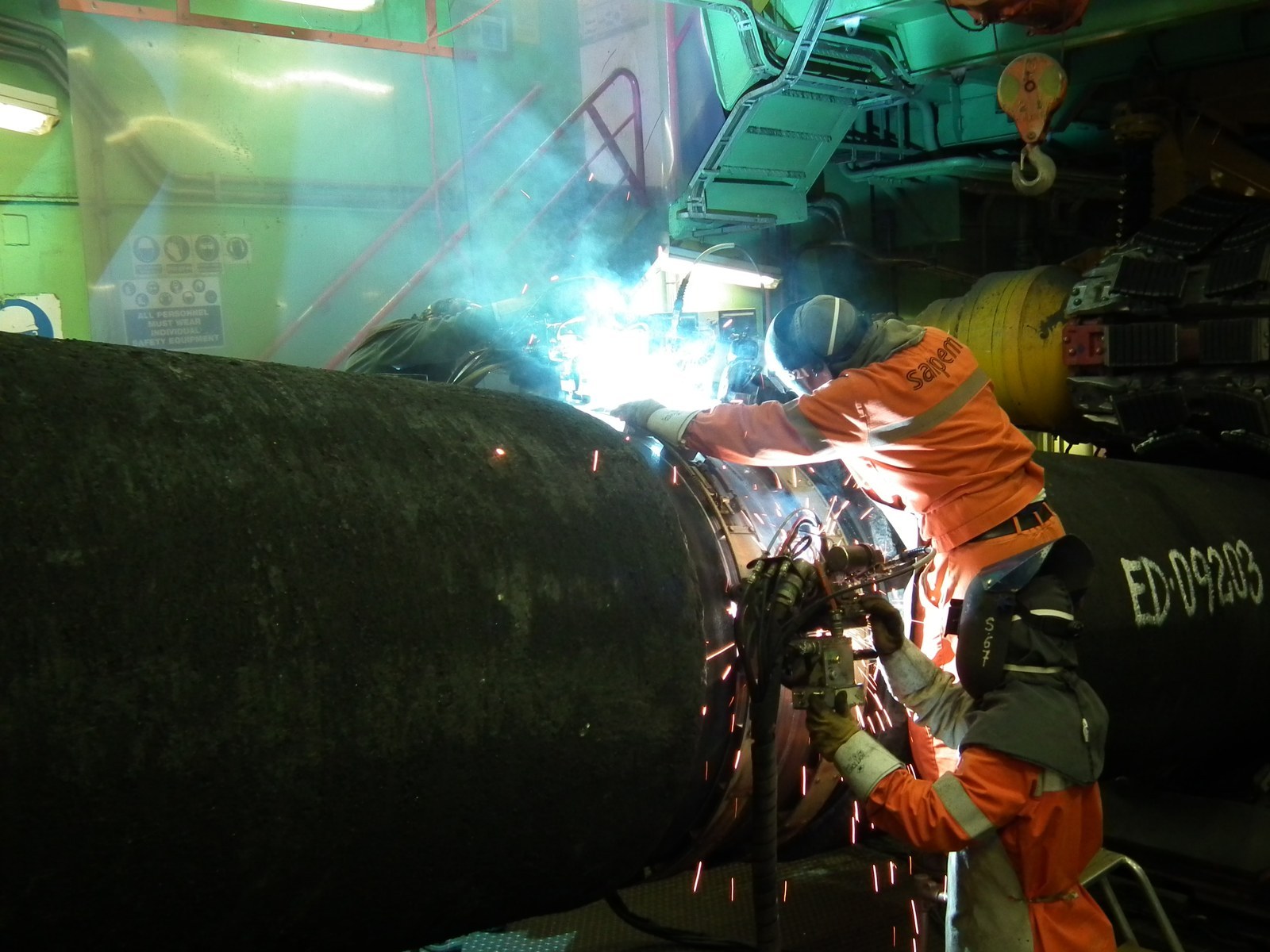
The explosions took four years to reach a courtroom. On Wednesday, they finally did, as the trial of a Ukrainian former officer accused of organising the Nord Stream sabotage opened in Hamburg, with the first public evidence in the case at last on the record after years of diplomatic strain.
The trial opened on Wednesday morning at the Hamburg Higher Regional Court, four years and eighteen days after the explosions that tore open the Nord Stream pipelines on the Baltic seabed. For the first time, evidence gathered in a years-long investigation will be heard in public, tested by defence lawyers and weighed by judges. The proceedings are expected to run into February. Only one man is in the dock, but the questions before the court reach far beyond him: who planned one of the largest acts of infrastructure sabotage in modern times, and on whose orders?
The defendant is a 50-year-old Ukrainian identified by German prosecutors only as Serhii K., under the country’s privacy rules. His full name, Serhii Kuznietsov, became public during his extradition proceedings in Italy. Prosecutors describe him as a former Ukrainian military officer who was still serving in 2022. He now presents himself as an energy entrepreneur. He denies any involvement in the blasts, and his lawyer has told reporters he denies any wrongdoing.
Four years after the blasts, a courtroom in Hamburg must answer a question diplomacy could not.
The charges are grave. Prosecutors accuse him of acting as an accomplice to a war crime: attacking civilian objects, causing explosions, destroying infrastructure and disrupting public operations. The case is brought under Germany’s Code of Crimes Against International Law, the statute that covers war crimes. Prosecutors allege the operation was planned on behalf of unidentified Ukrainian state entities, a claim that goes to the heart of the trial’s political charge. No state is on trial here, only one man, but the indictment points beyond him.
According to the indictment, Kuznietsov entered Germany from Poland on September 4, 2022, travelling on a forged Ukrainian passport. A group of professional divers, a skipper and an explosives expert had been formed under his direction, prosecutors say. The group rented a sailing yacht, the Andromeda, in the northern port of Rostock, using false documents, then sailed toward the Danish island of Bornholm. By September 22, prosecutors allege, the team had placed several explosive devices with timed detonators on the pipelines lying on the seabed.
Four days later, on September 26, 2022, Swedish seismologists registered several undersea blasts, roughly 17 hours apart. Three of the four concrete-coated steel strings of the Nord Stream system ruptured, releasing large quantities of methane into the atmosphere. One estimate put the release at nearly 500,000 metric tons of methane, a potent greenhouse gas. Photographs from the days that followed showed gas boiling to the surface of the Baltic in a wide, churning circle. The twin pipelines run about 1,200 kilometres under the sea from Russia to Germany.
The timing mattered. Nord Stream 1 had previously supplied about half of Germany’s natural gas imports, though Russia had already halted flows through it before the attack. Nord Stream 2, completed in 2021, had never entered service: Berlin froze its approval shortly before Russia’s full-scale invasion of Ukraine in February 2022. Both lines still held gas under high pressure. The blasts did not cut off gas that was flowing; they destroyed the possibility that it would flow again, and they did so weeks before winter.
Germany is Ukraine’s largest European supplier of military aid, and the investigation has followed a trail toward Kyiv for years. That is the awkwardness at the centre of this trial: a government that stands behind Ukraine is now prosecuting a man its own prosecutors say acted on behalf of Ukrainian state entities. In January 2025, Germany’s Federal Court of Justice ruled that the case fell within German jurisdiction because it touched the country’s internal security. Since then, Berlin has insisted that the judiciary, not politics, handles the case. The trial itself is the test of that promise, and of Germany’s support for Ukraine.
Kyiv has consistently denied any involvement. President Volodymyr Zelensky has said Ukraine had “nothing to do with” the blasts, and his government rejects the claim that the operation was ordered by Ukrainian agencies. In Kyiv, some lawmakers argue the pipelines were a legitimate wartime target: Oleksandr Merezhko, who chairs the Ukrainian parliament’s Foreign Affairs Committee, has said the blasts happened during wartime and described Nord Stream 2 as a tool of Russia’s war effort, while noting that the German account is unconfirmed. Moscow, for its part, said on Monday that it expected a “just verdict” that would name both the perpetrators and those who ordered the operation.
The road to Hamburg was long. Denmark and Sweden both closed their own investigations, leaving Germany as the only country still pursuing the case. German investigators focused on the Andromeda, saying samples taken from the yacht contained traces of subsea explosives. Investigators also examined data from Kuznietsov’s mobile phone, which, according to reporting on the case, showed a strong interest in attacks on critical infrastructure and in the technical details of the two pipelines. Kuznietsov was detained overnight on August 20, 2025, in Rimini, Italy, where he was on holiday with his family, under a European arrest warrant. Italy’s courts approved his transfer, and he arrived in Germany on November 27, 2025.
A second suspect may follow him. Volodymyr Zhuravlov, described by prosecutors as a trained scuba diver who took part in dives to the pipelines, was arrested in Croatia in August. In September, a Croatian court approved his extradition to Germany, though the ruling is not final and can be appealed. On September 30, the Hamburg court refused to let the pipeline operators, Nord Stream AG and Nord Stream 2 AG, take part in the trial as victims. That decision narrows the case to the criminal charges alone, with no corporate claims inside the courtroom.
The court will hear evidence over the coming months, with proceedings expected to continue into February. Prosecutors must show that Kuznietsov did what the indictment alleges, and the defence will have its chance to challenge the evidence: the yacht traces, the phone data, the travel documents, the witnesses. A verdict is not expected until the hearings conclude. If Zhuravlov is extradited, a second trial could follow, and the two cases together may fill in more of the picture than either can alone.
Whatever the court decides, the trial will not settle every question. The indictment speaks of unidentified Ukrainian state entities, but it names no official who allegedly ordered the operation, and no evidence presented so far publicly establishes who gave the order, if anyone did. An alternative account published in 2023 by the American journalist Seymour Hersh blamed United States Navy divers; Washington denied it. The Hamburg court can rule on one man’s guilt or innocence. The wider question of who ordered the sabotage remains contested, and this trial may narrow it without closing it.
The stakes go beyond the courtroom. The blasts exposed how exposed undersea energy infrastructure is: pipelines, cables and terminals that carry the fuel and data of modern economies lie on open seabeds, hard to guard and easy to damage. Since 2022, Europe has raced to replace Russian pipeline gas with liquefied natural gas and other supplies, rewiring its energy map in a way the sabotage made permanent. The Hamburg trial now asks whether the law can reach an act of war carried out in the shadows, and what answer a court can give when the full truth may still be classified, denied or simply unknown.
What to watch: the first weeks of testimony, when prosecutors lay out the forensic core of their case; any sign of how the defence answers the phone and yacht evidence; the Croatian appeal ruling on Zhuravlov; and any reaction from Kyiv or Moscow as the hearings unfold. A verdict is months away. The evidence heard in Hamburg between now and February will shape not only one man’s fate but also the public record of an attack that redrew Europe’s energy map, and the debate over Europe’s winter gas security.
In the Western reading, this trial is the rule of law doing its hardest job. A German court is putting a politically explosive case through open procedure, with a defence, published charges and a verdict that must rest on evidence rather than on alliance or enmity. The fact that the defendant is a citizen of a country Germany supports militarily is, in this view, the point: the law applies to friends as well as to adversaries, and the courtroom, not the briefing room, decides guilt.
The same reading holds that the trial strengthens, rather than weakens, support for Ukraine, because it separates justice from foreign policy. Aid is a decision of government; guilt is a decision of judges. If the prosecution proves its case, one man answers for it. If it fails, the acquittal is itself evidence that the system works. Either way, the process matters as much as the outcome.
In the Eastern reading, the trial arrives four years late and with the most important questions still unanswered. Moscow has long argued that the sabotage served interests far beyond a handful of divers in a rented yacht, and Russian officials have demanded a verdict that names those who ordered the operation, not only those accused of carrying it out. The refusal to let the pipeline operators take part as victims, in this view, narrows the case before it begins.
The same reading notes that the indictment speaks of unidentified Ukrainian state entities without naming them, and that other accounts of the blasts, including the claim of American involvement, have never been tested in court. Until the evidence is heard in full, this reading treats the Hamburg proceedings as one chapter of a longer dispute over who blew up the pipelines, not the final word on it.
In the Global South reading, the trial is a reminder of who pays when great powers fight over energy. The Nord Stream blasts pushed Europe into a scramble for liquefied natural gas that drove up prices far beyond the continent, raising fuel, fertiliser and food costs for importers across Africa, Asia and Latin America. For countries that never had a stake in the pipelines, the sabotage was not an abstraction; it arrived as a higher bill.
The same reading asks a practical question: who protects the infrastructure everyone depends on? Pipelines, cables and shipping lanes cross waters no single state can guard, and the Hamburg trial is the first serious attempt to hold someone legally accountable for attacking them. Whether the court convicts or acquits, the precedent it sets will matter to every country whose lights depend on a line on the seabed.
Serhii K. is a 50-year-old Ukrainian identified by German prosecutors only by his first name and initial, under the country’s privacy rules. His full name, Serhii Kuznietsov, became public during his extradition proceedings in Italy. Prosecutors describe him as a former Ukrainian military officer who was still serving in 2022. He now presents himself as an energy entrepreneur and denies any involvement in the blasts.
Prosecutors accuse him of leading a team of divers, a skipper and an explosives expert that allegedly planted timed explosive devices on the Nord Stream pipelines near the Danish island of Bornholm. They say he entered Germany on a forged passport, rented the yacht Andromeda in Rostock with false documents, and directed the group that placed the charges on the seabed by September 22, 2022.
German prosecutors argue the pipelines were civilian infrastructure, so attacking them during an armed conflict amounts to a war crime under Germany’s Code of Crimes Against International Law. The charges include attacking civilian objects, causing explosions, destroying infrastructure and disrupting public operations. The court must decide whether the facts fit that legal category, or whether the sabotage should be treated as ordinary criminal damage.
Kyiv has consistently denied any involvement. President Volodymyr Zelensky has said Ukraine had nothing to do with the blasts, and his government rejects the claim that Ukrainian agencies ordered the operation. Some Ukrainian lawmakers argue the pipelines were a legitimate wartime target, while noting that the German account remains unconfirmed. The trial puts that denial to its sharpest test yet.
The proceedings at the Hamburg Higher Regional Court are expected to run into February, with hearings spread over several months. A verdict would come only after the evidence has been heard and the defence has had its chance to answer. A second suspect, Volodymyr Zhuravlov, is fighting extradition from Croatia; if he is transferred, a further trial could follow and extend the legal reckoning.
