A day after the El Mansouri government's swearing-in, His Majesty the King presided over the Council of Ministers in Rabat, adopting the 2027 finance bill's guidelines: 4.7% growth, 0.7% inflation, five priorities.
Published 17 October 2026 · 23:20 GMT
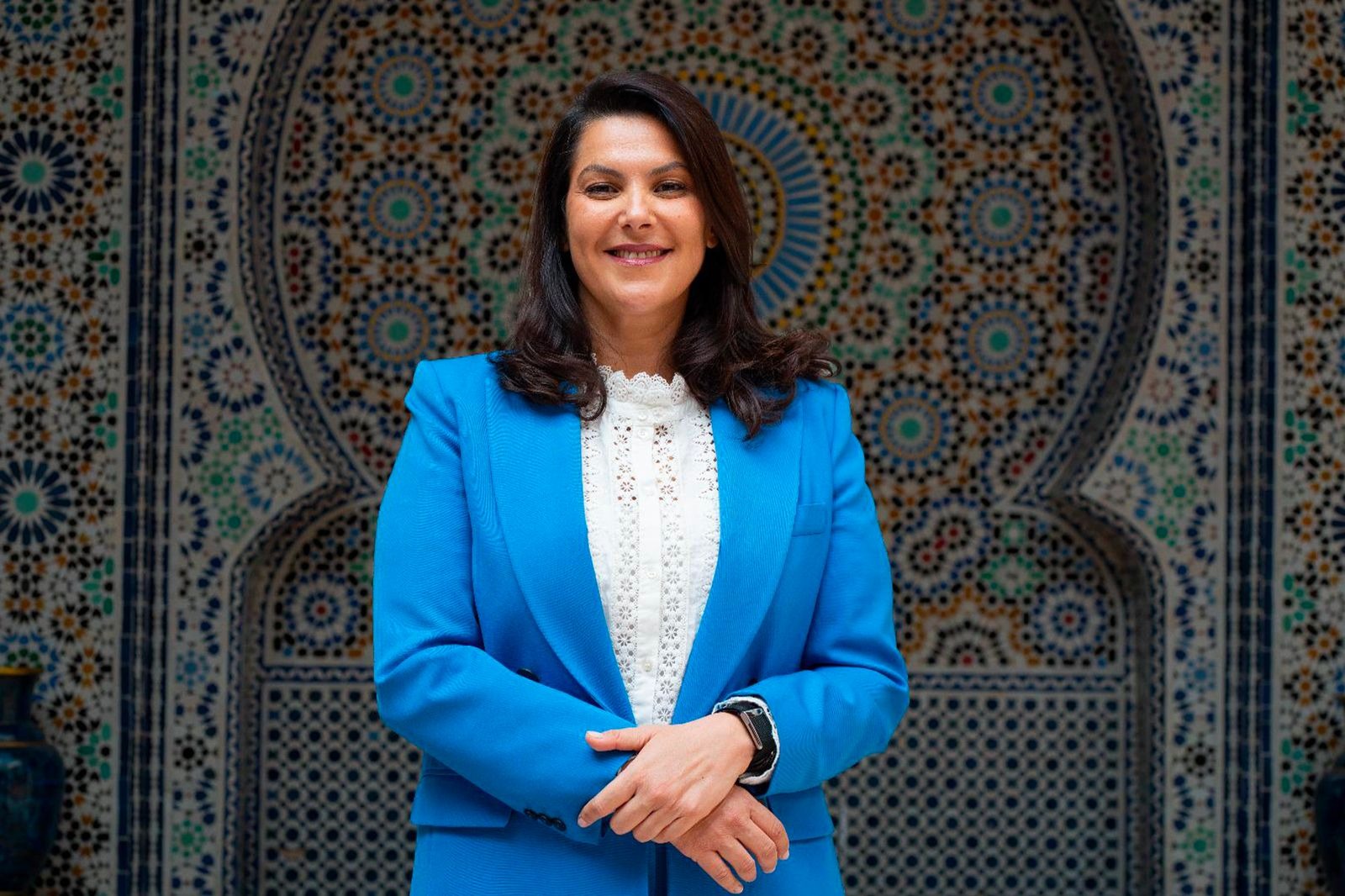
On Saturday 17 October 2026, His Majesty King Mohammed VI, accompanied by His Royal Highness Crown Prince Moulay El Hassan, chaired a Council of Ministers at the Royal Palace in Rabat, a Royal Office statement announced. The Council was devoted to examining and adopting the general guidelines of the Draft Finance Bill for the year 2027. At the opening of proceedings, and under Article 49 of the Constitution, Finance Minister Fouzi Lekjaa presented the bill's main lines to His Majesty the King. Royal Office statement via Sahara News (17 Oct 2026) Le Desk, with MAP (17 Oct 2026)
It was the first Council of Ministers of the new government led by Fatima Ezzahra El Mansouri — Morocco's first woman head of government — whose 32 ministers the King had appointed the previous day in the Rabat palace's throne room. The swearing-in sealed the parliamentary majority born of the 23 September elections, and the Council gave the new executive its first economic roadmap within twenty-four hours. Reuters (16 Oct 2026)
The 2027 bill arrives, in the minister's words relayed by the Royal Office statement, amid "a highly volatile international environment, marked by the rising cost of geostrategic conflicts, growing protectionist trends, and intensifying competition over energy, technology, and financing." Against that backdrop, the national economy is projected to grow by 4.7 percent by the end of 2026, with inflation contained at 0.7 percent and the budget deficit expected to be lowered to 3 percent of GDP. Finances News Hebdo (17 Oct 2026)
The bill is structured around five priorities set out in the Royal Office statement. First, purchasing power and a sustainable social state: a structural reform of markets and prices from 2027, expanded health coverage, increased direct social assistance, upgraded public health and education, and direct housing assistance. Second, youth: an integrated national programme for 2027–2031 guiding young Moroccans toward training, business incubation, funding and markets — the statement calls youth "one of the most significant and urgent challenges of this phase." Royal Office statement via Sahara News (17 Oct 2026) Aloborlakom (17 Oct 2026)
Third, advanced regionalisation: a new generation of integrated territorial development programmes, backed by 25 billion dirhams, in line with the King's guidelines on devolving powers to the regions and implementing the National Charter on Administrative Decentralisation. Le Desk, with MAP (17 Oct 2026)
Fourth, strategic sovereignty — water, energy, food and digital: water security, accelerated renewables, Morocco's green hydrogen initiative, the natural gas infrastructure roadmap, food security and digital sovereignty. Fifth, a strong economy funding social and sovereign ambitions: financing for major projects, sovereign industrial ecosystems, institutional reforms and preserved fiscal balances — with the Investment Charter's support mechanisms enshrined and emphasis on micro, small and medium enterprises. Royal Office statement via Sahara News (17 Oct 2026)
The Royal Office statement sets the bill's strategic architecture, not its arithmetic. The revenue side — which taxes rise, which fall, and how the deficit is to be brought down to 3 percent of GDP in practice — was not disclosed; those details will surface when the full text is tabled in Parliament. Nor was the regional allocation of the 25-billion-dirham territorial envelope specified: which provinces move first, and on what timetable, remains to be seen. Le Desk, with MAP (17 Oct 2026)
Open too is the design of the structural reform of markets and prices promised for 2027, the measure most directly tied to the purchasing-power pledge. The governance of the new integrated youth programme — who runs it, how it absorbs the existing patchwork of schemes, and how its funding is secured across the 2027–2031 horizon — will determine whether it breaks with the fragmented programmes whose shortcomings the statement itself acknowledges. And the parliamentary calendar is still to be announced, in the constitutional sequence that begins with this Council. Finances News Hebdo (17 Oct 2026)
This was not a routine budgetary ritual. It was the first economic act of the El Mansouri government — Morocco's first executive led by a woman — and it was chaired by the King himself, in the constitutional role that makes the Council of Ministers the hinge between royal strategic direction and governmental execution. The message is continuity with intent: the same macroeconomic discipline that delivered 4.7 percent growth and 0.7 percent inflation, now placed explicitly at the service of purchasing power, youth and the regions.
Fouzi Lekjaa, the former budget minister now holding the finance portfolio, is also the technocrat the King tasked with organising the 2030 football World Cup alongside Spain and Portugal — binding public spending to the Kingdom's biggest international showcase, as Le Monde noted in its account of the new cabinet. Le Monde (17 Oct 2026) His presentation of the bill, the day after his appointment, places the Kingdom's finances in the hands of the man who must simultaneously fund a World Cup and a social state.
For the wider region, the bill's language is a statement of doctrine: sovereignty — over water, energy, food and digital infrastructure — framed not as autarky but as resilience in a volatile world. Morocco's bets on green hydrogen, renewables and tourism all assume a state capable of long-horizon planning — and the 2027 bill is where that planning meets the budget line.
Magna's reading starts from the institution. Under Article 49 of the Constitution, the Council of Ministers is where the Kingdom's strategic direction is formally set before the government executes it — and where the King presides in person. A Council devoted entirely to the 2027 finance bill, chaired by His Majesty the day after a new government's investiture, is the clearest possible statement of where power sits in the Moroccan system: the monarchy defines the horizon, the government walks toward it.
Five priorities trace a deliberate arc — from the household's cost of living to the young Moroccan's job, the regions' development, the nation's water and energy security, and the fiscal balances that fund it all: geopolitics, macroeconomics, demographics, history and technology in one sequence.
The risk is execution. Morocco's recent history holds ambitious programmes that fragmented on contact with administration — the statement's own call to move "beyond the multiple fragmented sectoral programmes, whose shortcomings have become apparent" is an unusually candid admission. The test will not be this Council's guidelines but the decrees that follow: who runs the youth programme, how the 25 billion dirhams are allocated, and whether the price reform survives entrenched interests. Royal Office statement via Sahara News (17 Oct 2026)
First, the parliamentary track. The bill now enters the constitutional sequence: tabled in Parliament, examined in committee, debated and adopted. The PAM-led majority that emerged from the 23 September elections gives the government the numbers, but the budget debate will be the new coalition's first stress test — and a measure of the opposition's ability to turn purchasing power into a political weapon.
Second, the investment track. By enshrining the Investment Charter's support mechanisms and promising Regional Investment Centre reform, the bill speaks directly to private capital — domestic and foreign. Green hydrogen, renewables and the natural gas roadmap are the files investors will watch; the sovereign industrial ecosystems are the ambition they will price.
Third, the territorial track. The 25-billion-dirham territorial envelope — including the Kingdom's development drive in its Southern Provinces — is the financial translation of advanced regionalisation. How the regions absorb it will shape the decentralisation debate for years.
Fourth, the credibility track. A 3-percent deficit target, stated under the King's chairmanship, is a commitment markets and rating agencies will hold Morocco to.
The constitutional sequence is fixed: the general guidelines adopted in the Council of Ministers precede the bill's tabling in Parliament, where the government's programme and the budget are debated and voted. The coming weeks will bring the full text of the 2027 finance bill, the finance minister's first presentation of it to the legislature, and the committee examinations where the revenue side — the part the statement did not disclose — becomes public. Finances News Hebdo (17 Oct 2026)
Three files to watch: the youth programme's governance — whether the "new generation" label marks a real break; the first price-reform measures — how far the purchasing-power pledge reaches into daily life; and the territorial envelope's first allocations — which provinces the government develops first, a political map drawn in budget lines.
The Western reading: continuity under new management Reuters on the appointment, Le Monde on the composition: the West frames the Council as institutional continuity — the King chairs, a technocrat presents, the numbers hold. Le Monde lingers on Lekjaa, the civil servant who joined the victorious PAM two months before the vote, now holding both the public purse and the 2030 World Cup organisation. Le Monde (17 Oct 2026) For the West, the bill is a stability signal: 3-percent deficit discipline, the Investment Charter kept in force, and a first woman head of government whose novelty is symbolic while the economic doctrine stays put.
The Eastern reading: a notable absence No independent East-provenance reporting on this Council was found at publication time. Targeted searches — CNA, The Hindu's Asia coverage, NHK and Kyodo-indexed reporting — returned nothing on the 17 October Council or the 2027 bill. A domestic Moroccan procedure with no great-power stakes simply did not register on the East's news agenda: a genuine absence, not a search failure.
The Southern reading: the social contract in five priorities Moroccan newsrooms — Le Desk from the MAP dispatch, Finances News Hebdo, Aloborlakom, L'Entreprise du Maroc — centred the social contract: purchasing power, youth, the regions, and the 25-billion-dirham territorial envelope as the bill's most concrete commitment. Le Desk, with MAP (17 Oct 2026) The Arabic press stressed MSME support and the direct housing assistance programme. Aloborlakom (17 Oct 2026) The palace's sovereignty language — water, energy, food, digital — was read domestically as continuity of the King's strategic doctrine rather than a new departure.
Chaired by His Majesty King Mohammed VI at the Royal Palace in Rabat, the Council examined and adopted the general guidelines of Morocco's Draft Finance Bill for 2027. Finance Minister Fouzi Lekjaa presented the bill's main lines under Article 49 of the Constitution. The Council set five priorities — purchasing power, youth, regions, sovereignty and economic strength — against 4.7% growth, 0.7% inflation and a deficit target of 3% of GDP.
First, restoring purchasing power and the social state, including a structural reform of markets and prices from 2027. Second, a 2027–2031 integrated national youth programme for training and employment. Third, advanced regionalisation and a new generation of territorial development programmes, backed by 25 billion dirhams. Fourth, strategic sovereignty over water, energy, food and digital affairs, including green hydrogen. Fifth, a strong economy preserving macroeconomic and fiscal balances while funding sovereign ambitions.
The Council met on 17 October, one day after the swearing-in of the government led by Fatima Ezzahra El Mansouri — Morocco's first woman head of government, appointed by the King following the 23 September parliamentary elections. The 2027 finance bill is therefore the first budgetary roadmap of the new executive, presented by its new finance minister, Fouzi Lekjaa, and adopted under the King's chairmanship in the Council of Ministers.
The Royal Office statement allocates 25 billion dirhams to accelerate the new generation of integrated territorial development programmes, the financial arm of the advanced-regionalisation priority. Moroccan outlets, including Le Desk, flagged it as the bill's most concrete commitment. The regional breakdown and timetable were not disclosed; the first allocations will reveal which provinces the new government intends to develop first.
