AtlasIntel has Bolsonaro a tenth of a point ahead in a simulated runoff; BTG/Nexus has Lula ahead by two. The first round is Sunday — and 5,000 interviews say nobody knows.
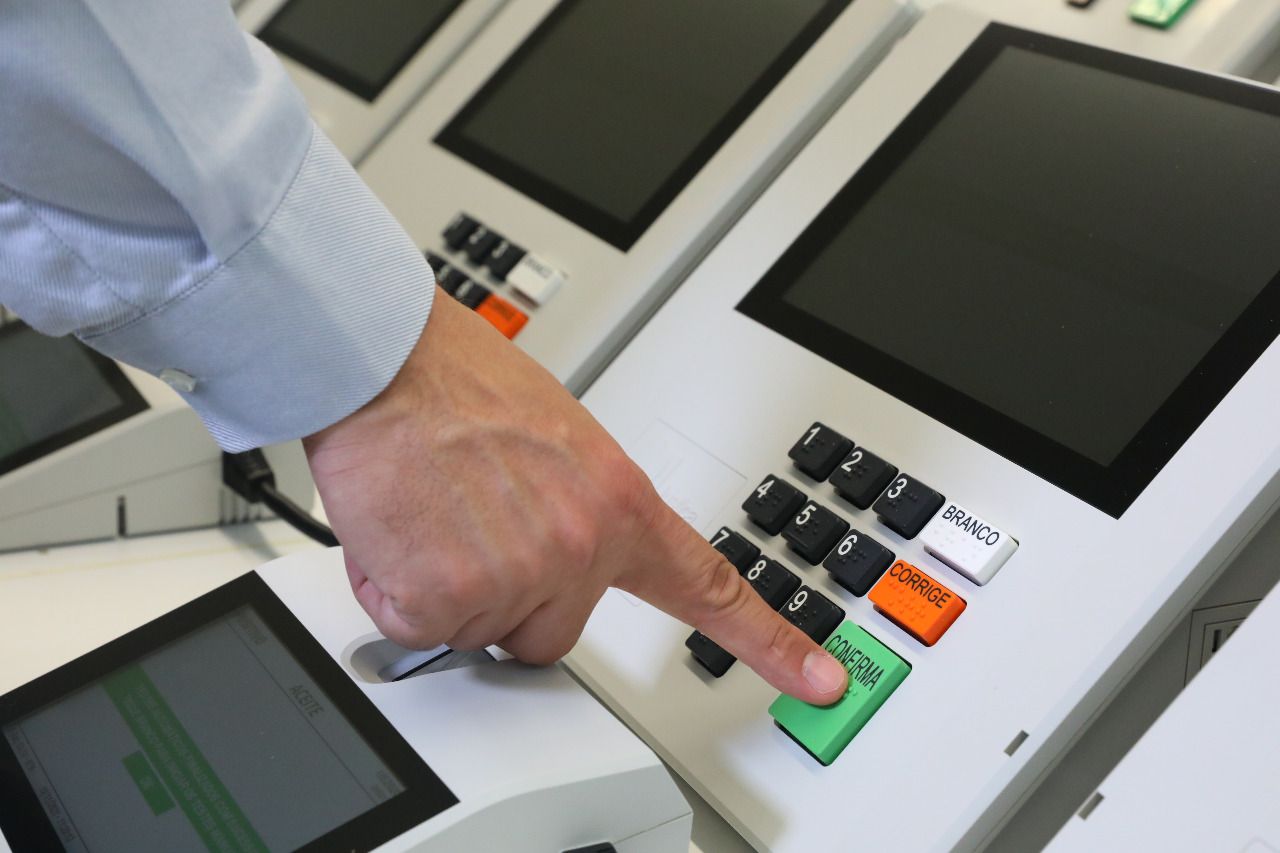
Five days before Brazilians vote, the two best pollsters in the country disagree about who is winning — which is another way of saying nobody is. The presidency will be decided by the voters the models cannot see.
Start with the numbers, because the campaigns certainly do. AtlasIntel's survey for Bloomberg — 5,005 interviews, the largest sample of the cycle — puts Flavio Bolsonaro a tenth of a percentage point ahead of Lula in a simulated second round: 47.7 to 47.6. A day earlier, BTG Pactual's Nexus poll — 2,000 interviews — had Lula ahead 46 to 44. Both leads sit inside the margin of error. Both pollsters agree on the shape of the race even as they disagree on its direction: a first round that Lula leads, and a runoff that is anyone's.
The first-round figures tell the steadier story. AtlasIntel has Lula at 45.3% and Bolsonaro at 42.2%; Nexus has 42% against 37%, with Lula's edge widening from 40–37 in the previous round. Neither man is near the 50%-of-valid-votes threshold that would settle this on Sunday, so Brazil is almost certainly voting twice: October 4, then October 25. The minor candidates — Renan Santos at 5.2% in the AtlasIntel read, Augusto Cury at 5% in the Nexus one — will not win, but their voters' second choices are now the most valuable commodity in Brazilian politics.
The presidency will be decided by the voters the models cannot see.
What makes this race unusual is how little the economy has moved it — and how much it might still. Mid-September inflation came in at 4.47%, above every forecast in the Reuters poll, driven by a 7.42% jump in residential electricity prices. The central bank, which cut the Selic to 13.75% last week, simultaneously trimmed its 2026 growth forecast to 1.8%. Inflation is now, in the pollsters' own phrase, the campaign's third candidate: it attacks the incumbent's record and the challenger's promises with equal force, because neither man has a credible answer for the price of electricity.
The two campaigns are fighting different elections. Lula's operation is banking on the first-round lead and the machinery of incumbency — the bet that a 42-to-45% plurality on Sunday becomes a coalition of everyone-but-Bolsonaro on October 25. Bolsonaro's camp is reading the AtlasIntel tenth-of-a-point as momentum: the challenger who was supposed to fade is instead closing, and in a runoff decided by turnout, intensity beats breadth. Both theories cannot be right. One of them is about to meet 150 million voters.
Sunday will answer the narrow question — who leads, and by how much. But the polls' real message is about October 25: with the country split down the middle and the economy deteriorating into the vote, Brazil is heading for the kind of runoff where the winner's legitimacy is contested before the count is finished. The next three weeks will be fought not over the centre, which barely exists, but over who shows up.
Western coverage — Reuters, the financial press — frames the race as a stress test for Brazilian democracy. The narrative is institutional: the region's largest economy choosing between a leftist incumbent and the heir of the Bolsonaro movement, with polls too close to confer legitimacy on either outcome in advance. The West's attention is on the runoff mechanics — the 50% threshold, the transfer of minor-candidate votes — because that is where this election will actually be decided.
The Western lens also watches the markets. A 4.47% inflation print and a central bank cutting growth forecasts five days before the vote is, in this telling, the kind of backdrop that punishes incumbents — and the Selic at 13.75% is the number traders will be watching on Monday morning, whoever wins.
Eastern coverage — Chinese and Russian state media — reads Brazil's deadlock as another exhibit in the crisis of Western-style democracy. The narrative: the Global South's largest democracy cannot produce a decisive result, the economy is deteriorating into the vote, and Washington's preferred hemisphere is choosing between two men the system has already failed to choose between. In this telling, the coin flip is the point.
The Eastern lens lingers on the economic backdrop with open interest. A Brazil in political limbo is a Brazil whose BRICS commitments, commodity contracts and currency are all in play — and in this reading, Beijing and Moscow are not spectators but stakeholders in whatever government emerges on October 25.
The Global South lens — Latin American and African press — reads this election as its own. Brazil is the South's heavyweight, and a Lula-Bolsonaro runoff is a continental event: the region's left against its right, fought in the open, with the outcome shaping Mercosur, BRICS and the Amazon's future. The South's coverage centres the voters, not the models — the 150 million Brazilians who will decide what the polls cannot.
What worries the South, in this telling, is the legitimacy gap the polls are already opening. A tenth of a point here, two points there — when the margin is the margin of error, the loser always has a story about being robbed. The South has seen that film too, and it never ends at the ballot box.
