A week after water protests began in Vacoas, a police shooting turned anger into arson. Port Louis now sleeps under curfew as the island's model of stability faces its hardest test.
Published 14 October 2026 · 18:00 GMT
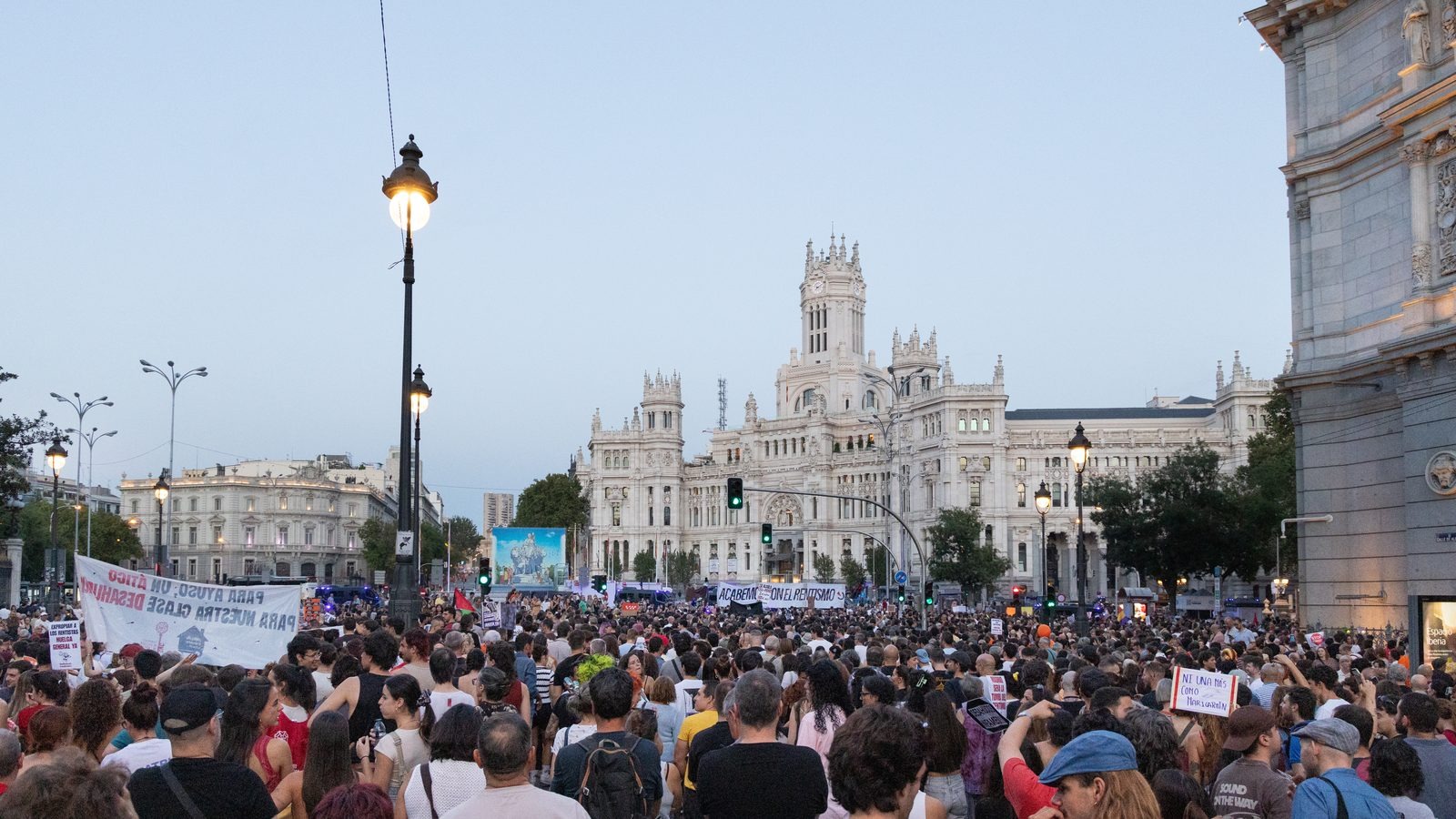
On Monday night, rioters set a police station in Rose-Hill on fire and blocked roads across Mauritius. By Tuesday, Prime Minister Navin Ramgoolam had placed the country's cities under an overnight curfew — the worst unrest the tourist island has seen since 1999, set off by empty reservoirs and a single police bullet.
For a week, the barricades were built from broken furniture and old mattresses. Then came the fire. On Monday night, protesters in Rose-Hill, south of the capital Port Louis, set a police station ablaze, burned tyres and blocked roads across the Indian Ocean island. A McDonald’s in Beau-Bassin was vandalised and vehicles torched. By Tuesday, the government ordered an overnight curfew — 20:30 to 06:00 — covering roughly a third of the country, including its main urban centres.
The spark was a shooting on Friday night, October 9. Élodie Thomas, a 27-year-old woman, was travelling home from work in a van through Camp-Levieux, a residential area south of Port Louis, when she was hit by a police bullet at a roadblock. The circumstances remain unclear; police have not commented beyond confirming an investigation is under way. A police sergeant has been provisionally charged and remanded in custody. On Monday, surgeons flown in from India operated to remove the bullet, and Health Minister Anil Bachoo said the surgery was successful.
A water crisis is a plumbing problem; a legitimacy crisis is not.
The protests had begun four days earlier, on October 7, in La Caverne in the Vacoas-Phoenix area, where residents blocked roads over water shortages and the rising cost of living. By the next day the blockades had spread to St-Paul and the Highlands. When the shooting happened, peaceful protest tipped into open confrontation with the police. Schools closed in parts of the country, public transport halted, and foreign embassies — including Britain’s and France’s — warned their nationals to avoid demonstrations.
Water is the root of it. A crippling drought has emptied Mauritius’s reservoirs, and restrictions on water use are in force in some areas. Taps have run dry in parts of the island’s interior, and analysts warn the shortages could persist until the rainy season arrives in December. In Constituency No 15, residents told local outlets that the reservoirs feeding their taps were running critically low — a warning the government heard but could not answer fast enough. When the protests first started, the government responded by sending more water to affected households — a proactive move, said Zoë McCathie, an analyst at South Africa-based Signal Risk — but it was not enough to calm the anger.
The cost of living is the second layer. The war in the Middle East has pushed fuel prices higher, and the island imports almost everything it consumes. Mauritius is Africa’s second-richest country per capita, after the Seychelles, and its economy runs on two engines — tourism and financial services — both of which depend on one thing above all: the appearance of total calm. Our Mauritius factbook tracks the island’s economy and its long democratic record in detail.
Then there is the police. “This time again, as in 1999, the police are the main target,” the historian and political analyst Jocelyn Chan Low told Bloomberg. “The scale of the violence has multiplied, with police stations and vehicles set ablaze.” The 1999 riots — sparked by demands to decriminalise cannabis — were the island’s last convulsion of this kind, and they ended with a national reckoning over policing. This week suggests the reckoning was never completed.
On an island this small, everything is personal. The water network, the police force and the hospitals are all one degree of separation away, so a bullet that wounds a commuter on her way home from work lands on the whole society at once. That is how a service-delivery protest becomes, in a matter of days, a verdict on the state itself.
For now, the state is betting on order. Despite the curfew, police reported several overnight incidents and made arrests on Tuesday night, but by Wednesday morning they said traffic was moving across the island and urged residents to resume normal activities. Schools remained closed for a second day, except for students sitting international examinations. Business Mauritius, the main private-sector lobby, told members to resume work while watching conditions region by region. A cabinet meeting on Wednesday afternoon was due to decide whether the curfew continues.
The disruption reached deep into daily life. The National Land Transport Authority ended bus services at 6 p.m. on Tuesday, ahead of the curfew, and schools stayed shut for a second day. Yet the banks and the stock exchange reopened — the financial sector’s way of voting that the calm would hold. For an island whose product is stability, the fastest recovery is a commercial one: every night of burning tyres erodes the brand Mauritius sells — safe beaches, safe money.
Prime Minister Navin Ramgoolam’s own language was severe. In a televised address he warned against those “acting against the interests of the country” and promised “the very heavy consequences warranted by their anti-patriotic acts.” He went further, alleging that drug traffickers angered by police operations had financed and organised some of the disturbances — a claim no independent source has verified. When a prime minister blames cartels for water protests, it says as much about the government’s anxiety as about the riots.
The episode has exposed something deeper than empty reservoirs. Mauritius built its reputation as Africa’s stable outlier — the second-richest nation per capita on the continent, a financial centre with a democracy unbroken since independence from Britain in 1968. But service delivery and policing are where legitimacy is manufactured daily, and both failed in the same week. A government that must fly surgeons in from India to extract a police bullet from a commuter’s body is a government whose margin for error has vanished.
Mauritius is not alone on the continent this year. From Morocco to Kenya to Madagascar, African governments have faced riots over living costs, power cuts and unemployment in the past two years. The pattern — service-delivery protests sliding into confrontations with security forces — is familiar in the region, including in South Africa, where our reporting has covered street violence in Durban and Soweto. What makes Mauritius unusual is that it almost never happens there: its stability is the product it sells. See the regional picture in our South Africa factbook.
The days ahead will test whether the calm is real. Banks and the stock exchange reopened this week, a sign the business class expects a quick return to normal. But the curfew only covers the night; the daytime grievances — dry taps, rising prices, a police force many now see as an adversary — operate around the clock. The water is not expected back in full until the December rains, and a prime minister accusing traffickers of staging protests suggests a government still searching for the story of its own crisis. Elsewhere in the region, leaders who survived service-delivery anger did so by answering the grievance, not the riot; see our coverage of Mauritania’s blackout crisis and its political fallout.
A water crisis is a plumbing problem. A legitimacy crisis is not. The curfew buys nights, not solutions: the reservoirs stay empty until the rains, the fuel bill stays high, and Élodie Thomas’s bullet wound has become, for many Mauritians, the emblem of a state that shoots first at the people it cannot supply. The cabinet’s Wednesday meeting may extend the curfew. The harder question is what happens to the taps — and the trust — when it lifts.
Seen from Western capitals, the week is a governance stress test. The charge against the police sergeant reads as a signal that accountability still functions; the curfew reads as a state choosing order over dialogue. For investors and tour operators, the question is narrow: does a country that sells stability still deliver it? The 1999 precedent suggests Mauritius can absorb this kind of shock — if the inquiry into the shooting is seen as genuine.
The human-rights frame is sharper. A woman shot at a roadblock on her way home from work, in a country where public unrest is rare, puts policing methods under international scrutiny. Western outlets will watch the Thomas case closely: whether the investigation produces transparency or a quiet settlement will shape how the island’s democratic record is read abroad.
From the east, the story sits in the Indian Ocean’s strategic lane. India flying surgeons to Port Louis is a reminder of how deep New Delhi’s ties run with the island — diaspora, trade, security. The unrest is read less as a policing scandal than as a small state absorbing global shocks: Middle East fuel prices, climate-driven drought, imported inflation, all arriving at once on an island that controls none of them.
The coverage here asks a structural question: can tourism-and-finance island economies survive the climate century without deeper buffers? Empty reservoirs are not a policy failure of one government; they are the shape of the coming decades. Mauritius is simply where the bill arrived first.
From Africa, the week feels familiar. Service-delivery protests that slide into confrontations with security forces have swept Morocco, Kenya and Madagascar in the past two years; Mauritius joins a continental pattern, not an exception. The 1999 riots are still in living memory, and for many Africans the striking detail is the water: a rich country by continental standards, brought to its knees by dry taps.
The south’s reading is also the most sympathetic to the protesters. The Ramgoolam government answered the initial water protests with more supply — noted by analysts as proactive — but the bullet erased the credit. When the state shoots first, solidarity across the region flows to the street, not the palace; the unverified claim about drug traffickers reads, here, as an old script.
Élodie Thomas is a 27-year-old Mauritian woman who was shot and wounded by a police officer on the night of 9 October while travelling home from work in a van through Camp-Levieux, south of Port Louis. Surgeons flown in from India operated on 12 October to remove the bullet, and the health minister said the surgery was successful. A police sergeant has been provisionally charged in connection with the shooting, though the full circumstances remain unclear.
A severe drought has drained the island’s reservoirs, forcing water-use restrictions in some areas and leaving taps dry in parts of the interior. Analysts say the shortages could persist until the rainy season arrives in December. Mauritius imports most of what it consumes, so the drought combines with high fuel and food prices to squeeze households from two sides at once.
The curfew runs overnight, from 20:30 to 06:00, and covers roughly a third of the island, including Port Louis and the main urban centres. It was imposed on Tuesday 13 October. The cabinet was due to meet on Wednesday afternoon to decide whether to extend it, so the measure’s future depends on that review and on whether overnight incidents continue.
The unrest has centred on urban and residential areas, not the resort zones, and police said on Wednesday morning that traffic was moving across the island again. Still, the British and French embassies have advised their nationals to avoid demonstrations and large gatherings. Travellers should check official advice, expect possible disruptions to transport, and avoid protest areas entirely.
