The foreign-exchange market is the largest on earth — and the least understood. It prices not companies or cargoes, but trust between nations.
Published 14 October 2026 · 06:00 GMT
Last updated: October 2026
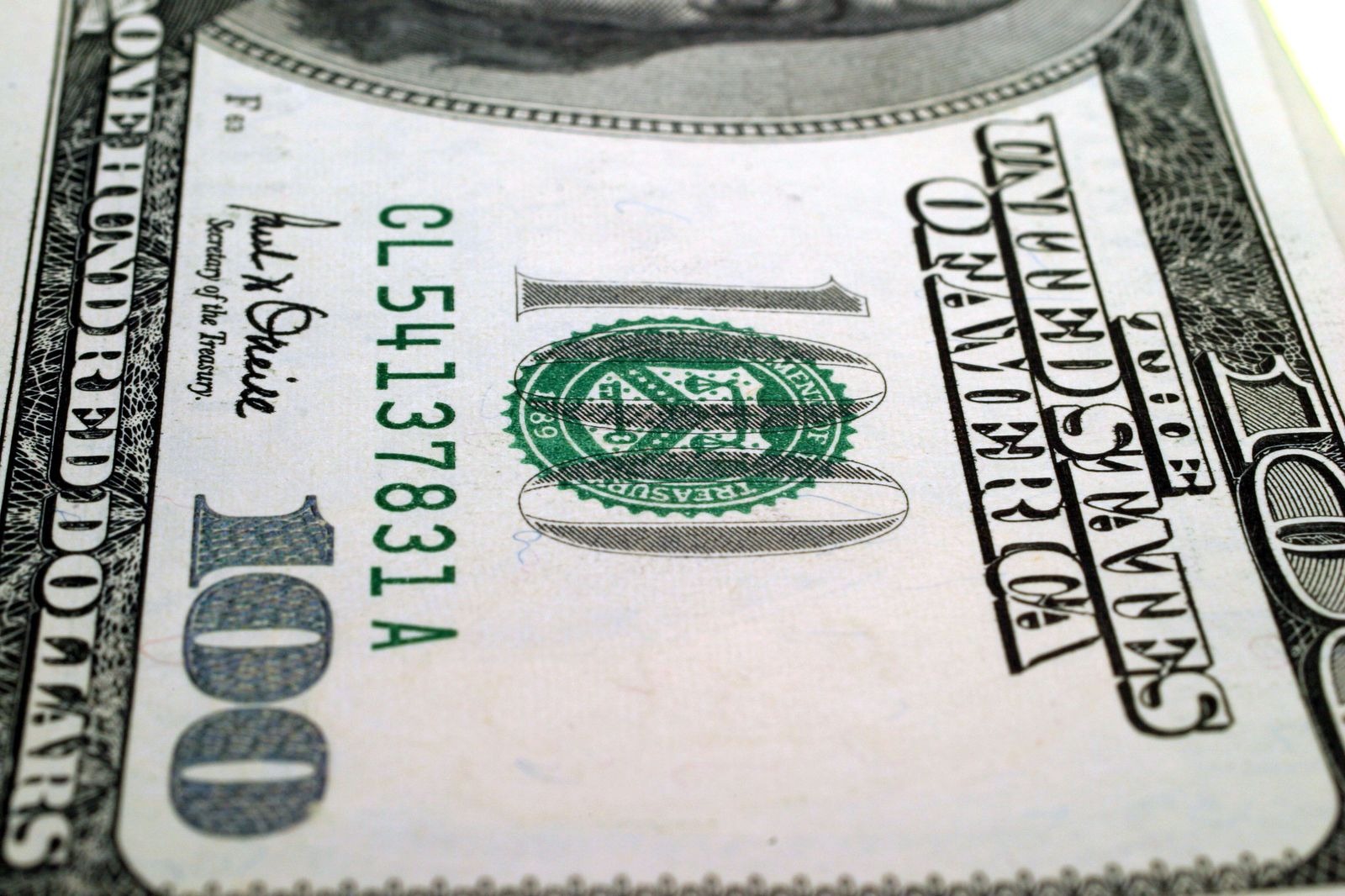
Every price you have ever seen was denominated in something. Currencies are the something.
A loaf of bread costs a number of dirhams, dollars, euros or naira. An oil cargo is priced in dollars even when neither buyer nor seller is American. A bond pays interest in the currency it was issued in, and a share's return depends on the currency you measure it in. Money is the yardstick, and the foreign-exchange market is where yardsticks are exchanged for one another, trillions of times a day. Because every other market is measured in money, the currency market is the market underneath all the others — and when it moves violently, it moves everything with it.
Start with what an exchange rate actually is. It is the price of one money in terms of another, set continuously by supply and demand. If more people want to hold euros than to hold dollars at the current rate, the euro rises against the dollar. That demand comes from many sources at once: exporters converting foreign earnings home, importers buying foreign currency to pay suppliers, investors chasing higher yields, tourists exchanging cash, central banks intervening, and speculators betting on all of the above. No single flow dominates on any given day, which is why exchange rates are notoriously hard to forecast in the short run — and why models that work beautifully for one decade fail in the next.
Money is the yardstick.
The deepest driver, over months and years, is the interest-rate differential. Money flows toward higher real returns, adjusted for risk. If one central bank raises rates while another holds steady, capital tends to flow toward the higher-yielding currency, pushing it up — at least until the market decides the higher rates will slow that economy, or that the risk is not worth the extra yield. It works quietly for years and then unwinds violently in days, because everyone who crowded into the same trade tries to exit through the same narrow door at once. Carry-trade unwinds are among the fastest, least intuitive moves in finance: a currency can soar for no domestic reason at all, simply because leveraged positions built elsewhere are being closed.
Inflation is the second great driver, and the one ordinary people feel first. A currency that loses purchasing power at home tends to lose value abroad, because foreigners will not hold money that buys less every year unless they are compensated. This is purchasing-power parity in its simplest form: over long horizons, exchange rates drift toward the level that equalises the price of the same basket of goods in different countries. In the short run, anything can happen; in the long run, a country that runs persistently higher inflation than its partners will see its currency depreciate. That is not a market verdict on the nation's character. It is arithmetic.
Trade flows matter, but less directly than folk wisdom suggests. A country that exports more than it imports earns foreign currency and might be expected to see its currency strengthen. Often it does. But capital flows dwarf trade flows in size and speed: portfolio investment, foreign direct investment, debt repayment and reserve management move far more money, far faster, than container ships do. A country can run a large trade surplus and still see its currency fall if investors are pulling capital out; a country can run a large deficit and see its currency rise if investors are pouring capital in. The balance of payments balances by definition — the question is always at what price, and who adjusts.
Then there is the dollar system itself, the architecture that has organised global money since the Second World War. The dollar is the currency in which most international trade is invoiced, most cross-border debt is denominated, most foreign-exchange trades have a dollar leg, and most central-bank reserves are held. This gives the United States a structural privilege: it borrows in its own currency, its assets are the world's safe asset, and its monetary policy spills over into every other country's financial conditions whether they want it or not. When the Federal Reserve raises rates, dollar debt becomes more expensive everywhere, capital flows toward dollar assets, and emerging-market currencies come under pressure — the so-called dollar doom loop, in which a stronger dollar tightens global finance, which slows the world economy, which sends more capital fleeing to the dollar. No other currency's domestic policy moves the world this way.
Why does the dollar hold this position? Not because of a treaty, and not because anyone voted for it. The dollar system rests on depth, liquidity, safety and openness: the US Treasury market is the deepest and most liquid bond market on earth, the dollar is freely convertible, US law protects property rights for foreign holders, and the American economy is large and diversified. Each challenger is strong on one dimension and weak on others. That is why predictions of imminent dollar collapse have been wrong for decades — and also why the slow erosion of dollar dominance in reserves and invoicing is real, even if it is gradual.
De-dollarisation, properly understood, is not a single event but a set of separate trends that are often confused. Central banks diversifying reserves into gold and other currencies is one trend. Bilateral trade settlement in local currencies — China and Brazil, India and Russia, Gulf states and Asian partners — is another. Sanctions-driven efforts to build payment systems outside dollar reach are a third. Each trend is real, each is driven by different motives, and none by itself ends the dollar system. What they collectively produce is a more fragmented monetary order: not a new single hegemon, but a world in which more trade and finance happens outside the dollar than before, while the dollar remains the first among currencies. The honest headline is not "the dollar falls" or "the dollar reigns forever." It is "the system gets more multipolar, slowly, unevenly, and with reversals."
Currency regimes are the policy choice that frames all of this. A floating currency absorbs shocks through the exchange rate: bad news makes the currency fall, which makes exports cheaper and imports dearer, cushioning the blow. A pegged or managed currency absorbs shocks through reserves and interest rates: the central bank defends the peg by selling reserves or raising rates, which can crush domestic credit. A currency union removes the exchange-rate tool entirely and forces adjustment through wages, prices and migration. There is no universally right regime — only trade-offs that fit some economies and punish others. The pegs that survive are those backed by reserves, discipline and a credible anchor; the pegs that collapse are those that promise stability they cannot fund. The history of currency crises is largely the history of pegs defended past the point of sense.
Demographics and structure add long-run currents beneath the daily chop. Countries with young, growing, urbanising populations tend to import capital, run current-account deficits and face depreciation pressure when sentiment turns — but they also offer the growth that attracts capital back. Countries with ageing populations and large savings tend to export capital and run surpluses, which supports their currencies but also exports demand. Over decades, the geography of currency strength follows the geography of savings, productivity and demography. The dollar's long-run rivals will be decided not by slogans but by which economies generate the deepest capital markets, the most credible institutions and the most productive use of savings.
For the reader, the practical discipline is simple. First, ask which currency a story is really about: the price quoted in dollars and the return in your own currency can be opposite numbers. Second, ask what is driving the move — rates, inflation, flows or politics — because each driver has a different half-life. Third, watch the real exchange rate, not just the nominal one: a currency can fall nominally while becoming more competitive in real terms, which is the point of a float. Fourth, remember that currency strength is not a grade: a strong currency helps consumers and hurts exporters; a weak one does the reverse, and every government that claims to want both is promising the impossible.
The consensus across the three lenses is that the dollar system is neither collapsing nor immutable. It is fragmenting at the edges while holding at the centre. More trade will settle outside the dollar, more reserves will diversify, more payment rails will be built to bypass it — and the dollar will remain the deepest, safest and most convertible money for a long time to come. The countries that thrive in this in-between order will be the ones that borrow in their own currency, build deep local capital markets, and treat the exchange rate as a shock absorber rather than a symbol of national pride.
Not investment advice. Magna Bureau reporting explains markets; it does not recommend buying or selling any currency or derivative.
The three lenses read currency power differently because they live it differently. From the West, the dollar system is infrastructure — mostly invisible, mostly beneficial, occasionally weaponised through sanctions in ways that make even allies uneasy.
From the East, the dollar system is both a tool and a vulnerability: useful for trade and reserves, dangerous because dollar access can be cut off, which is why building alternatives is treated as a security project, not just a financial one.
A strong dollar is a tightening imposed on countries that never voted for it, and a weak dollar is a relief they did not earn. Both are experienced as weather made elsewhere.
It is the price of one money in terms of another, set continuously by supply and demand. If more people want to hold euros than dollars at the current rate, the euro rises against the dollar. That demand comes from exporters converting earnings home, importers buying foreign currency, investors chasing higher yields, tourists exchanging cash, central banks intervening and speculators betting on all of the above.
Not because of a treaty, and not because anyone voted for it. The dollar system rests on depth, liquidity, safety and openness: the United States Treasury market is the deepest and most liquid bond market on earth, the dollar is freely convertible, United States law protects property rights for foreign holders, and the American economy is large and diversified. Each challenger is strong on one dimension and weak on others.
It is not a single event but a set of separate trends often confused. Central banks diversifying reserves into gold and other currencies is one trend. Bilateral trade settlement in local currencies is another. Sanctions-driven efforts to build payment systems outside dollar reach are a third. None by itself ends the dollar system. What they collectively produce is a more fragmented monetary order, not a new single hegemon.
