Oil, gas, metals and grain trade on screens, but they are settled in tankers, silos and smelters. When the physical world breaks, no financial model holds.
Published 14 October 2026 · 06:00 GMT
Last updated: October 2026
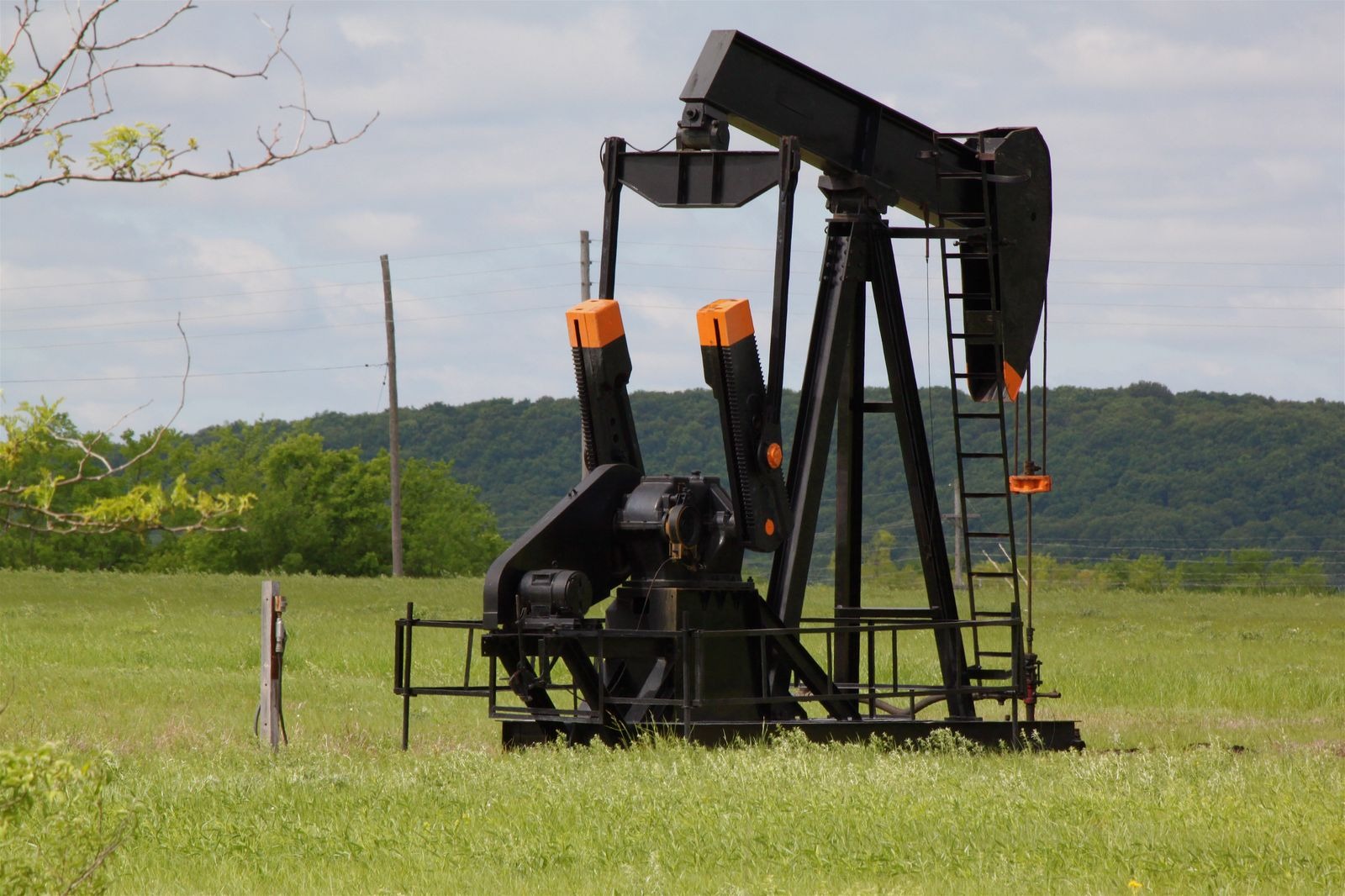
Every other market trades promises. Commodities trade stuff.
A share is a claim on future profits that may or may not arrive. A bond is a promise to pay that depends on the borrower surviving. A barrel of oil, a tonne of copper, a shipload of wheat: these are objects with weight, volume and a destination, and they must physically get from where they are to where they are needed. That difference sounds trivial until a strait closes, a harvest fails, a mine floods or a pipeline is sabotaged. Then the whole financial superstructure built on top of commodities — futures, options, swaps, exchange-traded funds — discovers that it was always a derivative of the physical world, and that the physical world does not negotiate.
Begin with the basic plumbing. Commodities trade in two overlapping systems. The physical market is where producers, refiners, millers, smelters and end-users buy and sell actual cargoes, negotiating grades, delivery points, quality penalties and shipping terms. The paper market is where futures and options contracts trade on exchanges, letting participants lock in a price for later delivery, hedge exposure, or speculate on direction. The two systems are linked by delivery and arbitrage: if the paper price drifts too far from the physical price, traders buy in one and sell in the other until they converge. Most paper contracts never result in delivery — they are closed out before expiry — but the possibility of delivery is what keeps the paper honest. A futures market without a credible physical settlement is just a betting shop; a physical market without futures is exposed to every price swing with no way to insure.
The physical world does not negotiate.
The futures curve is the market's diary of expectations. When near-term prices are higher than later prices — backwardation — the market is saying: we need this now, scarcity is here, pay up for immediate supply. When later prices are higher — contango — it is saying: there is plenty now, store it and sell it later, and the gap should roughly cover storage and financing costs. Readers who learn to read the curve can see more than any headline price: a rising spot price in backwardation means real shortage; a rising spot price in deep contango may mean speculation, or a storage squeeze, or simply the cost of carrying inventory. The curve is where the physical and financial worlds argue, in public, every day.
Oil deserves its own treatment because it is not just another commodity. It is the commodity through which all the others move. Diesel moves trucks, trains and ships. Petrochemicals become plastics, fertilisers and pharmaceuticals. Jet fuel moves aircraft. When oil spikes, the cost of everything that moves or grows rises with it, and central banks face the hardest version of their dilemma: inflation is rising, but the cause is supply, not excess demand, so raising rates treats the symptom by suppressing the patient. When oil collapses, producing states face fiscal crises, investment in future supply dries up, and the seeds of the next spike are planted. The oil cycle is not an accident of this market; it is its structure. Low prices kill the investment that high prices require, and high prices kill the demand that low prices need.
Gas is oil's more regional cousin, and its regional character is exactly the point. Oil travels easily by tanker to any port on earth, so there is roughly one world oil price with local differentials. Gas, historically, travelled by pipeline to fixed customers, creating separate regional markets with wildly different prices. Liquefied natural gas has softened that fragmentation — a cargo can now sail from one basin to another — but gas still punishes anyone who forgets geography. A cold snap in one region, a pipeline outage, a liquefaction plant failure: each can send a local gas price vertical while the world price barely moves. The lesson generalises: the easier a commodity is to store and ship, the more global its price; the harder it is, the more local its politics.
Metals tell the story of the energy transition in its most material form. Building a solar farm, a wind turbine, an electric grid or an electric vehicle consumes far more copper, aluminium, nickel, lithium and rare-earth elements per unit of energy than a fossil-fuel system did. That does not make the transition impossible — it makes it a mining and refining project as much as an engineering one. And mining has long lead times: a decade from discovery to production is normal, permits and water and community consent are real constraints, and refining capacity is concentrated in a handful of countries. The result is a structural tension: climate policy accelerates demand for transition metals while geology, permitting and geopolitics constrain supply. Price spikes in these metals are not market failures. They are the market transmitting the message that the physical build-out is lagging the political timetable.
Agriculture is where commodity markets meet human survival most directly. Wheat, rice, maize and soybeans are not merely inputs; they are calories, and their prices are set by weather, soil, water, seed, fertiliser and war. A drought in one breadbasket can be absorbed; simultaneous droughts in two or three cannot, because the world's grain stocks are thin by design — holding inventory is expensive, and just-in-time logistics has optimised away the buffer. Export bans, imposed by governments trying to protect their own consumers, then make the global shortage worse by trapping supply inside borders and panicking everyone else. The 5D lens is essential here: a grain price is simultaneously a climate event, a trade-policy event, a demographic event (how many mouths, in which cities), a historical event (which empires starved, which survived), and a structural event (who controls fertiliser, seed and shipping).
Financialisation has changed commodity markets without repealing their physics. Index funds, commodity ETFs and algorithmic traders now provide liquidity and, critics argue, amplify moves. There is truth in both the praise and the blame: financial participation makes hedging cheaper and price discovery faster, and it also means that a portfolio rebalancing in one asset class can move a commodity price that has nothing to do with its fundamentals that day. But over weeks and months, the physical market reasserts itself. No amount of paper buying can create a cargo that does not exist, and no amount of paper selling can destroy a surplus sitting in a tank farm. Traders who forget that distinction — who treat commodities as pure financial assets — are the ones who discover, expensively, that delivery months are real.
Climate change is now the master variable running through every commodity story. Heat, drought, flood and storm are no longer tail risks to be footnoted; they are recurring determinants of harvests, river levels for barge transport, hydropower output, mine water supply and energy demand. At the same time, the policy response to climate change is itself a commodity story: carbon prices, methane rules, deforestation regulation and critical-minerals strategies all move supply and demand. The honest way to report commodities in this era is as climate journalism with a price attached, not as finance journalism with a weather footnote.
The consensus across the three lenses is that the physical economy has reasserted its primacy. For a generation, finance treated commodities as just another asset class, interchangeable with any other. The shocks of recent years — blocked straits, war in breadbaskets, energy blackmail, mineral bottlenecks — have restored the older truth: whoever controls the physical flow controls the price, and whoever ignores the physical flow pays for it. The markets that matter most are the ones where a ship, a harvest or a mine can still override a model.
Not investment advice. Magna Bureau reporting explains markets; it does not recommend buying or selling any commodity or derivative.
The three lenses diverge most sharply on who bears the commodity shock. From the West, commodities are primarily an inflation and portfolio problem: energy and food prices feed the consumer price index, central banks respond, and investors rebalance between equities, bonds and real assets.
From the East, commodities are a security problem: long-term contracts, strategic reserves, state-backed mining investment and pipeline diplomacy are tools for guaranteeing supply, not merely trading it.
From the Global South, commodities are a livelihood and sovereignty problem: many states earn most of their export revenue from one or two commodities, so a price collapse is a fiscal crisis, a currency crisis and a social crisis at once — while a price spike may enrich a narrow export sector and impoverish the urban consumers who buy food and fuel. The same oil price that is an inconvenience in a rich suburb is a budget catastrophe in an importing state and a windfall with corruption risk in an exporting one.
The physical market is where producers, refiners, millers, smelters and end-users buy and sell actual cargoes, negotiating grades, delivery points and shipping terms. The paper market trades futures and options that let participants lock in a price, hedge exposure or speculate. Delivery and arbitrage link the two: if the paper price drifts too far from the physical price, traders buy in one and sell in the other until they converge.
They describe the shape of the futures curve. When near-term prices are higher than later prices, the market is in backwardation, signalling that scarcity is here and buyers will pay up for immediate supply. When later prices are higher, the market is in contango, signalling plenty now, with the gap roughly covering storage and financing costs. A rising spot price in backwardation means real shortage.
Oil is the commodity through which all others move. Diesel moves trucks, trains and ships, petrochemicals become plastics, fertilisers and pharmaceuticals, and jet fuel moves aircraft. When oil spikes, the cost of everything that moves or grows rises with it, and central banks face their hardest dilemma: inflation is rising from supply, not excess demand, so raising rates treats the symptom by suppressing the patient.
