A bus carrying mourners home from a burial collided head-on with a lorry at Kanga, past Mtito Andei, on Sunday morning — the second mass-fatality crash on the same Makueni stretch of the Nairobi–Mombasa highway in three weeks.
Published 25 October 2026 · 12:06 GMT
A bus carrying mourners home from a burial collided head-on with a lorry at Kanga, past Mtito Andei, on Sunday morning — the second mass-fatality crash on the same Makueni stretch of the Nairobi–Mombasa highway in three weeks. On the morning of Sunday 25 October 2026, a passenger bus collided head-on with a lorry at Kanga, past Mtito Andei, in Makueni County, on the highway linking Nairobi with Mombasa. At least 22 people were killed.
On Sunday morning 25 October 2026, a bus and a lorry collided head-on at Kanga, past Mtito Andei, on the Nairobi–Mombasa highway, killing at least 22 people; the bus was carrying passengers returning from a burial; and a crash on the same highway three weeks earlier killed 17 people.
The precise minute of the collision — Kenyan reporting puts it at around 7am, while some witnesses put it closer to 7:45am — and the exact description of the lorry involved; early toll reports of 20 dead were revised to 22 as injured victims succumbed.
What caused this collision; the speeds involved; what role, if any, road conditions played in this specific crash; the identities of all the victims; or whether the safety recommendations previously made for this stretch were ever implemented.
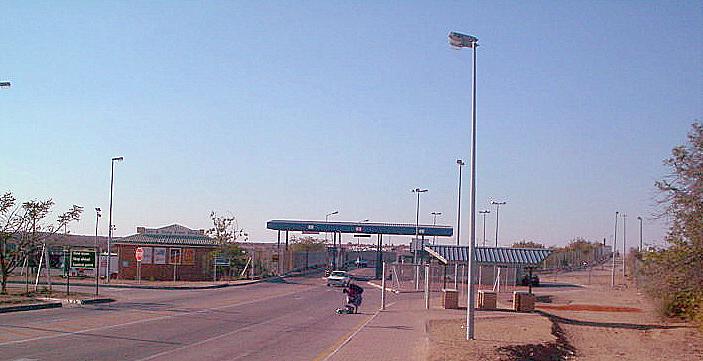
At around 7am on Sunday 25 October 2026, a passenger bus and a lorry collided head-on at Kanga, past Mtito Andei, in Makueni County. The bus was travelling along the Nairobi–Mombasa highway, the artery that carries people and freight between the capital and the coast, when it met the lorry coming the other way. The impact killed at least 22 people.
The first reports put the toll at 20. It rose to 22 during the morning as two more victims succumbed to their injuries, according to Kenyan television and press reporting. Several other passengers were injured and rushed to Mtito Andei Sub-County Hospital, where the bodies of the dead were also taken. Makueni County Commissioner Abdullahi Khalif confirmed the deaths and warned, in the early hours of reporting, that the toll could rise further.
The passengers had been returning from a burial ceremony. Local reporting identified the bus as belonging to a church group based in Mtito Andei, and said it was heading towards Mombasa after a funeral in western Kenya. A journey that began in mourning ended in a second mourning, on a highway that had already claimed 17 lives three weeks earlier.
The confirmed record is short, and it is consistent across the wire account and independent Kenyan reporting. The crash happened on Sunday morning at Kanga, past Mtito Andei, in Makueni County. The vehicles were a passenger bus and a lorry. The collision was head-on. The bus was carrying people home from a burial. The injured went to Mtito Andei Sub-County Hospital. The county commissioner confirmed the toll and opened an investigation.
The question is sharpened by the calendar. On 3 October, a multi-vehicle crash at Mlima Kiu, in the Salama area of the same county and the same highway, killed 17 people, including 16 pilgrims from St Mathias Mulumba Catholic Church in Mikindani, Mombasa County, and their driver. The pilgrims had been travelling to the Subukia National Marian Shrine in Nakuru County for the National Prayer Day when their 14-seater matatu collided with lorries in a chain of impacts. Two mass-fatality crashes, one county, one highway, twenty-two days apart — that is the pattern the investigation now has to explain.
Kenya's National Transport and Safety Authority has already classified this stretch as an accident black spot and says recommendations were made to address safety concerns there. What those recommendations were, and whether any of them were carried out before Sunday, is not yet part of the public record.
The cause of the collision has not been established. No account yet explains how a bus and a lorry travelling in opposite directions on a major highway came to meet head-on: no confirmed account of speed, of overtaking, of road surface, or of mechanical failure. Reports differ even on the hour, with Kenyan outlets putting the crash at around 7am and some witnesses closer to 7:45am. Those are small differences, but they matter to reconstruction, and they are a reminder that the first hours of a crash produce fragments, not a settled narrative.
Nor do we know the full casualty picture. The injured were still being treated when the toll reached 22, and the county commissioner had warned it could rise. The names of the victims had not been publicly released. Speeding and poor road conditions have previously been cited as contributing factors in Kenyan road crashes in general, but that general context is not evidence about this crash, and it should not be read as its cause.
The Nairobi–Mombasa highway is not a back road. It is the spine of Kenya's economy and its busiest passenger corridor, carrying long-distance buses, private motorists and heavy freight between the capital, the interior and the port city of Mombasa. When a corridor like that produces two mass-fatality crashes in three weeks, the question stops being about two drivers and becomes about the system: the road, the vehicles, the enforcement, and the recommendations that were made and, apparently, not acted on fast enough.
It matters beyond Makueni because the pattern is national. Kenya's road safety authority has put the country's annual road death toll at roughly 4,000 people, according to figures cited in Kenyan reporting — a toll that turns every holiday season into a test of whether warnings become action. The victims on Sunday were mourners. That detail, repeated in every account, is what makes the story travel: a community that had gathered to bury one of its own lost more than twenty more on the road home. The full picture of Kenya's place in the region, its economy and its infrastructure is set out in Magna Bureau's Kenya country profile.
There is a particular sting in the phrase accident black spot. It means the danger was already known, already mapped, already the subject of recommendations. A black spot that keeps killing is not a failure of knowledge; it is a failure of follow-through. The transport safety authority says recommendations were made for this stretch. Until the investigation publishes them, the public cannot judge whether they were engineering fixes, speed enforcement, signage, or something else entirely — and whether the money or the authority to carry them out ever arrived.
The deeper structure is familiar across the Global South: a single highway carrying far more mixed traffic — buses, matatus, private cars, heavy lorries — than it was designed for, policed unevenly, and used hardest by people who cannot afford safer alternatives. The bus on Sunday was carrying mourners, not tourists; the pilgrims on 3 October were travelling to a shrine. The people most exposed to this corridor are those travelling for family, faith and work. That is why the death toll lands politically as well as personally, and why the response will be judged on whether the corridor changes, not on whether officials express condolences. The human cost of shrinking support for African communities is documented in Magna Bureau's reporting on aid cuts affecting women and children in Kenya.
Breaking it would mean treating the black-spot list as a work programme with deadlines, not as a label: engineering the specific stretch, enforcing speed and overtaking rules where the crashes cluster, and auditing whether previous recommendations were implemented at all. It would also mean honest data — published crash investigations, not just toll counts — so that the next funeral journey does not travel the same unexamined road.
The first consequence is political pressure on the transport safety authority and the county government. Two disasters on one stretch in under a month make the black-spot designation itself an accusation: if the danger was mapped, why was it still lethal? Expect calls for a published audit of the recommendations, for speed controls on the corridor, and for a visible enforcement presence in the weeks ahead, when travel volumes rise.
The second consequence falls on operators and insurers. Long-distance bus companies on the Nairobi–Mombasa route will face harder questions about vehicle condition, driver hours and speed management, and passengers will ask them with fresh urgency. The third consequence is quieter and longer: for the families of Makueni, and for the church community that lost members on a burial journey, the corridor itself becomes a place of mourning — and mourning, repeated, becomes a constituency for change. The continent's wider effort to make its corridors work for its people, through freer movement of goods and services, is examined in Magna Bureau's coverage of the African trade agenda.
The investigation opened by the county commissioner is the next factual step: it should establish how the bus and the lorry came to collide, and whether speed, road conditions or vehicle condition played a part. The transport safety authority is likely to be pressed to publish what it recommended for this stretch and what was done about it. Funerals and burials for the victims will follow in the coming days, and the toll may still be revised as the injured are treated.
What to watch is whether the response goes beyond the familiar cycle — condolences, a crackdown, a return to normal — and produces a dated, checkable fix on the Kanga stretch itself. The test of this story is not the next headline about the corridor. It is whether the next journey along it is safer than the last two.
The Western lens: a wire story about a systemic failure The Associated Press dispatch that carried this story around the world framed it as a pattern rather than an accident: a bus and a truck on Kenya's main highway, at least 22 dead, three weeks after 17 died on the same road, on a stretch the safety authority itself calls a black spot. ETV Bharat (AP) (Oct 25, 2026) Western wire framing tends to reach for the systemic explanation — speeding, poor road conditions, enforcement gaps — and to treat each new crash as another data point in a known crisis rather than as a singular tragedy.
The Eastern lens: the same wire, read as a shared road-safety crisis South Asian coverage carried the dispatch within hours, with India's The Hindu publishing the full account the same day. The Hindu (Oct 25, 2026) For readers in countries with their own overloaded intercity corridors, the story reads less as distant news and more as a familiar one: the funeral journey, the overloaded highway, the black spot that was identified but not fixed. The East's interest here is not geopolitical; it is the recognition of a shared infrastructure problem.
The Southern lens: the names, the hospital, the road itself Kenyan reporting carried this story closest to where it happened, and it shows. Citizen Digital tracked the toll as it rose from 20 to 22 and named the hospital where the injured were treated. Citizen Digital (Oct 25, 2026) Kenyan outlets also supplied the context the wire could not: the church group, the burial journey, the pilgrims of 3 October, and the geography — Kanga, Mtito Andei, Mlima Kiu, Salama — that turns a highway statistic into a map of grief.
On Sunday morning, a passenger bus collided head-on with a lorry at Kanga, past Mtito Andei, in Makueni County, on the Nairobi–Mombasa highway. At least 22 people were killed, after an initial toll of 20 rose when two more victims succumbed to their injuries. Several other passengers were injured and taken to Mtito Andei Sub-County Hospital, while the bodies of the dead were moved to the hospital mortuary.
The passengers were returning from a burial ceremony, according to police accounts carried in Kenyan and international reporting. Local reporting identified the bus as belonging to a church group based in Mtito Andei, and said it was heading towards Mombasa after a funeral in western Kenya. The names and full identities of the victims had not been publicly released when the first reports appeared.
Kenya's National Transport and Safety Authority has designated the stretch where the crash happened an accident black spot, meaning it is recognised as a location with a repeated pattern of serious crashes. The authority said recommendations had been made to address safety concerns along the stretch. Just three weeks earlier, on 3 October, another crash on the same highway at Mlima Kiu, in the Salama area, killed 17 people.
The cause has not been established. Makueni County Commissioner Abdullahi Khalif said an investigation had begun, and the circumstances surrounding the collision were still unclear in the first reports. Speeding and poor road conditions have previously been cited as contributing factors in Kenyan road crashes in general, but no cause has been attributed to this specific collision. Investigators are expected to establish how the two vehicles came to collide head-on.
