Ex-DRC president Joseph Kabila now leads a new politico-military alliance with the Rwanda-backed M23, unveiled in Goma — a gamble that could unite the opposition or deepen the war.
Published 15 October 2026 · 18:00 GMT
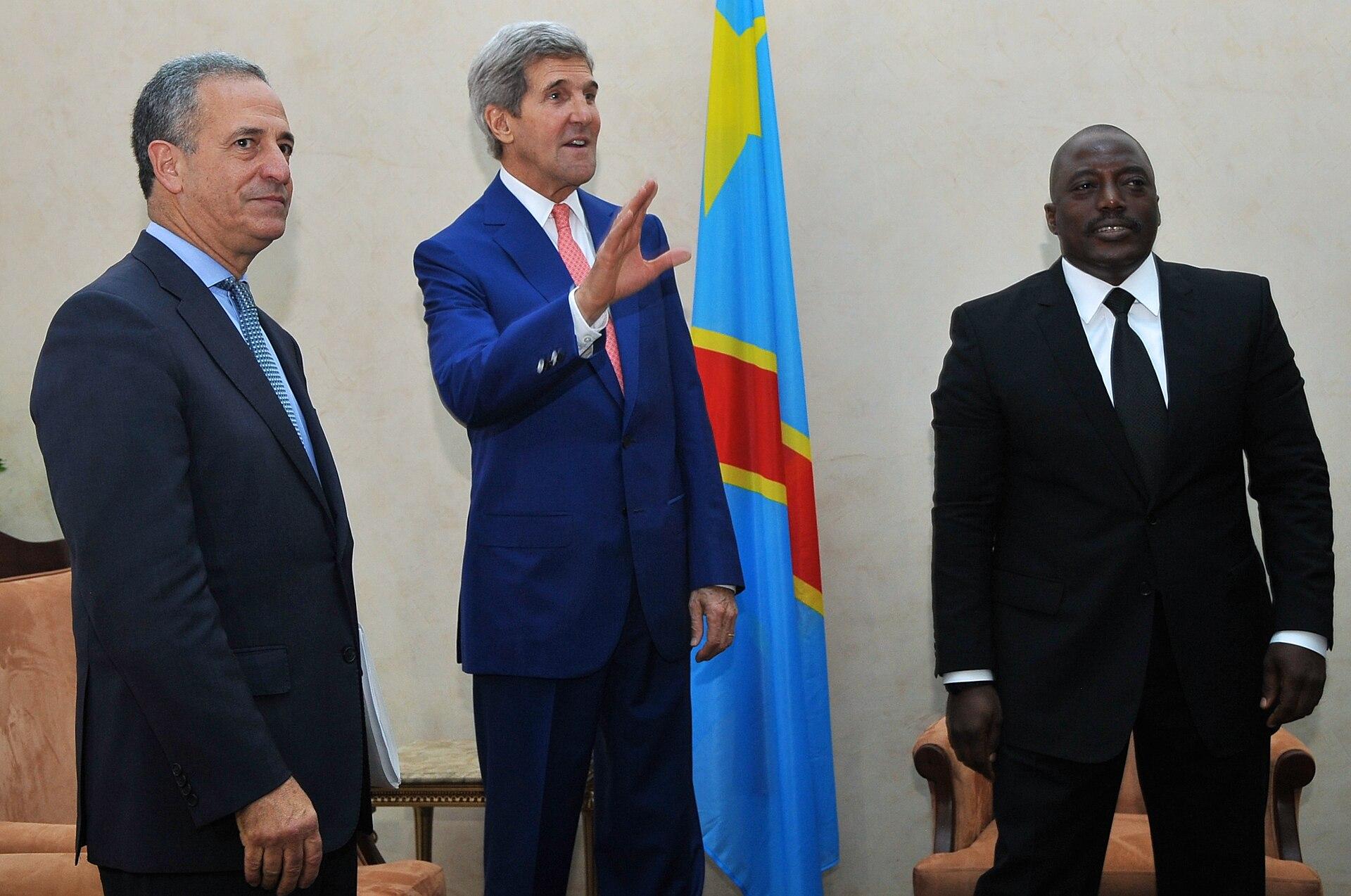
For eighteen years, Joseph Kabila ruled the Democratic Republic of Congo from the presidential palace in Kinshasa. On Monday evening he stood in a Goma courtyard, in a city held by the rebellion he is accused of arming, and placed himself at the head of a new alliance built to topple the government that condemned him to death.
On the evening of Monday 12 October 2026, at his residence in Goma, the eastern city the M23 has controlled since January 2025, former president Joseph Kabila unveiled the Front for the Refoundation of the Nation (FRN), a politico-military alliance formed with the Rwanda-backed M23 fighters. Kabila will lead the alliance himself. Its stated objective is to “put an end to tyranny by any means necessary, including the use of force,” and to unite and coordinate opposition forces against the government of President Félix Tshisekedi in Kinshasa.
The coalition’s adviser, Claude Ibalanky, announced at a press conference that the rebel leadership would serve as Kabila’s deputies: Corneille Nangaa, the former head of the Congo River Alliance (AFC) — the umbrella of which the M23 is the principal member — alongside Bertrand Bisimwa, military commander Sultani Makenga and Freddy Kaniki. Reuters reports the new structure replaces the AFC-M23 alliance outright, a reshuffle a June report by the UN Group of Experts had already anticipated, flagging a possible reorganisation of the rebellion around a leading role for Kabila.
A man condemned to death in Kinshasa now commands the rebellion in Goma — and claims the right to use force.
Kabila has little left to lose in Kinshasa’s courts. On 30 September 2025, a military court in the capital sentenced him to death in absentia on charges of treason, war crimes, crimes against humanity and insurrection over his alleged links to the rebellion. The Senate had voted in May 2025 to lift his immunity as senator for life. Kabila has rejected the proceedings as politically motivated, denied any ties to the M23, and in a speech on Friday accused the government of corruption, poor governance and military setbacks in the east — while criticising its minerals deal with the United States.
The man now backing the rebellion once ran the country. Kabila took office in 2001 at the age of 29, after his father, Laurent-Désiré Kabila, was assassinated, and governed the Democratic Republic of Congo for eighteen years before handing power to Tshisekedi in 2019, the country’s first peaceful transfer of power. Relations between the two men then soured. Kabila left the country in 2023, reappeared in Goma this year, and his return set off alarm bells in the capital — long before Monday’s announcement made the alliance official.
Corneille Nangaa’s presence beside Kabila carries its own history. Nangaa ran the electoral commission that oversaw the contested 2018 vote which ushered Tshisekedi into office and ended Kabila’s presidency — and Kabila travelled to rebel-held Goma in 2025 as several former allies took positions within the AFC-M23, deepening perceptions of an alliance between the former president and the insurgency. The irony runs deeper still: when the M23 first took up arms in 2012, its spokesmen justified the rebellion by pointing to Kabila’s contested 2011 re-election. Fourteen years later, the movement answers to him.
Whatever its name, the rebellion behind the FRN holds real ground. The M23 — backed by Rwanda, according to the United Nations and Western governments, a charge Kigali denies — first took up arms in 2012, resumed large-scale offensives in 2022, and captured swathes of the mineral-rich east during an offensive last year, including Goma and the city of Bukavu. The region has been ravaged by decades of fighting among government forces, rebels and armed groups, and several attempts to broker peace between them have failed. An earlier Magna Bureau report traced the long trail of allegations tying Kabila to the movement he now openly leads.
Analysts are divided over what the FRN will mean. Some argue the alliance could unite various opposition groups against Tshisekedi’s government, giving the rebellion a national political face: a former president with a name, networks and a grievance. Others fear it will escalate the conflict in eastern DRC, turning what diplomats have treated as a security dispute between Kinshasa and Kigali into an open contest over who has the right to govern Congo — with civilians in the east caught, as ever, in the middle.
Kigali’s role remains the hinge of every analysis. The United Nations and Western governments accuse Rwanda of backing the M23 and exercising command and control over the rebels; Rwanda denies supporting the insurgency, saying it acts to keep the conflict from spilling onto its territory. Washington has meanwhile courted Kinshasa over a minerals partnership, and sanctioned mining companies it accuses of trafficking conflict minerals. The FRN announcement lands in the middle of that triangle — rebel guns, mineral money, and foreign capitals.
Beneath the politics runs money. Eastern Congo holds gold, coltan and cobalt — the DRC supplies more than 70 per cent of the world’s cobalt, the metal at the heart of smartphone and electric-vehicle batteries — and the UN and rights groups have long documented how armed groups finance themselves through the mineral trade. Washington has shown fresh interest in a minerals partnership with Kinshasa, and the United States has sanctioned mining companies it accuses of fuelling the conflict through illicit minerals. Whoever controls the east’s mines controls leverage that reaches far beyond the battlefield.
Kinshasa’s own governance is under unusual scrutiny abroad. Belgian police raided homes linked to relatives of President Tshisekedi in Brussels and the neighbouring provinces this week, in a money-laundering investigation into the alleged theft of DRC mining revenues, according to Belgium’s Federal Public Prosecutor’s Office, as reported by the Eastleigh Voice. The probe follows complaints filed in Belgium in 2025 by non-governmental organisations from Katanga and former executives of Gécamines, the state mining company, over the alleged diversion of resources in Haut-Katanga and Lualaba. It is the kind of headline Kabila’s camp will quote.
Diplomacy has so far treated the conflict as two separate problems: a security dispute between Kinshasa and Kigali, and a rebellion with specific grievances to be settled at the negotiating table. Kabila’s move scrambles that map. A former head of state has put his name and his networks behind an insurgency that claims the right to use force against the government. Zambia’s army commander this week called for renewed ceasefire monitoring and concrete measures against armed groups in eastern DRC, warning that instability there threatens the whole region — a sign the neighbours are not waiting for Kinshasa and Goma to agree on what the war even is.
The neighbours are not waiting. Zambia’s army commander, Lieutenant General Geoffrey Zyeele, told a meeting of the International Conference on the Great Lakes Region’s defence experts in Lusaka this week that existing peace frameworks must be implemented, ceasefires properly monitored and concrete measures taken against the armed groups in eastern DRC. He warned that instability in the DRC, Sudan and South Sudan continues to threaten regional security — a reminder that Goma’s war is never only Goma’s.
The immediate answers are all unwritten. President Tshisekedi’s government offered no immediate reaction to the Goma announcement, and no timetable, programme or electoral roadmap for the FRN has been published. What matters now is whether the alliance’s member groups stay united behind a former president many of them once fought against, and whether the opposition figures still in Kinshasa see the FRN as a rallying point or a rebellion to avoid. Congo’s crises are rarely settled by the men who start them — they are settled by what the region’s neighbours and creditors decide they can live with.
The paper trail of diplomacy is long and thin. A ceasefire agreed in July has not stopped the fighting, and a June report by the UN Group of Experts had already warned of a coming reorganisation of the rebellion around Kabila — a warning that landed, by all appearances, unheeded. For a man sentenced to death in absentia, a war has little left to cost him and a peace that excludes him has everything to cost. Whether the FRN becomes a negotiating partner or a sanctioned pariah will be decided as much in the capitals that buy Congo’s minerals as in Goma or Kinshasa.
In Western capitals the story reads as a hardening of a familiar file: a former strongman under a death sentence openly taking command of a UN-sanctioned rebellion backed by Rwanda — the kind of development that usually precedes sanctions designations and diplomatic demarches. The silence from Kinshasa so far is being read as calculation, not calm.
The money angle dominates the Western telling: cobalt and coltan in global supply chains, a courted American minerals partnership with Kinshasa, and Belgian police raiding the Tshisekedi circle over alleged mining-revenue theft — corruption and conflict minerals, the two Western preoccupations with Congo, now arriving in the same week.
From the region, the FRN looks less like a rupture than a rebranding: the AFC-M23 structure putting a former president's face on an insurgency that already holds Goma and Bukavu. Zambia's call for ceasefire monitoring this week reflects the neighbours' anxiety — instability in the east has a way of crossing borders, and the Great Lakes have paid for that lesson before.
The regional question is legitimacy, not just force. Can Kabila's name turn a territorial rebellion into a national opposition, or does it simply give a familiar war a new flag? A June UN report had already flagged the reshuffle, which suggests the region's diplomats saw the shape of this coming — even if Kinshasa did not act on it.
The Global South reading centres sovereignty and extraction. A former colonial metropole raids a sitting president's relatives over mining revenues while a former president arms himself with rebels and foreign backing — and Congo's minerals remain the prize. From this angle, the FRN is less a Congolese crisis than a Congolese symptom: the world's hunger for cobalt and coltan keeps turning the east into a battlefield.
Peace processes designed elsewhere have failed repeatedly, and the lesson drawn here is blunt: no settlement drafted at a distance from the region's own politics will hold. Whether the FRN becomes a negotiating partner or a sanctioned pariah will be decided less in Goma or Kinshasa than in the capitals that buy Congo's minerals and sell its neighbours their weapons.
Joseph Kabila ruled the Democratic Republic of Congo from 2001 to 2019, taking office at 29 after his father Laurent-Désiré Kabila was assassinated. He handed power to Félix Tshisekedi in 2019 in the country's first peaceful transfer, then fell out with his successor. In 2025 a Kinshasa military court sentenced him to death in absentia over alleged M23 links, which he denies, and he reappeared in rebel-held Goma.
The FRN is a politico-military alliance unveiled by Joseph Kabila in Goma on 12 October 2026, formed with the Rwanda-backed M23 fighters and the groups of the Congo River Alliance. Kabila leads it, with rebel figures Corneille Nangaa, Bertrand Bisimwa, Sultani Makenga and Freddy Kaniki as deputies. Its stated aim is to end what it calls tyranny by any means necessary, including force, and unite the opposition against Kinshasa.
On 30 September 2025 a military court in Kinshasa convicted Kabila in absentia of treason, war crimes, crimes against humanity and insurrection, and sentenced him to death. Prosecutors accused him of conspiring with the M23 rebellion to overthrow President Tshisekedi. The Senate had lifted his immunity in May 2025. Kabila did not appear in court, denied the charges and called the proceedings politically motivated.
Eastern Congo holds gold, coltan and cobalt, and the DRC supplies more than 70 per cent of the world's cobalt, a key metal for batteries. The UN and rights groups say armed groups fund themselves through the mineral trade, while Kinshasa accuses Rwanda of backing the M23 to control the resources. Washington is courting a minerals partnership with Congo, and the US has sanctioned mining firms accused of fuelling the conflict.
