IMF–World Bank meetings open this week in Bangkok, the first outside Washington in three years, with the eighth month of the US-Israeli war on Iran and its energy shock dominating the agenda.
Published 11 October 2026 · 18:00 GMT
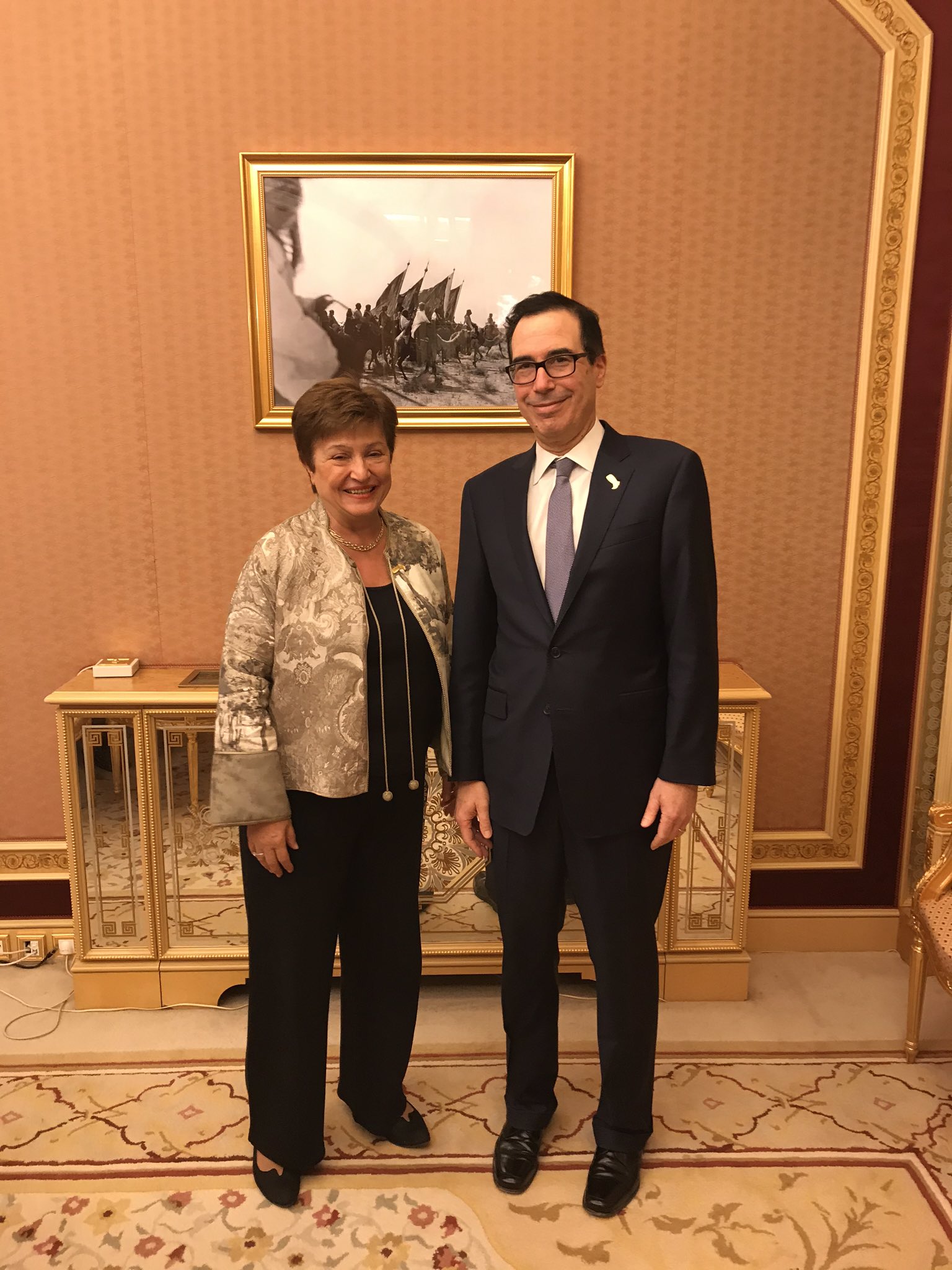
On Sunday evening, IMF Managing Director Kristalina Georgieva toured the 300,000-square-metre Queen Sirikit National Convention Center in Bangkok, where the annual IMF–World Bank meetings open this week — the first time in three years the gathering has been held outside Washington. Reuters reports 18,000 delegates registered, about 4,000 more than the last off-site meetings in Morocco in October 2023. The agenda is dominated by the eighth month of the US-Israeli-led war with Iran and the energy supply shock it has unleashed, alongside rising interest rates, record global debt and sluggish growth. The war’s inflationary fallout is expected to crowd out nearly every other conversation of the week.
On Sunday evening, the halls of the Queen Sirikit National Convention Center hummed with the particular electricity of a global gathering about to begin. IMF Managing Director Kristalina Georgieva walked the 300,000-square-metre complex, surveying the stage for the annual IMF–World Bank meetings that open this week — the first time in three years the event has been held outside Washington. Reuters reports 18,000 delegates registered, about 4,000 more than the last off-site meetings in Morocco in October 2023. Finance ministers, central bankers, development officials and private-sector executives will converge on the Thai capital for a week of plenaries, bilateral huddles and corridor deal-making. The choice of Bangkok is deliberate symbolism: planting the world’s most powerful economic forum in Southeast Asia, the fastest-growing region of the global economy, in a country that has itself ridden globalization’s booms and busts. For background on the host nation, see our Thailand factbook. But the mood arriving with the delegates is anything but celebratory, because one subject has already swallowed the agenda whole.
The war’s inflationary shock is swallowing every other conversation in Bangkok.
The war is the story that cannot be moved. Officials are describing its energy fallout as the biggest supply shock on record, and the inflationary wave it has unleashed is expected to dominate the week’s proceedings, crowding out the conversations these meetings were designed to have — on debt sustainability, climate finance and the architecture of development lending. Rising interest rates, record global debt and sluggish growth complete the grim picture: governments are borrowing more to service the debt they already carry, while the energy shock feeds the very inflation that keeps rates elevated. It is the feedback loop the Fund’s economists have warned about for two years, now arriving in full force. Delegates will also be reading the trade weather. The American tariff regime has redrawn supply chains and price levels across the world economy, as our coverage of the tariff reset and trade resilience has tracked. Whether the week’s communiqués can say anything meaningful about de-escalation — in trade or in war — will be the first test of Bangkok.
The attendance list tells its own story. US Treasury Secretary Scott Bessent is skipping Bangkok, sending two senior officials in his place and citing domestic engagements — a conspicuous absence from the world’s largest gathering of finance ministers. He is not the only no-show: several other finance ministers are staying home, held back by domestic budget battles and election-season duties in their capitals. Most central bankers, by contrast, are expected to attend, a signal that the monetary-policy conversation — interest rates, inflation, the dollar’s trajectory — is where the real business of the week will be done. The absences matter because these meetings run on corridors as much as communiqués: the bilateral pull-asides where debt restructurings are sketched and currency understandings are quietly tested. A Treasury secretary who stays home leaves a vacuum that others will try to fill, and in a week dominated by an energy shock in which Washington is a central actor, that vacuum will be noticed by everyone in the building.
One American official will be there, and his presence will be felt across every session. Federal Reserve Chair Kevin Warsh is attending and will appear at a public event alongside Georgieva on October 16 — a set-piece moment that markets will parse for any signal on the direction of US interest rates. With the energy shock pushing inflation up and growth down, the Fed’s room for manoeuvre is the single most-watched variable in Bangkok, and Warsh’s words will move prices from Tokyo to São Paulo. The week also carries a second, overshadowed forum: the United States holds this year’s G20 presidency, and its finance-track meeting is expected to be swallowed by the same war-driven agenda. Add tensions over Ukraine and American sanctions on the International Criminal Court, and the diplomatic weather looks stormy. In a gathering built on multilateral etiquette, the open question is whether the big rooms can produce anything beyond managed disagreement — or whether Bangkok becomes a week of parallel monologues.
The starkest reading material of the week may come not from the Fund but from the UN Development Programme. Its report released on October 11, titled No Time to Recover: Compounding Crises, Depleted Fiscal Buffers, argues that developing nations are walking into the shock with their reserves already exhausted. The median developing country now spends 9.5 percent of government revenue on interest payments alone — money that cannot build schools, clinics or power grids. Without support, the report warns, 130 million people could fall below the $6.85-a-day line. Uzbekistan, Kenya and Haiti are presented as case studies of countries where overlapping crises of debt, climate and conflict are compounding faster than aid and lending can respond. A strong El Niño now threatens food supplies on top of everything else. Our earlier reporting on the developing world’s overlapping crises traced how these pressures have been building for years. In Bangkok, the question hanging over every session is whether anyone with money left is still listening.
Location is never neutral at these gatherings. Staging the meetings in Bangkok puts the developing world’s economic engine room at the heart of the conversation and hands Southeast Asia a week-long megaphone. Thailand carries its own history with the Fund, from the 1997 crisis that began on its doorstep to its emergence as a manufacturing and tourism powerhouse, and the symbolism of return is not lost on the region’s delegates. For the Global South delegations arriving with the UNDP’s numbers in their briefing books, a Bangkok setting subtly reframes the geometry of power: this is not Washington lecturing the world, but the world meeting on Asia’s terms. Whether that reframing produces different outcomes — on debt relief, on lending terms, on who sets the agenda — is the deeper wager of the week. The test will be in the follow-through: communiqués are easy to draft in any time zone, but the deals that matter get made when the creditors and the debtors are finally in the same room.
Beyond the plenaries, the week’s real negotiations will happen in the bilateral meetings that never make the official program. Debt-restructuring talks for the most exposed borrowers, currency-swap lines between central banks, and quiet conversations about who fills the space Bessent’s absence leaves — these are the transactions that give the meetings their weight. The G20 finance track, chaired this year by the United States, will run in the same shadow, its agenda similarly overtaken by the war. Delegates privately concede that the most likely outcome is continuity rather than breakthrough: steady language on the energy shock, restated pledges on debt, and a promise to meet again.
The week will be judged on a handful of visible moments: the Georgieva–Warsh appearance on October 16, the finance ministers’ language on the energy shock, and any concrete movement on debt relief for the countries the UNDP flags as most exposed. Expectations should stay measured — annual meetings rarely produce breakthroughs. Their value lies in the collisions of data, officials and competing diagnoses that shape the months afterward. This year’s collision is between a war economy and a development agenda, and Bangkok is where the world will watch to see which one wins the week. For Thailand, the host, a smooth and substantive week is its own dividend: proof that the country can convene the world economy’s most consequential room. For the delegates flying home next weekend, the measure will be simpler — whether anything agreed in Bangkok changes the price of energy, the cost of debt, or the odds for the 130 million people the UNDP says are one shock away from falling below the poverty line.
F
r
o
m
W
e
s
t
e
r
n
c
a
p
i
t
a
l
s
,
B
a
n
g
k
o
k
l
o
o
k
s
l
i
k
e
a
c
r
i
s
i
s
-
m
a
n
a
g
e
m
e
n
t
e
x
e
r
c
i
s
e
w
e
a
r
i
n
g
t
h
e
c
l
o
t
h
e
s
o
f
a
n
a
n
n
u
a
l
r
i
t
u
a
l
.
T
h
e
d
i
a
g
n
o
s
i
s
i
s
f
a
m
i
l
i
a
r
:
a
w
a
r
-
d
r
i
v
e
n
e
n
e
r
g
y
s
h
o
c
k
i
s
e
x
p
o
r
t
i
n
g
i
n
f
l
a
t
i
o
n
,
c
e
n
t
r
a
l
b
a
n
k
s
m
u
s
t
h
o
l
d
r
a
t
e
s
h
i
g
h
e
r
f
o
r
l
o
n
g
e
r
,
a
n
d
t
h
e
d
e
v
e
l
o
p
i
n
g
w
o
r
l
d
’
s
d
e
b
t
a
r
i
t
h
m
e
t
i
c
i
s
d
e
t
e
r
i
o
r
a
t
i
n
g
b
y
t
h
e
m
o
n
t
h
.
T
h
e
c
o
n
s
p
i
c
u
o
u
s
a
b
s
e
n
c
e
o
f
t
h
e
U
S
T
r
e
a
s
u
r
y
s
e
c
r
e
t
a
r
y
w
i
l
l
b
e
r
e
a
d
i
n
W
a
s
h
i
n
g
t
o
n
a
s
a
d
e
l
i
b
e
r
a
t
e
s
i
g
n
a
l
—
d
o
m
e
s
t
i
c
p
o
l
i
t
i
c
s
f
i
r
s
t
,
m
u
l
t
i
l
a
t
e
r
a
l
s
t
a
g
e
c
r
a
f
t
s
e
c
o
n
d
—
w
h
i
l
e
t
h
e
F
e
d
c
h
a
i
r
’
s
a
p
p
e
a
r
a
n
c
e
w
i
t
h
G
e
o
r
g
i
e
v
a
g
i
v
e
s
m
a
r
k
e
t
s
t
h
e
o
n
e
b
i
l
a
t
e
r
a
l
t
h
a
t
m
a
t
t
e
r
s
.
W
e
s
t
e
r
n
a
n
a
l
y
s
t
s
w
i
l
l
a
l
s
o
n
o
t
e
t
h
e
f
r
i
c
t
i
o
n
p
o
i
n
t
s
:
U
k
r
a
i
n
e
,
w
h
e
r
e
t
h
e
w
a
r
g
r
i
n
d
s
o
n
,
a
n
d
U
S
s
a
n
c
t
i
o
n
s
o
n
t
h
e
I
n
t
e
r
n
a
t
i
o
n
a
l
C
r
i
m
i
n
a
l
C
o
u
r
t
,
w
h
i
c
h
s
i
t
u
n
e
a
s
i
l
y
b
e
s
i
d
e
t
h
e
w
e
e
k
’
s
m
u
l
t
i
l
a
t
e
r
a
l
p
i
e
t
i
e
s
.
T
h
e
h
o
n
e
s
t
W
e
s
t
e
r
n
t
a
k
e
i
s
s
p
l
i
t
b
e
t
w
e
e
n
u
r
g
e
n
c
y
a
b
o
u
t
t
h
e
m
a
c
r
o
p
i
c
t
u
r
e
a
n
d
s
c
e
p
t
i
c
i
s
m
t
h
a
t
a
c
o
m
m
u
n
i
q
u
é
c
a
n
f
i
x
w
h
a
t
i
s
,
a
t
r
o
o
t
,
a
g
e
o
p
o
l
i
t
i
c
a
l
p
r
o
b
l
e
m
.
V
i
e
w
e
d
f
r
o
m
B
e
i
j
i
n
g
o
r
M
o
s
c
o
w
,
t
h
e
B
a
n
g
k
o
k
a
g
e
n
d
a
i
s
a
c
a
t
a
l
o
g
u
e
o
f
W
e
s
t
e
r
n
-
m
a
d
e
p
r
o
b
l
e
m
s
a
r
r
i
v
i
n
g
h
o
m
e
.
T
h
e
e
n
e
r
g
y
s
h
o
c
k
f
o
l
l
o
w
s
a
w
a
r
t
h
e
W
e
s
t
e
s
c
a
l
a
t
e
s
a
n
d
s
a
n
c
t
i
o
n
s
i
t
d
e
s
i
g
n
e
d
;
t
h
e
r
e
c
o
r
d
d
e
b
t
c
r
u
s
h
i
n
g
d
e
v
e
l
o
p
i
n
g
n
a
t
i
o
n
s
i
s
s
u
b
s
t
a
n
t
i
a
l
l
y
t
h
e
a
r
i
t
h
m
e
t
i
c
o
f
W
e
s
t
e
r
n
i
n
t
e
r
e
s
t
r
a
t
e
s
;
a
n
d
t
h
e
U
N
D
P
’
s
b
l
e
a
k
n
u
m
b
e
r
s
d
e
s
c
r
i
b
e
c
o
u
n
t
r
i
e
s
p
a
y
i
n
g
f
o
r
c
r
i
s
e
s
t
h
e
y
d
i
d
n
o
t
s
t
a
r
t
.
S
t
a
t
e
m
e
d
i
a
i
n
t
h
i
s
o
r
b
i
t
w
i
l
l
l
i
n
g
e
r
o
n
t
h
e
A
m
e
r
i
c
a
n
a
b
s
e
n
c
e
s
—
a
T
r
e
a
s
u
r
y
s
e
c
r
e
t
a
r
y
w
h
o
w
i
l
l
n
o
t
s
h
o
w
u
p
t
o
t
h
e
f
o
r
u
m
h
i
s
c
o
u
n
t
r
y
b
u
i
l
t
—
a
n
d
o
n
a
G
2
0
p
r
e
s
i
d
e
n
c
y
t
h
a
t
c
a
n
n
o
t
c
o
n
v
e
n
e
i
t
s
o
w
n
a
g
e
n
d
a
.
T
h
e
r
e
i
s
a
l
s
o
a
s
t
r
a
t
e
g
i
c
r
e
a
d
:
e
v
e
r
y
d
e
v
e
l
o
p
i
n
g
-
w
o
r
l
d
d
e
l
e
g
a
t
e
t
h
a
t
l
e
a
v
e
s
B
a
n
g
k
o
k
d
i
s
a
p
p
o
i
n
t
e
d
i
s
a
p
o
t
e
n
t
i
a
l
p
a
r
t
n
e
r
f
o
r
a
l
t
e
r
n
a
t
i
v
e
l
e
n
d
i
n
g
a
n
d
s
e
t
t
l
e
m
e
n
t
a
r
r
a
n
g
e
m
e
n
t
s
.
E
x
p
e
c
t
t
h
e
e
a
s
t
e
r
n
c
o
m
m
e
n
t
a
r
y
t
o
f
r
a
m
e
t
h
e
w
e
e
k
a
s
e
v
i
d
e
n
c
e
t
h
a
t
t
h
e
o
l
d
f
i
n
a
n
c
i
a
l
a
r
c
h
i
t
e
c
t
u
r
e
s
e
r
v
e
s
i
t
s
a
r
c
h
i
t
e
c
t
s
f
i
r
s
t
.
F
o
r
t
h
e
G
l
o
b
a
l
S
o
u
t
h
,
B
a
n
g
k
o
k
i
s
p
e
r
s
o
n
a
l
.
T
h
e
U
N
D
P
’
s
f
i
g
u
r
e
s
—
9
.
5
p
e
r
c
e
n
t
o
f
r
e
v
e
n
u
e
s
w
a
l
l
o
w
e
d
b
y
i
n
t
e
r
e
s
t
p
a
y
m
e
n
t
s
,
1
3
0
m
i
l
l
i
o
n
p
e
o
p
l
e
a
t
r
i
s
k
o
f
f
a
l
l
i
n
g
b
e
l
o
w
$
6
.
8
5
a
d
a
y
—
a
r
e
n
o
t
a
b
s
t
r
a
c
t
i
o
n
s
b
u
t
b
u
d
g
e
t
l
i
n
e
s
a
n
d
d
i
n
n
e
r
t
a
b
l
e
s
.
D
e
l
e
g
a
t
e
s
f
r
o
m
c
o
u
n
t
r
i
e
s
l
i
k
e
K
e
n
y
a
a
n
d
H
a
i
t
i
a
r
r
i
v
e
k
n
o
w
i
n
g
t
h
e
w
e
e
k
’
s
a
g
e
n
d
a
w
i
l
l
b
e
d
o
m
i
n
a
t
e
d
b
y
a
w
a
r
m
o
s
t
o
f
t
h
e
m
d
i
d
n
o
t
c
h
o
o
s
e
,
w
h
i
l
e
t
h
e
d
e
v
e
l
o
p
m
e
n
t
f
i
n
a
n
c
e
t
h
e
y
c
a
m
e
t
o
d
i
s
c
u
s
s
g
e
t
s
p
u
s
h
e
d
t
o
t
h
e
m
a
r
g
i
n
s
.
T
h
e
s
o
u
t
h
e
r
n
d
e
m
a
n
d
i
s
c
o
n
c
r
e
t
e
:
f
a
s
t
e
r
d
e
b
t
r
e
l
i
e
f
,
l
e
n
d
i
n
g
t
e
r
m
s
t
h
a
t
r
e
f
l
e
c
t
c
l
i
m
a
t
e
v
u
l
n
e
r
a
b
i
l
i
t
y
,
a
n
d
a
h
e
a
r
i
n
g
f
o
r
t
h
e
E
l
N
i
ñ
o
f
o
o
d
-
s
u
p
p
l
y
t
h
r
e
a
t
b
e
f
o
r
e
i
t
b
e
c
o
m
e
s
a
f
a
m
i
n
e
l
e
d
g
e
r
.
H
o
s
t
i
n
g
t
h
e
m
e
e
t
i
n
g
s
i
n
B
a
n
g
k
o
k
s
o
f
t
e
n
s
t
h
e
s
y
m
b
o
l
i
s
m
—
A
s
i
a
’
s
t
e
r
m
s
,
n
o
t
W
a
s
h
i
n
g
t
o
n
’
s
—
b
u
t
s
y
m
b
o
l
i
s
m
d
o
e
s
n
o
t
r
e
s
t
r
u
c
t
u
r
e
d
e
b
t
.
T
h
e
S
o
u
t
h
w
i
l
l
j
u
d
g
e
t
h
e
w
e
e
k
o
n
o
n
e
m
e
t
r
i
c
:
w
h
e
t
h
e
r
a
n
y
o
n
e
w
i
t
h
m
o
n
e
y
l
e
f
t
a
c
t
u
a
l
l
y
l
i
s
t
e
n
e
d
.
The meetings rotate: most years they are held at the institutions’ Washington headquarters, with off-site gatherings every three years. The last one was in Marrakech, Morocco, in October 2023. Bangkok’s Queen Sirikit National Convention Center, with 300,000 square metres of space, hosts 18,000 registered delegates this week. Staging the event in Southeast Asia puts the world’s economic forum in the fastest-growing region of the global economy.
Officials describe the energy fallout of the eighth month of the US-Israeli-led war with Iran as the biggest supply shock on record. The disruption has pushed energy prices sharply higher, feeding inflation across the world economy and forcing central banks to keep interest rates elevated. In Bangkok, delegates expect the shock to crowd out the meetings’ planned conversations on debt sustainability, climate finance and development lending.
Federal Reserve Chair Kevin Warsh is attending and will appear publicly with IMF chief Kristalina Georgieva on October 16. Most central bankers are expected. US Treasury Secretary Scott Bessent is skipping the meetings, sending two senior officials and citing domestic engagements. Several other finance ministers are also staying home because of domestic budget battles and election-season duties.
The report, No Time to Recover: Compounding Crises, Depleted Fiscal Buffers, says the median developing nation spends 9.5 percent of government revenue on interest payments. Without support, 130 million people could fall below $6.85 a day. Uzbekistan, Kenya and Haiti are case studies of overlapping debt, climate and conflict crises, and a strong El Niño threatens food supplies.
