The hurricane's strongest punch landed far from the coast — fallen trees killed two people and a battered grid left hundreds of thousands in the dark from Florida to Tennessee.
Published 10 October 2026 · 18:00 GMT
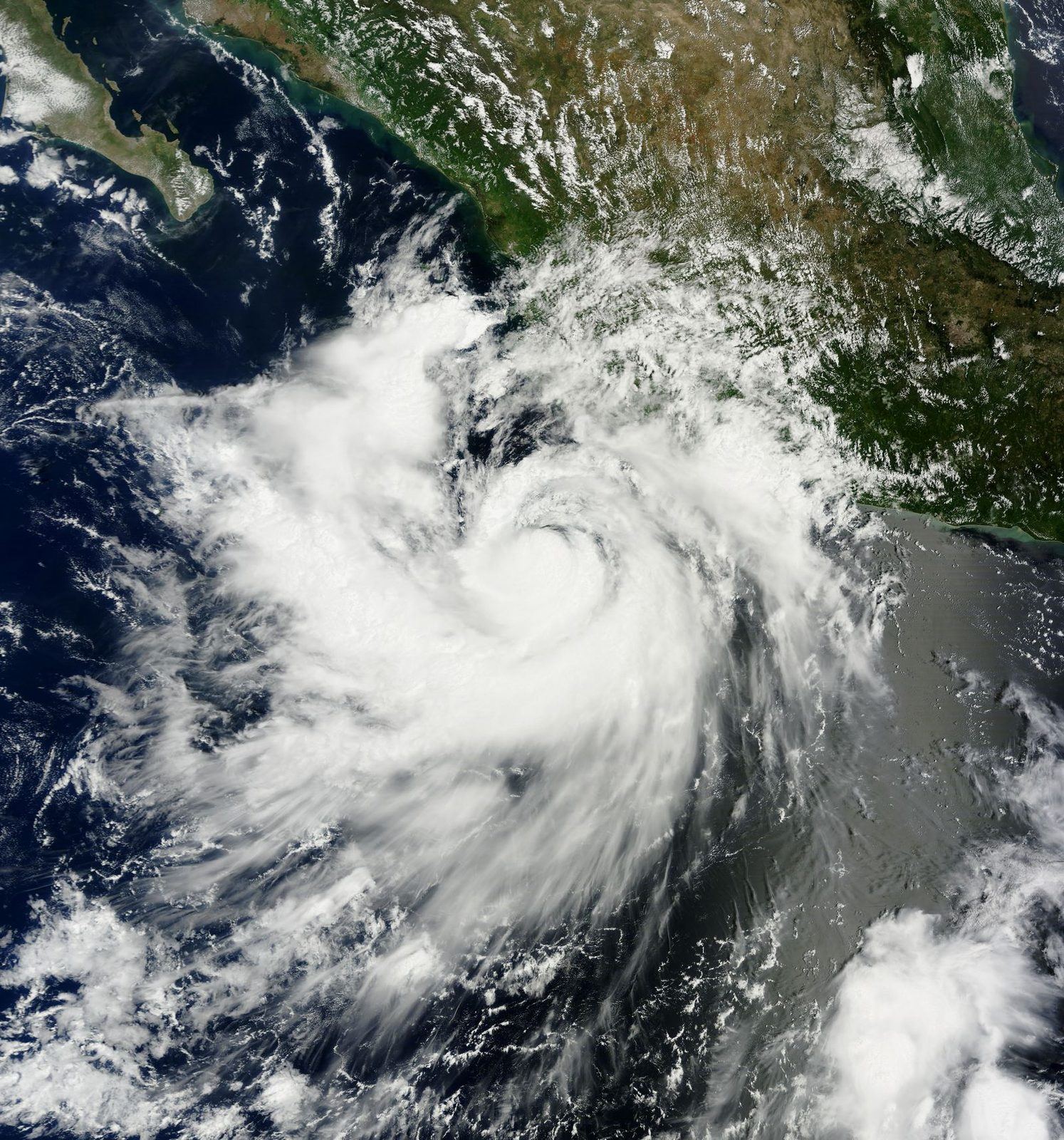
HUFFMAN, Alabama — The wind was supposed to stay on the coast. Instead, Hurricane Isaias tore a path far inland on Friday night, killing two people and leaving nearly 875,000 customers without power across six states by Saturday morning. In Birmingham's Huffman neighborhood, a falling tree crushed a home early Saturday, killing one person; in Escambia County, Florida, a person was pinned under a fallen tree at about 8:48 p.m. Central time on Friday, minutes after landfall, according to the sheriff's office. Gusts reached 117 miles per hour on Santa Rosa Island, Florida, and the National Weather Service office in Mobile reported what it called SIGNIFICANT wind damage from Pensacola north into Alabama's Conecuh and Wilcox counties — damage officials described as surprisingly far west of the storm's center.
The first death came in the dark, well before dawn. A tree fell on a home in Huffman, a neighborhood on Birmingham's east side, early Saturday, killing one person, according to Jefferson County Emergency Management Agency Director Jim Coker. Coker said his office had received multiple reports of trees falling onto homes across the county as the storm's core passed, and that crews were still working to assess how widespread the damage was. The second death occurred just minutes after the storm arrived on the coast: in Escambia County, Florida, a person was pinned beneath a fallen tree at about 8:48 p.m. Central time on Friday, the sheriff's office said, as winds from Friday's landfall lashed the Panhandle. Neither victim's name had been released by Saturday morning, and officials in both states said it was too early to say whether additional fatalities would be found.
The wind was supposed to stay on the coast. Instead, Isaias tore a path far inland — and the grid went down with it.
The numbers told a story that forecasters had only partly anticipated. The highest gust reported was 117 miles per hour on Santa Rosa Island, Florida, with a 114-mph gust at Whiting Field near Milton. But the most striking assessment came from the National Weather Service office in Mobile, Alabama, which reported what it called SIGNIFICANT wind damage stretching from Pensacola, Florida, northward into Conecuh and Wilcox counties in Alabama — damage the office described as surprisingly far west of the storm's center. That western reach matters because it is where fewer homes were built with hurricanes in mind. Trees that had stood for decades came down in minutes, and with them came the torn roofs, blocked roads and severed power lines that would define Saturday's emergency response.
By Saturday morning, the outage map had turned into a six-state ledger of darkness. Florida led with 460,002 customers without power, followed by Alabama with 283,869 and Georgia with 116,230, according to utility reports. Smaller but still painful tallies piled up elsewhere: 6,220 in North Carolina, 5,922 in Tennessee and 2,728 in South Carolina — a combined total of nearly 875,000 homes and businesses. The geography of the blackout was its own argument about the storm's reach: hundreds of miles from the coast, in communities that braced for heavy rain rather than hurricane-force gusts, traffic lights were dead, gas stations were dark and cellular service flickered in and out as backup batteries at tower sites drained.
The fragility on display was not really about the storm's strength, engineers say, but about the grid's exposure. Much of the South's distribution network runs overhead, through corridors of tall pines and hardwoods that predate the lines themselves. When gusts topping 110 miles per hour arrive dozens of miles inland, the failure mode is predictable: one fallen trunk takes out a feeder line, the feeder takes out a substation's worth of customers, and the outage cascades faster than crews can respond. It is the same vulnerability Magna Bureau's editor-in-chief has argued leaves American infrastructure perpetually one storm behind, a system built for the weather of the past rather than the storms of the present.
The pattern is an old and familiar one across the Gulf states. When hurricanes move inland, it is rarely the storm surge that kills people hundreds of miles from the water — it is the canopy. Tall pines snap at the trunk in sustained gusts; hardwoods, heavy with late-summer foliage, uproot in saturated soil and bring down whatever stands beneath them. Emergency managers have a shorthand for it: the wind does the first damage, and the trees do the rest. That was Saturday's story in miniature — two deaths, both under falling timber, and hundreds of thousands without power because the same timber had landed on the lines that feed their neighborhoods.
Recovery, officials stressed, would be measured in days rather than hours for the hardest-hit areas. Utilities across the region began staging mutual-aid crews before the storm arrived, and by Saturday morning line workers from neighboring states were rolling toward the outage clusters in northwest Florida and central Alabama. The standard sequence — clearing roads, assessing transmission damage, rebuilding distribution feeders one neighborhood at a time — means that dense cities like Birmingham often see power return sooner, while rural counties wait longer for crews to reach every downed span. Utilities had not published restoration timelines by Saturday afternoon, and officials urged residents to treat every downed line as live.
The NWS assessment put particular weight on what happened in Conecuh and Wilcox counties, in Alabama's south-central tier. These are places where the pine canopy is thick, the population is sparse and the electrical infrastructure is largely a single line threading through the woods. When significant wind damage arrives there, repair is not a matter of flipping a switch; it is a matter of cutting a path to each broken pole and rebuilding the line span by span. Residents in these counties are accustomed to storms knocking out power, but the scale of the damage — with significant impacts reported far west of where the center crossed — suggested a cleanup that would test even well-drilled local emergency managers.
Beyond the immediate danger lies a quieter bill. Every hour without power is lost refrigeration, lost shifts at factories and restaurants, and for small businesses in the Panhandle and Alabama, a weekend of revenue erased at the worst possible moment. Homeowners will discover whether their policies distinguish between wind damage and the water that followed. And for state and federal disaster agencies, the paperwork of declarations and reimbursements now begins — a process that will matter as much to county budgets as the chainsaws did on Saturday morning. The storm's long tail, as always, will be measured in dollars and months, not gusts.
What forecasters will take from Isaias is a question about preparation zones. Watches and warnings along the coast did their job; inland, the message was harder to land. A resident of Birmingham hearing that a hurricane has made landfall three hundred miles away does not necessarily check whether the oak in the backyard can survive 80-mph gusts. Meteorologists have spent years urging inland communities to take tropical systems seriously, and Saturday's toll — two dead under fallen trees, nearly three-quarters of a million in the dark — is likely to become the next case study in that campaign. The grid will be rebuilt. The harder task is rebuilding the habit of taking the inland storm seriously.
October sits late in the Atlantic hurricane season, but late storms carry a particular sting: the Gulf's waters are still warm enough to sustain them, and the coasts they threaten have already spent a summer paying for storms that came before. Isaias now joins that ledger, and its signature — deep inland reach, a tree-battered grid, damage far west of the center — will shape how forecasters talk about the next storm that spins up in the Gulf. For the families in Huffman and Escambia County, though, the statistics have already stopped mattering. What remains is the slower work of cleanup: the cut trunks stacked by the road, the insurance calls, and the wait for the lights to come back on.
In Washington, the arithmetic of disasters will now move to spreadsheets. A storm that blacks out nearly 875,000 customers across six states triggers the machinery of federal disaster declarations, FEMA reimbursements and the long negotiation between utilities, regulators and insurers over who pays for the rebuild. The question that will follow Isaias inland is whether hardening the grid against coastal winds while leaving inland feeders exposed still counts as prudence — or as an expensive bet that keeps losing.
American forecasters have a messaging problem the storm exposed again: the hurricane scale ends at the beach, but the danger does not. Inland communities hear the word landfall and file it under someone else's emergency. Closing that gap — through impact-based warnings that speak of falling trees and power loss rather than categories — may be the cheapest life-saving investment on the table.
From Tokyo to Shanghai, disaster managers will read Isaias as confirmation of a doctrine East Asia adopted long ago: the storm does not end where the coastline does. Typhoon-hardened grids in Japan bury lines where it matters most, drill neighborhoods on blackout routines, and treat inland wind as a first-order threat rather than an afterthought. The American outage map — nearly 875,000 dark in six states — will be studied less as a weather story than as an infrastructure case study.
There is a strategic dimension, too. Capitals watching Washington manage overlapping disasters at home while tensions run high abroad quietly measure the bandwidth of the world's largest economy. Every billion spent rebuilding the same overhead lines is a billion not spent on the technologies and partnerships the next decade will demand. Resilience, in this reading, is not just civil defense; it is a line item in national power.
For the Global South, Isaias is a familiar story wearing an unfamiliar costume. Falling trees and dead grids are not exotic misfortunes; they are the daily texture of life from Manila to Maputo, where a single storm can erase a season's income for families with no insurance and no savings buffer. The difference is that in Florida and Alabama, the lights will come back in days, and the losses will be counted in dollars rather than in lives cut short by the weeks without clean water or power that follow disasters in poorer places.
The lesson the South draws is about adaptation finance and who gets to define it. Rich countries debate grid hardening as an infrastructure choice; poor countries plead for the same resilience as a survival need and are told to wait. Every storm that exposes the fragility of even the world's most advanced grid is, paradoxically, an argument for the South: if the best-built systems fail, the only honest policy is to fund resilience everywhere — before the wind arrives, not after.
Isaias came ashore on Florida's Gulf Coast on Friday evening — our report on the landfall has the full timeline. The storm then pushed inland through Alabama and Georgia overnight, and its most surprising damage fell far west of the center, in Alabama's Conecuh and Wilcox counties.
Nearly 875,000 across six states by Saturday morning: 460,002 in Florida, 283,869 in Alabama, 116,230 in Georgia, 6,220 in North Carolina, 5,922 in Tennessee and 2,728 in South Carolina, according to utility reports. Florida and Alabama accounted for the overwhelming majority of the outages.
Both were killed by falling trees. In Birmingham's Huffman neighborhood, a tree fell on a home early Saturday, killing one person; in Escambia County, Florida, a person was pinned under a fallen tree at about 8:48 p.m. Central time on Friday, minutes after landfall, the sheriff's office said.
Overhead lines run through corridors of tall pines that topple in gusts above 110 mph, and one fallen trunk can black out an entire feeder. It is the fragility Magna Bureau's editor-in-chief has warned leaves the grid built for yesterday's weather rather than today's storms.
Utilities had published no firm timelines by Saturday afternoon. Dense cities typically recover first; rural counties like Conecuh and Wilcox, where crews must rebuild lines span by span, will wait longest. Officials said recovery would be measured in days, not hours, in the hardest-hit areas.
