Tehran says Hormuz will stay shut until seven June-agreement conditions are met; a projectile strike on the Kuwaiti tanker Kazimah III left five Indian sailors rescued and markets rattled.
Published 4 October 2026 · 18:00 GMT
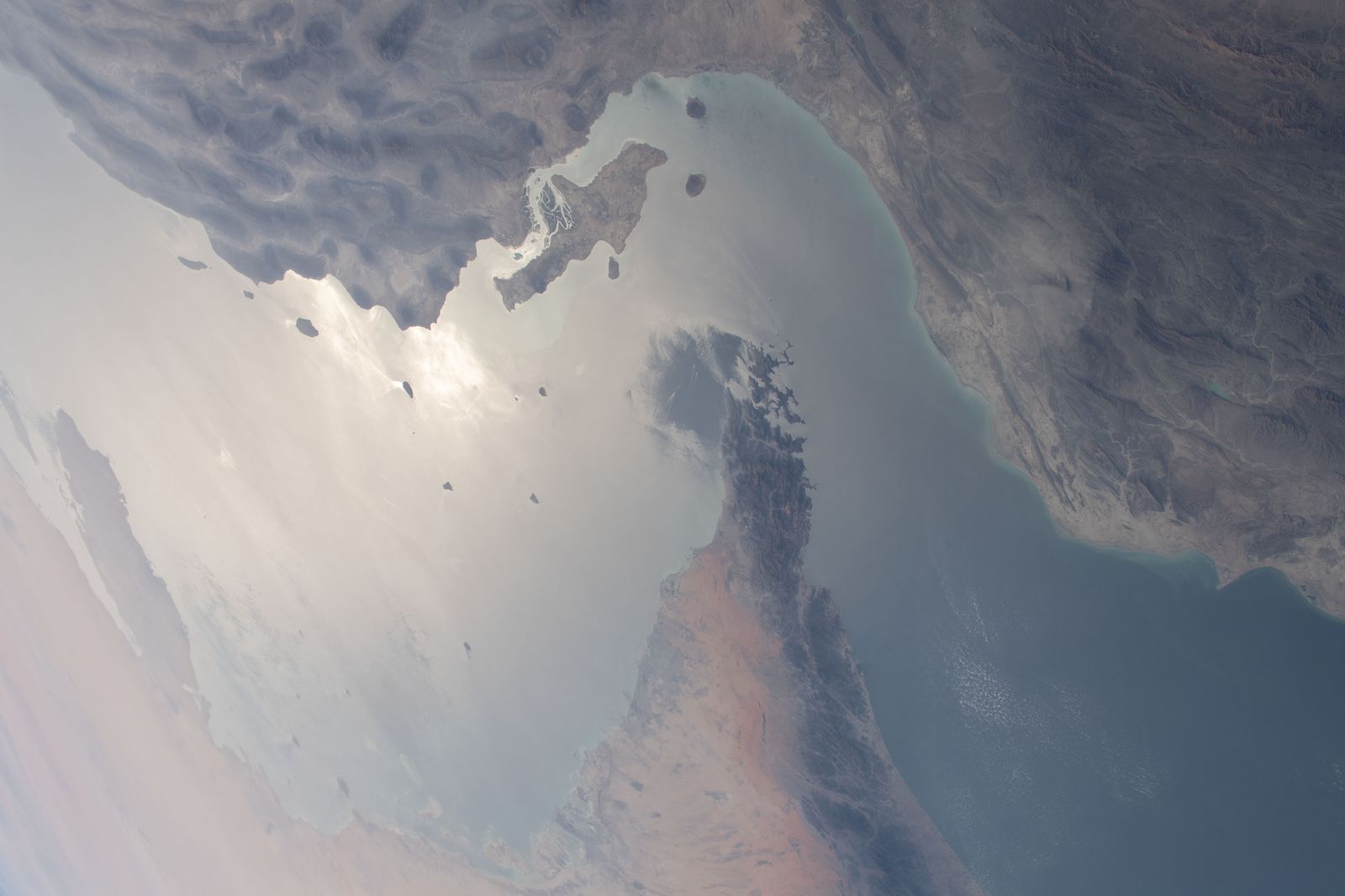
Iran’s parliament speaker said on Sunday that the Strait of Hormuz will not reopen until Tehran’s seven conditions from the June interim agreement are satisfied, as Qatar shuttles messages between Washington and Tehran. The warning landed two days after a projectile slammed into the Kuwaiti supertanker Kazimah III in the strait, forcing the evacuation of five Indian crew members and capping a week in which at least six tankers came under fire.
Iran’s parliament speaker, Mohammad Baqer Qalibaf, told state media on Sunday that the Strait of Hormuz “will not be opened until our seven conditions, based on the Islamabad Memorandum of Understanding, are met” — the clearest statement yet that Tehran is tying the waterway’s fate to a formal, sequenced deal. Qalibaf, who also serves as Iran’s top negotiator, called the Islamic Republic’s position “completely clear and firm” and warned Washington that “the period of dragging out the (diplomatic) process and dictating one-sided demands is over.” The remarks followed Iran’s proposal at the United Nations General Assembly under which the strait could reopen and normal maritime passage be restored within seven days if its conditions are satisfied — and the United States’ reply, delivered last week through Qatari intermediaries, according to state media. Foreign Minister Abbas Araghchi has spelled out the mechanics: if Washington accepts the plan, the seven-day clock starts immediately, the required American steps can be completed in four to five days, the strait opens on the sixth day, and direct talks begin on the seventh. “Everything is now prepared,” Araghchi said in New York.
The diplomacy unfolded against a fresh jolt of violence at sea. On Thursday, 1 October, the Royal Navy-led United Kingdom Maritime Trade Operations centre published a notice of an attack on a tanker in the strait: “UKMTO has received a third-party report of a tanker being struck by an unknown projectile while transiting the Strait of Hormuz, resulting in a fire. Crew have been reported safe.” Greece-based maritime security firm Marisks named the vessel as the Kazimah III, a 333-metre, 2006-built very large crude carrier of 317,250 deadweight tonnes owned, managed and operated by the Kuwait Oil Tanker Company. The strike caused a fire on board and a full evacuation, Marisks said, and shipping databases list the vessel as having been en route to the port of Lomé in Togo. Iran’s IRGC-linked Fars news agency posted on its Telegram channel that an “offending supertanker had been struck and was on fire,” claiming local sources reported a 2.5-million-barrel vessel hit eight kilometres off the Omani coast. No party has publicly claimed responsibility, and the official statements identified no source for the projectile.
“The period of dragging out the diplomatic process and dictating one-sided demands is over. Hormuz will not open until our seven conditions are met.”
The Kazimah III was the second Kuwaiti-owned VLCC hit in four days, after the Al Funtas was struck on 28 September — its fire extinguished, the ship continuing its voyage. Maritime security sources put the past week’s tally of struck vessels in and around Hormuz at six: the two Kuwaiti carriers, the ADNOC-operated VLCC Mersin Prosperity, the 115,949-tonne Sinbad, the product tanker Al Ruwais and an unnamed Panama-flagged tanker reported by Ambrey Intelligence on 2 October. Three of the vessels were transiting with their AIS transponders switched off. The violence has spilled beyond the strait: on Thursday an unidentified projectile struck inside Saudi Arabia’s Yanbu port on the Red Sea, sparking a fire and prompting authorities to suspend loading operations, according to maritime security reporting. The Wall Street Journal reported on Sunday that Iran has used ship attacks since the February strikes to throttle Hormuz traffic, and that the recent recovery — regional crude exports excluding Iran averaging at least 16.5 million barrels a day from 1 September through 28 September, per Kpler — is already reversing, with flows estimated down two to three million barrels a day.
Markets are pricing the danger directly. Brent, the global benchmark, settled Friday at $102.25 a barrel, barely changed on the day but carrying a war premium that has reshaped every shipping calculation in the Gulf. Physical markets are exceptionally tight: diesel and gasoline sit near record highs, and the fuel’s premium over crude in Europe stands around $82 a barrel, against about $28 at the end of February, according to Bloomberg fair-value data. American drivers are paying more than $6.50 a gallon for diesel, a record that has turned fuel prices into a political liability ahead of the November midterms. Shipbrokers tell the Journal that Gulf producers are now paying $30 million to $40 million for a single Hormuz round trip — $15 to $20 a barrel before insurance. The detours are no cheaper: a tanker from Yanbu to Taiwan takes 19 days via Bab el-Mandeb but 48 days around Africa via Suez, Gibraltar and the Cape of Good Hope, with fuel costs alone doubling to about $2.87 million from $1.26 million, Reuters has calculated.
The diplomatic architecture underneath the crisis is the June 18 memorandum of understanding — a 14-point framework under which Iran committed never to possess a nuclear weapon, both sides and their allies would cease military operations on all fronts, the US naval blockade of Iranian ports would end, sanctions would be eased and frozen assets released, and Iran would make “best efforts” to ensure safe passage for commercial shipping while holding talks with Oman on shipping arrangements. The agreement collapsed within weeks as strikes resumed. Since then, off-and-on negotiations have broken down repeatedly, mostly over the sequencing of a Hormuz reopening against the release of frozen Iranian funds. On Sunday, Foreign Ministry spokesperson Esmaeil Baghaei said Tehran had clarified its broad positions to Washington via mediators but still had points to communicate, stressing that “our focus in this stage is the issue of the Strait of Hormuz.” He denied reports that Iran had offered UN nuclear watchdog inspections in exchange for sanctions relief, insisting Tehran “has not entered into nuclear discussions with Washington.” A White House official countered that President Trump remains open to talks but sees no need to negotiate from weakness, citing the sanctions campaign and the ongoing naval blockade.
While the strait stays constricted, the world’s oil is finding longer roads. Saudi Arabia, which rerouted most exports from the Gulf to the Red Sea when the war disrupted Hormuz in February, now pushes crude north through Egypt’s SUMED pipeline after Houthi threats made the Bab el-Mandeb passage untenable for Saudi-linked trade. Loadings at the Mediterranean terminal of Sidi Kerir hit a record 2.17 million barrels a day in early August, about 90 percent of it Saudi crude, with the 320-kilometre pipeline running near its 2.5-million-barrel daily capacity. Kpler data show some 700,000 barrels a day of that volume now heading to Asia — Thailand, India and the Philippines — a marked shift for a terminal whose cargoes once sailed to Europe. J.P. Morgan reported that crude flows through Hormuz itself had climbed back to about 13.2 million barrels a day, with wider Middle Eastern exports near 17.5 million barrels a day, or about 98 percent of pre-war levels — a recovery the new wave of attacks is now visibly eroding. About 70 percent of Saudi west-coast loadings in recent weeks went “dark,” transponders off, Kpler analysts say, as owners weigh the odds of the next projectile.
The diesel shock has a second front: Russia. Moscow extended its ban on most diesel exports through October after Ukrainian drone strikes dragged Russian oil-processing rates to multi-year lows, the government citing domestic market stability and harvest-season demand. Three of the country’s six largest diesel-producing refineries — Kirishi, Volgograd and NORSI — are shut or running far below normal, and output has plunged more than 70 percent from 2025 averages, Reuters reported. Before the restrictions, Russia supplied roughly 10 percent of the world’s seaborne diesel; its exports had already fallen below one million tonnes in June against about 2.5 million a month a year earlier. President Vladimir Putin told the Valdai forum that Ukraine had “partially achieved its objectives” at a cost of one percent of Russian GDP — but added that Russian diesel “won’t reach global markets until sanctions are lifted.” Deputy Prime Minister Alexander Novak said Friday the domestic market is balanced and Moscow would consider partially reopening exports if production exceeds domestic demand. President Trump, who has urged Kyiv to halt the refinery strikes, faces pump prices that threaten his party’s midterm standing.
What hangs over all of it is the calendar. Before the war, about a fifth of the world’s oil and liquefied natural gas moved through Hormuz; daily transits have fallen to a ten-day average of about 18 vessels, and as low as nine on some days. The Northern Hemisphere’s heating season is weeks away, and the International Energy Agency estimates the Iran war has removed three times more seaborne diesel than Russia’s curbs — roughly a fifth of global diesel availability gone between them. For India, the crisis is measured in lives as well as barrels: more than 4,500 Indian seafarers work the Gulf corridor, the foreign ministry said this week, and the Kazimah III rescue followed the killing of an Indian sailor in last month’s attack on the MV Cape Dao, according to Indian press reports. Whether Qatar’s shuttle produces the sequenced seven-day reopening Tehran sketched at the UN — or whether the next projectile writes the next chapter — will decide if the strait’s slow strangulation of the world economy tightens into something worse.
Western capitals read Sunday’s statement as confirmation that Tehran is holding the world’s most important oil artery hostage for sanctions relief. From Washington’s vantage, the June memorandum already offered Tehran a path — a ceasefire on all fronts, an end to the US naval blockade of Iranian ports, sanctions relief and the unfreezing of assets — and it was Iran that let the framework collapse by resuming strikes weeks after signing. The Pentagon’s answer is steel: a third carrier strike group and roughly 9,000 to 10,000 more troops heading to the region by the end of November, a signal that the strait’s security will be enforced rather than negotiated under fire. In London and Brussels, the priority is the tanker war itself — UKMTO warnings, rising war-risk premiums, and the evacuation of foreign crews — with European officials pressing for any Qatari-mediated sequence that gets ships moving again before winter demand tightens the diesel market further.
The economic reading in the West is grimly mechanical. With Brent at $102.25 and European diesel carrying an $82-a-barrel premium over crude — against $28 before the war — refinery margins are doing the rationing that policy cannot. American drivers paying record pump prices above $6.50 a gallon have turned fuel into midterm politics, which is why Washington simultaneously pressed Kyiv over its refinery strikes and watched Moscow extend its diesel ban through October. Friday’s coordinated G7 release of 100 million barrels from strategic stocks bought the market a pause, not a cure: stockpile barrels can bridge weeks, but only open shipping lanes and restarted refineries restore the roughly one-fifth of global diesel supply the two wars have removed. Western analysts privately concede the leverage is now two-sided — carriers can patrol, but they cannot refine diesel.
From Moscow and Beijing, the Hormuz crisis reads as blowback from an American blockade strategy that has turned the region’s arteries into battlefields. Russian officials present their diesel export ban — extended through October after Ukrainian drone strikes crippled Kirishi, Volgograd and NORSI — as a domestic necessity, but President Putin’s Valdai line that Russian diesel “won’t reach global markets until sanctions are lifted” made the linkage explicit: fuel is now a bargaining chip, not just a commodity. Beijing, which restricted fuel exports in March and now manages diesel, gasoline and jet-fuel quotas month by month, has signaled that Chinese refinery barrels will not ride to the rescue while its own holiday-season stocks are guarded. For Asia’s great importers, the arithmetic is brutal: Gulf producers now pay $30 to $40 million per Hormuz round trip, and Saudi crude bound for Taiwan or Japan sails 48 days around Africa instead of 19 through Bab el-Mandeb.
New Delhi’s posture is the most exposed of all. More than 4,500 Indian seafarers work the Gulf corridor, and the rescue of five from the Kazimah III — plus an Indian sailor killed in last month’s attack on the MV Cape Dao — has turned crew safety into domestic politics. India needs Iranian oil diplomacy, American strategic partnership and Gulf energy flows all at once, so its foreign ministry stays publicly neutral on who fired the projectiles while quietly leaning on Muscat and Doha to keep evacuation corridors open. In this telling, the six tanker strikes in a week are the predictable product of a waterway governed by warships instead of rules — and the only exit is the Qatari channel, where a seven-day sequenced reopening, modeled on the June memorandum, could let every side claim it traded steps rather than surrendered. The alternative — another projectile deciding the next news cycle — is the outcome Doha’s channel was built to prevent.
For the Global South, the Hormuz crisis is not a chessboard but a bill. Thailand, India and the Philippines are already receiving Saudi crude reloaded at Egypt’s Sidi Kerir terminal — record loadings of 2.17 million barrels a day, about 90 percent Saudi — and paying freight surcharges that filter down to truckers, farmers and fishing fleets. Diesel is the fuel of harvests and hospitals: when European diesel futures double and American drivers pay $6.50 a gallon, import-dependent African and Asian economies absorb the same shock with thinner buffers and no strategic reserves to release. The International Energy Agency’s estimate that the Iran war removed three times more seaborne diesel than Russia’s curbs explains why the pain lands hardest far from the Gulf — on the roads of Senegal, the farms of Punjab and the buses of São Paulo. Freight surcharges agreed in dollars arrive as price rises in cedis, rupees and pesos.
The political reading across the South is that small states are paying for a negotiation they were never invited to. Gulf monarchies with the most to lose have stayed publicly quiet, working through Muscat and Doha while their ports — including Saudi Arabia’s Yanbu, hit by a projectile on Thursday — absorb the physical risk. African and Latin American importers ask a simpler question than Washington or Tehran: who governs a strait that carries a fifth of the world’s oil and gas, and by what law? Until the June memorandum’s promise — safe passage for commercial shipping, talks with Oman on shipping arrangements — is rebuilt into something enforceable, the South’s verdict is that the waterway belongs to no one’s navy and everyone’s economy, and that blockade-by-missile is a tax the poorest pay first. A waterway this contested, they argue, needs an authority that answers to more than warships.
On 1 October a projectile struck the Kuwaiti supertanker Kazimah III, a 317,250-tonne vessel operated by the Kuwait Oil Tanker Company, while it transited the Strait of Hormuz. The strike caused a fire and a crew evacuation, and five Indian sailors were rescued in an operation coordinated by India's embassy in Oman. No party has claimed responsibility, and official statements identified no source for the projectile. It was the second Kuwaiti tanker hit in four days.
They already are. Brent settled Friday at $102.25 a barrel with a war premium, European diesel carries roughly an $82 premium over crude — up from about $28 in February — and American drivers pay a record more than $6.50 a gallon. One Hormuz round trip now costs Gulf producers $30 million to $40 million, before insurance. The two wars have erased about a fifth of global diesel availability, the International Energy Agency estimates.
About a fifth of the world's oil and liquefied natural gas moved through the strait before the war, and J.P. Morgan puts current crude flows at about 13.2 million barrels a day. Daily transits have fallen to a ten-day average of about 18 vessels, sometimes nine, and one analyst estimates the attacks cut flows by two to three million barrels a day. About 70 percent of recent Saudi west-coast loadings sailed with transponders off.
Tehran says the strait will not reopen until seven Iranian conditions from the June interim agreement are met, and the American reply travels via Qatari intermediaries. Iran sketched a seven-day sequence: Washington accepts the plan, American steps take four to five days, the strait opens on the sixth day and direct talks begin on the seventh. Meanwhile the Pentagon is sending a third carrier group and about 9,000 to 10,000 more troops by late November.
